Ana Filipa Vrdoljak – författare
Visar alla böcker från författaren Ana Filipa Vrdoljak. Handla med fri frakt och snabb leverans.
11 produkter
Cultural Dimension of Human Rights
E-bok, 2013
1097 kr
Lägg i varukorg
The intersections between culture and human rights have engaged some of the most heated and controversial debates across international law and theory. As understandings of culture have evolved in recent decades to encompass culture as ways of life, there has been a shift in emphasis from national …
Cultural Dimension of Human Rights
E-bok, 2013
1518 kr
Lägg i varukorg
The intersections between culture and human rights have engaged some of the most heated and controversial debates across international law and theory. As understandings of culture have evolved in recent decades to encompass culture as ways of life, there has been a shift in emphasis from national …
Oxford Handbook of International Cultural Heritage Law
Av Ana Filipa Vrdoljak, Francesco Francioni
E-bok, 2020
2547 kr
Lägg i varukorg
This Handbook provides a cutting edge study of the fast developing field of international law on the protection of cultural heritage by taking stock of the recent developments and of the core concepts and current challenges. The legal protection of cultural heritage has come under renewed focus …
Oxford Handbook of International Cultural Heritage Law
Av Ana Filipa Vrdoljak, Francesco Francioni
E-bok, 2020
2547 kr
Lägg i varukorg
This Handbook provides a cutting edge study of the fast developing field of international law on the protection of cultural heritage by taking stock of the recent developments and of the core concepts and current challenges. The legal protection of cultural heritage has come under renewed focus …
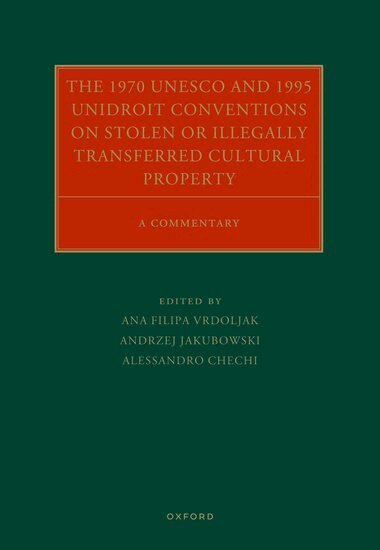
The 1970 UNESCO and 1995 UNIDROIT Conventions on Stolen or Illegally Transferred Cultural Property
A Commentary
Av Ana Filipa Vrdoljak, Andrzej Jakubowski
Inbunden, 2024
3754 kr
Lägg i varukorg
The illicit traffic in cultural objects is a grave concern to the general public and international community. The resulting cultural damage fuels debates on how best to regulate the trade in cultural objects and inform legal responses at all levels for the protection of movable cultural heritage. …
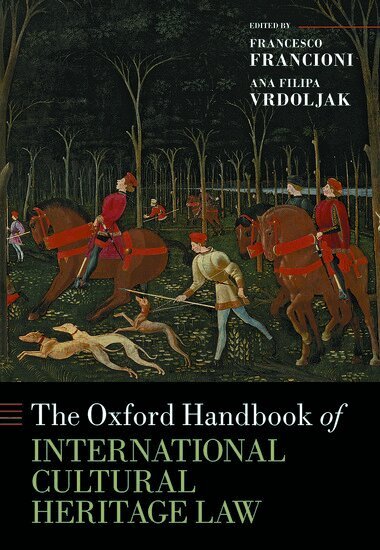
The Oxford Handbook of International Cultural Heritage Law
Av Francesco Francioni, Francesco Francioni m. fl.
Inbunden, 2020
3625 kr
Lägg i varukorg
This Handbook provides a cutting edge study of the fast developing field of international law on the protection of cultural heritage by taking stock of the recent developments and of the core concepts and current challenges. The legal protection of cultural heritage has come under renewed focus …
The Cultural Dimension of Human Rights
Inbunden, 2013
2375 kr
Lägg i varukorg
The intersections between culture and human rights have engaged some of the most heated and controversial debates across international law and theory. As understandings of culture have evolved in recent decades to encompass culture as ways of life, there has been a shift in emphasis from national …
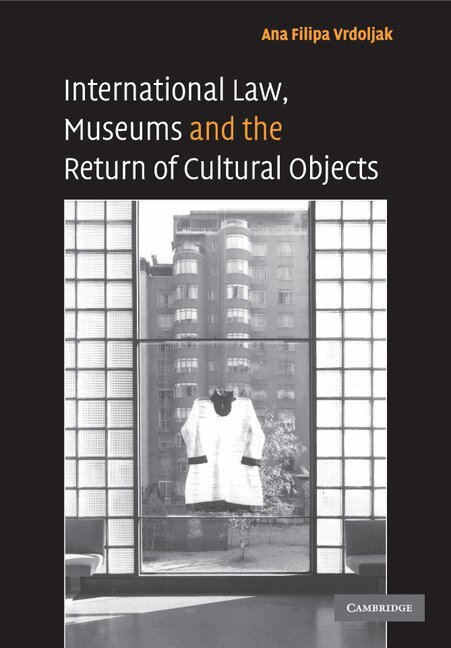
International Law, Museums and the Return of Cultural Objects
Häftad, 2008
771 kr
Lägg i varukorg
While the question of the return of cultural objects is by no means a new one, it has become the subject of increasingly intense debate in recent years. This important book explores the removal and the return of cultural objects from occupied communities during the last two centuries and analyses …
International Law for Common Goods
Normative Perspectives on Human Rights, Culture and Nature
Av Federico Lenzerini, Ana Filipa Vrdoljak
E-bok, 2014
1964 kr
Lägg i varukorg
International law has long been dominated by the State. But it has become apparent that this bias is unrealistic and untenable in the contemporary world as the rise of the notion of common goods challenges this dominance. These common goods – typically values (like human rights, rule of law, etc) …
International Law for Common Goods
Normative Perspectives on Human Rights, Culture and Nature
Av Federico Lenzerini, Ana Filipa Vrdoljak
E-bok, 2014
2007 kr
Lägg i varukorg
International law has long been dominated by the State. But it has become apparent that this bias is unrealistic and untenable in the contemporary world as the rise of the notion of common goods challenges this dominance. These common goods – typically values (like human rights, rule of law, etc) …
International Law for Common Goods
Normative Perspectives on Human Rights, Culture and Nature
Av Federico Lenzerini, Ana Filipa Vrdoljak
Inbunden, 2014
1820 kr
Lägg i varukorg
International law has long been dominated by the State. But it has become apparent that this bias is unrealistic and untenable in the contemporary world as the rise of the notion of common goods challenges this dominance. These common goods – typically values (like human rights, rule of law, etc) …