Francesco Francioni - Böcker
Visar alla böcker från författaren Francesco Francioni. Handla med fri frakt och snabb leverans.
17 produkter
17 produkter
3 269 kr
Skickas inom 3-6 vardagar
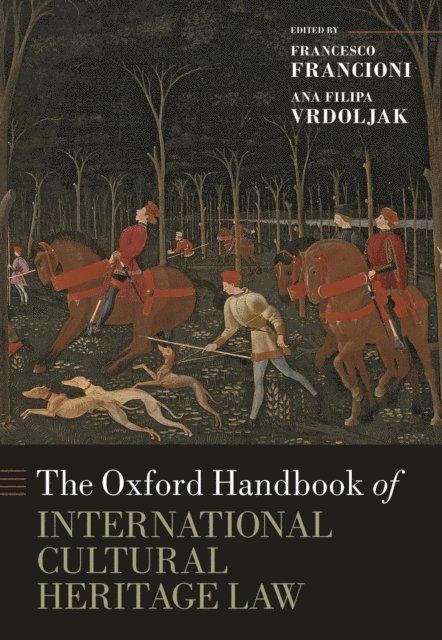
This Handbook provides a cutting edge study of the fast developing field of international law on the protection of cultural heritage by taking stock of the recent developments and of the core concepts and current challenges. The legal protection of cultural heritage has come under renewed focus from the international community and states since the 1990s. This is evidenced by the adoption of a range of international instruments. Countries are also enacting cultural heritage legislation or overhauling existing laws within their own national territory. Contributions address the protection of immovable and movable, tangible and intangible cultural heritage in peacetime and in the event of armed conflict as well as the interaction between specific regimes of cultural heritage protection with other fields of international law, including international criminal law, human rights and humanitarian law, environmental law, international trade, investments, and intellectual property. The last part of the Handbook covers diverse regional systems of heritage protection.
2 251 kr
Skickas inom 5-8 vardagar
Almost fifty years have passed since the adoption of the Convention Concerning the Protection of the World Cultural and Natural Heritage (the UNESCO World Heritage Convention). With its 194 States Parties, it is the most widely ratified convention within the family of UNESCO treaties on the protection of cultural heritage. The success of this Convention and its almost universal acceptance by the international community of states is due to the great appeal that recognising certain properties as “world heritage” has for national governments. Since the publication of the first Commentary, new problems have arisen in the management of world heritage sites. It has become increasingly difficult to properly monitor the conservation of the ever-growing mass of sites inscribed in the World Heritage List, and to resolve disputes over the formal designation of contested world heritage properties - a problem that has led to the withdrawal of the United States and Israel from UNESCO. New frontiers are now being explored for the expansion of the world heritage idea over marine areas beyond national jurisdiction, and the monopoly of the State in the identification, delineation, and presentation of world heritage properties is being increasingly challenged in the name of indigenous peoples' rights and by local communities claiming ownership over contested cultural sites. At the same time, the regime of world heritage protection has infiltrated other areas of international law, especially international economic law, investment arbitration, and the area of international criminal law. This second edition critically examines the World Heritage Convention against this dynamic evolution of international heritage law to help academics, lawyers, diplomats, and officials interpret and apply the norms of the Convention after half a century of uninterrupted implementing practice by State Parties and Treaty Bodies.
1 440 kr
Skickas inom 5-8 vardagar
In international law, as in any other legal system, respect and protection of human rights can be guaranteed only by the availability of effective judicial remedies. When a right is violated or damage is caused, access to justice is of fundamental importance for the injured individual and it is an essential component of the rule of law. Yet, access to justice as a human right remains problematic in international law. First, because individual access to international justice remains exceptional and based on specific treaty arrangements, rather than on general principles of international law; second, because even when such right is guaranteed as a matter of treaty obligation, other norms or doctrines of international law may effectively impede its exercise, as in the case of sovereign immunity or non reviewability of UN Security Council measures directly affecting individuals. Further, even access to domestic legal remedies is suffering because of the constraints put by security threats, such as terrorism, on the full protection of freedom and human rights.This collection of essays offers seven distinct perspectives on the present status of access to justice: its development in customary international law, the stress put on it in times of emergency, its problematic exercise in the case of violations of the law of war, its application to torture victims, its development in the case law of the UN Human Rights Committee and of the European Court of Human Rights, its application to the emerging field of environmental justice, and finally access to justice as part of fundamental rights in European law.
679 kr
Skickas inom 5-8 vardagar
In international law, as in any other legal system, respect and protection of human rights can be guaranteed only by the availability of effective judicial remedies. When a right is violated or damage is caused, access to justice is of fundamental importance for the injured individual and it is an essential component of the rule of law. Yet, access to justice as a human right remains problematic in international law. First, because individual access to international justice remains exceptional and based on specific treaty arrangements, rather than on general principles of international law; second, because even when such right is guaranteed as a matter of treaty obligation, other norms or doctrines of international law may effectively impede its exercise, as in the case of sovereign immunity or non reviewability of UN Security Council measures directly affecting individuals. Further, even access to domestic legal remedies is suffering because of the constraints put by security threats, such as terrorism, on the full protection of freedom and human rights.This collection of essays offers seven distinct perspectives on the present status of access to justice: its development in customary international law, the stress put on it in times of emergency, its problematic exercise in the case of violations of the law of war, its application to torture victims, its development in the case law of the UN Human Rights Committee and of the European Court of Human Rights, its application to the emerging field of environmental justice, and finally access to justice as part of fundamental rights in European law.
2 138 kr
Skickas inom 5-8 vardagar
3 890 kr
Skickas inom 7-10 vardagar
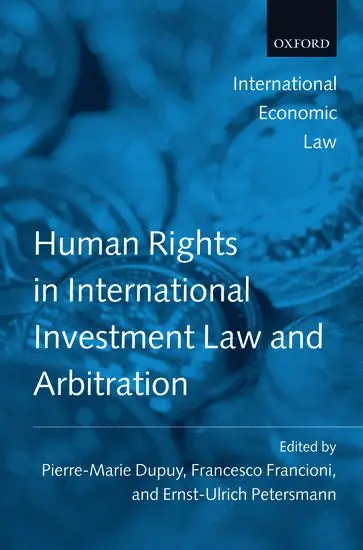
This book offers a systematic analysis of the interaction between international investment law, investment arbitration and human rights, including the role of national and international courts, investor-state arbitral tribunals and alternative jurisdictions, the risks of legal and jurisdictional fragmentation, the human rights dimensions of investment law and arbitration, and the relationships of substantive and procedural principles of justice to international investment law. Part I summarizes the main conclusions of the 24 book chapters and places them into the broader context of the principles of justice, global administrative law and multilevel constitutionalism that may be relevant for the administration of justice in international economic law and investor-state arbitration. Part II includes contributions clarifying the constitutional dimensions of transnational investment disputes and investor-state arbitration, as reflected in the increasing number of arbitral awards and amicus curiae submissions addressing human rights concerns. Part III addresses the need for principle-oriented ordering and the normative congruence of diverse national, regional and worldwide legal regimes, focusing on the pertinent dispute settlement practices and legal interpretation methods of regional economic courts and human rights courts, which increasingly interpret international economic law with due regard to human rights obligations of the governments concerned. Part IV includes twelve case studies on the potential human rights dimensions of specific protection standards (e.g. fair and equitable treatment, non-discrimination), applicable law (e.g. national and international human rights law, rules on corporate social accountability), procedural law issues (e.g. amicus curiae submissions) and specific fundamental rights (e.g. the protection of human health, access to water, and protection of the environment). These case studies discuss not only the still limited examples of human rights discourse in investor-state arbitral awards; they also probe the potential legal relevance of investor-state arbitration for the judicial recognition, interpretation and balancing of primary rules, such as of investment law and human rights law, in the light of the principles of justice as defined by national and international law.
1 116 kr
Skickas inom 7-10 vardagar
This book offers a systematic analysis of the interaction between international investment law, investment arbitration and human rights, including the role of national and international courts, investor-state arbitral tribunals and alternative jurisdictions, the risks of legal and jurisdictional fragmentation, the human rights dimensions of investment law and arbitration, and the relationships of substantive and procedural principles of justice to international investment law. Part I summarizes the main conclusions of the 24 book chapters and places them into the broader context of the principles of justice, global administrative law and multilevel constitutionalism that may be relevant for the administration of justice in international economic law and investor-state arbitration. Part II includes contributions clarifying the constitutional dimensions of transnational investment disputes and investor-state arbitration, as reflected in the increasing number of arbitral awards and amicus curiae submissions addressing human rights concerns. Part III addresses the need for principle-oriented ordering and the normative congruence of diverse national, regional and worldwide legal regimes, focusing on the pertinent dispute settlement practices and legal interpretation methods of regional economic courts and human rights courts, which increasingly interpret international economic law with due regard to human rights obligations of the governments concerned. Part IV includes twelve case studies on the potential human rights dimensions of specific protection standards (e.g. fair and equitable treatment, non-discrimination), applicable law (e.g. national and international human rights law, rules on corporate social accountability), procedural law issues (e.g. amicus curiae submissions) and specific fundamental rights (e.g. the protection of human health, access to water, and protection of the environment). These case studies discuss not only the still limited examples of human rights discourse in investor-state arbitral awards; they also probe the potential legal relevance of investor-state arbitration for the judicial recognition, interpretation and balancing of primary rules, such as of investment law and human rights law, in the light of the principles of justice as defined by national and international law.
2 310 kr
Skickas inom 3-6 vardagar
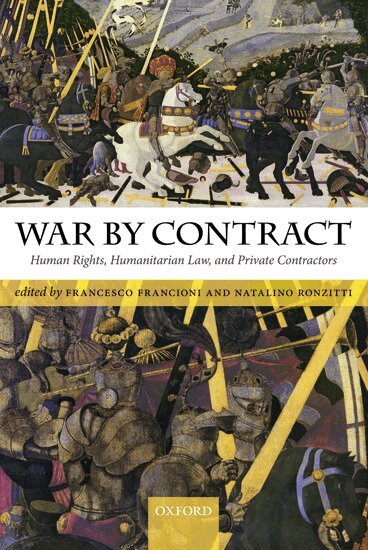
The growth in scope and importance of the private military and security industry in the past decade has challenged the role of the state as the main provider of defence and security functions. At the same time it has put under stress the state's authority to properly oversee the conduct of private contractors and has raised the question of whether existing rules of domestic law and international law are adequate to ensure their accountability in the event of abuse. This book addresses this question through the lens of international human rights law and international humanitarian law. It presents a systematic analysis of the way in which these two bodies of international law, applicable in times of peace and in the event of armed conflict, may be interpreted and implemented in a way so as to fill possible accountability gaps. Human rights and humanitarian law obligations are analysed from the point of view of their applicability to the states involved, to international organisations, and to the companies and their individual employees. Victims' access to civil remedies and the criminal prosecution of private contractors, as well as new policy issues, such as the use of private contractors in the fight against piracy, are also covered in the book.
1 553 kr
Skickas inom 5-8 vardagar
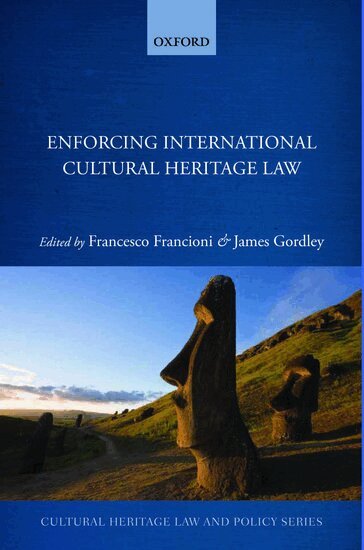
The idea of cultural heritage as an 'international public good' can be traced back to the Preamble of the 1954 Hague Convention for the Protection of Cultural Property in the Event of Armed Conflict, according to which "damage to cultural property belonging to any people whatsoever means damage to the cultural heritage of all mankind". How this idea of cultural heritage as a global public good can be reconciled with the effective enforcement of protection norms is the subject of this study. Bringing together world experts in protecting cultural heritage, Enforcing International Cultural Heritage Law examines the different ways that cultural heritage property can be protected, including protection at the international level, enforcement in domestic courts, and the role of alternative dispute resolution mechanisms. The book is divided into three sections. The first section assesses international law and analyses the interaction between international and domestic norms of public and private law. It discusses the different methods of international enforcement, the role of international and mixed criminal tribunals and courts, and the means for protecting cultural heritage in times of armed conflict. The second section addresses the role of national courts, discussing such topics as: barriers to domestic enforcement of international norms, the refusal to enforce foreign law, the difficulty of territorial boundaries in relation to underwater heritage, and the application of criminal sanctions by domestic courts. The final section of the book surveys alternatives to the legal enforcement of the norms protecting cultural heritage, including arbitration, soft law, and diplomacy.
742 kr
Skickas inom 10-15 vardagar
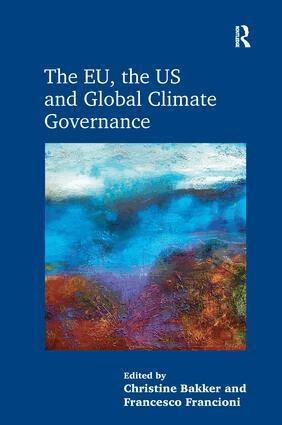
This volume presents a critical analysis of transatlantic relations in the field of environmental governance and climate change. The work focuses on understanding the possible trends in the evolution of global environmental governance and the prospects for breaking the current impasse on climate action. Drawing on research involving experts from eleven different universities and institutes, the authors provide innovative analyses on policy measures taken by the EU and the US, the world’s largest economic and commercial blocs, in a number of fields, ranging from general attitudes on environmental leadership with regard to climate change, to energy policies, new technologies for hydrocarbons extraction and carbon capture, as well as the effects of extreme weather events on climate-related political attitudes. The book examines the way in which the current attitudes of the EU and the US with regard to climate change will affect international cooperation and the building of consensus on possible climate policies, and looks to the future for international environmental governance, arguably one of the most pressing concerns of civilisation today. This book, which is based on research carried out in the context of the EU-financed FP7 research project TRANSWORLD, will appeal to academics, policy makers and practitioners seeking a deeper understanding of the challenges resulting from climate change.
1 921 kr
Skickas inom 10-15 vardagar
This volume presents a critical analysis of transatlantic relations in the field of environmental governance and climate change. The work focuses on understanding the possible trends in the evolution of global environmental governance and the prospects for breaking the current impasse on climate action. Drawing on research involving experts from eleven different universities and institutes, the authors provide innovative analyses on policy measures taken by the EU and the US, the world’s largest economic and commercial blocs, in a number of fields, ranging from general attitudes on environmental leadership with regard to climate change, to energy policies, new technologies for hydrocarbons extraction and carbon capture, as well as the effects of extreme weather events on climate-related political attitudes. The book examines the way in which the current attitudes of the EU and the US with regard to climate change will affect international cooperation and the building of consensus on possible climate policies, and looks to the future for international environmental governance, arguably one of the most pressing concerns of civilisation today. This book, which is based on research carried out in the context of the EU-financed FP7 research project TRANSWORLD, will appeal to academics, policy makers and practitioners seeking a deeper understanding of the challenges resulting from climate change.
1 567 kr
Skickas inom 10-15 vardagar
After the completion of the Uruguay Round and the adoption of the 1994 agreement establishing the WTO,the place of international trade in the context of the international legal order has radically changed. International trade law has become a subject of wide-spread interest, cutting across traditional boundaries, and engaging diverse political and legal concerns. One consquence of this development is increasing concern with the legitimacy of the WTO process, which in turn has led to the WTO becoming the focus of rancorous protest by, among others, environmental NGOs, trade unions, and human rights activists. This collection of essays by leading scholars and lawyers engaged in the policy-making process, addresses the underlying tensions and dilemmas of the WTO process and its impact upon the environment and human rights in particular. The contributors search for a balance between, on the one hand, legitimate free trade interests and, on the other, the role and limits of unilateral measures as an instrument to protect non-commercial values.The essays thus range over a host of topical questions including: trade in GMOs, biosafety in intellectual property rights, technology transfer and environmental protection, trade and labour rights, child labour standards, the EU and WTO, MERCOSUR, and many other topics. The contributors include: Thomas Schoenbaum, Andrea Bianchi, Chris McCrudden, Michael Spence, Sarah Cleveland, Patricia Hansen, Riccardo Pavoni, and Francesco Francioni.
1 687 kr
Skickas inom 10-15 vardagar
As with any rapid technological development, the biotechnology revolution is putting great strains on the ability of law to adapt to new challenges and threats. Although there is general agreement on the need to regulate biotechnology in many different fields of human activity (agriculture, life sciences, forensic science) domestic law remains deeply divided over the best approach to take. This book is the first attempt at covering the most pressing legal issues raised by the impact of biotechnologies on different categories of international norms.Through the contribution of a selected group of international scholars and experts from international organizations, the book addresses 1) the international status of genetic resources, both in areas of national jurisdiction and in common spaces such as the international sea bed area and Antarctica; 2) the relevance of environmental principles in the governance of modern biotechnologies; 3) the impact of biotechnologies on trade rules, including intellectual property law; 4) the human rights implications, especially in the field of human genetics; and 5) the intersection between general international law and regional systems, especially those developed in Europe and Latin America. The overall objective of the book is to provide an up-to-date picture of international law as it stands today and to stimulate critical reflection and further research on the solutions that will be required in years to come.
1 567 kr
Skickas inom 10-15 vardagar
This book follows and complements the previous volume Biotechnology and International Law (Hart 2006) bringing a specific focus on human rights. It is the result of a collaborative effort which brings together the contributions of a select group of experts from academia and from international organisations with the purpose of discussing the extent to which current activities in the field of biotechnology can be regulated by existing human rights principles and standards, and what gaps, if any, need to be identified and filled with new legislative initiatives. Instruments such as the UNESCO Declaration on the Human Genome (1997) and on Bioethics and Human Rights (2005) are having an impact on customary international law. But what is the relevance of these instruments with respect to traditional concepts of state responsibility and the functioning of domestic remedies against misuse of biotechnologies? Are new legislative initiatives needed, and what are the pros and cons of a race toward the adoption of new ad hoc instruments in an area of such rapid technological development?Are there risks of normative and institutional fragmentation as a consequence of the proliferation of different regulatory regimes? Can we identify a core of human rights principles that define the boundaries of legitimate uses of biotechnology, the legal status of human genetic material, as well as the implications of the definition of the human genome as 'common heritage of humanity' for the purpose of patenting of genetic inventions? These and other questions are the focus of a fascinating collection of essays which, together, help to map this emerging field of inquiry.
5 616 kr
Tillfälligt slut
2 656 kr
Skickas inom 5-8 vardagar
What is the relationship between culture and human rights? Can the idea of cultural rights, which are predicated on the distinctiveness and exclusivity of a community’s beliefs and traditions, be compatible with the concept of human rights, which are universal and ‘inherent’ to all human beings? If we accept such compatibility, what is the actual content of cultural rights? Who are their beneficiaries: individuals, or peoples or groups as collective entities? And what precise obligations do cultural rights pose upon states or other actors in international law, or for the international community as a whole? International instruments on the protection of human rights do not provide self-evident answers to these questions. This book seeks to analyse these dilemmas and to assess the impact that they are having on international law and the development of a coherent category of cultural human rights.
Del 27 - Italian Yearbook of International Law
Italian Yearbook of International Law 27 (2017)
Inbunden, Engelska, 2018
3 741 kr
Skickas inom 5-8 vardagar
Volume XXVII of the Italian Yearbook of International Law features a Symposium on sanctions and restrictive measures in international law. The Symposium addresses: i) the legal status of autonomous and collective sanctions in international law; ii) the EU practice relating to the adoption of restrictive measures; iii) the standard of review for the legality of economic sanctions under the security exception clauses in international trade agreements; iv) the sanctions against Russia by the Parliamentary Assembly of the Council of Europe; v) the implementation of targeted sanctions in the Italian legal order; and vi) the role of sanctions in the UN architecture on children and armed conflict. There follows a Focus section on the ILC’s work on the identification of customary international law, with contributions zooming in on i) the value of domestic case law in the identification and formation of customary law; ii) the identification of exceptions to customary norms; iii) the “specialty” of customary human rights law; and iv) the persistent objector rule. The volume further contains timely contributions on the referenda in Catalonia and Kurdistan, on the Treaty on the Prohibition of Nuclear Weapons, on the EU Conflict Minerals Regulation, and on the Memorandum of Understanding between Italy and Libya on cooperation to combat illegal migration. As in every volume the following sections, each containing a wealth of new information, are included: Practice of International Courts and Tribunals and Italian Practice Relating to International Law. The remaining part of the Volume contains a bibliographical index of Italian contributions to international law scholarship published in 2017, a book review section, and an analytical index for easy consultation and reference to materials cited in the Yearbook.Published with the contributions of ENI and Tenaris.Please click here for the online version and the abstracts of the articles of The Italian Yearbook of International Law.