Pierre-Marie Dupuy - Böcker
Visar alla böcker från författaren Pierre-Marie Dupuy. Handla med fri frakt och snabb leverans.
9 produkter
9 produkter
3 890 kr
Skickas inom 7-10 vardagar
This book offers a systematic analysis of the interaction between international investment law, investment arbitration and human rights, including the role of national and international courts, investor-state arbitral tribunals and alternative jurisdictions, the risks of legal and jurisdictional fragmentation, the human rights dimensions of investment law and arbitration, and the relationships of substantive and procedural principles of justice to international investment law. Part I summarizes the main conclusions of the 24 book chapters and places them into the broader context of the principles of justice, global administrative law and multilevel constitutionalism that may be relevant for the administration of justice in international economic law and investor-state arbitration. Part II includes contributions clarifying the constitutional dimensions of transnational investment disputes and investor-state arbitration, as reflected in the increasing number of arbitral awards and amicus curiae submissions addressing human rights concerns. Part III addresses the need for principle-oriented ordering and the normative congruence of diverse national, regional and worldwide legal regimes, focusing on the pertinent dispute settlement practices and legal interpretation methods of regional economic courts and human rights courts, which increasingly interpret international economic law with due regard to human rights obligations of the governments concerned. Part IV includes twelve case studies on the potential human rights dimensions of specific protection standards (e.g. fair and equitable treatment, non-discrimination), applicable law (e.g. national and international human rights law, rules on corporate social accountability), procedural law issues (e.g. amicus curiae submissions) and specific fundamental rights (e.g. the protection of human health, access to water, and protection of the environment). These case studies discuss not only the still limited examples of human rights discourse in investor-state arbitral awards; they also probe the potential legal relevance of investor-state arbitration for the judicial recognition, interpretation and balancing of primary rules, such as of investment law and human rights law, in the light of the principles of justice as defined by national and international law.
1 116 kr
Skickas inom 7-10 vardagar
This book offers a systematic analysis of the interaction between international investment law, investment arbitration and human rights, including the role of national and international courts, investor-state arbitral tribunals and alternative jurisdictions, the risks of legal and jurisdictional fragmentation, the human rights dimensions of investment law and arbitration, and the relationships of substantive and procedural principles of justice to international investment law. Part I summarizes the main conclusions of the 24 book chapters and places them into the broader context of the principles of justice, global administrative law and multilevel constitutionalism that may be relevant for the administration of justice in international economic law and investor-state arbitration. Part II includes contributions clarifying the constitutional dimensions of transnational investment disputes and investor-state arbitration, as reflected in the increasing number of arbitral awards and amicus curiae submissions addressing human rights concerns. Part III addresses the need for principle-oriented ordering and the normative congruence of diverse national, regional and worldwide legal regimes, focusing on the pertinent dispute settlement practices and legal interpretation methods of regional economic courts and human rights courts, which increasingly interpret international economic law with due regard to human rights obligations of the governments concerned. Part IV includes twelve case studies on the potential human rights dimensions of specific protection standards (e.g. fair and equitable treatment, non-discrimination), applicable law (e.g. national and international human rights law, rules on corporate social accountability), procedural law issues (e.g. amicus curiae submissions) and specific fundamental rights (e.g. the protection of human health, access to water, and protection of the environment). These case studies discuss not only the still limited examples of human rights discourse in investor-state arbitral awards; they also probe the potential legal relevance of investor-state arbitration for the judicial recognition, interpretation and balancing of primary rules, such as of investment law and human rights law, in the light of the principles of justice as defined by national and international law.
Harnessing Foreign Investment to Promote Environmental Protection
Incentives and Safeguards
Inbunden, Engelska, 2013
1 521 kr
Skickas inom 7-10 vardagar
Harnessing Foreign Investment to Promote Environmental Protection investigates the main challenges facing the implementation of environmental protection and the synergies between foreign investment and environmental protection. Adopting legal, economic and political perspectives, the contributing authors analyse the various incentives which encourage foreign investment into pro-environment projects (such as funds, project-finance, market mechanisms, payments-for-ecosystem services and insurance) and the safeguards against its potentially harmful effects (investment regulation, CSR and accountability mechanisms, contracts and codes of conduct).
997 kr
Skickas inom 7-10 vardagar
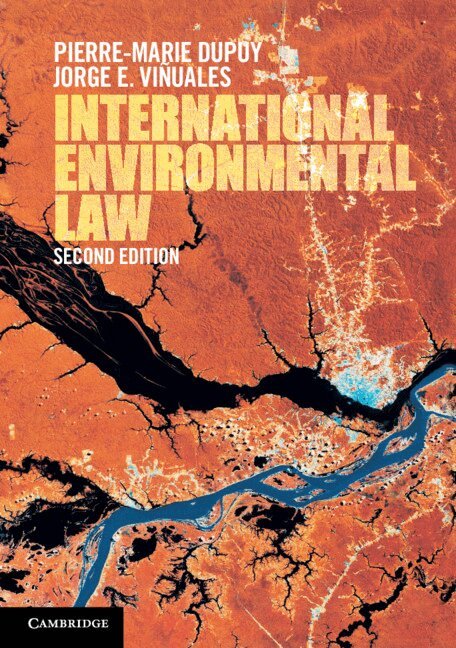
International Environmental Law offers a concise, conceptually clear, and legally rigorous introduction to contemporary international environmental law and practice. The book covers all major environmental agreements, paying particular attention to their underlying structure, main legal provisions, and practical operation. It blends legal and policy analysis, making extensive reference to the jurisprudence and scholarship, and addressing the interconnections with other areas of international law, including human rights, humanitarian law, trade and foreign investment. The material is structured into four sections - foundations, substantive regulation, implementation, and influence on other areas of international law - which help the reader to navigate the different areas of international environmental law. Each chapter includes charts summarising the main components of the relevant legal frameworks and provides a detailed bibliography. Suitable for practicing and academic international lawyers who want an accessible, up-to-date introduction to contemporary international environmental law, as well as non-lawyers seeking a concise and clear understanding of the subject.
542 kr
International Environmental Law offers a concise, conceptually clear, and legally rigorous introduction to contemporary international environmental law and practice. The book covers all major environmental agreements, paying particular attention to their underlying structure, main legal provisions, and practical operation. It blends legal and policy analysis, making extensive reference to the jurisprudence and scholarship, and addressing the interconnections with other areas of international law, including human rights, humanitarian law, trade and foreign investment. The material is structured into four sections - foundations, substantive regulation, implementation, and influence on other areas of international law - which help the reader to navigate the different areas of international environmental law. Each chapter includes charts summarising the main components of the relevant legal frameworks and provides a detailed bibliography. Suitable for practicing and academic international lawyers who want an accessible, up-to-date introduction to contemporary international environmental law, as well as non-lawyers seeking a concise and clear understanding of the subject.
Harnessing Foreign Investment to Promote Environmental Protection
Incentives and Safeguards
Häftad, Engelska, 2015
540 kr
Skickas inom 7-10 vardagar
Harnessing Foreign Investment to Promote Environmental Protection investigates the main challenges facing the implementation of environmental protection and the synergies between foreign investment and environmental protection. Adopting legal, economic and political perspectives, the contributing authors analyse the various incentives which encourage foreign investment into pro-environment projects (such as funds, project-finance, market mechanisms, payments-for-ecosystem services and insurance) and the safeguards against its potentially harmful effects (investment regulation, CSR and accountability mechanisms, contracts and codes of conduct).
5 114 kr
Skickas inom 7-10 vardagar
International custom "as evidence of a general practice accepted as law", is considered one of the two main sources of international law as it primarily derives from the conduct of sovereign States, but is also closely connected with the role of the international judge when identifying the applicable customary rule, a function it shares with the bodies in charge of its codification (and progressive development), starting with the International Law Commission. Though mainly considered to be general international law, international custom has a complex relationship with many specific fields of law and specific regions of the world. The editor provides comprehensive research published in the last seven decades, invaluable to everyone interested in the field of customary international law.
1 724 kr
Skickas inom 7-10 vardagar
The increasing role that NGOs play at different levels of legal relevance - from treaty-making to rule implementation, and from support to judges to aid delivery - calls for reconsideration of the international legal status of those organizations. This book shows that the degree of flexibility currently enjoyed by NGOs in fields as varied as human rights, the environment and the European Union development cooperation policy constitutes the best arena for all actors involved, with the consequences that the instances where more strict regulation of NGOs' participation is desirable are very limited.With each chapter focusing on a different modality of NGO participation in international affairs (from formalised legal statuses to informal ways of dealing with issues of international relevance), this book will be of great interest to academics specialised in international law, political scientists, international officials working for both international organisations and non-governmental organisations, and legal practitioners (legal counsels of international organisations, lawyers and judges).
Roots of International Law / Les fondements du droit international
Liber Amicorum Peter Haggenmacher
Inbunden, Engelska, 2013
3 798 kr
Skickas inom 5-8 vardagar
This collection of essays gathers contributions from leading international lawyers from different countries, generations and angles with the aim of highlighting the multifaceted history of international law. This volume questions and analyses the origins and foundations of the international legal system. A particular attention is devoted to Hugo Grotius as one of the founding fathers of the law of nations. Several contributions further question the positivist tradition initiated by Vattel and endorsed by scholars of the 19th Century. This immersion in the intellectual origins of international law is enriched by an inquiry into the practice of the law of nations, including its main patterns and changing evolution as well as the role of non-western traditions and the impact of colonization. Le présent ouvrage réunit les contributions de juristes internationaux reconnus en vue d’éclairer les multiples facettes de l’histoire du droit international public. L’ouvrage analyse et questionne les origines et les fondements de l’ordre juridique international. Une attention toute particulière est dédiée à Hugo Grotius l’un des pères fondateurs du droit international. D’autres contributions questionnent également la tradition positiviste initiée par Vattel et confortée par la doctrine du 19ème siècle. Cette immersion dans les origines doctrinales du système juridique international est enrichie par l’étude de la pratique du droit international public, son évolution ainsi que le rôle des traditions non-occidentales et l’impact de la colonisation.