Andrea Castagnola – författare
Visar alla böcker från författaren Andrea Castagnola. Handla med fri frakt och snabb leverans.
10 produkter
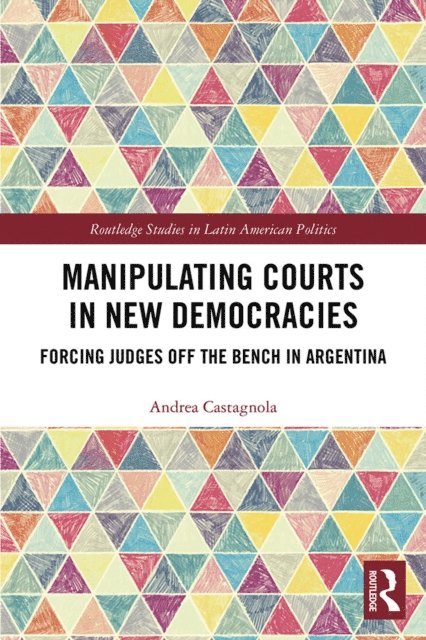
Manipulating Courts in New Democracies
Forcing Judges off the Bench in Argentina
Häftad, 2019
837 kr
Lägg i varukorg
When can the Executive manipulate the composition of a Court? What political factors explain judicial instability on the bench? Using original field data from Argentina's National Supreme Court and all twenty-four Provincial Supreme Courts, Andrea Castagnola develops a novel theory to explain …
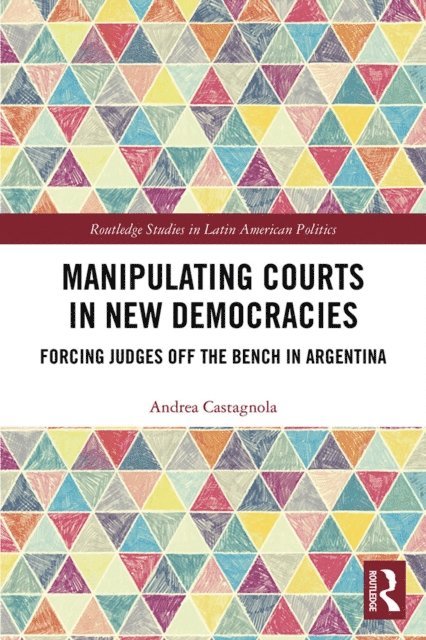
Manipulating Courts in New Democracies
Forcing Judges off the Bench in Argentina
Inbunden, 2017
2526 kr
Lägg i varukorg
When can the Executive manipulate the composition of a Court? What political factors explain judicial instability on the bench? Using original field data from Argentina's National Supreme Court and all twenty-four Provincial Supreme Courts, Andrea Castagnola develops a novel theory to explain …
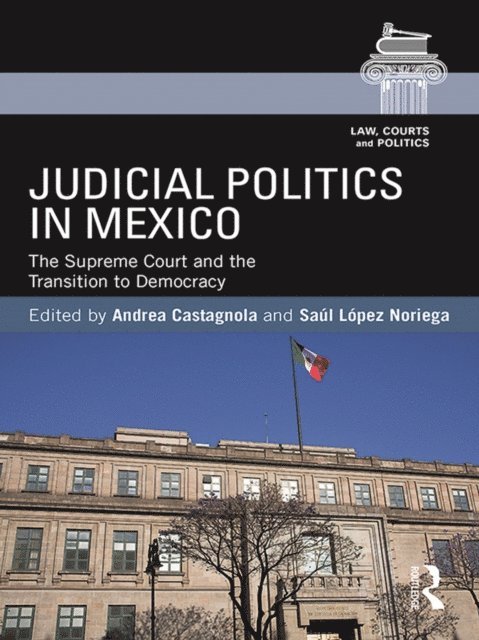
Judicial Politics in Mexico
The Supreme Court and the Transition to Democracy
Av Andrea Castagnola, Saul Lopez Noriega
Inbunden, 2016
2526 kr
Lägg i varukorg
After more than seventy years of uninterrupted authoritarian government headed by the Partido Revolucionario Institucional (PRI), Mexico formally began the transition to democracy in 2000. Unlike most other new democracies in Latin America, no special Constitutional Court was set up, nor was there …
Judicial Politics in Mexico
The Supreme Court and the Transition to Democracy
Av Andrea Castagnola, Saul Lopez Noriega
Häftad, 2016
703 kr
Lägg i varukorg
After more than seventy years of uninterrupted authoritarian government headed by the Partido Revolucionario Institucional (PRI), Mexico formally began the transition to democracy in 2000. Unlike most other new democracies in Latin America, no special Constitutional Court was set up, nor was there …
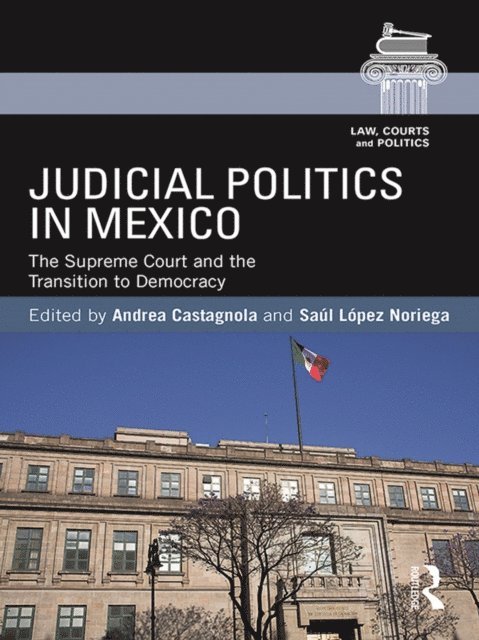
Judicial Politics in Mexico
The Supreme Court and the Transition to Democracy
Av Saul Lopez Noriega, Andrea Castagnola
E-bok, 2016
901 kr
Lägg i varukorg
After more than seventy years of uninterrupted authoritarian government headed by the Partido Revolucionario Institucional (PRI), Mexico formally began the transition to democracy in 2000. Unlike most other new democracies in Latin America, no special Constitutional Court was set up, nor was there …
Judicial Politics in Mexico
The Supreme Court and the Transition to Democracy
Av Saul Lopez Noriega, Andrea Castagnola
E-bok, 2016
901 kr
Lägg i varukorg
After more than seventy years of uninterrupted authoritarian government headed by the Partido Revolucionario Institucional (PRI), Mexico formally began the transition to democracy in 2000. Unlike most other new democracies in Latin America, no special Constitutional Court was set up, nor was there …
Manipulating Courts in New Democracies
Forcing Judges off the Bench in Argentina
E-bok, 2017
967 kr
Lägg i varukorg
When can the Executive manipulate the composition of a Court? What political factors explain judicial instability on the bench? Using original field data from Argentina''s National Supreme Court and all twenty-four Provincial Supreme Courts, Andrea Castagnola develops a novel theory to explain …
Manipulating Courts in New Democracies
Forcing Judges off the Bench in Argentina
E-bok, 2017
988 kr
Lägg i varukorg
When can the Executive manipulate the composition of a Court? What political factors explain judicial instability on the bench? Using original field data from Argentina''s National Supreme Court and all twenty-four Provincial Supreme Courts, Andrea Castagnola develops a novel theory to explain …
Los derechos humanos y la violencia: Estado, instituciones y sociedad civil
Av Nacori Lopez, Jairo Antonio Lopez Pacheco m. fl.
E-bok, 2021
83 kr
Lägg i varukorg
Los derechos humanos pueden ser analizados como normas pero también como demandas políticas. A medida que se hacen más complejas las ideas de violencia y de derechos humanos, la relación "a más violencia, más violaciones de derechos" ya no es unívoca ni unidireccional, pues la violencia también …
Los derechos humanos y la violencia
Estado, instituciones y sociedad civil
Av Julio Rios Figueroa, Andrea Pozas m. fl.
E-bok, 2015
85 kr
Lägg i varukorg
Este libro es el fruto del trabajo y la reflexión que llevamos a cabo a lo largo dedos años en el seminario de investigación "Democracia y derechos humanos"de la Flacso México (en adelante el seminario). En este participan tanto profeso-rescomo estudiantes de diversas instituciones académicas. Se …