Andrea Liverani – författare
Visar alla böcker från författaren Andrea Liverani. Handla med fri frakt och snabb leverans.
3 produkter
3 produkter
833 kr
Skickas inom 10-15 vardagar
Between 1987 and today Algeria has been engaged in a conflict pitching the army against Islamist guerilla groups which has killed more than 200.000 people. During the same period, Algeria also witnessed the explosion of more than 70,000 voluntary associations, making it one of the most civic-dense countries in the Arab world. This book analyses the development of these association in Algeria and the state’s attempt to retain political legitimacy.Starting from a critique of portrayals of Algerian ‘civil society’ as a force conducive to democratization, the study examines the changing relationship of the state to voluntary associations in both the colonial and post-colonial eras. An in-depth assessment of the social bases of the associative sphere then leads to questioning its independence from the state, and highlights the role of the associative sector in tempering the fracture between the state and those social groups that most suffered from the collapse of Algeria’s post colonial political framework. Finally, the study analyses donors’ use of advocacy and service-delivery associations in democracy-promotion programmes, arguing that their focus on the country’s ‘civil society’ contributed to the state’s efforts to preserve its international legitimacy.Based on in-depth examination of existing literature and extensive fieldwork conducted at a time when Algeria was still closed to foreign researchers because of the conflict, Andrea Liverani challenges the mainstream views on the political role of associations in democracy, illustrating how ‘civil society’ can work towards the conservation of an authoritarian order, rather than simply towards democratic change. A lucid contribution to an emerging scholarship, Civil Society in Algeria will appeal to students, academic experts, and NGO/aid practitioners.
2 246 kr
Skickas inom 10-15 vardagar
Between 1987 and today Algeria has been engaged in a conflict pitching the army against Islamist guerilla groups which has killed more than 200.000 people. During the same period, Algeria also witnessed the explosion of more than 70,000 voluntary associations, making it one of the most civic-dense countries in the Arab world. This book analyses the development of these association in Algeria and the state’s attempt to retain political legitimacy.Starting from a critique of portrayals of Algerian ‘civil society’ as a force conducive to democratization, the study examines the changing relationship of the state to voluntary associations in both the colonial and post-colonial eras. An in-depth assessment of the social bases of the associative sphere then leads to questioning its independence from the state, and highlights the role of the associative sector in tempering the fracture between the state and those social groups that most suffered from the collapse of Algeria’s post colonial political framework. Finally, the study analyses donors’ use of advocacy and service-delivery associations in democracy-promotion programmes, arguing that their focus on the country’s ‘civil society’ contributed to the state’s efforts to preserve its international legitimacy.Based on in-depth examination of existing literature and extensive fieldwork conducted at a time when Algeria was still closed to foreign researchers because of the conflict, Andrea Liverani challenges the mainstream views on the political role of associations in democracy, illustrating how ‘civil society’ can work towards the conservation of an authoritarian order, rather than simply towards democratic change. A lucid contribution to an emerging scholarship, Civil Society in Algeria will appeal to students, academic experts, and NGO/aid practitioners.
274 kr
Skickas inom 10-15 vardagar
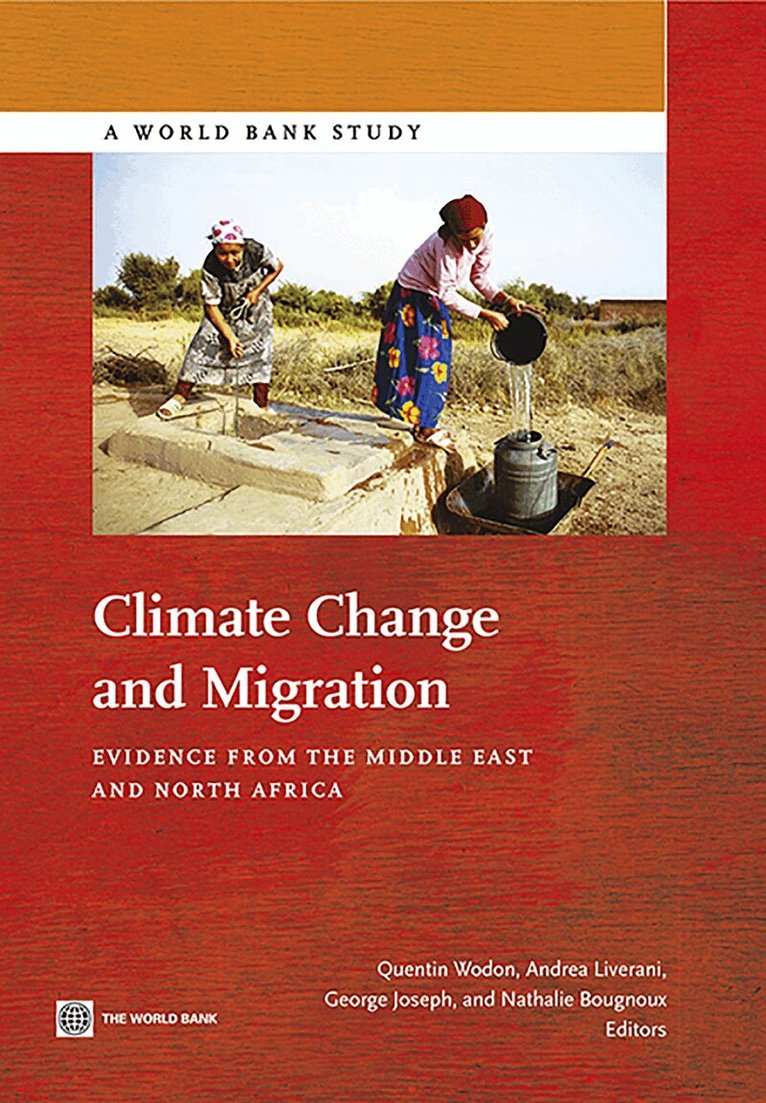
Climate change and migration are major concerns in the MENA region, yet the empirical evidence on the impact of climate change and extreme weather events on migration remains limited. Information is broadly lacking on how households in vulnerable areas perceive changes in the climate, how they are affected by extreme weather events, whether they benefit from community and government programmes to help them cope with and adapt to a changing climate, and how these conditions influence the decision of household members to migrate, either temporarily or permanently. This introductory chapter summarises briefly the main results of the study which relied on existing data as well as focus groups and new household surveys collected in 2011 in Algeria, Egypt, Morocco, Syria, and Yemen. The results suggest that households do perceive important changes in the climate, and that many households are being affected by extreme weather events resulting in losses in income, crops, and livestock. The coping and adaptation strategies used by households to deal with weather shocks are diverse, but also limited, with most households not able to recover from the negative impact of weather shocks. The ability of community level responses and government programmes to support households is also very limited. Finally, while climate change is not today the main driver of migration flows, it does appear to contribute substantially to these flows, so that worsening climatic conditions are likely to exacerbate future migration flows.