Andreas F› Llesdal - Böcker
Visar alla böcker från författaren Andreas F Llesdal. Handla med fri frakt och snabb leverans.
5 produkter
5 produkter
428 kr
Skickas inom 7-10 vardagar
What kind of European Union do top Commission officials want? Should the European Union be supranational or intergovernmental? Should it promote market-liberalism or regulated capitalism? Should the Commission be Europe's government or its civil service? This 2002 book examines top officials' preferences on these questions through analysis of unique data from 137 interviews. Understanding the forces that shape human preferences is the subject of intense debate. Hooghe demonstrates that the Commission has difficulty shaping its employees' preferences in the fluid multi-institutional context of the European Union. Top officials' preferences are better explained by experiences outside rather than inside the Commission: political party, country, and prior work leave deeper imprints than directorate-general or cabinet. Preferences are also influenced more by internalized values than by self-interested career calculation. Hooghe's findings are surprising, and will challenge a number of common assumptions about the workings and motives of the European Commission.
428 kr
Skickas inom 7-10 vardagar
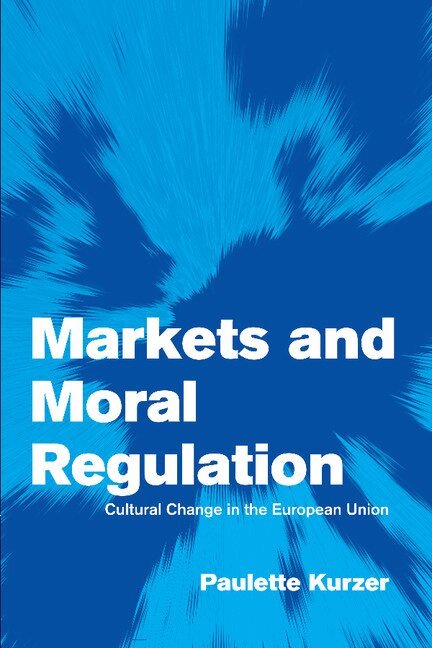
Does European integration influence national cultures and social policies? Is Europe's fabled cultural diversity diminishing? In this book, Paulette Kurzer examines these important and topical questions by comparing the Irish abortion ban, Finnish and Swedish drinking restrictions, and Dutch drug decriminalization. Employing a synthesis of constructivist and institutionalist theories, Kurzer demonstrates that domestic shifts in values and attitudes, spurred along by the impact of EC/EU market integration, are in fact bringing about a convergence in European morality norms. Alcohol control policies are forced to liberalize, the Irish abortion proscription is being redefined, and Dutch drug toleration is pushed into a more punitive direction. Markets and Moral Regulation argues that a crucial agency is European law and its role as a market regulator: as market forces invade these cultural and moral spheres, protective barriers disintegrate. The result is that cultural and social domains are increasingly exposed to the influence of market competition.
428 kr
Skickas inom 7-10 vardagar
Why did Western European states agree to the enlargement of the EU and NATO? Frank Schimmelfennig analyzes the history of the enlargement process and develops a theoretical approach of 'rhetorical action' to explain why it occurred. While rationalist theory explains the willingness of East European states to join the NATO and EU, it does not explain why member states decided to admit them. Using original data, Schimmelfennig shows that expansion to the East can be understood in terms of liberal democratic community building. Drawing on the works of Jon Elster and Erving Goffman, he demonstrates that the decision to expand was the result of rhetorical action. Candidates and their supporters used arguments based on collective identity, norms and values of the Western community to shame opponents into acquiescing to enlargement. This landmark book makes an enormous contribution to theory in international relations and to the study of European politics.
428 kr
Skickas inom 7-10 vardagar
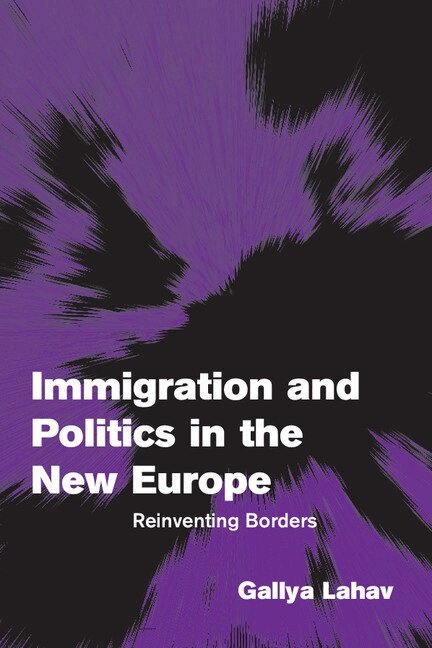
With almost a quarter of the world's migrants, Europe has been attempting to regulate migration and harmonize immigration policy at the European level. The central dilemma exposed is how liberal democracies can reconcile the need to control the movement of people with the desire to promote open borders, free markets and liberal standards. Gallya Lahav's book traces ten years of public opinion and elite attitudes toward immigration cross-nationally to show how and why increasing EU integration may not necessarily lead to more open immigration outcomes. Empirical evidence reveals that support from both elite and public opinion has led to the adoption of restrictive immigration policies despite the requirements of open borders. Unique in bringing together original data on European legislators and national elites, longitudinal data on public opinion and institutional and policy analyses, this 2004 study provides an important insight into the processes of European integration, and globalization more broadly.
1 192 kr
Skickas inom 7-10 vardagar
With almost a quarter of the world's migrants, Europe has been attempting to regulate migration and harmonize immigration policy at the European level. The central dilemma exposed is how liberal democracies can reconcile the need to control the movement of people with the desire to promote open borders, free markets and liberal standards. Gallya Lahav's book traces ten years of public opinion and elite attitudes toward immigration cross-nationally to show how and why increasing EU integration may not necessarily lead to more open immigration outcomes. Empirical evidence reveals that support from both elite and public opinion has led to the adoption of restrictive immigration policies despite the requirements of open borders. Unique in bringing together original data on European legislators and national elites, longitudinal data on public opinion and institutional and policy analyses, this 2004 study provides an important insight into the processes of European integration, and globalization more broadly.