Liesbet Hooghe – författare
1 175 kr
Läs direkt efter köp
1 460 kr
Läs direkt efter köp
588 kr
Läs direkt efter köp
588 kr
Läs direkt efter köp
344 kr
Läs direkt efter köp
344 kr
Läs direkt efter köp
1 335 kr
Läs direkt efter köp
1 175 kr
Läs direkt efter köp
3 041 kr
Skickas inom 5-8 vardagar
1 565 kr
Skickas inom 7-10 vardagar
2 106 kr
Skickas inom 5-8 vardagar
602 kr
Skickas inom 5-8 vardagar
1 970 kr
Skickas inom 3-6 vardagar
366 kr
Skickas inom 5-8 vardagar
1 652 kr
Skickas inom 5-8 vardagar
841 kr
Skickas inom 10-15 vardagar
2 410 kr
Skickas inom 10-15 vardagar
464 kr
Skickas inom 7-10 vardagar
854 kr
Skickas inom 7-10 vardagar
605 kr
Skickas inom 10-15 vardagar
957 kr
Läs direkt efter köp
Most countries around the globe have one or two levels of regional or intermediate government, yet we have little systematic idea of how much authority they wield, or how this has changed over time.
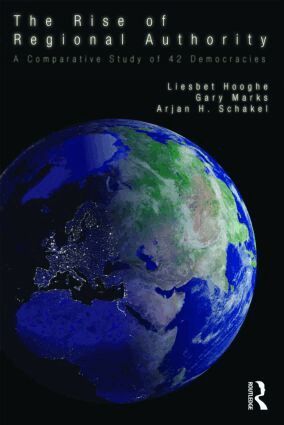
This book measures and explains the formal authority of intermediate or regional government in 42 advanced democracies, including the 27 EU member states. It tracks regional authority on an annual basis from 1950 to 2006. The measure reveals wide variation both cross-sectionally and over time. The authors examine four influences – functional pressures, democratization, European integration, and identity – to explain regionalization over the past half-century.
This unique and comprehensive volume will be a vital resource for students and scholars of comparative politics, public administration and public management, federalism, democratization, nationalism, and multilevel governance.
957 kr
Läs direkt efter köp
Most countries around the globe have one or two levels of regional or intermediate government, yet we have little systematic idea of how much authority they wield, or how this has changed over time.
This book measures and explains the formal authority of intermediate or regional government in 42 advanced democracies, including the 27 EU member states. It tracks regional authority on an annual basis from 1950 to 2006. The measure reveals wide variation both cross-sectionally and over time. The authors examine four influences – functional pressures, democratization, European integration, and identity – to explain regionalization over the past half-century.
This unique and comprehensive volume will be a vital resource for students and scholars of comparative politics, public administration and public management, federalism, democratization, nationalism, and multilevel governance.