Tobias Lenz - Böcker
Visar alla böcker från författaren Tobias Lenz. Handla med fri frakt och snabb leverans.
8 produkter
8 produkter
Measuring International Authority
A Postfunctionalist Theory of Governance, Volume III
Inbunden, Engelska, 2017
1 464 kr
Skickas inom 7-10 vardagar
This is the third of five ambitious volumes theorizing the structure of governance above and below the central state. This book is written for those interested in the character, causes, and consequences of governance within the state.This book sets out a measure of authority for seventy-six international organizations (IOs) from 1950, or the time of their establishment, to 2010 which can allow researchers to test expectations about the character, sources, and consequences of international governance. The international organizations considered are regional (e.g. the EU, Andean Community, NAFTA), cross-regional (e.g. Commonwealth of Nations, the Organization of Islamic Cooperation), and global (e.g. the UN, World Bank, WTO). Firstly, the book introduces carefully constructed estimates for the scope and depth of authority exercised by international governments. The estimates are unique in their comparative scope, their specificity, and time span. Secondly, it describes describe broad trends in IO authority by comparing delegation and pooling, over time, across IOs, and across decision areas. Thirdly, it presents the evidence gathered by the authors to estimate international authority by carefully discussing forty-seven international organizations, and showing how their bodies are composed, what decisions each body makes, and how they make decisions.Transformations in Governance is a major new academic book series from Oxford University Press. It is designed to accommodate the impressive growth of research in comparative politics, international relations, public policy, federalism, environmental and urban studies concerned with the dispersion of authority from central states up to supranational institutions, down to subnational governments, and side-ways to public-private networks. It brings together work that significantly advances our understanding of the organization, causes, and consequences of multilevel and complex governance. The series is selective, containing annually a small number of books of exceptionally high quality by leading and emerging scholars. The series targets mainly single-authored or co-authored work, but it is pluralistic in terms of disciplinary specialization, research design, method, and geographical scope. Case studies as well as comparative studies, historical as well as contemporary studies, and studies with a national, regional, or international focus are all central to its aims. Authors use qualitative, quantitative, formal modeling, or mixed methods. A trade mark of the books is that they combine scholarly rigour with readable prose and an attractive production style. The series is edited by Liesbet Hooghe and Gary Marks of the University of North Carolina, Chapel Hill, and Walter Mattli of the University of Oxford.
1 863 kr
Skickas inom 3-6 vardagar
Why do international organizations (IOs) look so different, yet so similar? The possibilities are diverse. Some international organizations have just a few member states, while others span the globe. Some are targeted at a specific problem, while others have policy portfolios as broad as national states. Some are run almost entirely by their member states, while others have independent courts, secretariats, and parliaments. Variation among international organizations appears as wide as that among states. This book explains the design and development of international organization in the postwar period. It theorizes that the basic set up of an IO responds to two forces: the functional impetus to tackle problems that spill beyond national borders and a desire for self-rule that can dampen cooperation where transnational community is thin. The book reveals both the causal power of functionalist pressures and the extent to which nationalism constrains the willingness of member states to engage in incomplete contracting. The implications of postfunctionalist theory for an IO's membership, policy portfolio, contractual specificity, and authoritative competences are tested using annual data for 76 IOs for 1950-2010.Transformations in Governance is a major academic book series from Oxford University Press. It is designed to accommodate the impressive growth of research in comparative politics, international relations, public policy, federalism, environmental and urban studies concerned with the dispersion of authority from central states up to supranational institutions, down to subnational governments, and side-ways to public-private networks. It brings together work that significantly advances our understanding of the organization, causes, and consequences of multilevel and complex governance. The series is selective, containing annually a small number of books of exceptionally high quality by leading and emerging scholars. The series targets mainly single-authored or co-authored work, but it is pluralistic in terms of disciplinary specialization, research design, method, and geographical scope. Case studies as well as comparative studies, historical as well as contemporary studies, and studies with a national, regional, or international focus are all central to its aims. Authors use qualitative, quantitative, formal modeling, or mixed methods. A trade mark of the books is that they combine scholarly rigour with readable prose and an attractive production style. The series is edited by Liesbet Hooghe and Gary Marks of the University of North Carolina, Chapel Hill, and the VU Amsterdam, and Walter Mattli of the University of Oxford.
Interorganizational Diffusion in International Relations
Regional Institutions and the Role of the European Union
Inbunden, Engelska, 2021
1 396 kr
Skickas inom 5-8 vardagar
This is an open access title available under the terms of a CC BY-NC-ND 4.0 International licence. It is free to read at Oxford Scholarship Online and offered as a free PDF download from OUP and selected open access locations.How and under what conditions does the European Union (EU) shape processes of institution building in other regional organizations? Interorganizational Diffusion in International Relations: Regional Institutions and the Role of the European Union develops and tests a theory of interorganizational diffusion in international relations that explains how successful pioneer organizations shape institutional choices in other organizations by affecting the institutional preferences and bargaining strategies of national governments. The author argues that Europe's foremost regional organization systematically affects institution building abroad, but that such influence varies across different types of organizations. Mixing quantitative and qualitative methods, it shows how the EU institutionally strengthens regional organizations through active engagement and by building its own institutions at home. Yet, the contractual nature of other regional organizations bounds this causal influence; EU influence makes a distinguishable difference primarily in those organizations that, like the EU itself, rest on an open-ended contract. Evidence for these claims is drawn from the statistical analysis of a dataset on the institutionalization of 35 regional organizations in the period from 1950 to 2017 as well as detailed single and comparative case studies on institutional creation and change in the Southern African Development Community, Mercosur, the Association of Southeast Asian Nations, and the North American Free Trade Agreement.Transformations in Governance is a major academic book series from Oxford University Press. It is designed to accommodate the impressive growth of research in comparative politics, international relations, public policy, federalism, environmental and urban studies concerned with the dispersion of authority from central states up to supranational institutions, down to subnational governments, and side-ways to public-private networks. It brings together work that significantly advances our understanding of the organization, causes, and consequences of multilevel and complex governance. The series is selective, containing annually a small number of books of exceptionally high quality by leading and emerging scholars.The series targets mainly single-authored or co-authored work, but it is pluralistic in terms of disciplinary specialization, research design, method, and geographical scope. Case studies as well as comparative studies, historical as well as contemporary studies, and studies with a national, regional, or international focus are all central to its aims. Authors use qualitative, quantitative, formal modeling, or mixed methods. A trade mark of the books is that they combine scholarly rigour with readable prose and an attractive production style.The series is edited by Liesbet Hooghe and Gary Marks of the University of North Carolina, Chapel Hill, and the VU Amsterdam, and Walter Mattli of the University of Oxford.
358 kr
Skickas inom 5-8 vardagar
Why do international organizations (IOs) look so different, yet so similar? The possibilities are diverse. Some international organizations have just a few member states, while others span the globe. Some are targeted at a specific problem, while others have policy portfolios as broad as national states. Some are run almost entirely by their member states, while others have independent courts, secretariats, and parliaments. Variation among international organizations appears as wide as that among states. This book explains the design and development of international organization in the postwar period. It theorizes that the basic set up of an IO responds to two forces: the functional impetus to tackle problems that spill beyond national borders and a desire for self-rule that can dampen cooperation where transnational community is thin. The book reveals both the causal power of functionalist pressures and the extent to which nationalism constrains the willingness of member states to engage in incomplete contracting. The implications of postfunctionalist theory for an IO's membership, policy portfolio, contractual specificity, and authoritative competences are tested using annual data for 76 IOs for 1950-2010.Transformations in Governance is a major academic book series from Oxford University Press. It is designed to accommodate the impressive growth of research in comparative politics, international relations, public policy, federalism, environmental and urban studies concerned with the dispersion of authority from central states up to supranational institutions, down to subnational governments, and side-ways to public-private networks. It brings together work that significantly advances our understanding of the organization, causes, and consequences of multilevel and complex governance. The series is selective, containing annually a small number of books of exceptionally high quality by leading and emerging scholars. The series targets mainly single-authored or co-authored work, but it is pluralistic in terms of disciplinary specialization, research design, method, and geographical scope. Case studies as well as comparative studies, historical as well as contemporary studies, and studies with a national, regional, or international focus are all central to its aims. Authors use qualitative, quantitative, formal modeling, or mixed methods. A trade mark of the books is that they combine scholarly rigour with readable prose and an attractive production style. The series is edited by Liesbet Hooghe and Gary Marks of the University of North Carolina, Chapel Hill, and the VU Amsterdam, and Walter Mattli of the University of Oxford.
The Rise of International Parliaments
Strategic Legitimation in International Organizations
Inbunden, Engelska, 2021
1 735 kr
Skickas inom 5-8 vardagar
International parliaments are on the rise. An increasing number of international organizations establishes 'international parliamentary institutions' or IPIs, which bring together members of national parliaments or - in rare cases - elected representatives of member state citizens. Yet, IPIs have generally remained powerless institutions with at best a consultative role in the decision-making process of international organizations. Why do the member states of international organizations create IPIs but do not vest them with relevant institutional powers? This study argues that neither the functional benefits of delegation nor the internalization of democratic norms answer this question convincingly. Rather, IPIs are best understood as an instrument of strategic legitimation. By establishing institutions that mimic national parliaments, governments seek to ensure that audiences at home and in the wider international environment recognize their international organizations as democratically legitimate. At the same time, they seek to avoid being effectively constrained by IPIs in international governance.The Rise of International Parliaments provides a systematic study of the establishment and empowerment of IPIs based on a novel dataset. In a statistical analysis covering the world's most relevant international organizations and a series of case studies from all major world regions, we find two varieties of international parliamentarization. International organizations with general purpose and high authority create and empower IPIs to legitimate their region-building projects domestically. Alternatively, the establishment of IPIs is induced by the international diffusion of democratic norms and prominent templates, above all that of the European Parliament.Transformations in Governance is a major academic book series from Oxford University Press. It is designed to accommodate the impressive growth of research in comparative politics, international relations, public policy, federalism, and environmental and urban studies concerned with the dispersion of authority from central states to supranational institutions, subnational governments, and public-private networks. It brings together work that advances our understanding of the organization, causes, and consequences of multilevel and complex governance. The series is selective, containing annually a small number of books of exceptionally high quality by leading and emerging scholars.The series is edited by Liesbet Hooghe and Gary Marks of the University of North Carolina, Chapel Hill, and Walter Mattli of the University of Oxford.
967 kr
Skickas inom 7-10 vardagar
The Memoirs of the AMS is devoted to the publication of new research in all areas of pure and applied mathematics. The Memoirs is designed particularly to publish long papers of groups of cognate papers in book form, and is under the supervision of the Editorial Committee of the AMS journal Transactions of the American Mathematical Society. All papers are peer-reviewed.
597 kr
Skickas inom 10-15 vardagar
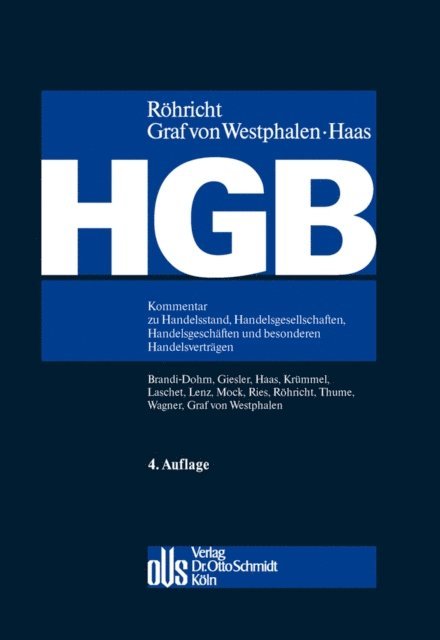
Rechtsabteilungen in Unternehmen bieten Ein- und Umsteigern aus den rechts- und steuerberatenden Berufen ein attraktives Tätigkeitsfeld. Das Werk erläutert den Weg zum Syndikus sowie den Aufbau einer Rechts- und Steuerabteilung im Unternehmen, gewährt Einblicke in die Rechtsabteilungen bestimmter Branchen und beschreibt deren berufs- und standesrechtliche Hintergründe.Neu in der 3. aktualisierten Auflage: das Spannungsfeld des Loss Adjusters und der Syndikusanwalt im inhabergeführten Mittelstand.
1 082 kr
Skickas inom 5-8 vardagar