Andreea Smaranda Aldea – författare
Visar alla böcker från författaren Andreea Smaranda Aldea. Handla med fri frakt och snabb leverans.
6 produkter
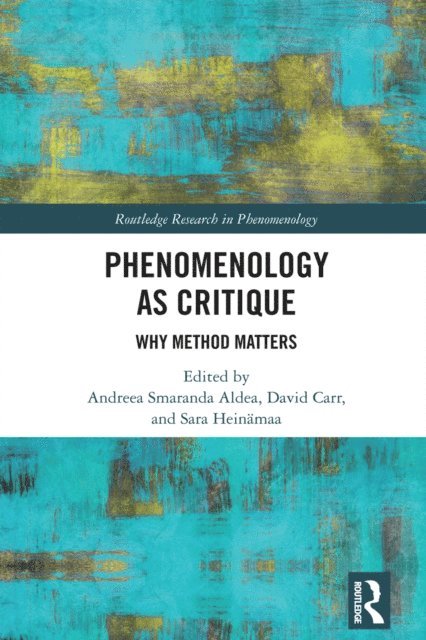
Phenomenology as Critique
Why Method Matters
Av Sara Heinamaa, David Carr m. fl.
E-bok, 2022
837 kr
Lägg i varukorg
Drawing on classical Husserlian resources as well as existentialist and hermeneutical approaches, this book argues that critique is largely a question of method. It demonstrates that phenomenological discussions of acute social and political problems draw from a rich tradition of radically critical …
Phenomenology as Critique
Why Method Matters
Av Sara Heinamaa, David Carr m. fl.
E-bok, 2022
837 kr
Lägg i varukorg
Drawing on classical Husserlian resources as well as existentialist and hermeneutical approaches, this book argues that critique is largely a question of method. It demonstrates that phenomenological discussions of acute social and political problems draw from a rich tradition of radically critical …
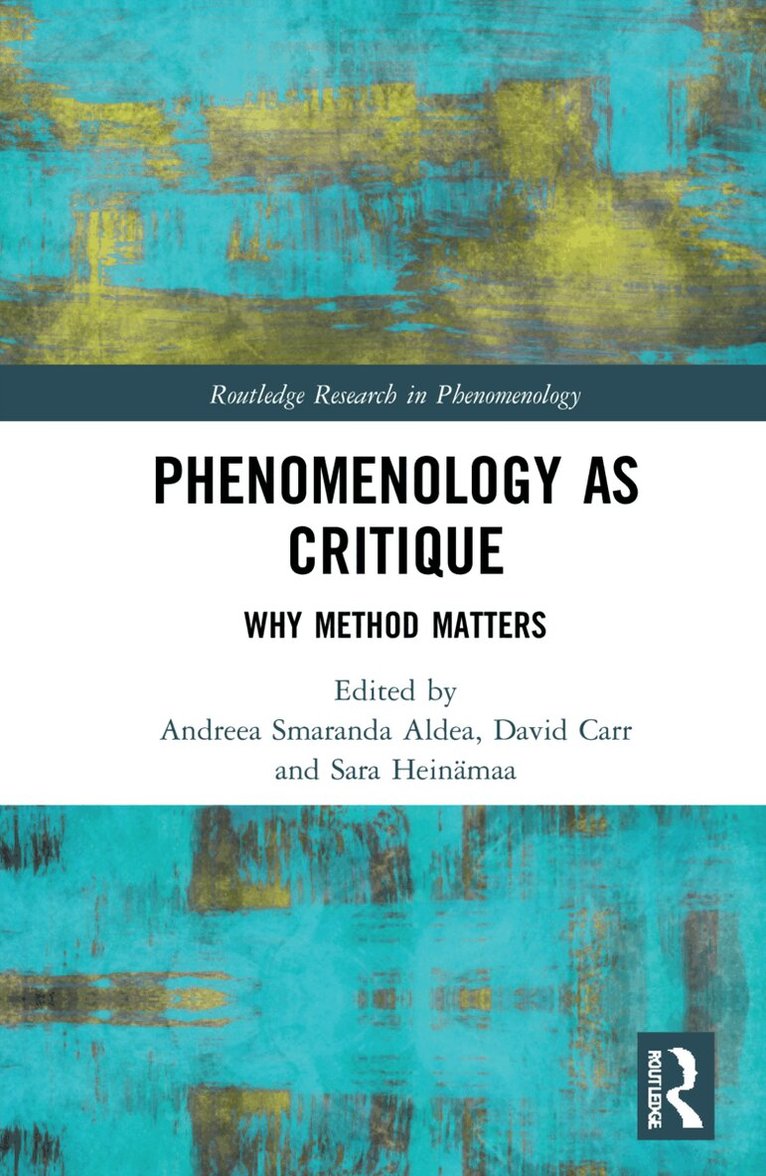
Phenomenology as Critique
Why Method Matters
Av Andreea Smaranda Aldea, David Carr m. fl.
Inbunden, 2022
2886 kr
Lägg i varukorg
Drawing on classical Husserlian resources as well as existentialist and hermeneutical approaches, this book argues that critique is largely a question of method. It demonstrates that phenomenological discussions of acute social and political problems draw from a rich tradition of radically critical …
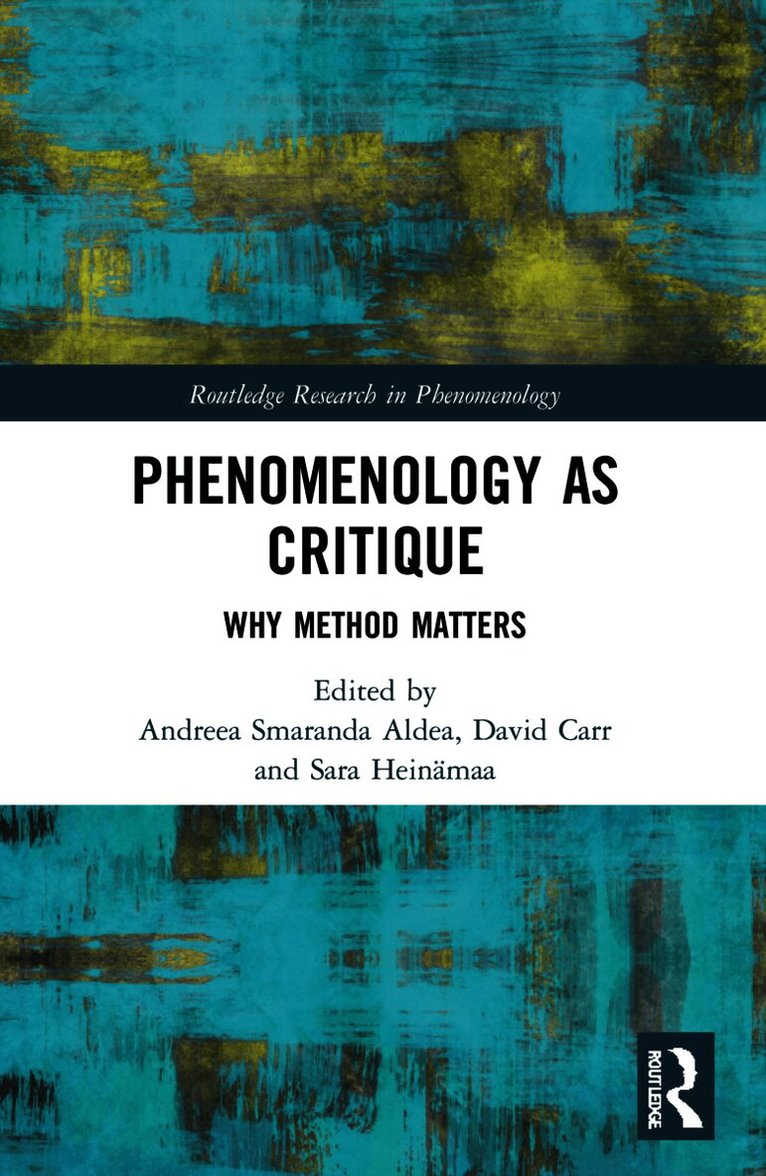
Phenomenology as Critique
Why Method Matters
Av Andreea Smaranda Aldea, David Carr m. fl.
Häftad, 2024
794 kr
Lägg i varukorg
Drawing on classical Husserlian resources as well as existentialist and hermeneutical approaches, this book argues that critique is largely a question of method. It demonstrates that phenomenological discussions of acute social and political problems draw from a rich tradition of radically critical …
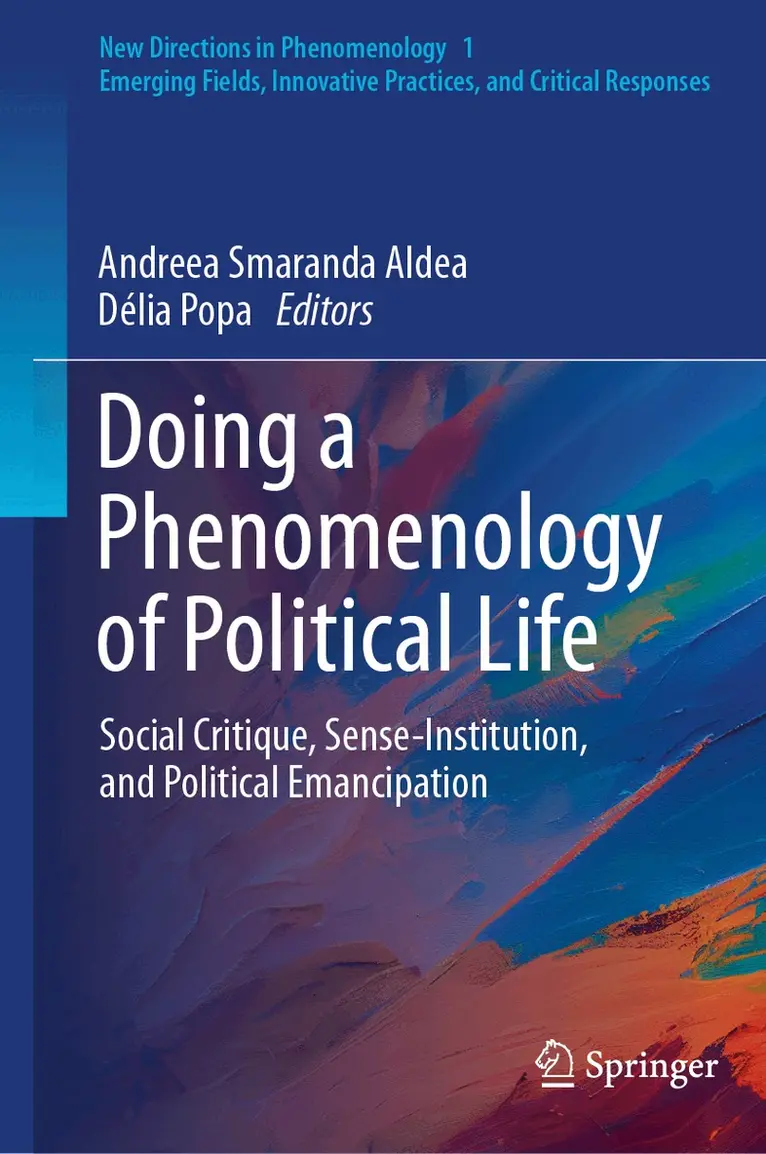
Doing a Phenomenology of Political Life
Social Critique, Sense-Institution, and Political Emancipation
Av Andreea Smaranda Aldea, Délia Popa
Inbunden, 2026
1314 kr
Lägg i varukorg
Starting from the hypothesis that all human forms of life have a political dimension – be it clearly expressed or hidden, conscious or unconscious – this volume examines the ways in which political life can be fruitfully analyzed with the help of phenomenological methodologies. Examining issues of …
Doing a Phenomenology of Political Life
Social Critique, Sense-Institution, and Political Emancipation
Av Delia Popa, Andreea Smaranda Aldea
E-bok, 2025
1746 kr
Lägg i varukorg
Starting from the hypothesis that all human forms of life have a political dimension – be it clearly expressed or hidden, conscious or unconscious – this volume examines the ways in which political life can be fruitfully analyzed with the help of phenomenological methodologies. Examining issues of …