Andrew Berg - Böcker
Visar alla böcker från författaren Andrew Berg. Handla med fri frakt och snabb leverans.
3 produkter
3 produkter
1 236 kr
Skickas inom 7-10 vardagar
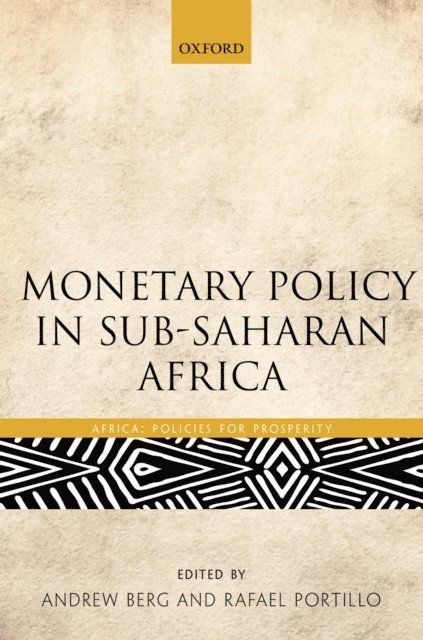
Low-income countries in sub-Saharan Africa present unique monetary policy challenges, from the high share of volatile food in consumption to underdeveloped financial markets; however most academic and policy work on monetary policy is aimed at much richer countries. Can economic models and methods invented for rich countries even be adapted and applied here? How does and should monetary policy work in sub-Saharan African? Monetary Policy in Sub-Saharan Africa answers these questions and provides practical tools and policy guidance to respond to the complex challenges of this region.Most countries in sub-Saharan Africa have made great progress in stabilizing inflation over the past two decades. As they have achieved a degree of basic macroeconomic stability, policymakers are looking to avoid policy misalignments and respond appropriately to shocks in order to achieve stability and growth. Officially, they often have adopted "money targeting" frameworks, a regime that has long disappeared from almost all advanced and even emerging-market discussions. In practice, though, they are in many cases finding current regimes lacking, with opaque and sometimes inconsistent objectives, inadequate transmission of policy to the economy, and difficulties in responding to supply shocks. Monetary Policy in Sub-Saharan Africa takes a new approach by applying dynamic general equilibrium models suitably adapted to reflect key features of low-income countries for the analysis of monetary policy in sub-Saharan African countries.Using a progressive approach derived from the International Monetary Fund's extensive practice and research, Monetary Policy in Sub-Saharan Africa seeks to address what we know about the empirics of monetary transmission in low-income countries, how monetary policy can work in countries characterized by underdeveloped financial markets and opaque policy regimes, and how we can use empirical and theoretical methods largely derived in advanced countries to answer these questions. It then uses these key topics to guide policymakers as they attempt to adjust food price, terms of trade, aid shocks, and the effects of the global financial crisis.
1 066 kr
Skickas inom 7-10 vardagar
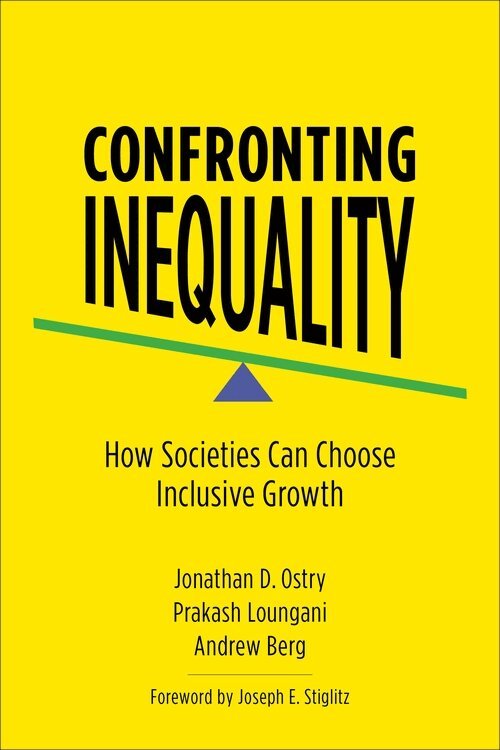
Inequality has drastically increased in many countries around the globe over the past three decades. The widening gap between the very rich and everyone else is often portrayed as an unexpected outcome or as the tradeoff we must accept to achieve economic growth. In this book, three International Monetary Fund economists show that this increase in inequality has in fact been a political choice—and explain what policies we should choose instead to achieve a more inclusive economy.Jonathan D. Ostry, Prakash Loungani, and Andrew Berg demonstrate that the extent of inequality depends on the policies governments choose—such as whether to let capital move unhindered across national boundaries, how much austerity to impose, and how much to deregulate markets. While these policies do often confer growth benefits, they have also been responsible for much of the increase in inequality. The book also shows that inequality leads to weaker economic performance and proposes alternative policies capable of delivering more inclusive growth. In addition to improving access to health care and quality education, they call for redistribution from the rich to the poor and present evidence showing that redistribution does not hurt growth. Accessible to scholars across disciplines as well as to students and policy makers, Confronting Inequality is a rigorous and empirically rich book that is crucial for a time when many fear a new Gilded Age.
268 kr
Skickas inom 7-10 vardagar
Inequality has drastically increased in many countries around the globe over the past three decades. The widening gap between the very rich and everyone else is often portrayed as an unexpected outcome or as the tradeoff we must accept to achieve economic growth. In this book, three International Monetary Fund economists show that this increase in inequality has in fact been a political choice—and explain what policies we should choose instead to achieve a more inclusive economy.Jonathan D. Ostry, Prakash Loungani, and Andrew Berg demonstrate that the extent of inequality depends on the policies governments choose—such as whether to let capital move unhindered across national boundaries, how much austerity to impose, and how much to deregulate markets. While these policies do often confer growth benefits, they have also been responsible for much of the increase in inequality. The book also shows that inequality leads to weaker economic performance and proposes alternative policies capable of delivering more inclusive growth. In addition to improving access to health care and quality education, they call for redistribution from the rich to the poor and present evidence showing that redistribution does not hurt growth. Accessible to scholars across disciplines as well as to students and policy makers, Confronting Inequality is a rigorous and empirically rich book that is crucial for a time when many fear a new Gilded Age.