• Fri frakt över 249 kr
  • •
  • Snabba leveranser
  • •
  • Billiga böcker
Kundservice

Du är på sajten för privatpersoner.

Företag, bibliotek eller offentlig verksamhet?

Du handlar på classic.bokus.com, där alla dina funktioner finns intakta.
Till classic.bokus.com
Bokus logotyp. Gå till startsidan.
  • Erbjudanden
  • Nyheter
  • Student
  • Topplistor
  • Barn & ungdom
  • Bokus Play
  • E-böcker
  • Pocketböcker
  • Spel & pussel

10% rabatt på allt med kod NYSTART10 →

Sidfot

Mina sidor

    Hjälp

    • Kundservice
    • Vanliga frågor och svar
    • Frakt och leverans
    • Retur vid ångerrätt
    • Reklamera vara
    • Betalning
    • Köpvillkor
    • Allmänna villkor
    • Information om webbplatsens tillgänglighet

    Om Bokus

    • Om oss
    • Pressrum
    • För studenter
    • För företag
    • För bibliotek och offentlig verksamhet
    • För leverantörer
    • Hållbarhet

    Populärt

    • Aktuella erbjudanden
    • Presentkort
    • Studentlitteratur
    • Nya böcker
    • Topplistor
    • Signerade böcker
    • Engelska böcker

    Inspiration

    • Boktips
    • BookTok
    • Populära bokserier
    • Barnbokskaraktärer
    • Populära författare
    Logotyp för Bokus
    Följ oss på Facebook (extern länk)Följ oss på Instagram (extern länk)Följ oss på YouTube (extern länk)Följ oss på TikTok (extern länk)
    bokus @ CookiesAnpassa cookiesIntegritetspolicyKöpvillkor
    Till Citymail hemsida (extern länk)Till Budbee hemsida (extern länk)Till Postnord hemsida (extern länk)Till Schenker hemsida (extern länk)Till Early Bird hemsida (extern länk)Till Walleys hemsida (extern länk)
    1. Ekonomi och Ledarskap
    2. Nationalekonomi
    3. Mikroekonomi

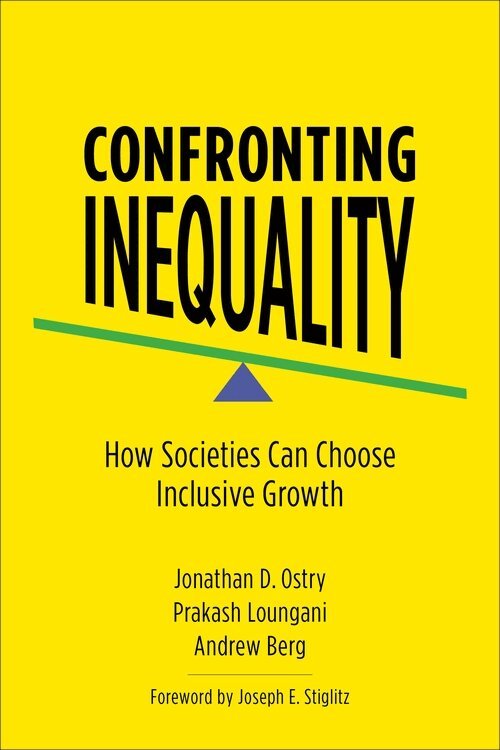
    Confronting Inequality

    How Societies Can Choose Inclusive Growth

    AvJonathan D. Ostry,Prakash Loungani

    Inbunden, Engelska, 2019

    1 098 kr

    Beställningsvara. Skickas inom 5-8 vardagar. Fri frakt över 249 kr.

    Fler format och utgåvor

    Häftad

    276 kr

    Beskrivning

    Inequality has drastically increased in many countries around the globe over the past three decades. The widening gap between the very rich and everyone else is often portrayed as an unexpected outcome or as the tradeoff we must accept to achieve economic growth. In this book, three International Monetary Fund economists show that this increase in inequality has in fact been a political choice—and explain what policies we should choose instead to achieve a more inclusive economy.Jonathan D. Ostry, Prakash Loungani, and Andrew Berg demonstrate that the extent of inequality depends on the policies governments choose—such as whether to let capital move unhindered across national boundaries, how much austerity to impose, and how much to deregulate markets. While these policies do often confer growth benefits, they have also been responsible for much of the increase in inequality. The book also shows that inequality leads to weaker economic performance and proposes alternative policies capable of delivering more inclusive growth. In addition to improving access to health care and quality education, they call for redistribution from the rich to the poor and present evidence showing that redistribution does not hurt growth. Accessible to scholars across disciplines as well as to students and policy makers, Confronting Inequality is a rigorous and empirically rich book that is crucial for a time when many fear a new Gilded Age.

    Produktinformation

    • Utgivningsdatum:2019-01-08
    • Mått:152 x 229 x undefined mm
    • Format:Inbunden
    • Språk:Engelska
    • Antal sidor:192
    • Förlag:Columbia University Press
    • Medarbetare:JosephE. Stiglitz
    • ISBN:9780231174688

    Utforska kategorier

    • Mikroekonomi inom Ekonomi och Ledarskap
    • Nationalekonomi inom Ekonomi och Ledarskap

    Mer om författaren

    Jonathan D. Ostry is deputy director of the research department at the International Monetary Fund, where his work on financial globalization and inequality has been influential in bringing about a shift in the IMF’s stance on these issues. His many books include Taming the Tide of Capital Flows (2017). His work on inequality and unsustainable growth has been cited by, among others, Barack Obama.Prakash Loungani is assistant director in the IMF’s Independent Evaluation Office. Known for his work on the difficulty of forecasting recessions, he blogs as The Unassuming Economist.Andrew Berg is deputy director of the IMF’s Institute for Capacity Development. He previously served at the U.S. Treasury, including as deputy assistant secretary for East Asia and Latin America in 2000–2001 and chief economist of the Mexican Task Force in 1995–1996.

    Recensioner i media

    This book shows that, far from being either necessary or good for growth, inequality leads to weaker economic performance. Moreover, increases in inequality have been a choice, not an unexpected outcome. The extent of inequality depends very much on the policies governments chose. These conclusions come from careful research conducted over several years. This book’s message is simple: societies are free to choose policies that will deliver more inclusive growth.

    Innehållsförteckning

    • Foreword, by Joseph E. StiglitzPreface1. Introduction2. Inequality: Measures and Drivers3. Inequality and Sustained Growth4. Structural Policies and Inequality5. Financial Globalization and Inequality6. Austerity and Inequality7. Central Banks and Inequality8. Technology, Robots, and Inequality9. Remedies for Inequality—Redistribution10. ConclusionsData AppendixTechnical AppendixGlossaryReferencesIndex