Andrew Chittick - Böcker
Visar alla böcker från författaren Andrew Chittick. Handla med fri frakt och snabb leverans.
3 produkter
3 produkter
1 236 kr
Skickas inom 5-8 vardagar
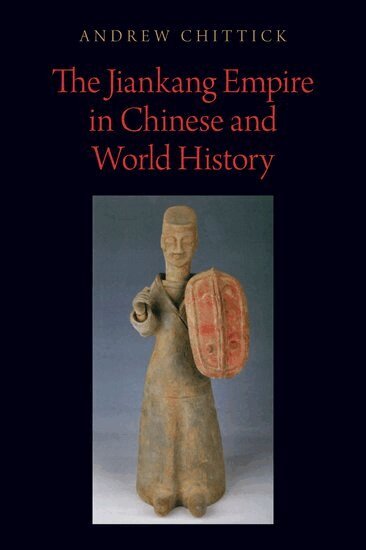
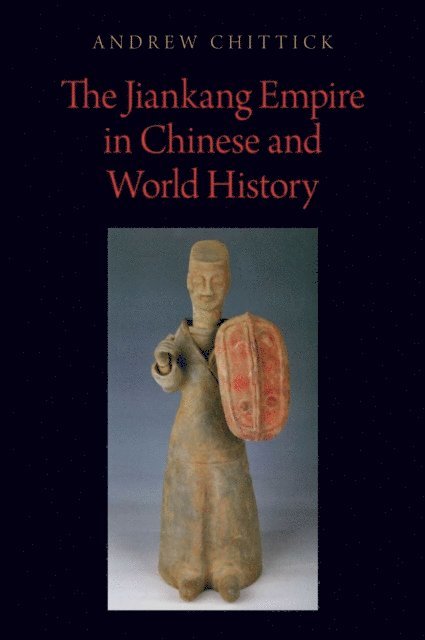
This work offers a sweeping re-assessment of the Jiankang Empire (3rd-6th centuries CE), known as the Chinese "Southern Dynasties." It shows how, although one of the medieval world's largest empires, Jiankang has been rendered politically invisible by the standard narrative of Chinese nationalist history, and proposes a new framework and terminology for writing about medieval East Asia. The book pays particular attention to the problem of ethnic identification, rejecting the idea of "ethnic Chinese," and delineating several other, more useful ethnographic categories, using case studies in agriculture/foodways and vernacular languages. The most important, the Wuren of the lower Yangzi region, were believed to be inherently different from the peoples of the Central Plains, and the rest of the book addresses the extent of their ethnogenesis in the medieval era. It assesses the political culture of the Jiankang Empire, emphasizing military strategy, institutional cultures, and political economy, showing how it differed from Central Plains-based empires, while having significant similarities to Southeast Asian regimes. It then explores how the Jiankang monarchs deployed three distinct repertoires of political legitimation (vernacular, Sinitic universalist, and Buddhist), arguing that the Sinitic repertoire was largely eclipsed in the sixth century, rendering the regime yet more similar to neighboring South Seas states. The conclusion points out how the research re-orients our understanding of acculturation and ethnic identification in medieval East Asia, generates new insights into the Tang-Song transition period, and offers new avenues of comparison with Southeast Asian and medieval European history.
1 088 kr
Tillfälligt slut
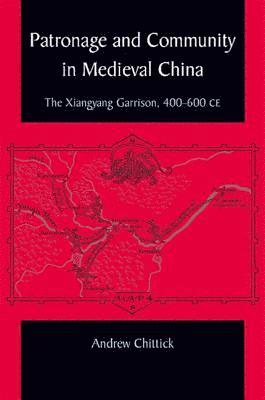
A vivid portrait of the culture of a provincial military society in China's early medieval period and its interactions with the southern imperial court.This first book-length treatment of a provincial military society in China's early medieval period offers a vivid portrait of this milieu and invites readers to reevaluate their understanding of a critical period in Chinese history. Drawing on poetry, local history, archaeology, and Buddhist materials, as well as more traditional historical sources, Andrew Chittick explores the culture and interrelationships of the leading figures of the Xiangyang region (in the north of modern Hubei province) in the centuries leading up to the Sui unification. Using the model of patron-client relations to characterize the interactions between local men and representatives of the southern court at Jiankang, the book emphasizes the way in which these interactions were shaped by personal ties and cultural and status differences. The result is a compelling explanation for the shifting, unstable, and violent nature of the political and military system of the southern dynasties. Offering a wider perspective which considers the social world beyond the capital elite, the book challenges earlier conceptions of medieval society as "aristocratic" and rooted in family lineage and officeholding.Andrew Chittick is E. Leslie Peter Associate Professor of East Asian Humanities at Eckerd College.
394 kr
Tillfälligt slut
A vivid portrait of the culture of a provincial military society in China's early medieval period and its interactions with the southern imperial court.This first book-length treatment of a provincial military society in China's early medieval period offers a vivid portrait of this milieu and invites readers to reevaluate their understanding of a critical period in Chinese history. Drawing on poetry, local history, archaeology, and Buddhist materials, as well as more traditional historical sources, Andrew Chittick explores the culture and interrelationships of the leading figures of the Xiangyang region (in the north of modern Hubei province) in the centuries leading up to the Sui unification. Using the model of patron-client relations to characterize the interactions between local men and representatives of the southern court at Jiankang, the book emphasizes the way in which these interactions were shaped by personal ties and cultural and status differences. The result is a compelling explanation for the shifting, unstable, and violent nature of the political and military system of the southern dynasties. Offering a wider perspective which considers the social world beyond the capital elite, the book challenges earlier conceptions of medieval society as "aristocratic" and rooted in family lineage and officeholding.Andrew Chittick is E. Leslie Peter Associate Professor of East Asian Humanities at Eckerd College.