• Fri frakt över 249 kr
  • •
  • Snabba leveranser
  • •
  • Billiga böcker
Kundservice

Du är på sajten för privatpersoner.

Företag, bibliotek eller offentlig verksamhet?

Du handlar på classic.bokus.com, där alla dina funktioner finns intakta.
Till classic.bokus.com
Bokus logotyp. Gå till startsidan.
  • Erbjudanden
  • Nyheter
  • Student
  • Topplistor
  • Barn & ungdom
  • Bokus Play
  • E-böcker
  • Pocketböcker
  • Spel & pussel

10% rabatt på allt med kod: NYSTART10 →

Sidfot

Mina sidor

    Hjälp

    • Kundservice
    • Vanliga frågor och svar
    • Frakt och leverans
    • Retur vid ångerrätt
    • Reklamera vara
    • Betalning
    • Köpvillkor
    • Allmänna villkor
    • Information om webbplatsens tillgänglighet

    Om Bokus

    • Om oss
    • Pressrum
    • För studenter
    • För företag
    • För bibliotek och offentlig verksamhet
    • För leverantörer
    • Hållbarhet

    Populärt

    • Aktuella erbjudanden
    • Presentkort
    • Studentlitteratur
    • Nya böcker
    • Topplistor
    • Signerade böcker
    • Engelska böcker

    Inspiration

    • Boktips
    • BookTok
    • Populära bokserier
    • Barnbokskaraktärer
    • Populära författare
    Logotyp för Bokus
    Följ oss på Facebook (extern länk)Följ oss på Instagram (extern länk)Följ oss på YouTube (extern länk)Följ oss på TikTok (extern länk)
    bokus @ CookiesAnpassa cookiesIntegritetspolicyKöpvillkor
    Till Citymail hemsida (extern länk)Till Budbee hemsida (extern länk)Till Postnord hemsida (extern länk)Till Schenker hemsida (extern länk)Till Early Bird hemsida (extern länk)Till Walleys hemsida (extern länk)
    1. Historia och arkeologi
    2. Historia
    3. Asiens historia

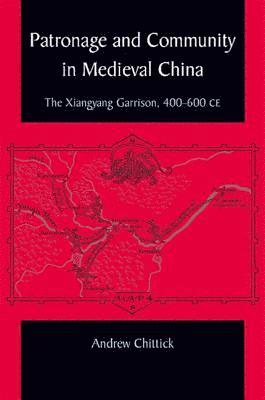
    Patronage and Community in Medieval China

    The Xiangyang Garrison, 400-600 CE

    AvAndrew Chittick

    Inbunden, Engelska, 2010

    Del i serien SUNY series in Chinese Philosophy and Culture

    1 108 kr

    Tillfälligt slut

    Fler format och utgåvor

    Häftad

    Tillf. slut

    Beskrivning

    A vivid portrait of the culture of a provincial military society in China's early medieval period and its interactions with the southern imperial court.This first book-length treatment of a provincial military society in China's early medieval period offers a vivid portrait of this milieu and invites readers to reevaluate their understanding of a critical period in Chinese history. Drawing on poetry, local history, archaeology, and Buddhist materials, as well as more traditional historical sources, Andrew Chittick explores the culture and interrelationships of the leading figures of the Xiangyang region (in the north of modern Hubei province) in the centuries leading up to the Sui unification. Using the model of patron-client relations to characterize the interactions between local men and representatives of the southern court at Jiankang, the book emphasizes the way in which these interactions were shaped by personal ties and cultural and status differences. The result is a compelling explanation for the shifting, unstable, and violent nature of the political and military system of the southern dynasties. Offering a wider perspective which considers the social world beyond the capital elite, the book challenges earlier conceptions of medieval society as "aristocratic" and rooted in family lineage and officeholding.Andrew Chittick is E. Leslie Peter Associate Professor of East Asian Humanities at Eckerd College.

    Produktinformation

    • Utgivningsdatum:2010-01-05
    • Mått:152 x 229 x 23 mm
    • Vikt:454 g
    • Format:Inbunden
    • Språk:Engelska
    • Serie:SUNY series in Chinese Philosophy and Culture
    • Antal sidor:201
    • Förlag:State University of New York Press
    • ISBN:9781438428970

    Utforska kategorier

    • Asiens historia inom Historia och arkeologi
    • Socialhistoria och kulturhistoria inom Historia och arkeologi

    Innehållsförteckning

    • List of MapsAcknowledgments1. IntroductionAristocracy and OligarchyCommunity and IdentityPatronage as a SystemRegimes, Regime Change, and Other NomenclatureAn Introduction to the Xiangyang Region2. Development, 400–465Liu Yu’s New Policies: Immigration and Residence DeterminationLiu Yu’s New Policies: AdministrativeReorganizationPrinces and Patronage: The Early Career of Liu YuanjingXiangyang Men on Campaign, 442–454Xiangyang Local Culture: Honor, Vengeance, and ViolenceXiangyang Local Culture: Music and DanceLocal Society Shows Its Strength: Xiangyangunder Liu Jun’s RegimeConclusion: The Perils of Power3. Fragmentation, 465–500Xiangyang Men in the Civil War of 465–466The Evolving Structure of Relations between Court and Garrison, 466–483Gentrifi cation and EmigrationImmigrant ClustersImmigrant Groups with More Expansive TiesThe Crisis of the Qi RegimeConclusion4. Zenith, 500–530Xiao Yan Assembles the "Xiangyang Clique"The "Jiangling Clique" and the Jiankang CoupXiangyang Men at the CapitalXiangyang Local Lore: The Evidence from Bao ZhiXiangyang Iconography: The Evidence from Local TombsThe Patronage of Court-Style BuddhismImperial Bias against Local CultureCompetitive Spectacle: The Local Culture of Military FestivalsConclusion5. Sublimation, 530–600Fighting Bands and Free-Floating AllegiancesXiangyang under the Yuwen RegimeVengeance and Family TiesThe Further Development of BuddhismConclusion6. ConclusionLocal Community and Local CulturePatronage and the Evolution of Court- Provincial RelationsAPPENDIX A Genealogical ChartsDiagram 1: Selected Descendents of Liu ZhuoDiagram 2: Selected Descendents of Wei HuaDiagram 3: Relationships among SelectedMembers of the Nanyang ClusterNotesBibliographyIndex