Andrew Cowell - Böcker
Visar alla böcker från författaren Andrew Cowell. Handla med fri frakt och snabb leverans.
9 produkter
9 produkter
594 kr
Skickas inom 10-15 vardagar
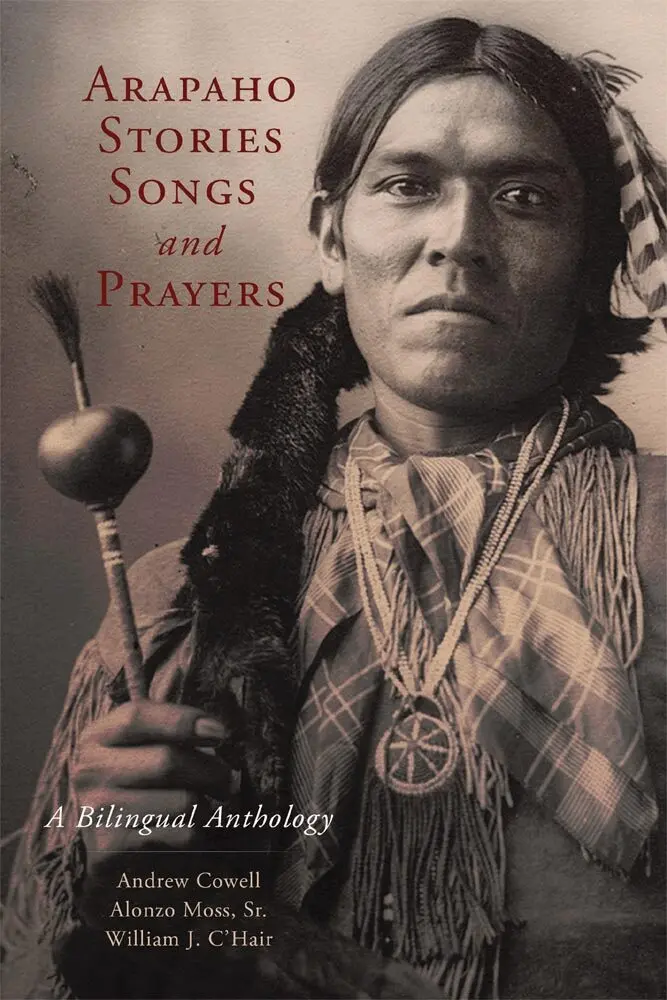
A bison and a bobtailed horse race across the sky, raising a trail of dust behind them - leaving in their wake the Milky Way to forever mark their path. An unknown Arapaho teller shared this account with an ethnographer in 1893, explaining that the race determined which animal would be ridden, which would be food. Traditional American Indian oral narratives, ranging from origin stories to trickster tales and prayers, constitute part of the great heritage of each tribe. Many of these narratives, gathered in the late nineteenth and early twentieth centuries, were obtained or published only in English translation. Although this is the case with many Arapaho stories, extensive Arapaho-language texts exist that have never before been published - until now. Arapaho Stories, Songs, and Prayers gives new life to these manuscripts, celebrating Arapaho oral narrative traditions in all the richness of their original language.Working with Alonzo Moss, Sr., and William J. C'Hair, two fluent native speakers of Arapaho, Andrew Cowell retranscribes these texts - collected between the early 1880s and the late 1920s - into modern Arapaho orthography, and retranslates and annotates them in English. Masterpieces of oral literature, these texts include creation accounts, stories about the Arapaho trickster character Nih'oo3oo, animal tales, anecdotes, songs, prayers, and ceremonial speeches. In addition to a general introduction, the editors offer linguistic, stylistic, thematic, and cultural commentary and context for each of the texts.More than any other work, this book affords new insights into Arapaho language and culture. It expands the Arapaho lexicon, discusses Arapaho values and ethos, and offers a uniquely informed perspective on Arapaho storytelling. An unparalleled work of recovery and preservation, it will at once become the reference guide to the Arapaho language and its texts.
361 kr
Skickas inom 10-15 vardagar
A bison and a bobtailed horse race across the sky, raising a trail of dust behind them - leaving in their wake the Milky Way to forever mark their path. An unknown Arapaho teller shared this account with an ethnographer in 1893, explaining that the race determined which animal would be ridden, which would be food. Traditional American Indian oral narratives, ranging from origin stories to trickster tales and prayers, constitute part of the great heritage of each tribe. Many of these narratives, gathered in the late nineteenth and early twentieth centuries, were obtained or published only in English translation. Although this is the case with many Arapaho stories, extensive Arapaho-language texts exist that have never before been published - until now. Arapaho Stories, Songs, and Prayers gives new life to these manuscripts, celebrating Arapaho oral narrative traditions in all the richness of their original language.Working with Alonzo Moss, Sr., and William J. C'Hair, two fluent native speakers of Arapaho, Andrew Cowell retranscribes these texts - collected between the early 1880s and the late 1920s - into modern Arapaho orthography, and retranslates and annotates them in English. Masterpieces of oral literature, these texts include creation accounts, stories about the Arapaho trickster character Nih'oo3oo, animal tales, anecdotes, songs, prayers, and ceremonial speeches. In addition to a general introduction, the editors offer linguistic, stylistic, thematic, and cultural commentary and context for each of the texts.More than any other work, this book affords new insights into Arapaho language and culture. It expands the Arapaho lexicon, discusses Arapaho values and ethos, and offers a uniquely informed perspective on Arapaho storytelling. An unparalleled work of recovery and preservation, it will at once become the reference guide to the Arapaho language and its texts.
502 kr
Skickas inom 10-15 vardagar
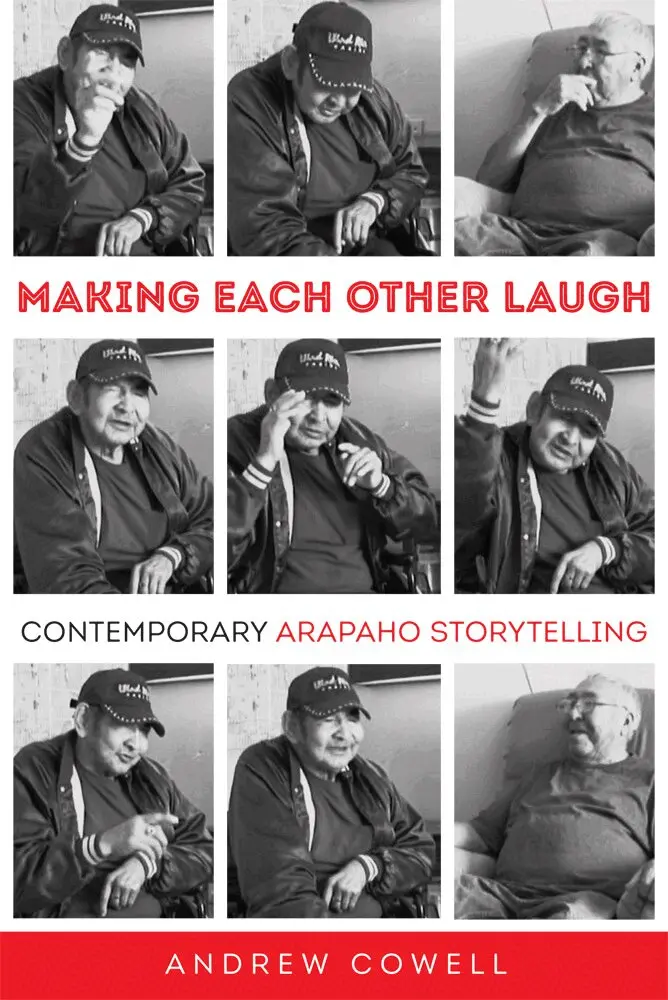
Native American oral storytelling traditions have been widely documented and appreciated, but they are often associated with the past, pre-contact times, and ancient legends. Less attention has been given to the way this tradition continues to exist in the present, with new stories being created to respond to the modern world. Making Each Other Laugh provides unique insight into contemporary Northern Arapaho stories, told in the Arapaho language, and into the social and cultural milieu of the stories. It also provides invaluable insight into the rich humor of modern Arapaho stories and life. These stories - from roughly the 1990s through the 2010s - are a rich source of Arapaho wisdom and values, often imparted in a singularly comical fashion. Appearing here in both Arapaho and English, they are also a virtual dictionary of the Arapaho language, featuring many rare and complex words that can only be understood in the storytelling context. This volume presents these stories in sequences, as they were actually told in social interactions among Native speakers. Structured this way, the anthology maintains the true nature of the Arapaho story sequence as a single, collaborative artistic and social performance. In critical chapters, Andrew Cowell focuses on how the stories emerge, how narrators negotiate what comes next and who will tell it, and how the genres and themes of the stories relate to each other. He also explores the ways such modern stories employ genres that have evolved from traditional models while adapting new content and styles over the course of the twentieth and early twenty-first centuries. Largely humorous, sometimes hilarious, often centered on encounters with Euro-American society and technology, the stories in Making Each Other Laugh bear witness to the continuing vitality of Native American oral traditions.
431 kr
Skickas inom 7-10 vardagar
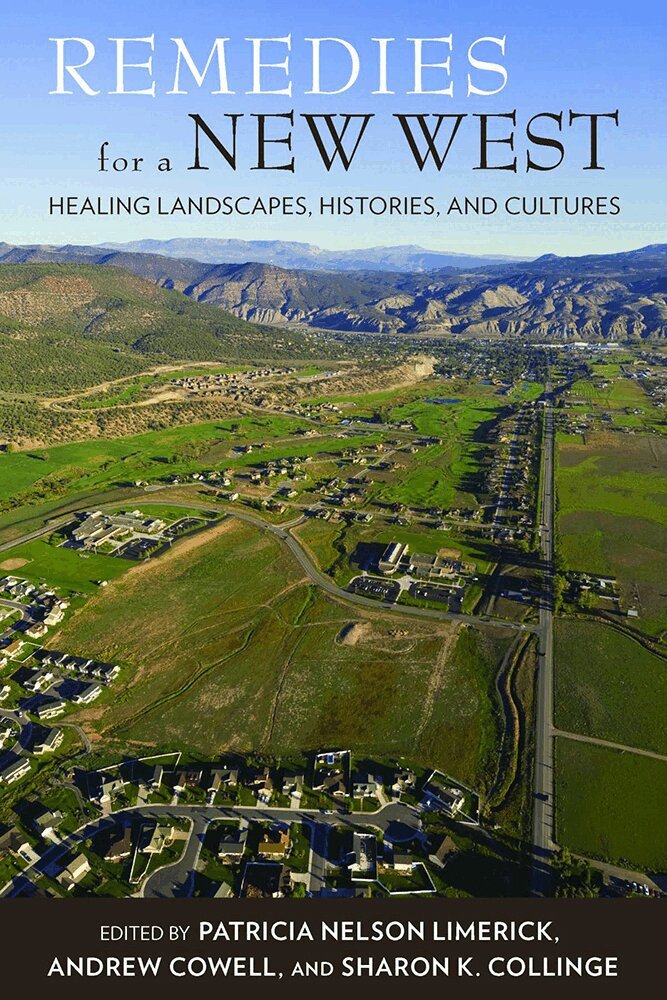
This wide-ranging collection of essays is intended to provoke both thought and action. The pieces collected here explore a variety of issues facing the American West—disappearing Native American languages, deteriorating air quality, suburban sprawl, species loss, grassland degradation, and many others—and suggest steps toward “healing.” More than “dealing with” or “solving,” according to the editors, healing addresses not just symptoms but their underlying causes, offering not just a temporary cure but a permanent one.The signs of illness and trauma can seem omnipresent in today’s West: land and soil disrupted from mining, overgrazing, logging, and farming; wildlife habitat reduced and fragmented; native societies disturbed and threatened; open space diminished by cities and suburbs; wilderness destroyed by roads and recreation-seekers. But as these essays suggest, the “treatment program” for healing the West has many healthful side effects. Engaging in the kinds of projects suggested by contributors is therapeutic not only for the environment but for participants as well. Restoration, repair, and recovery can counter symptoms of despair with concentrated doses of promise and possibility.The more “lesions” the West has, this book suggests, the more opportunities there are for westerners to revive and ultimately cure the ailing patient they have helped to create. The very idea of restoring the West to health, contributors and editors contend, unleashes our imaginations, sharpens our minds, and gives meaning to the ways we choose to live our lives. At the same time, acknowledging the profound difficulties of the work that lies ahead immunizes us against our own arrogance as we set about the task of healing the West.
390 kr
Skickas inom 7-10 vardagar
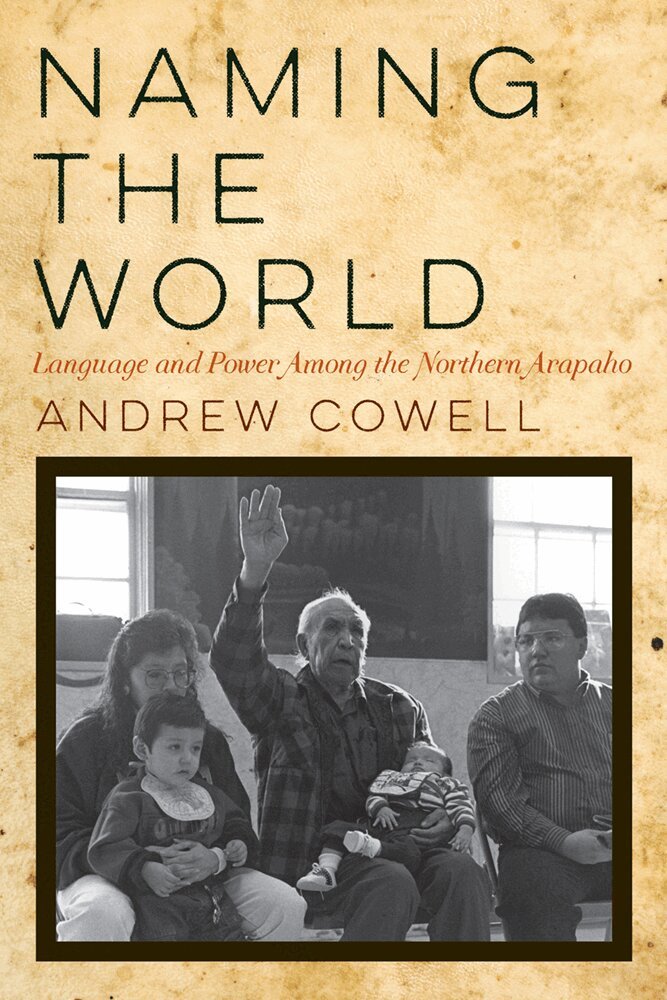
Naming the World examines language shift among the Northern Arapaho of the Wind River Reservation, Wyoming, and the community’s diverse responses as it seeks social continuity. Andrew Cowell argues that, rather than a single “Arapaho culture,” we find five distinctive communities of practice on the reservation, each with differing perspectives on social and more-than-human power and the human relationships that enact power.As the Arapaho people resist Euro-American assimilation or domination, the Arapaho language and the idea that the language is sacred are key rallying points—but also key points of contestation. Cowell finds that while many at Wind River see the language as crucial for maintaining access to more-than-human power, others primarily view the language in terms of peer-oriented identities as Arapaho, Indian, or non-White. These different views lead to quite different language usage and attitudes in relation to place naming, personal naming, cultural metaphors, new word formation, and the understudied practice of folk etymology.Cowell presents data from conversations and other natural discourse to show the diversity of everyday speech and attitudes, and he links these data to broader debates at Wind River and globally about the future organization of indigenous societies and the nature of Arapaho and indigenous identity.
896 kr
Tillfälligt slut
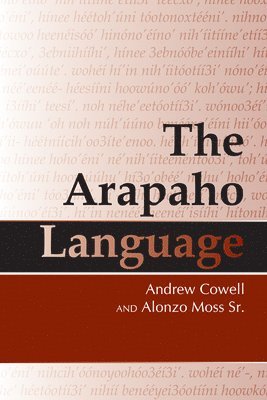
The Arapaho Language is the definitive reference grammar of an endangered Algonquian language. Arapaho differs strikingly from other Algonquian languages, making it particularly relevant to the study of historical linguistics and the evolution of grammar. Andrew Cowell and Alonzo Moss Sr. document Arapaho's interesting features, including a pitch-based accent system with no exact Algonquian parallels, radical innovations in the verb system, and complex contrasts between affirmative and non-affirmative statements.Cowell and Moss detail strategies used by speakers of this highly polysynthetic language to form complex words and illustrate how word formation interacts with information structure. They discuss word order and discourse-level features, treat the special features of formal discourse style and traditional narratives, and list gender-specific particles, which are widely used in conversation. Appendices include full sets of inflections for a variety of verbs.Arapaho is spoken primarily in Wyoming, with a few speakers in Oklahoma. The corpus used in The Arapaho Language spans more than a century of documentation, including multiple speakers from Wyoming and Oklahoma, with emphasis on recent recordings from Wyoming. The book cites approximately 2,000 language examples drawn largely from natural discourse - either recorded spoken language or texts written by native speakers.With The Arapaho Language, Cowell and Moss have produced a comprehensive document of a language that, in its departures from its nearest linguistic neighbors, sheds light on the evolution of grammar.
411 kr
Skickas inom 3-6 vardagar
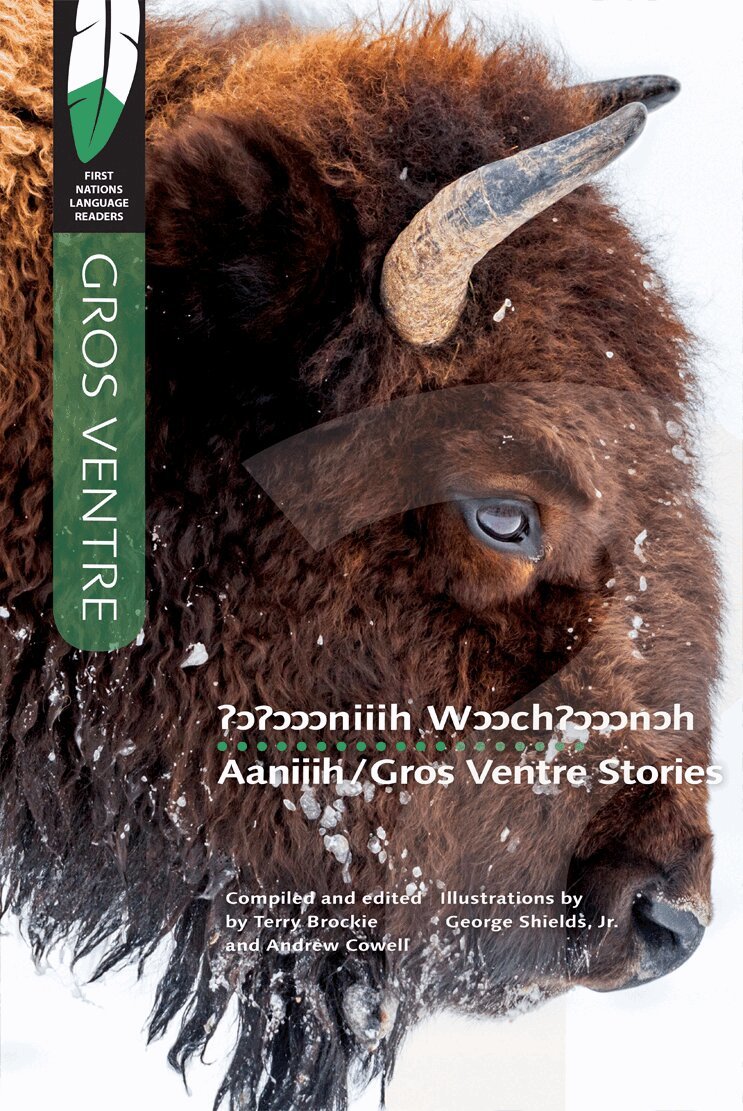
The first-ever collection of Aaniiih/Gros Ventre narratives to be published in the Aaniiih/Gros Ventre language, this book contains traditional trickster tales and war stories. Some of these stories were collected by Alfred Kroeber in 1901, while others are contemporary, oral stories, told in the past few years. As with the previous titles in the First Nations Language Readers series, Aaniiih/Gros Ventre Stories comes with a complete glossary and provides some grammar usage. Delightfully illustrated, each story is accompanied by an introduction to guide the reader through the material. The Aaniiih/Gros Ventre people lived in the Saskatchewan area in the 1700s, before being driven south during the 1800s to the Milk River area in Montana, along the USA/Canada border.
1 051 kr
Skickas inom 10-15 vardagar
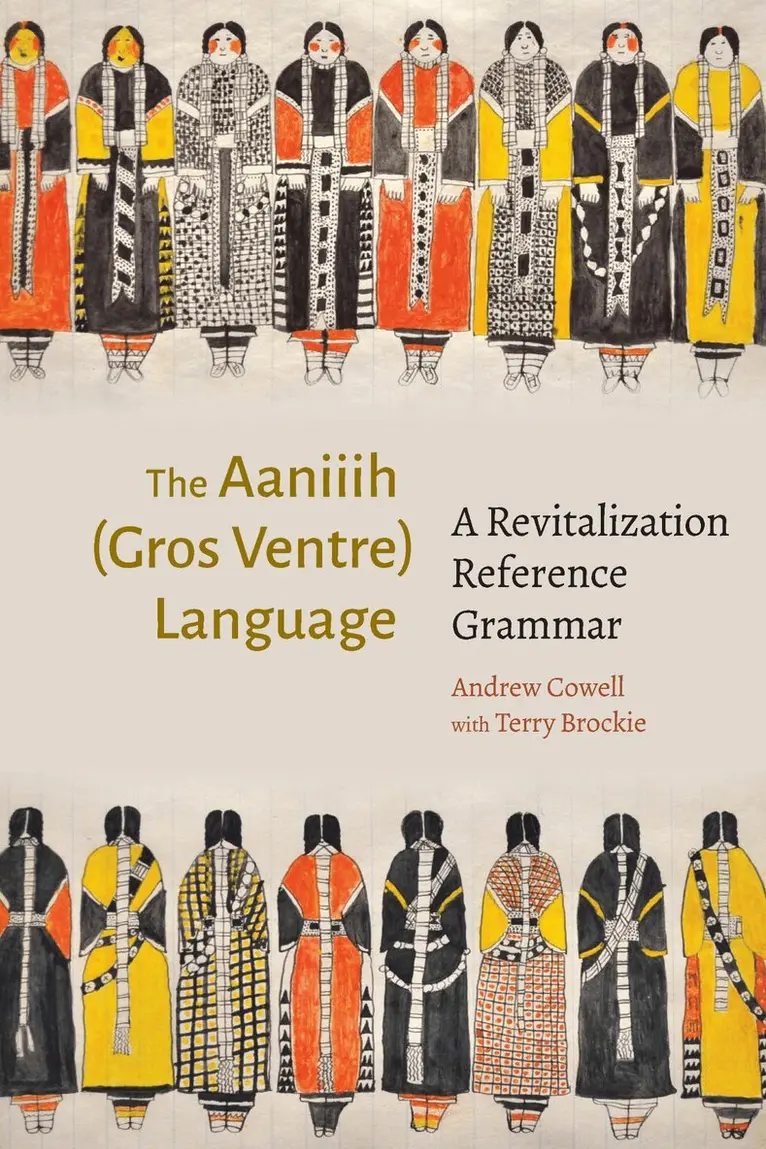
The Aaniiih (Gros Ventre) Language is a tribally centered reference grammar of Aaniiih. A member of the Algonquian language family, Aaniiih is most closely related to the Arapaho language. Previously spoken in areas of central and southern Alberta and Saskatchewan and northern Montana, the language is now spoken on the Fort Belknap Reservation in north central Montana. Andrew Cowell and Terry Brockie worked with tribal members to retranscribe historical and archival documentation of the language in order to revitalize it.This grammar provides a comprehensive description of the language throughout all its stages, focusing on the phonology and morphology of new word formation; on levels of politeness in the language and strategies for indirectness; and on salient cultural topics such as place-names, personal names, prayer, and traditional narrative, as well as greetings, departures, and a rich variety of exclamations and interjections. The grammar describes both classical (pre-reservation) and modern Aaniiih, allowing contemporary revivers of the language to fully understand both and to choose which to focus on for teaching and learning.The Aaniiih (Gros Ventre) Language is an essential guide to assisting with the Gros Ventre nation’s efforts to teach and revitalize its language in the twenty-first century.
Del 6 - Gallica
Medieval Warrior Aristocracy
Gifts, Violence, Performance, and the Sacred
Inbunden, Engelska, 2007
1 070 kr
Skickas inom 7-10 vardagar
A major reconsideration of the relationship between warrior aristocrats, epics, and heroes in medieval culture.The process of identity formation during the central Middle Ages (10th-12th centuries) among the warrior aristocracy was fundamentally centered on the paired practices of gift giving and violent taking, inextricably linked elements of the same basic symbolic economy. These performative practices cannot be understood without reference to a concept of the sacred, which anchored and governed the performances, providing the goal and rationale of social and military action.After focussing on anthropological theory, social history, and chronicles, the author turns to the "literary" persona of the hero as seen in the epic. He argues that the hero was specifically a narrative touchstone used for reflection on the nature and limits of aggressive identity formation among the medieval warrior elite; the hero can be seen, from a theoretical perspective, as a "supplement" to his own society, who both perfectly incarnated its values but also, in attaining full integrity, short-circuited the very mechanisms of identity formation and reciprocity which undergirded the society.The book shows that the relationship between warriors, heroes, and their opponents (especially Saracens) must be understood as a complex, tri-partite structure - not a simple binary opposition - in which the identity of each constituent depends on the other two. ANDREW COWELL isAssociate Professor of the Department of French and Italian, and the Department of Linguistics, at the University of Colorado.