Patricia Nelson Limerick - Böcker
Visar alla böcker från författaren Patricia Nelson Limerick. Handla med fri frakt och snabb leverans.
12 produkter
12 produkter
834 kr
Skickas inom 5-8 vardagar
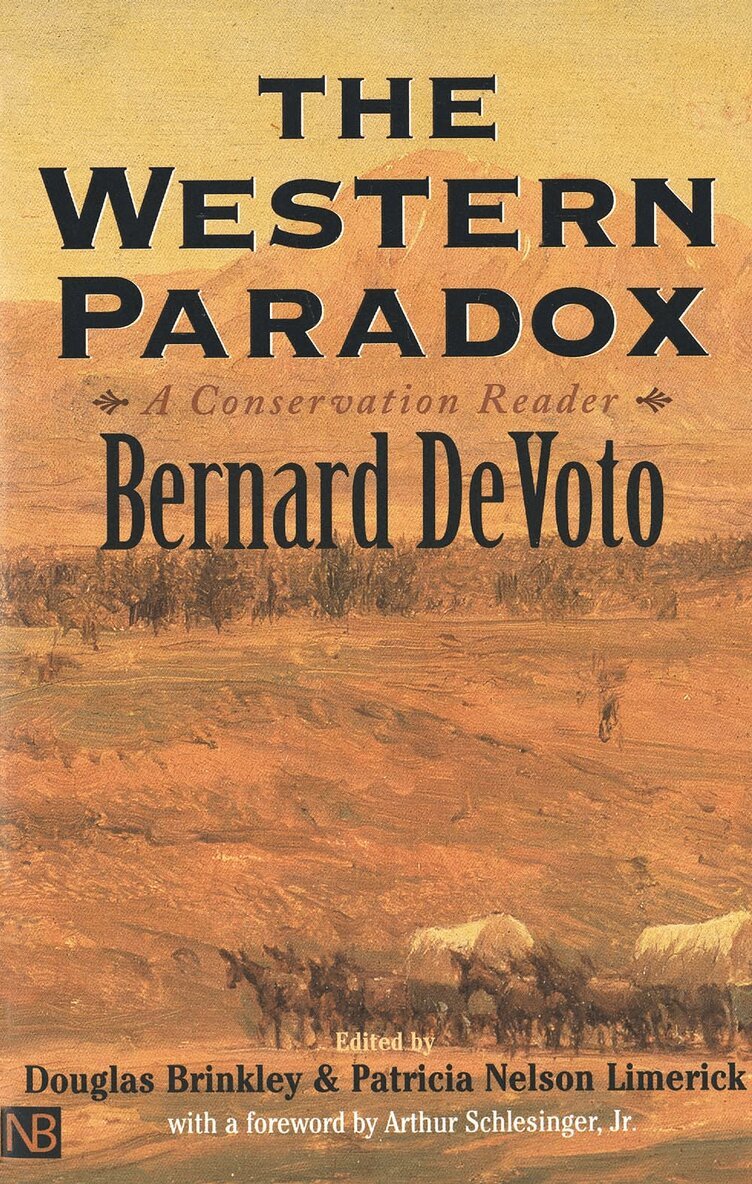
“This book is the fascinating record of DeVoto’s crusade to save the West from itself. . . . His arguments, insights, and passion are as relevant and urgent today as they were when he first put them on paper.”—Arthur M. Schlesinger, Jr., from the Foreword Bernard DeVoto (1897–1955) was, according to the novelist Wallace Stegner, “a fighter for public causes, for conservation of our natural resources, for freedom of the press and freedom of thought.” A Pulitzer Prize–winning historian, DeVoto is best remembered for his trilogy, The Year of Decision: 1846, Across the Wide Missouri, and The Course of Empire. He also wrote a column for Harper’s Magazine, in which he fulminated about his many concerns, particularly the exploitation and destruction of the American West. This volume brings together ten of DeVoto’s acerbic and still timely essays on Western conservation issues, along with his unfinished conservationist manifesto, Western Paradox, which has never before been published. The book also includes a foreword by Arthur M. Schlesinger, Jr., who was a student of DeVoto’s at Harvard University, and a substantial introduction by Douglas Brinkley and Patricia Limerick, both of whom shed light on DeVoto’s work and legacy.
177 kr
Skickas inom 7-10 vardagar
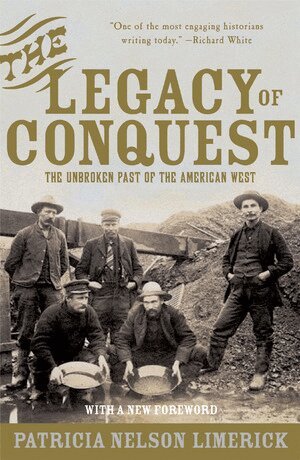
The "settling" of the American West has been perceived throughout the world as a series of quaint, violent, and romantic adventures. But in fact, Patricia Nelson Limerick argues, the West has a history grounded primarily in economic reality; in hardheaded questions of profit, loss, competition, and consolidation. Here she interprets the stories and the characters in a new way: the trappers, traders, Indians, farmers, oilmen, cowboys, and sheriffs of the Old West "meant business" in more ways than one, and their descendents mean business today.
329 kr
Skickas inom 5-8 vardagar
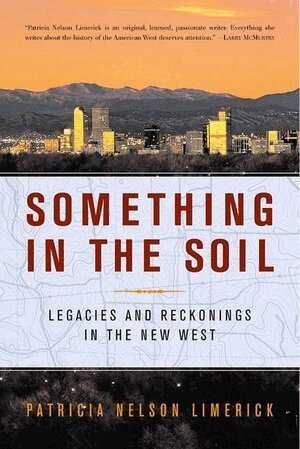
In Something in the Soil, Patricia Nelson Limerick travels far outside the usual academic circles to bring Western past and Western present into a spirited union. Whether her topic is the rapid growth in the West today, the patent awfulness of most academic writing, or struggles over the standing of the "Great White Men" of the region’s past, Limerick operates on the principle that history is an active presence in the West, layers of collective memory that are, quite literally, "something in the soil." Enlightening and always witty, this wide-ranging collection of essays and arguments from the New West’s landmark historian offers an artful journey into its dramatic past and contentious present.
594 kr
Skickas inom 3-6 vardagar
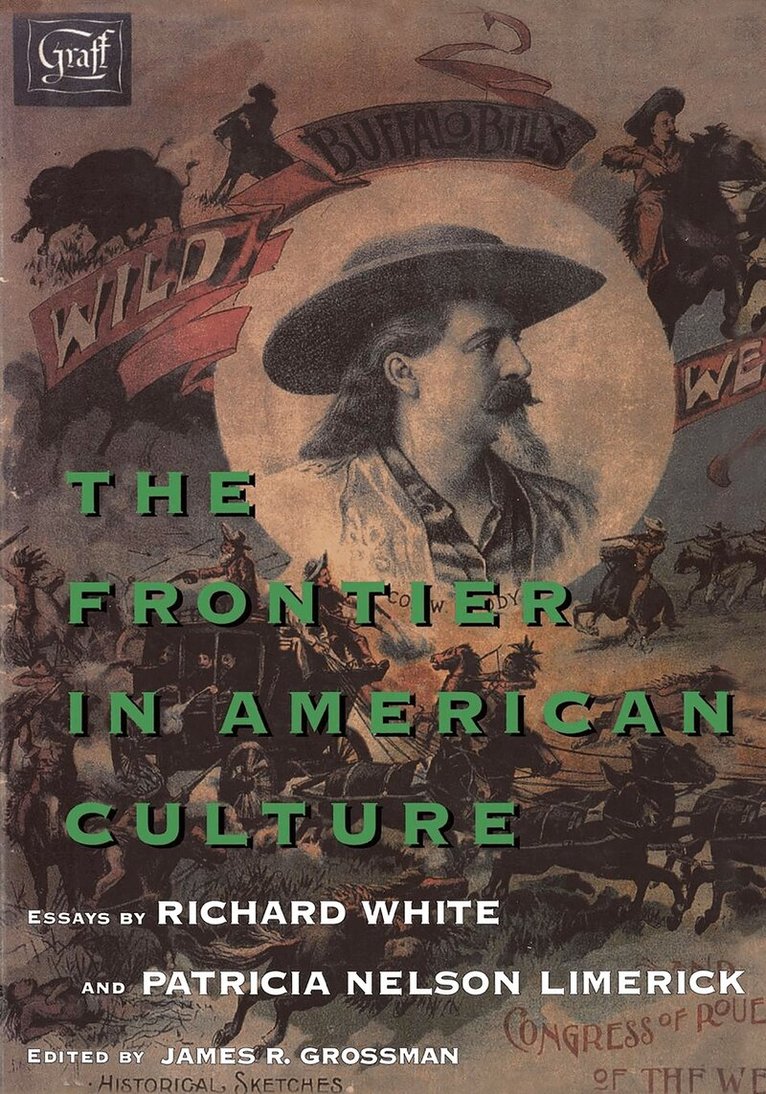
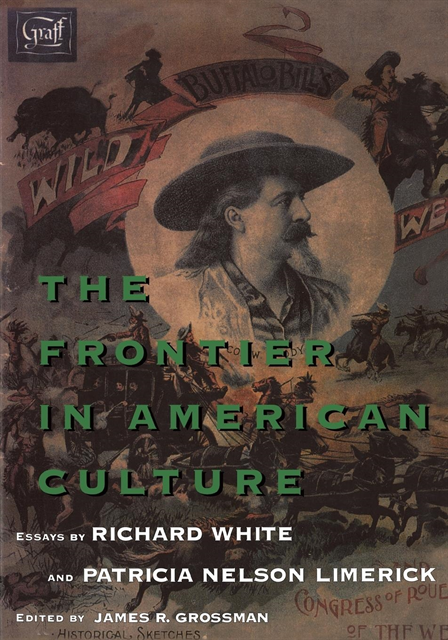
Log cabins and wagon trains, cowboys and Indians, Buffalo Bill and General Custer. These and other frontier images pervade our lives, from fiction to films to advertising, where they attach themselves to products from pancake syrup to cologne, blue jeans to banks. Richard White and Patricia Limerick join their inimitable talents to explore our national preoccupation with this uniquely American image. Richard White examines the two most enduring stories of the frontier, both told in Chicago in 1893, the year of the Columbian Exposition. One was Frederick Jackson Turner's remarkably influential lecture, "The Significance of the Frontier in American History"; the other took place in William 'Buffalo Bill' Cody's flamboyant extravaganza, "The Wild West". Turner recounted the peaceful settlement of an empty continent, a tale that placed Indians at the margins. Cody's story put Indians - and bloody battles - at center stage, and culminated with the Battle of the Little Bighorn, popularly known as 'Custer's Last Stand'. Seemingly contradictory, these two stories together reveal a complicated national identity.Patricia Limerick shows how the stories took on a life of their own in the twentieth century and were then reshaped by additional voices - those of Indians, Mexicans, African-Americans, and others, whose versions revisit the question of what it means to be an American. Generously illustrated, engagingly written, and peopled with such unforgettable characters as Sitting Bull, Captain Jack Crawford, and Annie Oakley, "The Frontier in American Culture" reminds us that despite the divisions and denials the western movement sparked, the image of the frontier unites us in surprising ways.
378 kr
Skickas inom 10-15 vardagar
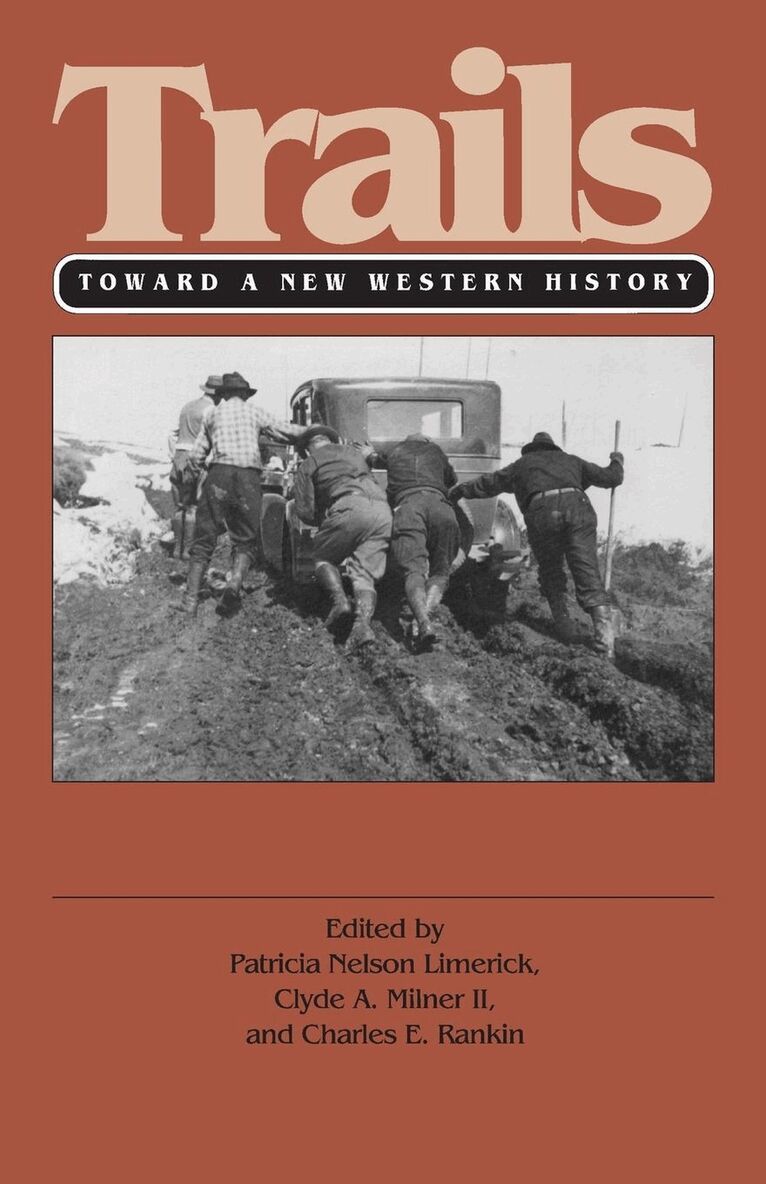
This is the new story of the Old West, told by ten historians who dare to reenvision the American West and knock the field of Western history on its ear. Some historians call it a revolution.The Trails Conference in Santa Fe, a 1989 gathering organized by “new” western historian Patricia Nelson Limerick, spawned widespread media coverage and academic debate and provided the impetus for this volume. There, at the end of the Santa Fe Trail, leading scholars came together to discuss, debate, and evaluate an exciting new view of our past. It amounts to a far-reaching reexamination of the role of the West in U.S. history and of the field of Western history itself.Trails brings together the best of this new work. The contributors provide a range of views that clarify the changes in Western history. They consider what the “New Western History” is, what its impact on Western history has been thus far, and where it might lead as we move into the 1990s and beyond.These historians reject both the “tall in the saddle” myth and the concept of the frontier and its settlement described by Frederick Jackson Turner in 1893: a single, triumphant process that began with the arrival of white settlers and ended a century later when all the land was claimed. Instead, they see continuity. To them, the West is a region, washed by waves of successive emigrants over a period of 25,000 years; a place with climate, resources, and sustained damage of human habitation.Contributors: Brian W. Dippie, Patricia Nelson Limerick, Michael P. Malone, Walter Nugent, Peggy Pascoe, William G. Robbins, Gerald Thompson, Elliott West, Richard White, Donald Worster
446 kr
Skickas inom 5-8 vardagar
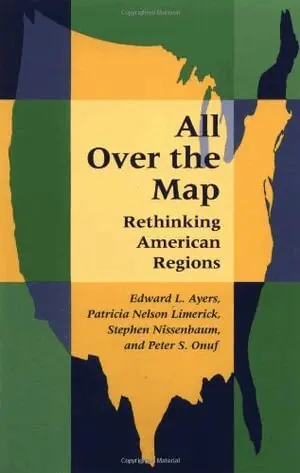
Even as Americans keep moving "all over the map" in the late twentieth century, they cherish memories of the places they come from. But where do these places-these regions-come from? What makes them so real? In this groundbreaking book a distinguished group of historians explores the concept of region in America, traces changes the idea has undergone in our national experience, and examines its meaning for Americans today. Far from diminishing in importance, the authors conclude, regional differences continue to play a significant role in Americans' self-image. Regional identity, in fact, has always been fed by the very forces that many people think threaten its existence today: a central government, an aggressive economy, and connections with places beyond regional boundaries. Calling into question widely held notions about how Americans came to differ from one another and explaining why those differences continue to flourish, this iconoclastic study-by scholars with differing regional ties-will refresh and redirect the centuries-old discussion over Americans' conceptions of themselves.
431 kr
Skickas inom 7-10 vardagar
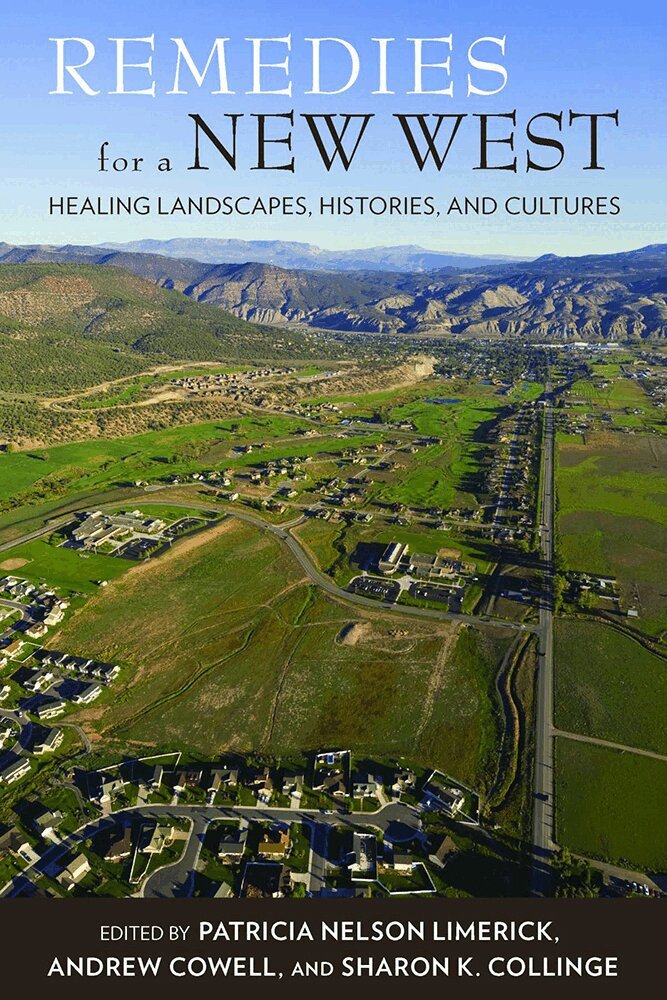
This wide-ranging collection of essays is intended to provoke both thought and action. The pieces collected here explore a variety of issues facing the American West—disappearing Native American languages, deteriorating air quality, suburban sprawl, species loss, grassland degradation, and many others—and suggest steps toward “healing.” More than “dealing with” or “solving,” according to the editors, healing addresses not just symptoms but their underlying causes, offering not just a temporary cure but a permanent one.The signs of illness and trauma can seem omnipresent in today’s West: land and soil disrupted from mining, overgrazing, logging, and farming; wildlife habitat reduced and fragmented; native societies disturbed and threatened; open space diminished by cities and suburbs; wilderness destroyed by roads and recreation-seekers. But as these essays suggest, the “treatment program” for healing the West has many healthful side effects. Engaging in the kinds of projects suggested by contributors is therapeutic not only for the environment but for participants as well. Restoration, repair, and recovery can counter symptoms of despair with concentrated doses of promise and possibility.The more “lesions” the West has, this book suggests, the more opportunities there are for westerners to revive and ultimately cure the ailing patient they have helped to create. The very idea of restoring the West to health, contributors and editors contend, unleashes our imaginations, sharpens our minds, and gives meaning to the ways we choose to live our lives. At the same time, acknowledging the profound difficulties of the work that lies ahead immunizes us against our own arrogance as we set about the task of healing the West.
512 kr
Skickas inom 3-6 vardagar
This lively book traces the development of American attitudes toward the desert using case studies from the writings of John C Fr+(c)mont, William Lewis Manly, Mark Twain, William Ellsworth Smythe, John Van Dyke, George Wharton James, Joseph Wood Krutch, and Edward Abbey.
1 092 kr
Skickas inom 10-15 vardagar
The act of interpretation has been central to Western American history. At every historical juncture, interpreters were active and present-conveying meaning between people speaking mutually unintelligible languages, bartering for goods and power along borders, and translating intentions from gestures, acts, and words. While research on interpreters within zones of cultural exchange has grown among scholars of early modern Europe and Asia, the historiography of interpreters of the American West remains deficient.Translating Past to Present offers a new perspective on the historical significance of interpretation and translation. This collection explores how the current sparse historiography relates to a lack of transparency about interpretive acts, both in historical and contemporary practices, and calls attention to the subjectivity of interpretive acts and historians’ role in shaping how historical messages are represented. By summoning interpreters from the margins of history, Translating Past to Present spans broad geographies and chronologies to provide a long-overdue examination of the practices of interpretation in the American West.
378 kr
Skickas inom 10-15 vardagar
The act of interpretation has been central to Western American history. At every historical juncture, interpreters were active and present-conveying meaning between people speaking mutually unintelligible languages, bartering for goods and power along borders, and translating intentions from gestures, acts, and words. While research on interpreters within zones of cultural exchange has grown among scholars of early modern Europe and Asia, the historiography of interpreters of the American West remains deficient.Translating Past to Present offers a new perspective on the historical significance of interpretation and translation. This collection explores how the current sparse historiography relates to a lack of transparency about interpretive acts, both in historical and contemporary practices, and calls attention to the subjectivity of interpretive acts and historians’ role in shaping how historical messages are represented. By summoning interpreters from the margins of history, Translating Past to Present spans broad geographies and chronologies to provide a long-overdue examination of the practices of interpretation in the American West.
301 kr
Skickas inom 3-6 vardagar
709 kr
Skickas inom 7-10 vardagar
Designed for teachers and students of the United States history survey course who prefer a larger measure of social history content, along with all the vital materials in political, diplomatic, legal, and economic history.This four-color text is written by four major American historians. Its dramatic, clear prose, aimed at beginning college students, tells the nation's story in a way they will both feel and reflect on. It is a full length, standard-sized textbook that provides a coherent narrative rich in relating history, accomplishing its goals in slightly under a thousand pages of highly readable text, not including the appendices and comprehensive index. Accompanied by abundant ancillary materials: maps, charts, tables, and separate student workbook.