Andrew E. Barshay - Böcker
Visar alla böcker från författaren Andrew E. Barshay. Handla med fri frakt och snabb leverans.
4 produkter
4 produkter
Del 15 - Twentieth Century Japan: The Emergence of a World Power
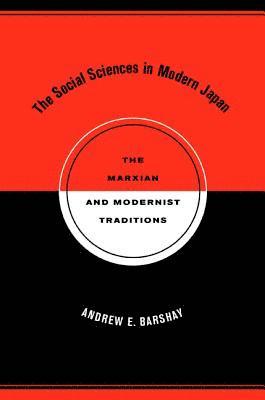
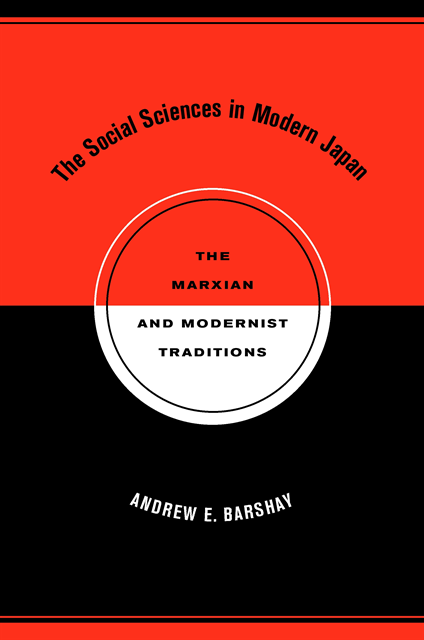
Social Sciences in Modern Japan
The Marxian and Modernist Traditions
Häftad, Engelska, 2007
292 kr
Skickas inom 7-10 vardagar
This incisive intellectual history of Japanese social science from the 1890s to the present day considers the various forms of modernity that the processes of "development" or "rationalization" have engendered and the role social scientists have played in their emergence. Andrew E. Barshay argues that Japan, together with Germany and pre-revolutionary Russia, represented forms of developmental alienation from the Atlantic Rim symptomatic of late-emerging empires. Neither members nor colonies of the Atlantic Rim, these were independent national societies whose cultural self-image was nevertheless marked by a sense of difference. Barshay presents a historical overview of major Japanese trends and treats two of the most powerful streams of Japanese social science, one associated with Marxism, the other with Modernism (kindaishugi), whose most representative figure is the late Maruyama Masao. Demonstrating that a sense of developmental alienation shaped the thinking of social scientists in both streams, the author argues that they provided Japanese social science with moments of shared self-understanding.
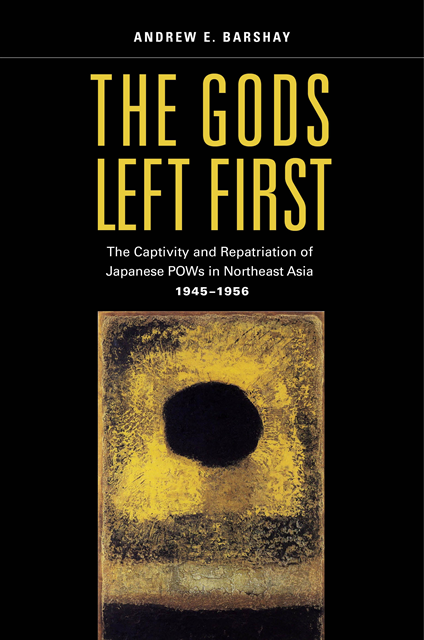
Gods Left First
The Captivity and Repatriation of Japanese POWs in Northeast Asia, 1945–1956
Inbunden, Engelska, 2013
537 kr
Skickas inom 7-10 vardagar
At the time of Japan's surrender to Allied forces on August 15, 1945, some six million Japanese were left stranded across the vast expanse of a vanquished Asian empire. Half civilian and half military, they faced the prospect of returning somehow to a Japan that lay prostrate, its cities destroyed, after years of warfare and Allied bombing campaigns. Among them were more than 600,000 soldiers of Japan's army in Manchuria, who had surrendered to the Red Army only to be transported to Soviet labor camps, mainly in Siberia. Held for between two and four years, and some far longer, amid forced labor and reeducation campaigns, they waited for return, never knowing when or if it would come. Drawing on a wide range of memoirs, art, poetry, and contemporary records, The Gods Left First reconstructs their experience of captivity, return, and encounter with a postwar Japan that now seemed as alien as it had once been familiar. In a broader sense, this study is a meditation on the meaning of survival for Japan's continental repatriates, showing that their memories of involvement in Japan's imperial project were both a burden and the basis for a new way of life.
932 kr
Skickas inom 3-6 vardagar
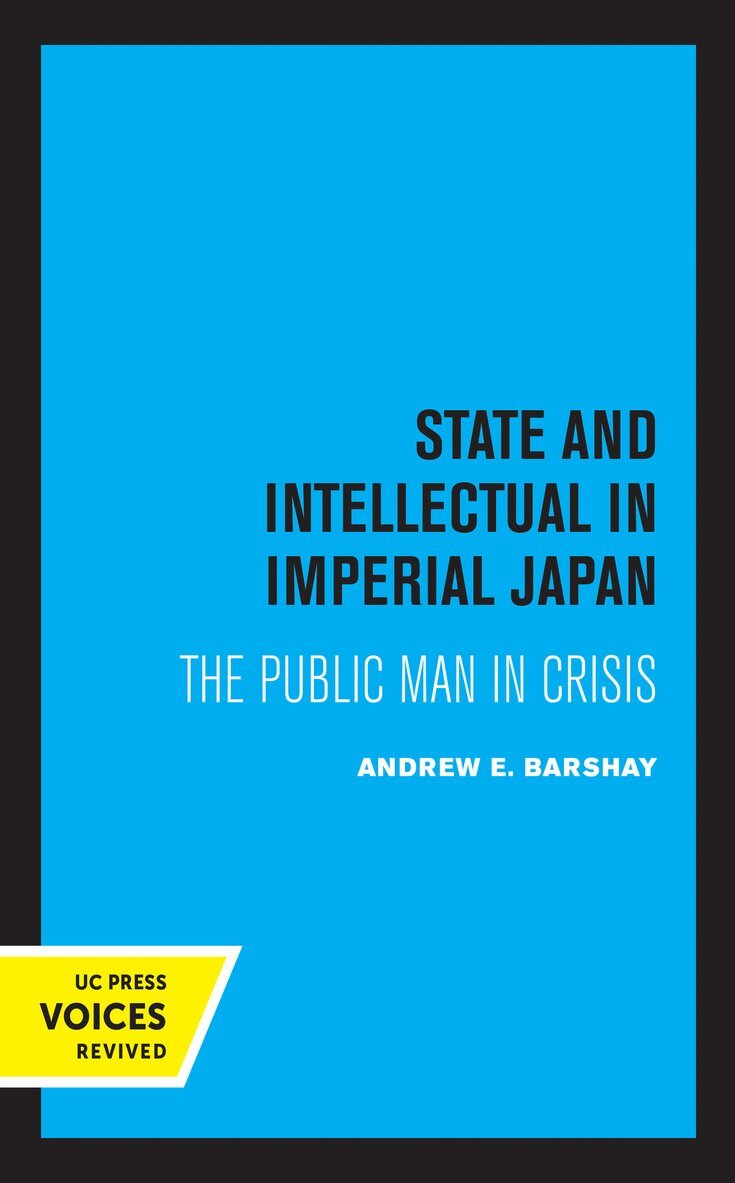
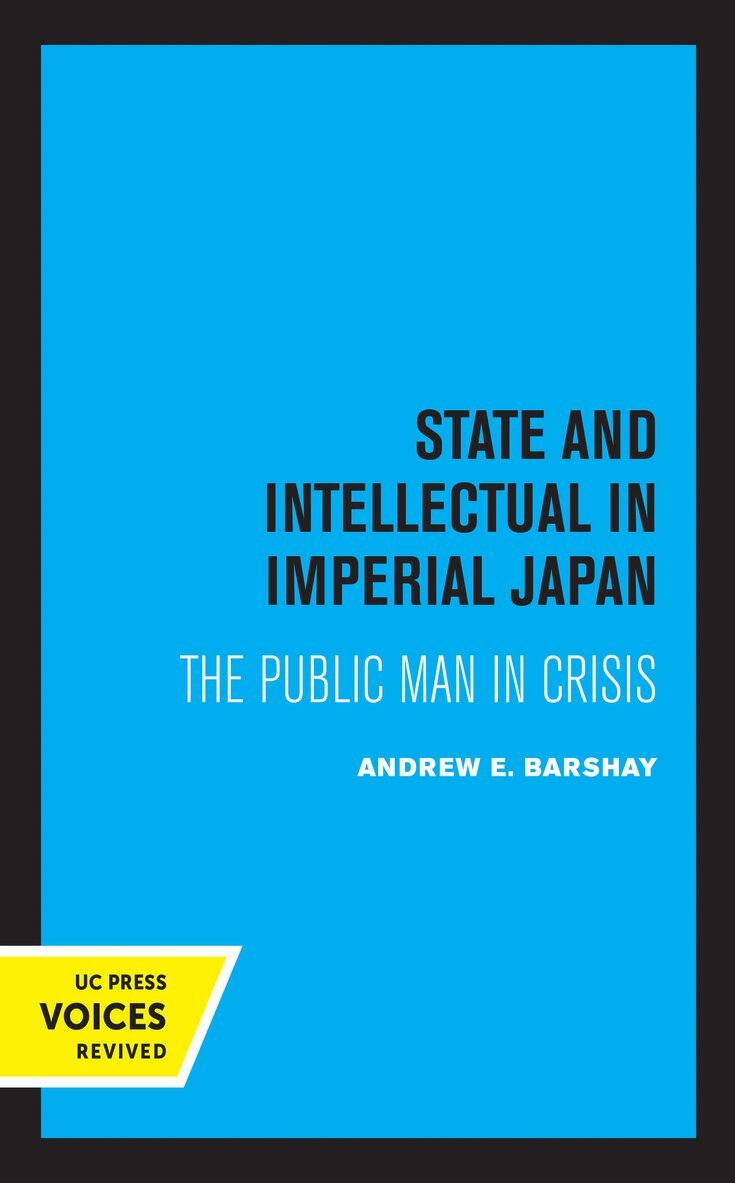
State and Intellectual in Imperial Japan: The Public Man in Crisis by Andrew E. Barshay examines the dilemmas of Japanese intellectual life under the pressures of modern state formation and wartime mobilization. Through paired studies of Nanbara Shigeru, a professor of Western political thought at Tokyo Imperial University, and Hasegawa Nyozekan, a journalist and trenchant critic, Barshay illuminates the tension between “insider” and “outsider” positions in the public sphere during the imperial period (1868–1945). Nanbara, the insider, grappled with the contradiction of serving an imperial institution while resisting the emperor-centered kokutai ideology, seeking refuge in a Christian-inflected vision of moral order. Hasegawa, the outsider, defended a fragile humanistic and anarchic conception of community against the encroachments of the state, though he too was drawn into supporting its war aims. Both men demonstrate the paradoxical mixture of critique and complicity that defined Japan’s intellectuals in crisis.Barshay situates these figures within a broader analysis of how the modern Japanese state conflated “publicness” with officialdom, narrowing the space for dissent even as it depended on intellectual authority for legitimacy. The book also traces the formative influence of these thinkers on Maruyama Masao, whose postwar scholarship bridged their divergent legacies. Engaging with debates on nationalism, fascism, and the role of the state, Barshay probes how intellectuals negotiated loyalty, survival, and conscience amid repression and war. Both a comparative study of public intellectuals and a cautionary tale about the modern state’s demand for allegiance, State and Intellectual in Imperial Japan provides a powerful framework for understanding the price of national identity in the twentieth century and the enduring relevance of the “public man” in moments of crisis.This title is part of UC Press's Voices Revived program, which commemorates University of California Press’s mission to seek out and cultivate the brightest minds and give them voice, reach, and impact. Drawing on a backlist dating to 1893, Voices Revived makes high-quality, peer-reviewed scholarship accessible once again using print-on-demand technology. This title was originally published in 1988.
1 690 kr
Skickas inom 3-6 vardagar
State and Intellectual in Imperial Japan: The Public Man in Crisis by Andrew E. Barshay examines the dilemmas of Japanese intellectual life under the pressures of modern state formation and wartime mobilization. Through paired studies of Nanbara Shigeru, a professor of Western political thought at Tokyo Imperial University, and Hasegawa Nyozekan, a journalist and trenchant critic, Barshay illuminates the tension between “insider” and “outsider” positions in the public sphere during the imperial period (1868–1945). Nanbara, the insider, grappled with the contradiction of serving an imperial institution while resisting the emperor-centered kokutai ideology, seeking refuge in a Christian-inflected vision of moral order. Hasegawa, the outsider, defended a fragile humanistic and anarchic conception of community against the encroachments of the state, though he too was drawn into supporting its war aims. Both men demonstrate the paradoxical mixture of critique and complicity that defined Japan’s intellectuals in crisis.Barshay situates these figures within a broader analysis of how the modern Japanese state conflated “publicness” with officialdom, narrowing the space for dissent even as it depended on intellectual authority for legitimacy. The book also traces the formative influence of these thinkers on Maruyama Masao, whose postwar scholarship bridged their divergent legacies. Engaging with debates on nationalism, fascism, and the role of the state, Barshay probes how intellectuals negotiated loyalty, survival, and conscience amid repression and war. Both a comparative study of public intellectuals and a cautionary tale about the modern state’s demand for allegiance, State and Intellectual in Imperial Japan provides a powerful framework for understanding the price of national identity in the twentieth century and the enduring relevance of the “public man” in moments of crisis.This title is part of UC Press's Voices Revived program, which commemorates University of California Press’s mission to seek out and cultivate the brightest minds and give them voice, reach, and impact. Drawing on a backlist dating to 1893, Voices Revived makes high-quality, peer-reviewed scholarship accessible once again using print-on-demand technology. This title was originally published in 1988.