Andrew I. Port - Böcker
Visar alla böcker från författaren Andrew I. Port. Handla med fri frakt och snabb leverans.
7 produkter
7 produkter
577 kr
Skickas inom 7-10 vardagar
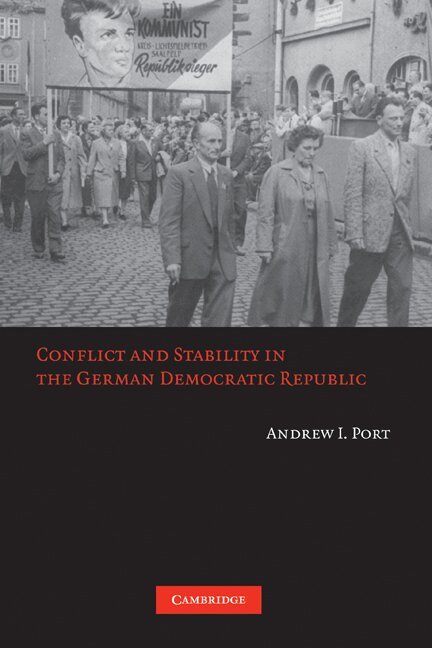
Why did the German Democratic Republic last for so long - longer, in fact, than the Weimar Republic and the Third Reich combined? This book looks at various political, social, and economic conflicts at the grass roots of the GDR in an attempt to answer this question and account for regime stability. A local study, it examines opposition and discontent in Saalfeld, an important industrial and agricultural district. Based on previously inaccessible primary sources as well as on interviews with local residents, the book offers a novel explanation for the durability of the regime by looking at how authorities tried to achieve harmony and consensus through negotiation and compromise. At the same time, it shows how official policies created deep-seated social cleavages that promoted stability by hindering East Germans from presenting a united front to authorities when mounting opposition or pressing for change. All of this provides an indirect answer to perhaps the major question of the postwar period: Why did the Cold War last as long as it did?
1 228 kr
Skickas inom 7-10 vardagar
Why did the German Democratic Republic last for so long - longer, in fact, than the Weimar Republic and the Third Reich combined? This book looks at various political, social, and economic conflicts at the grass roots of the GDR in an attempt to answer this question and account for regime stability. A local study, it examines opposition and discontent in Saalfeld, an important industrial and agricultural district. Based on previously inaccessible primary sources as well as on interviews with local residents, the book offers a novel explanation for the durability of the regime by looking at how authorities tried to achieve harmony and consensus through negotiation and compromise. At the same time, it shows how official policies created deep-seated social cleavages that promoted stability by hindering East Germans from presenting a united front to authorities when mounting opposition or pressing for change. All of this provides an indirect answer to perhaps the major question of the postwar period: Why did the Cold War last as long as it did?
293 kr
Skickas inom 7-10 vardagar
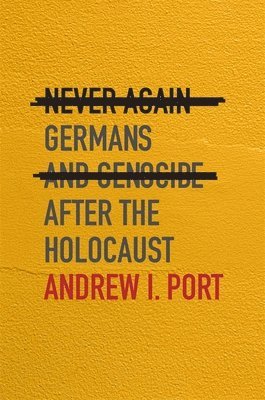
Laura Shannon Prize in Contemporary European Studies ShortlistGermans remember the Nazi past so that it may never happen again. But how has the abstract vow to remember translated into concrete action to prevent new genocides abroad?As reports of mass killings in Bosnia spread in the middle of 1995, Germans faced a dilemma. Should the Federal Republic deploy its military to the Balkans to prevent a genocide, or would departing from postwar Germany’s pacifist tradition open the door to renewed militarism? In short, when Germans said “never again,” did they mean “never again Auschwitz” or “never again war”?Looking beyond solemn statements and well-meant monuments, Andrew I. Port examines how the Nazi past shaped German responses to the genocides in Cambodia, Bosnia, and Rwanda—and further, how these foreign atrocities recast Germans’ understanding of their own horrific history. In the late 1970s, the reign of the Khmer Rouge received relatively little attention from a firmly antiwar public that was just “discovering” the Holocaust. By the 1990s, the genocide of the Jews was squarely at the center of German identity, a tectonic shift that inspired greater involvement in Bosnia and, to a lesser extent, Rwanda. Germany’s increased willingness to use force in defense of others reflected the enthusiastic embrace of human rights by public officials and ordinary citizens. At the same time, conservatives welcomed the opportunity for a more active international role involving military might—to the chagrin of pacifists and progressives at home.Making the lessons, limits, and liabilities of politics driven by memories of a troubled history harrowingly clear, Never Again is a story with deep resonance for any country confronting a dark past.
2 014 kr
Skickas inom 3-6 vardagar
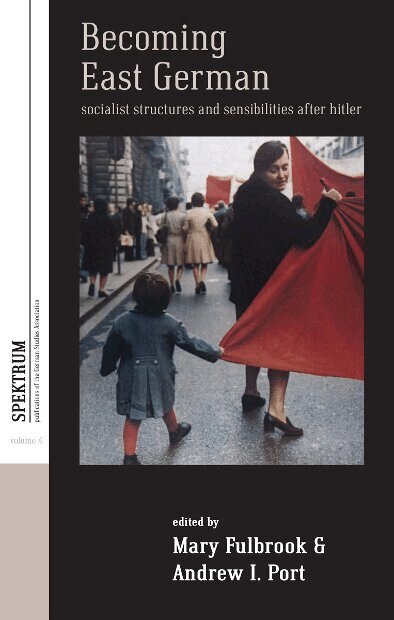
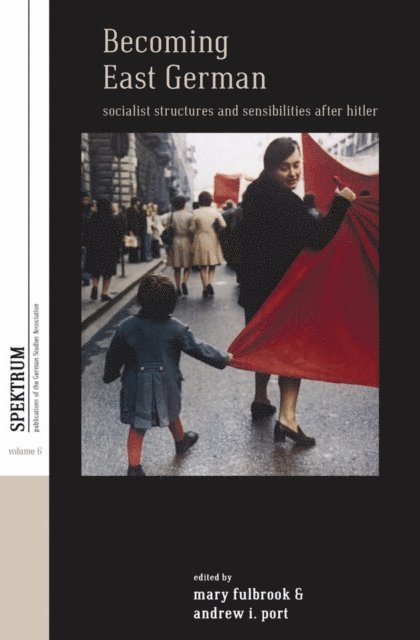
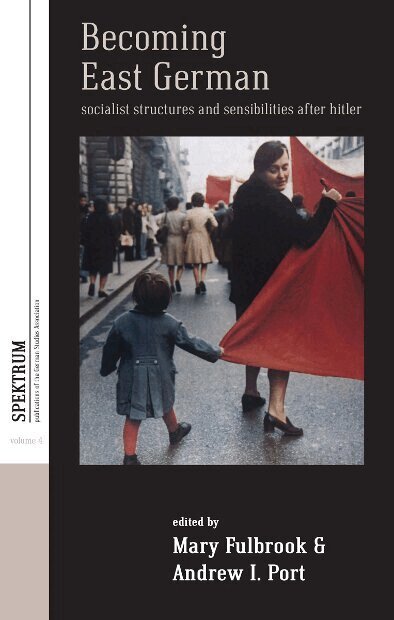
For roughly the first decade after the demise of the GDR, professional and popular interpretations of East German history concentrated primarily on forms of power and repression, as well as on dissent and resistance to communist rule. Socio-cultural approaches have increasingly shown that a single-minded emphasis on repression and coercion fails to address a number of important historical issues, including those related to the subjective experiences of those who lived under communist regimes. With that in mind, the essays in this volume explore significant physical and psychological aspects of life in the GDR, such as health and diet, leisure and dining, memories of the Nazi past, as well as identity, sports, and experiences of everyday humiliation. Situating the GDR within a broader historical context, they open up new ways of interpreting life behind the Iron Curtain – while providing a devastating critique of misleading mainstream scholarship, which continues to portray the GDR in the restrictive terms of totalitarian theory.
618 kr
Skickas inom 7-10 vardagar
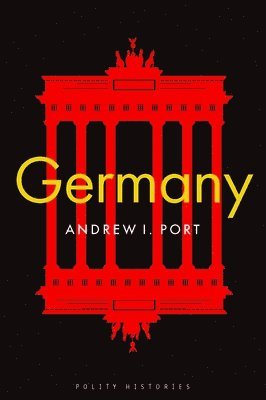
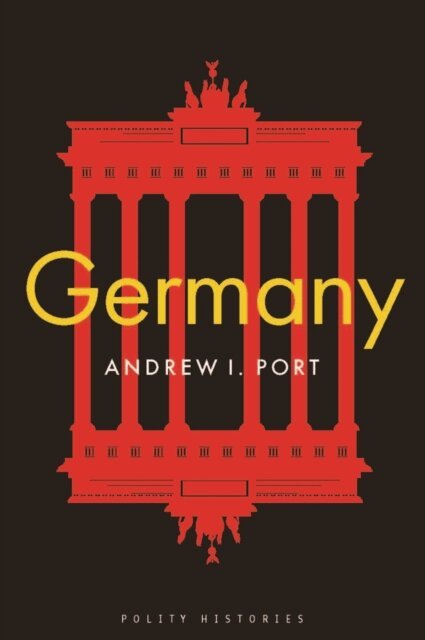
Few countries are more haunted by the darker aspects of their history than Germany. Nazi crimes continue to cast a long shadow at home and abroad. Germans have nevertheless managed to put their violent, genocidal past behind them, creating a peaceful and prosperous democracy at the heart of Europe.In this refreshing book, Andrew I. Port tells the story of that extraordinary transformation. Tracing the histories of the Eastern and Western halves of postwar Germany in tandem, he highlights their obvious differences and unexpected commonalities. This novel approach explains not only the country’s many accomplishments since the fall of the Berlin Wall, but also the challenges it has faced – from the difficulty of unifying two distinct societies to violent forms of xenophobia and the rise of extremist parties. Whether the Federal Republic remains a stable and successful power is the new "German Question" of the twenty-first century.
191 kr
Skickas inom 7-10 vardagar
Few countries are more haunted by the darker aspects of their history than Germany. Nazi crimes continue to cast a long shadow at home and abroad. Germans have nevertheless managed to put their violent, genocidal past behind them, creating a peaceful and prosperous democracy at the heart of Europe.In this refreshing book, Andrew I. Port tells the story of that extraordinary transformation. Tracing the histories of the Eastern and Western halves of postwar Germany in tandem, he highlights their obvious differences and unexpected commonalities. This novel approach explains not only the country’s many accomplishments since the fall of the Berlin Wall, but also the challenges it has faced – from the difficulty of unifying two distinct societies to violent forms of xenophobia and the rise of extremist parties. Whether the Federal Republic remains a stable and successful power is the new "German Question" of the twenty-first century.
583 kr
Skickas inom 3-6 vardagar
For roughly the first decade after the demise of the GDR, professional and popular interpretations of East German history concentrated primarily on forms of power and repression, as well as on dissent and resistance to communist rule. Socio-cultural approaches have increasingly shown that a single-minded emphasis on repression and coercion fails to address a number of important historical issues, including those related to the subjective experiences of those who lived under communist regimes. With that in mind, the essays in this volume explore significant physical and psychological aspects of life in the GDR, such as health and diet, leisure and dining, memories of the Nazi past, as well as identity, sports, and experiences of everyday humiliation. Situating the GDR within a broader historical context, they open up new ways of interpreting life behind the Iron Curtain – while providing a devastating critique of misleading mainstream scholarship, which continues to portray the GDR in the restrictive terms of totalitarian theory.