• Fri frakt över 249 kr
  • •
  • Snabba leveranser
  • •
  • Billiga böcker
Kundservice

Du är på sajten för privatpersoner.

Företag, bibliotek eller offentlig verksamhet?

Du handlar på classic.bokus.com, där alla dina funktioner finns intakta.
Till classic.bokus.com
Bokus logotyp. Gå till startsidan.
  • Erbjudanden
  • Nyheter
  • Student
  • Topplistor
  • Barn & ungdom
  • Bokus Play
  • E-böcker
  • Pocketböcker
  • Spel & pussel

10% rabatt på allt med kod: NYSTART10 →

Sidfot

Mina sidor

    Hjälp

    • Kundservice
    • Vanliga frågor och svar
    • Frakt och leverans
    • Retur vid ångerrätt
    • Reklamera vara
    • Betalning
    • Köpvillkor
    • Allmänna villkor
    • Information om webbplatsens tillgänglighet

    Om Bokus

    • Om oss
    • Pressrum
    • För studenter
    • För företag
    • För bibliotek och offentlig verksamhet
    • För leverantörer
    • Hållbarhet

    Populärt

    • Aktuella erbjudanden
    • Presentkort
    • Studentlitteratur
    • Nya böcker
    • Topplistor
    • Signerade böcker
    • Engelska böcker

    Inspiration

    • Boktips
    • BookTok
    • Populära bokserier
    • Barnbokskaraktärer
    • Populära författare
    Logotyp för Bokus
    Följ oss på Facebook (extern länk)Följ oss på Instagram (extern länk)Följ oss på YouTube (extern länk)Följ oss på TikTok (extern länk)
    bokus @ CookiesAnpassa cookiesIntegritetspolicyKöpvillkor
    Till Citymail hemsida (extern länk)Till Budbee hemsida (extern länk)Till Postnord hemsida (extern länk)Till Schenker hemsida (extern länk)Till Early Bird hemsida (extern länk)Till Walleys hemsida (extern länk)
    1. Historia och arkeologi
    2. Historia

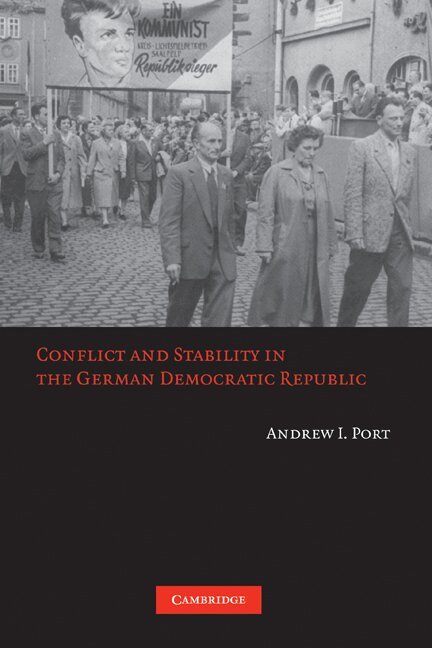
    Conflict and Stability in the German Democratic Republic

    AvAndrew I. Port

    Häftad, Engelska, 2008

    615 kr

    Beställningsvara. Skickas inom 10-15 vardagar. Fri frakt över 249 kr.

    Fler format och utgåvor

    Inbunden

    1 319 kr

    Beskrivning

    Why did the German Democratic Republic last for so long - longer, in fact, than the Weimar Republic and the Third Reich combined? This book looks at various political, social, and economic conflicts at the grass roots of the GDR in an attempt to answer this question and account for regime stability. A local study, it examines opposition and discontent in Saalfeld, an important industrial and agricultural district. Based on previously inaccessible primary sources as well as on interviews with local residents, the book offers a novel explanation for the durability of the regime by looking at how authorities tried to achieve harmony and consensus through negotiation and compromise. At the same time, it shows how official policies created deep-seated social cleavages that promoted stability by hindering East Germans from presenting a united front to authorities when mounting opposition or pressing for change. All of this provides an indirect answer to perhaps the major question of the postwar period: Why did the Cold War last as long as it did?

    Produktinformation

    • Utgivningsdatum:2008-10-06
    • Mått:156 x 234 x 17 mm
    • Vikt:460 g
    • Format:Häftad
    • Språk:Engelska
    • Antal sidor:326
    • Förlag:Cambridge University Press
    • ISBN:9780521744171
    • Utmärkelser:DAAD Prize for Distinguished Scholarship in German and European Studies 2013

    Utforska kategorier

    • Historia inom Historia och arkeologi

    Mer om författaren

    Andrew I. Port is an Assistant Professor of History at Wayne State University, Detroit. He earned a PhD in history from Harvard University and a BA in history from Yale University. He has published articles in Social History and the Frankfürter Allgemeine Zeitung. Professor Port is a research associate at the Center for Russian and East European Studies at the University of Michigan, Ann Arbor, and he was a visiting scholar at the Zentrum für Zeithistorische Forschung (Center for Contemporary Historical Research) in Potsdam, Germany.

    Recensioner i media

    '[Port's] study makes a significant contribution to the history of the GDR and to scholarly debate about the relationship between state and society in Stalinist states.' Donna Harsch, Carnegie Mellon University

    Innehållsförteckning

    • Part I. Upheaval (1945–53): 1. Creating a 'new order'; 2. The GDR's 'first strike'; 3. The revolution manqué of June 1953; Part II. The Calm after the Storm (1953–71): 4. The limits of repression; 5. Exit, voice, and apathy; 6. Power in the people's factories; 7. Achieving harmony on the shop floor; 8. Divide and rule?; 9. 'I comes before we' in the countryside; 10. 'Whatever happened to the classless society?'