Andrew Irvine – författare
Visar alla böcker från författaren Andrew Irvine. Handla med fri frakt och snabb leverans.
9 produkter
Bertrand Russell
Critical Assessments
1998
25310 kr
Lägg i varukorg
This set offers the reader a way into the critical writings on Russell's work on Logic, Mathematics, Language, Knowledge, the World, History of Philosophy, Ethics, Education, Religion and Politics, and on his life and influence.
Philosophy of Mathematics
Av Andrew Irvine, Dov M. Gabbay m. fl.
Inbunden, 2009
1958 kr
Lägg i varukorg
One of the most striking features of mathematics is the fact that we are much more certain about the mathematical knowledge we have than about what mathematical knowledge is knowledge of. Are numbers, sets, functions and groups physical entities of some kind? Are they objectively existing objects …
Gastroenterology on the Move
Av Andrew Irvine, Lucy Carroll m. fl.
E-bok, 2015
464 kr
Lägg i varukorg
The Medicine on the Move series provides fully-flexible access to subjects across the curriculum, in this case gastroenterology, in a unique combination of print and mobile formats. The books are ideal for the busy medical student and junior doctor, irrespective of individual learning style and …
Gastroenterology on the Move
Av Andrew Irvine, Lucy Carroll m. fl.
E-bok, 2015
464 kr
Lägg i varukorg
The Medicine on the Move series provides fully-flexible access to subjects across the curriculum, in this case gastroenterology, in a unique combination of print and mobile formats. The books are ideal for the busy medical student and junior doctor, irrespective of individual learning style and …
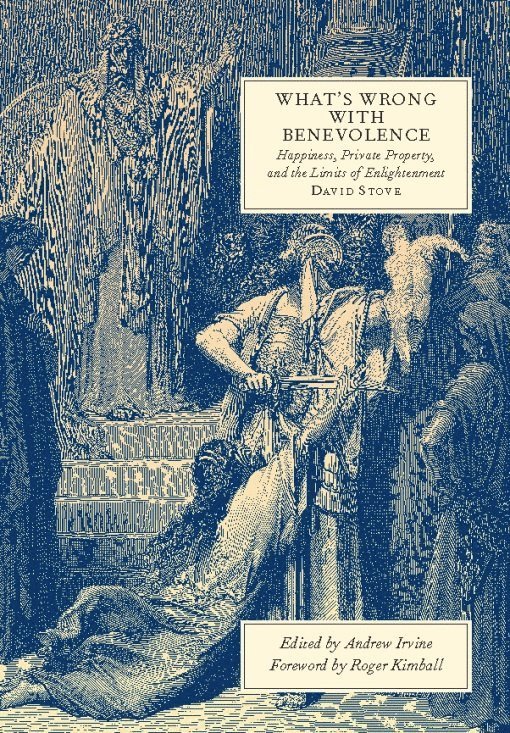
What's Wrong with Benevolence
Happiness, Private Property, and the Limits of Enlightenment
E-bok, 2011
318 kr
Lägg i varukorg
Is benevolence a virtue? In many cases it appears to be so. But when it comes to the “enlarged benevolence” of the Enlightenment, David Stove argues that the answer is clearly no. In this insightful, provocative essay, Stove builds a case for the claim that when benevolence is universal, …
What's Wrong with Benevolence
Happiness, Private Property, and the Limits of Enlightenment
Inbunden, 2011
205 kr
Tillfälligt slut
Is benevolence a virtue? In many cases it appears to be so. But when it comes to the "enlarged benevolence" of the Enlightenment, David Stove argues that the answer is clearly no. In this insightful, provocative essay, Stove builds a case for the claim that when benevolence is universal, …