Andrew J. Friedenthal – Författare
Visar alla böcker från författaren Andrew J. Friedenthal. Handla med fri frakt och snabb leverans.
4 produkter
4 produkter
917 kr
Skickas inom 10-15 vardagar
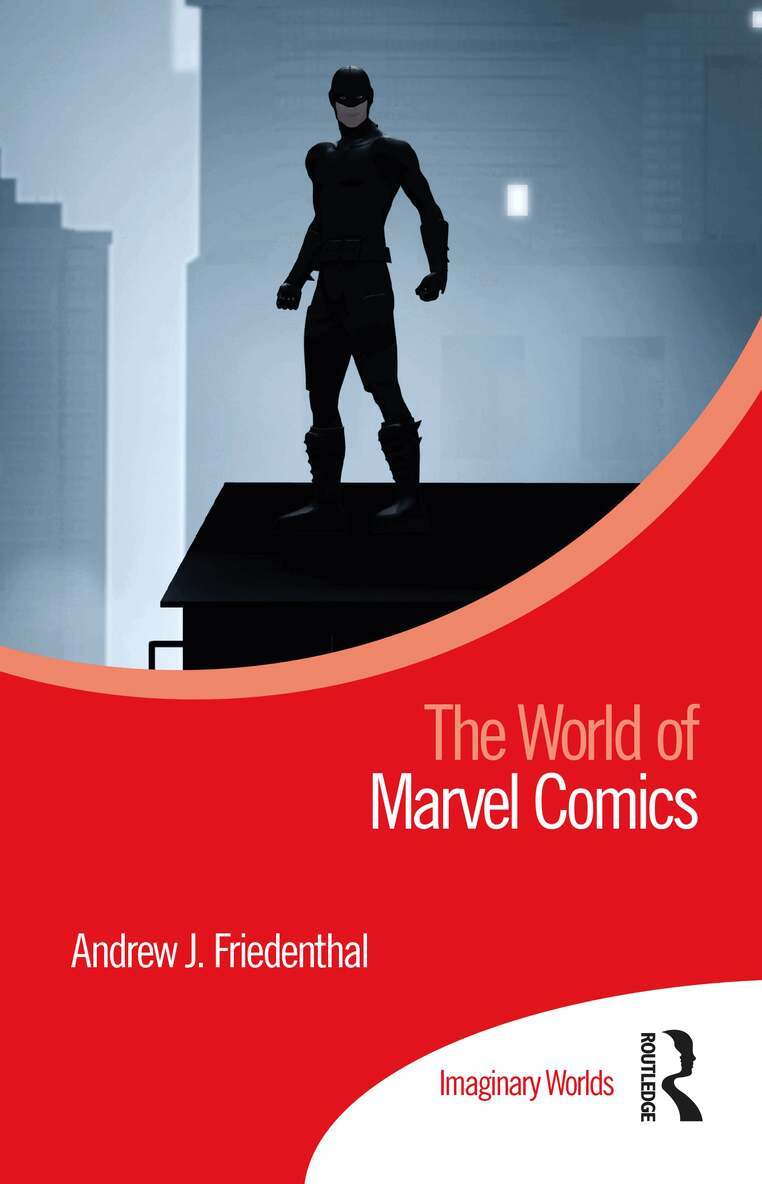
A detailed study of the history and long-lasting influence of Marvel Comics, this book explores the ways Marvel’s truly unique comic book world reflects real world issues and controversies alongside believable, psychologically-motivated characters.The book examines a decades-long dual focus on both tight-knit continuity and real-world fidelity that makes the Marvel Universe a unique entity amongst imaginary worlds. Although there have been many books and articles that analyze each of these aspects of the Marvel Universe, the unique focus of this book is on how those two aspects have interwoven over the course of Marvel’s history, and the ways in which both have been used as storytelling engines that have fueled the entire imaginary world of Marvel Comics.Andrew J. Friedenthal has crafted a groundbreaking, engaging, and thoughtful examination of how this particular story world combines intricate world-building with responsiveness to real world events, which will be of interest to scholars and enthusiasts of not just comics studies, but also the fields of transmedia studies and imaginary worlds.
265 kr
Skickas inom 10-15 vardagar
A detailed study of the history and long-lasting influence of Marvel Comics, this book explores the ways Marvel’s truly unique comic book world reflects real world issues and controversies alongside believable, psychologically-motivated characters.The book examines a decades-long dual focus on both tight-knit continuity and real-world fidelity that makes the Marvel Universe a unique entity amongst imaginary worlds. Although there have been many books and articles that analyze each of these aspects of the Marvel Universe, the unique focus of this book is on how those two aspects have interwoven over the course of Marvel’s history, and the ways in which both have been used as storytelling engines that have fueled the entire imaginary world of Marvel Comics.Andrew J. Friedenthal has crafted a groundbreaking, engaging, and thoughtful examination of how this particular story world combines intricate world-building with responsiveness to real world events, which will be of interest to scholars and enthusiasts of not just comics studies, but also the fields of transmedia studies and imaginary worlds.
1 184 kr
Skickas inom 10-15 vardagar
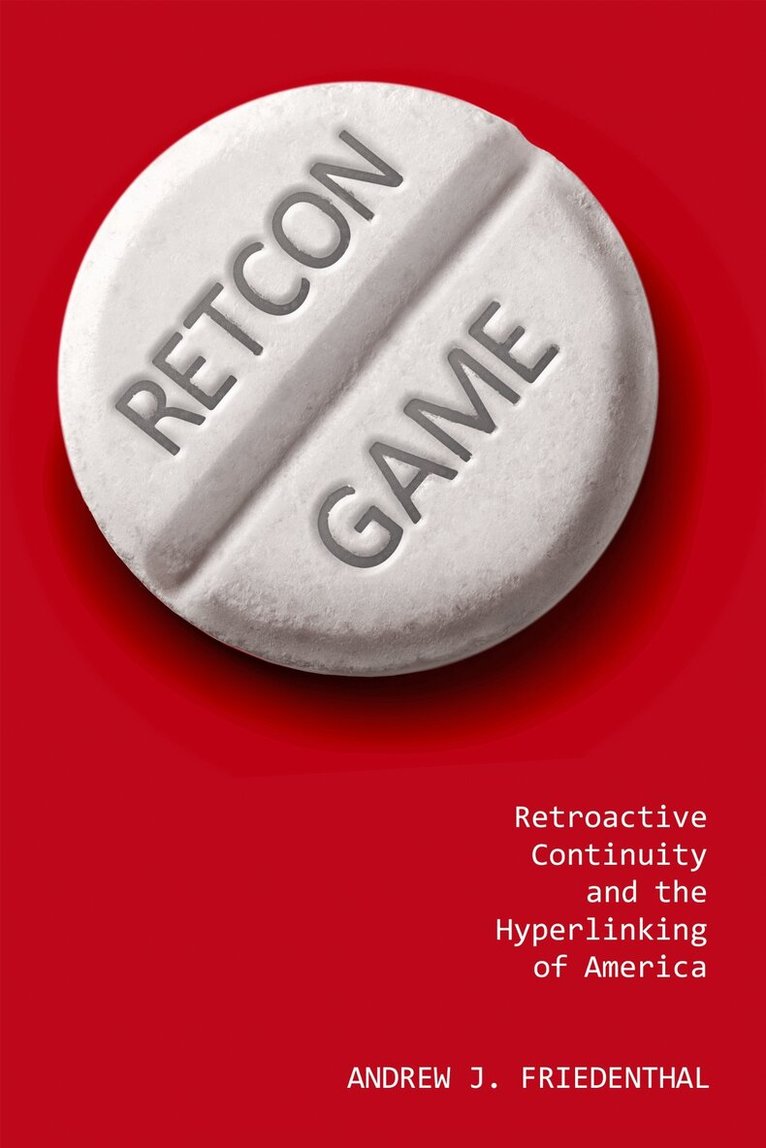
The superhero Wolverine time travels and changes storylines. On Torchwood, there’s a pill popped to alter the past. The narrative technique of retroactive continuity seems rife lately, given all the world-building in comics. Andrew J. Friedenthal deems retroactive continuity, or “retconning,” as a force with many implications forhow Americans view history and culture.Friedenthal examines this phenomenon in a range of media, from its beginnings in comic books and now its widespread shift into television, film, and digital media. Retconning has reached its present form as a result of the complicated workings of superhero comics. In comic books and other narratives, retconning often seems utilized to literally rewrite some aspect of a character’s past, either to keep that character more contemporary, to erase storiesfrom continuity that no longer fit, or to create future story potential.From comics, retconning has spread extensively, to long-form, continuity-rich dramas on television, such as Buffy the Vampire Slayer, Lost, and beyond. Friedenthal explains that in a culture saturated by editable media, where interest groups argue over Wikipedia pages and politicians can immediately delete questionable tweets, the retcon serves as a perfect metaphor for the ways in which history, and our access to information overall, has become endlessly malleable.In the first book to focus on this subject, Friedenthal regards the editable Internet hyperlink, rather than the stable printed footnote, as the de facto source of information in America today. To embrace retroactive continuity in fictional media means accepting that the past itself is not a stable element, but rather something constantly in contentious flux. Due to retconning’s ubiquity within our media, we have grown familiar with narratives as inherentlyunstable, a realization that deeply affects how we understand the world.
423 kr
Skickas inom 10-15 vardagar
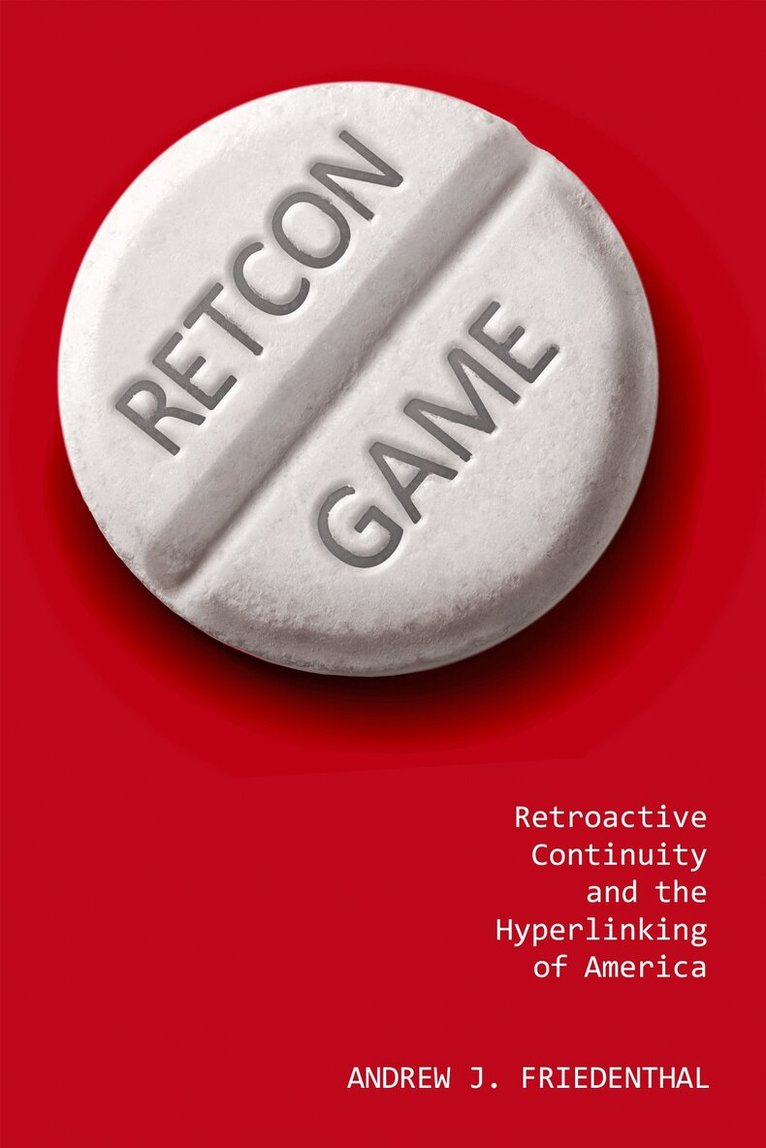
The superhero Wolverine time travels and changes storylines. On Torchwood, there's a pill popped to alter memories of the past. The narrative technique of retroactive continuity seems rife lately, given all the world-building in comics. Andrew J. Friedenthal deems retroactive continuity, or ""retconning,"" as a force with many implications for how Americans view history and culture.Friedenthal examines this phenomenon in a range of media, from its beginnings in comic books and now its widespread shift into television, film, and digital media. Retconning has reached its present form as a result of the complicated workings of superhero comics. In comic books and other narratives, retconning often seems utilized to literally rewrite some aspect of a character's past, either to keep that character more contemporary, to erase stories from continuity that no longer fit, or to create future story potential.From comics, retconning has spread extensively, to long-form, continuity-rich dramas on television, such as Buffy the Vampire Slayer, Lost, and beyond. Friedenthal explains that in a culture saturated by editable media, where interest groups argue over Wikipedia pages and politicians can immediately delete questionable tweets, the retcon serves as a perfect metaphor for the ways in which history, and our access to information overall, has become endlessly malleable.In the first book to focus on this subject, Friedenthal regards the editable Internet hyperlink, rather than the stable printed footnote, as the de facto source of information in America today. To embrace retroactive continuity in fictional media means accepting that the past itself is not a stable element, but rather something constantly in contentious flux. Due to retconning's ubiquity within our media, we have grown familiar with narratives as inherently unstable, a realization that deeply affects how we understand the world.