Andrew Moretta – författare
Visar alla böcker från författaren Andrew Moretta. Handla med fri frakt och snabb leverans.
6 produkter
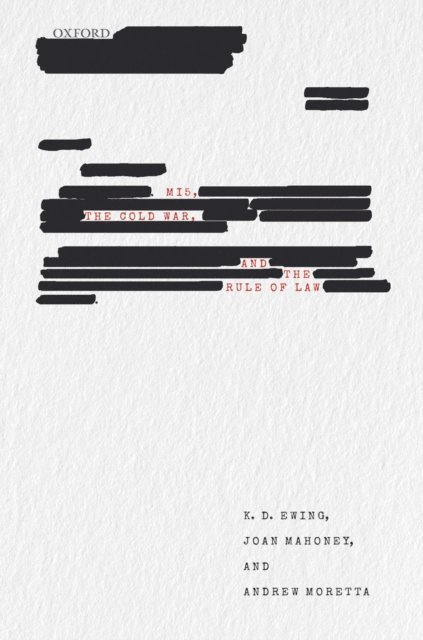
MI5, the Cold War, and the Rule of Law
Av Andrew Moretta, Joan Mahoney m. fl.
E-bok, 2020
1484 kr
Lägg i varukorg
This book explores the powers, activities, and accountability of MI5 from the end of the Second World War to 1964. It argues that MI5 acted with neither statutory authority nor statutory powers, and with no obvious forms of statutory accountability. It was established as a counter-espionage agency, …
MI5, the Cold War, and the Rule of Law
Av Andrew Moretta, Joan Mahoney m. fl.
E-bok, 2020
1484 kr
Lägg i varukorg
This book explores the powers, activities, and accountability of MI5 from the end of the Second World War to 1964. It argues that MI5 acted with neither statutory authority nor statutory powers, and with no obvious forms of statutory accountability. It was established as a counter-espionage agency, …
MI5, the Cold War, and the Rule of Law
Av Keith Ewing, Joan Mahoney m. fl.
Inbunden, 2020
1646 kr
Lägg i varukorg
This book explores the powers, activities, and accountability of MI5 from the end of the Second World War to 1964. It argues that MI5 acted with neither statutory authority nor statutory powers, and with no obvious forms of statutory accountability. It was established as a counter-espionage agency, …
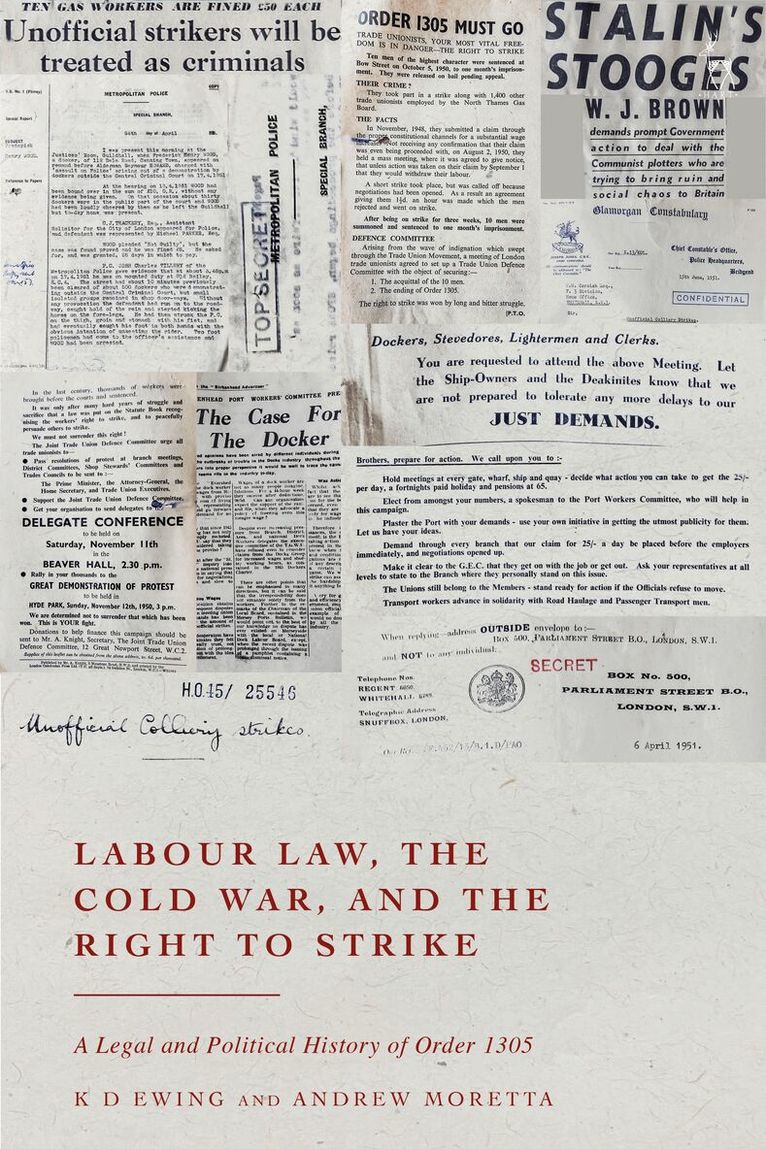
Labour Law, the Cold War, and the Right to Strike
A Legal and Political History of Order 1305
E-bok, 2026
1362 kr
Lägg i varukorg
This book examines the origins, deployment, and legacy of Order 1305, a measure introduced in 1940 to make it a criminal offence to take part in a strike. Surprisingly, the prohibition on the right to strike was retained by the Attlee administration after the Second World War, and was transformed …
Labour Law, the Cold War, and the Right to Strike
A Legal and Political History of Order 1305
E-bok, 2026
1362 kr
Lägg i varukorg
This book examines the origins, deployment, and legacy of Order 1305, a measure introduced in 1940 to make it a criminal offence to take part in a strike. Surprisingly, the prohibition on the right to strike was retained by the Attlee administration after the Second World War, and was transformed …
Labour Law, the Cold War, and the Right to Strike
A Legal and Political History of Order 1305
Inbunden, 2026
1242 kr
Lägg i varukorg
This book examines the origins, deployment, and legacy of Order 1305, a measure introduced in 1940 to make it a criminal offence to take part in a strike. Surprisingly, the prohibition on the right to strike was retained by the Attlee administration after the Second World War, and was transformed …