Andrew Piper – författare
Visar alla böcker från författaren Andrew Piper. Handla med fri frakt och snabb leverans.
15 produkter
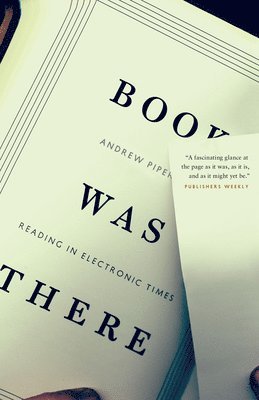
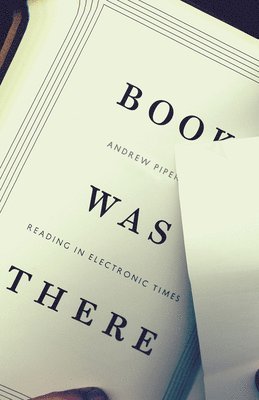
Book Was There
Reading in Electronic Times
Av Andrew Piper
Häftad, 2013
185 kr
Lägg i varukorg
Much ink has been spilled lamenting or championing the decline of printed books. In Book Was There, Andrew Piper shows that the rich history of reading itself offers unexpected clues to what lies in store for books - print or digital. From medieval manuscript books to today's interactive urban …
Dreaming in Books
The Making of the Bibliographic Imagination in the Romantic Age
Av Andrew Piper
Häftad, 2013
263 kr
Lägg i varukorg
At the turn of the nineteenth century, publishing houses in London, New York, Paris, Stuttgart, and Berlin produced books in ever greater numbers. But it was not just the advent of mass printing that created the era's "bookish" culture. According to Andrew Piper, romantic writing and writers played …
Enumerations
Data and Literary Study
Av Andrew Piper
Inbunden, 2018
979 kr
Lägg i varukorg
For well over a century, academic disciplines have studied human behavior using quantitative information. Until recently, however, the humanities have remained largely immune to the use of data—or vigorously resisted it. Thanks to new developments in computer science and natural language …
Enumerations
Data and Literary Study
Av Andrew Piper
Häftad, 2018
302 kr
Lägg i varukorg
For well over a century, academic disciplines have studied human behavior using quantitative information. Until recently, however, the humanities have remained largely immune to the use of data—or vigorously resisted it. Thanks to new developments in computer science and natural language …
Enumerations
Data and Literary Study
Av Andrew Piper
E-bok, 2018
584 kr
Lägg i varukorg
For well over a century, academic disciplines have studied human behavior using quantitative information. Until recently, however, the humanities have remained largely immune to the use of data—or vigorously resisted it. Thanks to new developments in computer science and natural language …
Dreaming in Books
The Making of the Bibliographic Imagination in the Romantic Age
Av Andrew Piper
Inbunden, 2009
979 kr
Lägg i varukorg
At the opening of the nineteenth century, publishing houses in London, New York, Paris, Stuttgart, and Berlin produced books in ever greater numbers. But it was not just the advent of mass printing that created the era's 'bookish' culture. According to Andrew Piper, romantic writers played a …
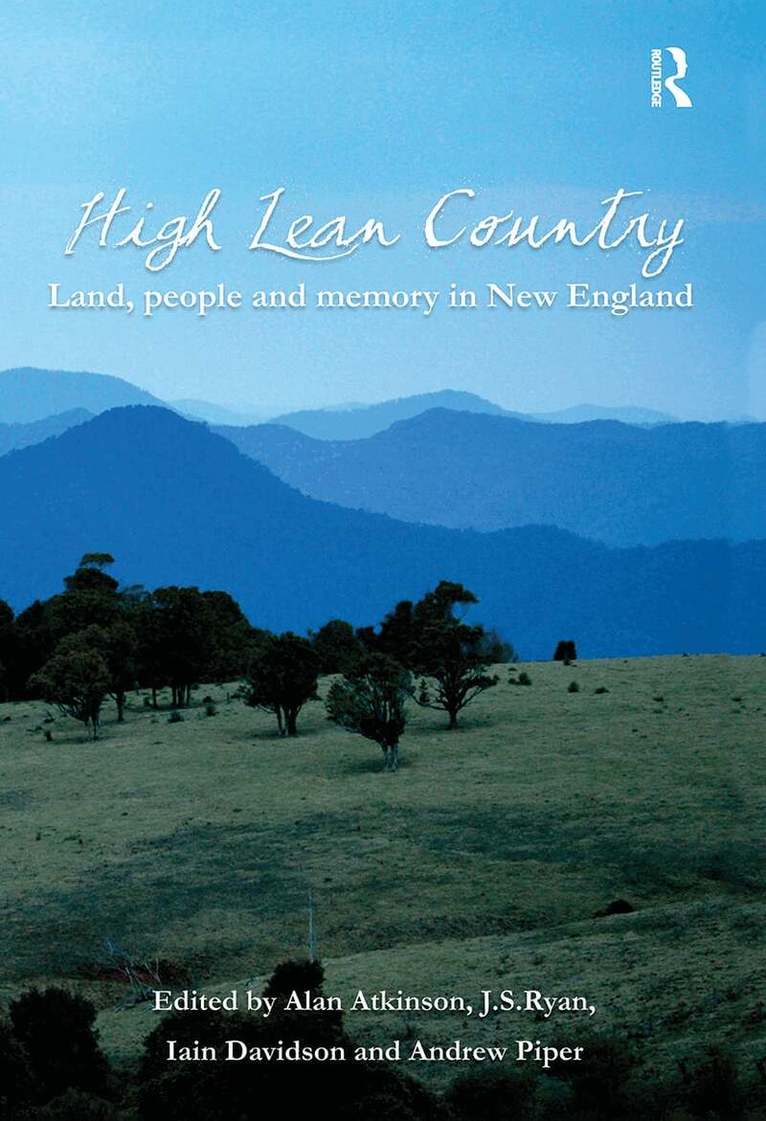
High Lean Country
Land, people and memory in New England
Av Alan Atkinson, JS Ryan m. fl.
Inbunden, 2021
2601 kr
Lägg i varukorg
High Lean Country captures the rich history and haunting character of the New England region of northern New South Wales.The authors explore how memory - of land, of family, of patterns of life on the other side of the world - has influenced the identity of New England. They also consider how the …
High Lean Country
Land, people and memory in New England
Av Andrew Piper, Iain Davidson m. fl.
E-bok, 2020
678 kr
Lägg i varukorg
High Lean Country captures the rich history and haunting character of the New England region of northern New South Wales. The authors explore how memory - of land, of family, of patterns of life on the other side of the world - has influenced the identity of New England. They also consider how the …
High Lean Country
Land, people and memory in New England
Av Andrew Piper, Iain Davidson m. fl.
E-bok, 2020
678 kr
Lägg i varukorg
High Lean Country captures the rich history and haunting character of the New England region of northern New South Wales. The authors explore how memory - of land, of family, of patterns of life on the other side of the world - has influenced the identity of New England. They also consider how the …
Can We Be Wrong? The Problem of Textual Evidence in a Time of Data
Av Andrew Piper
E-bok, 2020
330 kr
Lägg i varukorg
Can We Be Wrong? The Problem of Textual Evidence in a Time of Data
Av Andrew Piper
E-bok, 2020
338 kr
Lägg i varukorg
This Element tackles the problem of generalization with respect to text-based evidence in the field of literary studies. When working with texts, how can we move, reliably and credibly, from individual observations to more general beliefs about the world? The onset of computational methods has …
Can We Be Wrong? The Problem of Textual Evidence in a Time of Data
Av Andrew Piper
Häftad, 2020
354 kr
Lägg i varukorg
This Element tackles the problem of generalization with respect to text-based evidence in the field of literary studies. When working with texts, how can we move, reliably and credibly, from individual observations to more general beliefs about the world? The onset of computational methods has …
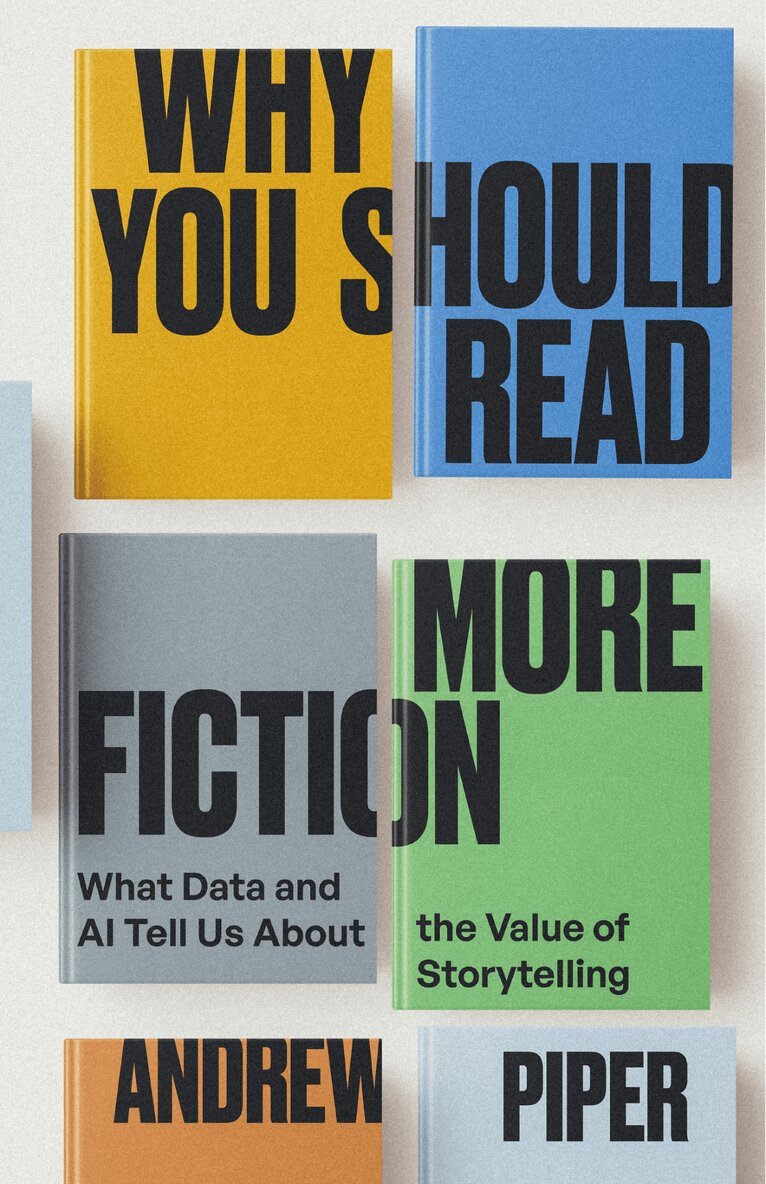
Why You Should Read More Fiction
What Data and AI Tell Us About the Value of Storytelling
Av Andrew Piper
Inbunden, 2026
399 kr
Lägg i varukorg
Why human storytelling matters: the science behind attention, memory, and connection.How do the stories we read shape the ways we think, perceive, and navigate the world? In this ambitious and timely book, Andrew Piper argues that fiction is far more than entertainment. Stories cultivate attention, …
High Lean Country
Land, people and memory in New England
Av Alan Atkinson, JS Ryan m. fl.
Häftad, 2006
580 kr
Lägg i varukorg
An exploration of the history and heritage of the New England region of New South Wales.
Book Was There
Reading in Electronic Times
Av Andrew Piper
Inbunden, 2012
4,0 utav 5 stjärnor. Totalt antal röster: (2)
244 kr
Tillfälligt slut
Andrew Piper grew up liking books and loving computers. While occasionally burying his nose in books, he was going to computer camp, programming his Radio Shack TRS-80, and playing Pong. His eventual love of reading made him a historian of the book and a connoisseur of print, but as a card-carrying …