
Andrew S. Curran – författare
Visar alla böcker från författaren . Handla med fri frakt och snabb leverans.
9 produkter
9 produkter
Inbunden, Engelska, 2022
291 kr
Skickas inom 5-8 vardagar
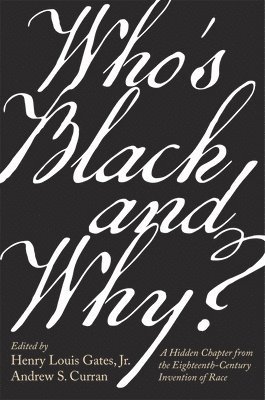
“A fascinating, if disturbing, window onto the origins of racism.”—Publishers Weekly“The eighteenth-century essays published for the first time in Who’s Black and Why? contain a world of ideas—theories, inventions, and fantasies—about what blackness is, and what it means. To read them is to witness European intellectuals, in the age of the Atlantic slave trade, struggling, one after another, to justify atrocity.”—Jill Lepore, author of These Truths: A History of the United StatesThe first translation and publication of sixteen submissions to the notorious eighteenth-century Bordeaux essay contest on the cause of black skin—an indispensable chronicle of the rise of scientifically based, anti-Black racism.In 1739 Bordeaux’s Royal Academy of Sciences announced a contest for the best essay on the sources of “blackness.” What is the physical cause of blackness and African hair, and what is the cause of Black degeneration, the contest announcement asked. Sixteen essays, written in French and Latin, were ultimately dispatched from all over Europe. The authors ranged from naturalists to physicians, theologians to amateur savants. Documented on each page are European ideas about who is Black and why.Looming behind these essays is the fact that some four million Africans had been kidnapped and shipped across the Atlantic by the time the contest was announced. The essays themselves represent a broad range of opinions. Some affirm that Africans had fallen from God’s grace; others that blackness had resulted from a brutal climate; still others emphasized the anatomical specificity of Africans. All the submissions nonetheless circulate around a common theme: the search for a scientific understanding of the new concept of race. More important, they provide an indispensable record of the Enlightenment-era thinking that normalized the sale and enslavement of Black human beings.These never previously published documents survived the centuries tucked away in Bordeaux’s municipal library. Translated into English and accompanied by a detailed introduction and headnotes written by Henry Louis Gates, Jr., and Andrew Curran, each essay included in this volume lays bare the origins of anti-Black racism and colorism in the West.
Häftad, Engelska, 2024
176 kr
Skickas inom 5-8 vardagar
2023 PROSE Award in European History“An invaluable historical example of the creation of a scientific conception of race that is unlikely to disappear anytime soon.”—Washington Post“Reveals how prestigious natural scientists once sought physical explanations, in vain, for a social identity that continues to carry enormous significance to this day.”—Nell Irvin Painter, author of The History of White People“A fascinating, if disturbing, window onto the origins of racism.”—Publishers Weekly“To read [these essays] is to witness European intellectuals, in the age of the Atlantic slave trade, struggling, one after another, to justify atrocity.”—Jill Lepore, author of These Truths: A History of the United StatesIn 1739 Bordeaux’s Royal Academy of Sciences announced a contest for the best essay on the sources of “blackness.” What is the physical cause of blackness and African hair, and what is the cause of Black degeneration, the contest announcement asked. Sixteen essays, written in French and Latin, were ultimately dispatched from all over Europe. Documented on each page are European ideas about who is Black and why. Looming behind these essays is the fact that some four million Africans had been kidnapped and shipped across the Atlantic by the time the contest was announced.The essays themselves represent a broad range of opinions, which nonetheless circulate around a common theme: the search for a scientific understanding of the new concept of race. More important, they provide an indispensable record of the Enlightenment-era thinking that normalized the sale and enslavement of Black human beings.These never previously published documents survived the centuries tucked away in Bordeaux’s municipal library. Translated into English and accompanied by a detailed introduction and headnotes written by Henry Louis Gates, Jr., and Andrew Curran, each essay included in this volume lays bare the origins of anti-Black racism and colorism in the West.
Häftad, Engelska, 2013
462 kr
Skickas inom 5-8 vardagar
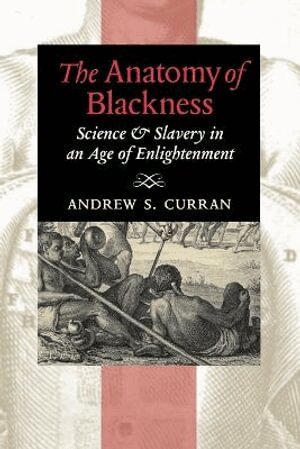
This volume examines the Enlightenment-era textualization of the Black African in European thought. Andrew S. Curran rewrites the history of blackness by replicating the practices of eighteenth-century readers. Surveying French and European travelogues, natural histories, works of anatomy, pro- and anti-slavery tracts, philosophical treatises, and literary texts, Curran shows how naturalists and philosophes drew from travel literature to discuss the perceived problem of human blackness within the nascent human sciences, describes how a number of now-forgotten anatomists revolutionized the era's understanding of black Africans, and charts the shift of the slavery debate from the moral, mercantile, and theological realms toward that of the "black body" itself. In tracing this evolution, he shows how blackness changed from a mere descriptor in earlier periods into a thing to be measured, dissected, handled, and often brutalized.Penetrating and comprehensive, The Anatomy of Blackness shows that, far from being a monolithic idea, eighteenth-century Africanist discourse emerged out of a vigorous, varied dialogue that involved missionaries, slavers, colonists, naturalists, anatomists, philosophers, and Africans themselves.
Inbunden, Engelska, 2019
304 kr
Skickas inom 5-8 vardagar
E-bok
Engelska, 2019334 kr
Läs direkt efter köp
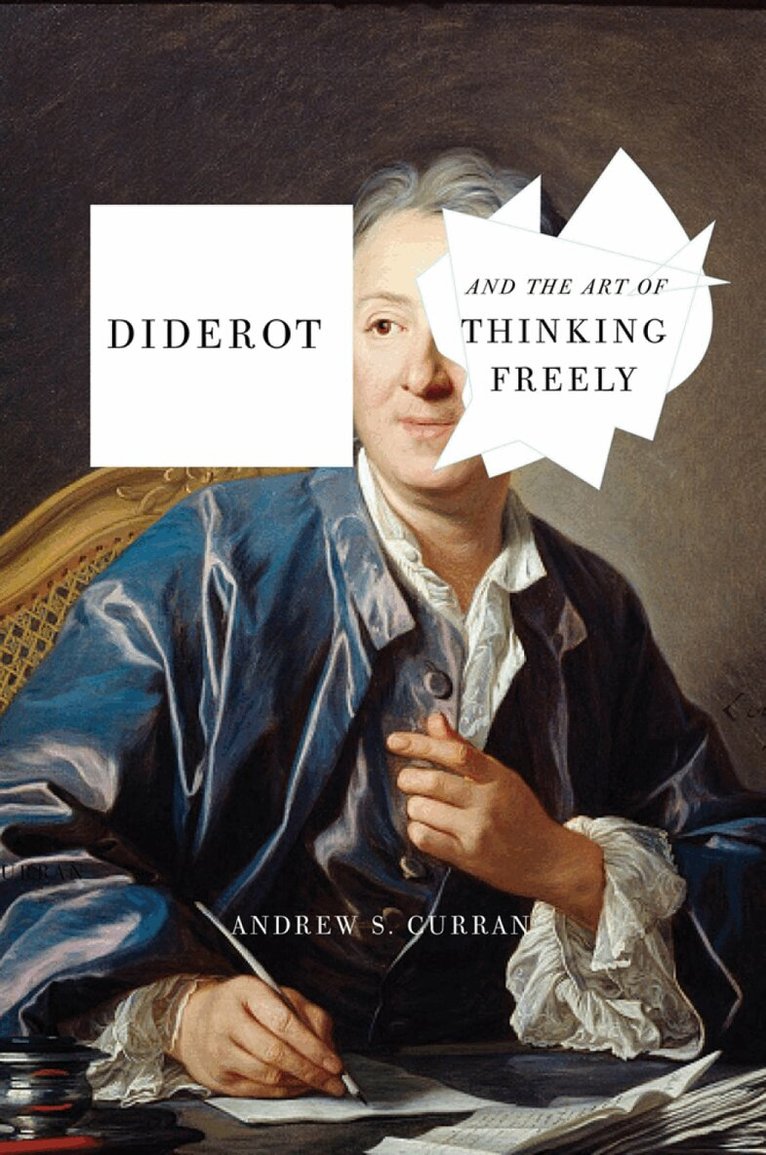
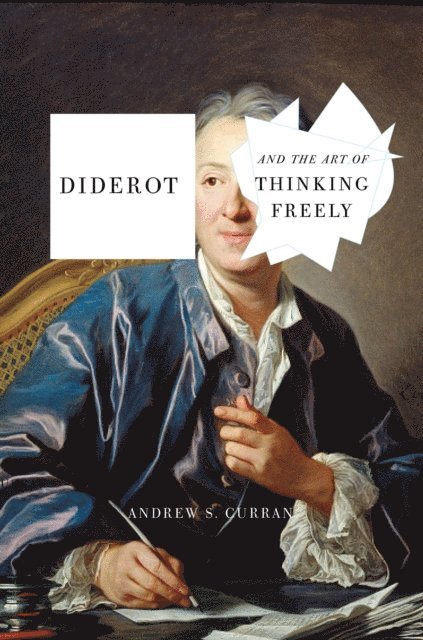
A spirited biography of the prophetic and sympathetic philosopher who helped build the foundations of the modern world.Denis Diderot is often associated with the decades-long battle to bring the world''s first comprehensive Encyclopédie into existence. But his most daring writing took place in the shadows. Thrown into prison for his atheism in 1749, Diderot decided to reserve his best books for posterity--for us, in fact. In the astonishing cache of unpublished writings left behind after his death, Diderot challenged virtually all of his century''s accepted truths, from the sanctity of monarchy, to the racial justification of the slave trade, to the norms of human sexuality. One of Diderot''s most attentive readers during his lifetime was Catherine the Great, who not only supported him financially, but invited him to St. Petersburg to talk about the possibility of democratizing the Russian empire.In this thematically organized biography, Andrew S. Curran vividly describes Diderot''s tormented relationship with Rousseau, his curious correspondence with Voltaire, his passionate affairs, and his often iconoclastic stands on art, theater, morality, politics, and religion. But what this book brings out most brilliantly is how the writer''s personal turmoil was an essential part of his genius and his ability to flout taboos, dogma, and convention.
Inbunden, Engelska, 2026
440 kr
Skickas inom 3-6 vardagar
E-bok
Engelska, 2026218 kr
Läs direkt efter köp
Inbunden, Engelska, 2026
306 kr
Skickas inom 5-8 vardagar
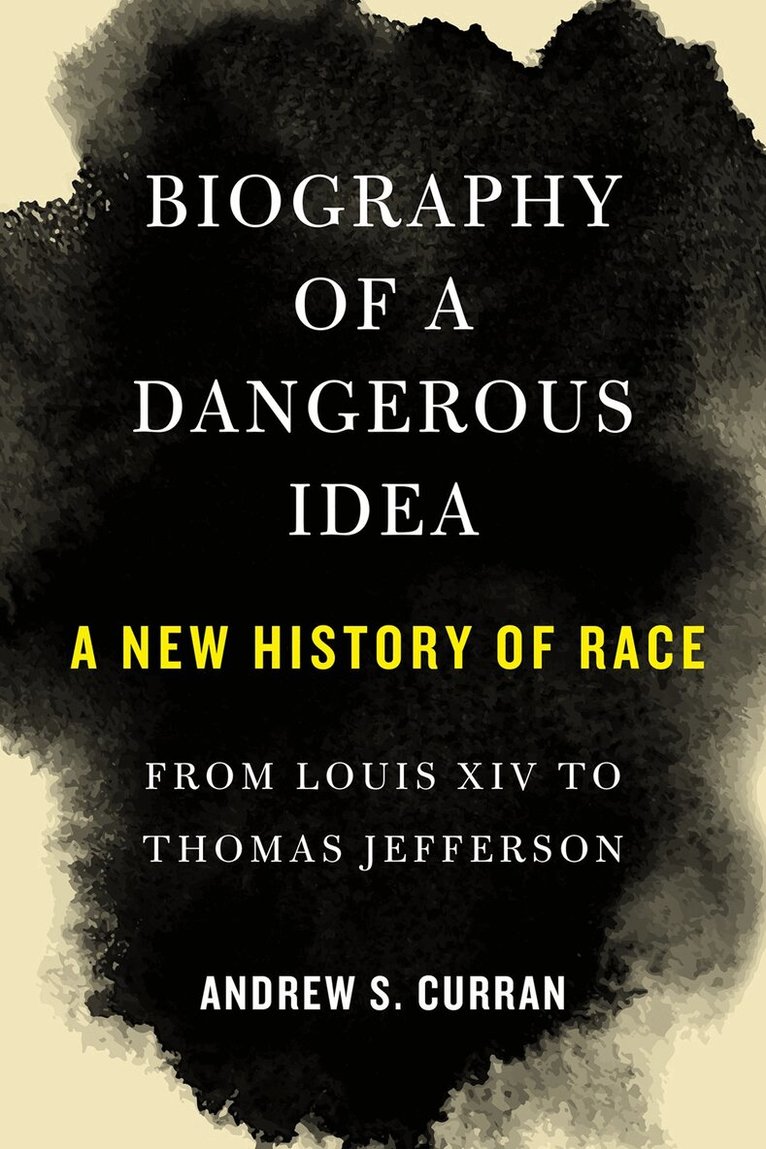
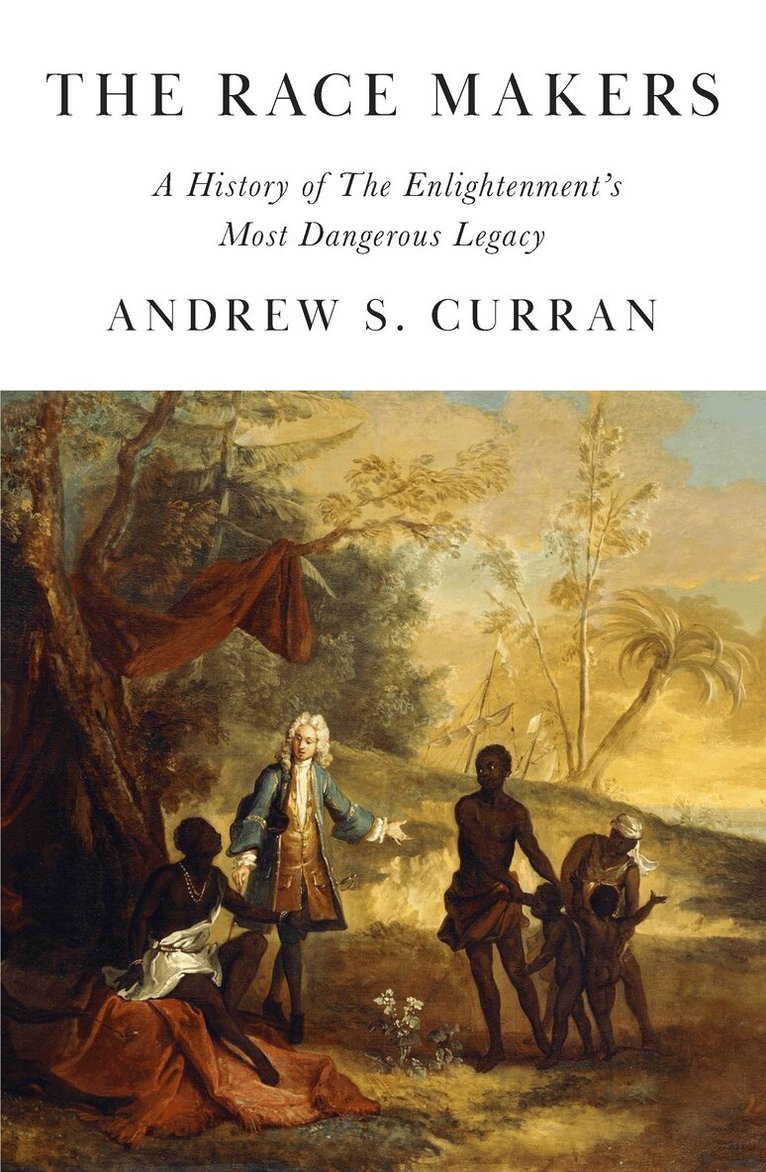
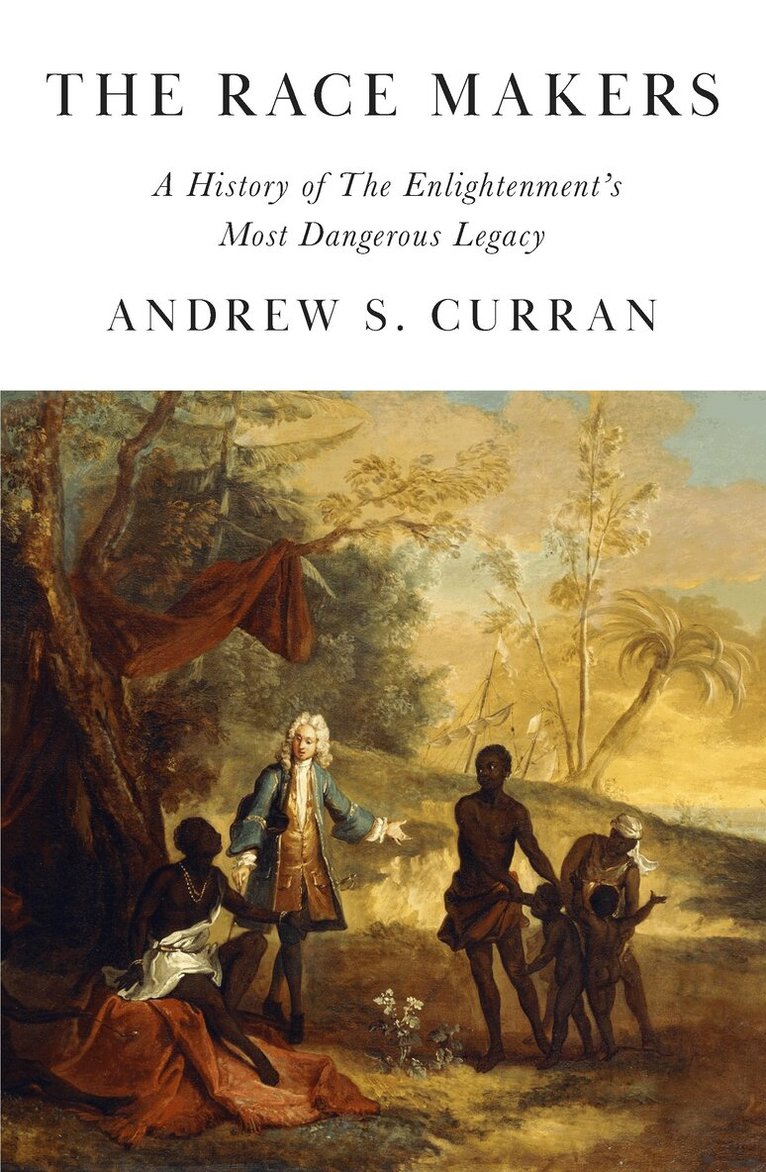
In the early eighteenth century, Christianity began to lose its hold on the story of humankind. Yet centuries of xenophobia, religious intolerance and emerging biological ideas did not simply disappear. Instead, secular thinkers reshaped them as they looked to redefine what it meant to be human. By century’s end, naturalists and philosophers had divided humankind into racial categories using methods associated with the Enlightenment era.In The Race Makers, Enlightenment specialist Andrew S. Curran traces the emergence of race through thirteen pivotal figures, including Louis XIV, Buffon, Carl Linnaeus, Voltaire, David Hume, Adam Smith, Immanuel Kant and Thomas Jefferson. From the gilded halls of Versailles to the slave plantations of the Caribbean, and from the court of the Mughal Empire to the drawing rooms of Monticello, Curran reveals how the pursuit of knowledge became entangled with – and often drove – systems of empire and oppression. The result is a bold reappraisal of the Enlightenment’s most celebrated luminaries.Combining rigorous scholarship with vivid storytelling, The Race Makersoffers a sweeping and unsettling account of how modern concepts of race were born – and why they still matter.
E-bok
Engelska, 2026268 kr
Läs direkt efter köp
In the early eighteenth century, Christianity began to lose its hold on the story of humankind. Yet centuries of xenophobia, religious intolerance and emerging biological ideas did not simply disappear. Instead, secular thinkers reshaped them as they looked to redefine what it meant to be human. By century’s end, naturalists and philosophers had divided humankind into racial categories using methods associated with the Enlightenment era.In The Race Makers, Enlightenment specialist Andrew S. Curran traces the emergence of race through thirteen pivotal figures, including Louis XIV, Buffon, Carl Linnaeus, Voltaire, David Hume, Adam Smith, Immanuel Kant and Thomas Jefferson. From the gilded halls of Versailles to the slave plantations of the Caribbean, and from the court of the Mughal Empire to the drawing rooms of Monticello, Curran reveals how the pursuit of knowledge became entangled with – and often drove – systems of empire and oppression. The result is a bold reappraisal of the Enlightenment’s most celebrated luminaries.Combining rigorous scholarship with vivid storytelling, The Race Makersoffers a sweeping and unsettling account of how modern concepts of race were born – and why they still matter.