Angela N. H. Creager - Böcker
Visar alla böcker från författaren Angela N. H. Creager. Handla med fri frakt och snabb leverans.
10 produkter
10 produkter
954 kr
Skickas inom 7-10 vardagar
What useful changes has feminism brought to science? Feminists have enjoyed success in their efforts to open many fields to women as participants. But the effects of feminism have not been restricted to altering employment and professional opportunities for women. The essays in this volume explore how feminist theory has had a direct impact on research in the biological and social sciences, in medicine, and in technology, often providing the impetus for fundamentally changing the theoretical underpinnings and practices of such research. In archaeology, evidence of women's hunting activities suggested by spears found in women's graves is no longer dismissed; computer scientists have used feminist epistemologies for rethinking the human-interface problems of our growing reliance on computers. Attention to women's movements often tends to reinforce a presumption that feminism changes institutions through critique-from-without. This volume reveals the potent but not always visible transformations feminism has brought to science, technology, and medicine from within.Contributors:Ruth Schwartz CowanLinda Marie FediganScott GilbertEvelynn M. HammondsEvelyn Fox KellerPamela E. MackMichael S. MahoneyEmily MartinRuth OldenzielNelly OudshoornCarroll PursellKaren RaderAlison Wylie
307 kr
Skickas inom 7-10 vardagar
What useful changes has feminism brought to science? Feminists have enjoyed success in their efforts to open many fields to women as participants. But the effects of feminism have not been restricted to altering employment and professional opportunities for women. The essays in this volume explore how feminist theory has had a direct impact on research in the biological and social sciences, in medicine, and in technology, often providing the impetus for fundamentally changing the theoretical underpinnings and practices of such research. In archaeology, evidence of women's hunting activities suggested by spears found in women's graves is no longer dismissed; computer scientists have used feminist epistemologies for rethinking the human-interface problems of our growing reliance on computers. Attention to women's movements often tends to reinforce a presumption that feminism changes institutions through critique-from-without. This volume reveals the potent but not always visible transformations feminism has brought to science, technology, and medicine from within.Contributors:Ruth Schwartz CowanLinda Marie FediganScott GilbertEvelynn M. HammondsEvelyn Fox KellerPamela E. MackMichael S. MahoneyEmily MartinRuth OldenzielNelly OudshoornCarroll PursellKaren RaderAlison Wylie
266 kr
Skickas inom 7-10 vardagar
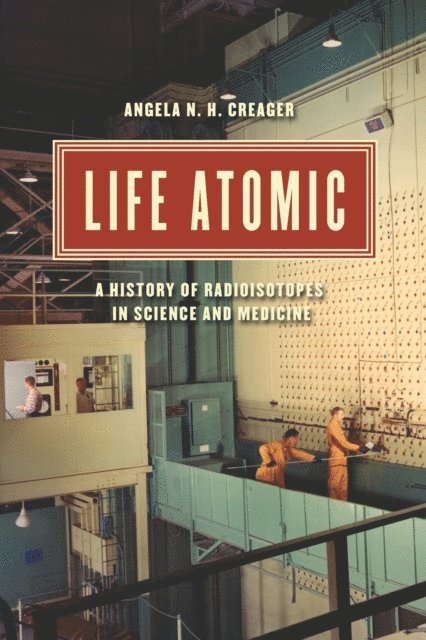
After World War II, the US Atomic Energy Commission (AEC) began mass-producing radioisotopes, sending out nearly 64,000 shipments of radioactive materials to scientists and physicians by 1955. Even as the atomic bomb became the focus of Cold War anxiety, radioisotopes represented the government's efforts to harness the power of the atom for peace—advancing medicine, domestic energy, and foreign relations. In Life Atomic, Angela N. H. Creager tells the story of how these radioisotopes, which were simultaneously scientific tools and political icons, transformed biomedicine and ecology. Government-produced radioisotopes provided physicians with new tools for diagnosis and therapy, specifically cancer therapy, and enabled biologists to trace molecular transformations. Yet the government's attempt to present radioisotopes as marvelous dividends of the atomic age was undercut in the 1950s by the fallout debates, as scientists and citizens recognized the hazards of low-level radiation.Creager reveals that growing consciousness of the danger of radioactivity did not reduce the demand for radioisotopes at hospitals and laboratories, but it did change their popular representation from a therapeutic agent to an environmental poison. She then demonstrates how, by the late twentieth century, public fear of radioactivity overshadowed any appreciation of the positive consequences of the AEC's provision of radioisotopes for research and medicine.
361 kr
Skickas inom 7-10 vardagar
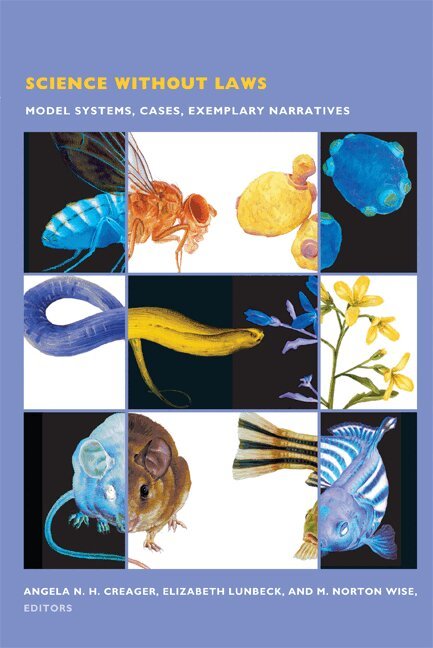
Physicists regularly invoke universal laws, such as those of motion and electromagnetism, to explain events. Biological and medical scientists have no such laws. How then do they acquire a reliable body of knowledge about biological organisms and human disease? One way is by repeatedly returning to, manipulating, observing, interpreting, and reinterpreting certain subjects-such as flies, mice, worms, or microbes-or, as they are known in biology, “model systems.” Across the natural and social sciences, other disciplinary fields have developed canonical examples that have played a role comparable to that of biology’s model systems, serving not only as points of reference and illustrations of general principles or values but also as sites of continued investigation and reinterpretation. The essays in this collection assess the scope and function of model objects in domains as diverse as biology, geology, and history, attending to differences between fields as well as to epistemological commonalities.Contributors examine the role of the fruit fly Drosophila and nematode worms in biology, troops of baboons in primatology, box and digital simulations of the movement of the earth’s crust in geology, and meteorological models in climatology. They analyze the intensive study of the prisoner’s dilemma in game theory, ritual in anthropology, the individual case in psychoanalytic research, and Athenian democracy in political theory. The contributors illuminate the processes through which particular organisms, cases, materials, or narratives become foundational to their fields, and they examine how these foundational exemplars-from the fruit fly to Freud’s Dora-shape the knowledge produced within their disciplines.ContributorsRachel A. AnkenyAngela N. H. CreagerAmy Dahan DalmedicoJohn ForresterClifford GeertzCarlo GinzburgE. Jane Albert HubbardElizabeth LunbeckMary S. MorganJosiah OberNaomi OreskesSusan SperlingMarcel WeberM. Norton Wise
Negotiating Radiation Protection in the Nuclear Age
Histories of Exposure and Expertise
Inbunden, Engelska, 2025
1 570 kr
Skickas inom 7-10 vardagar
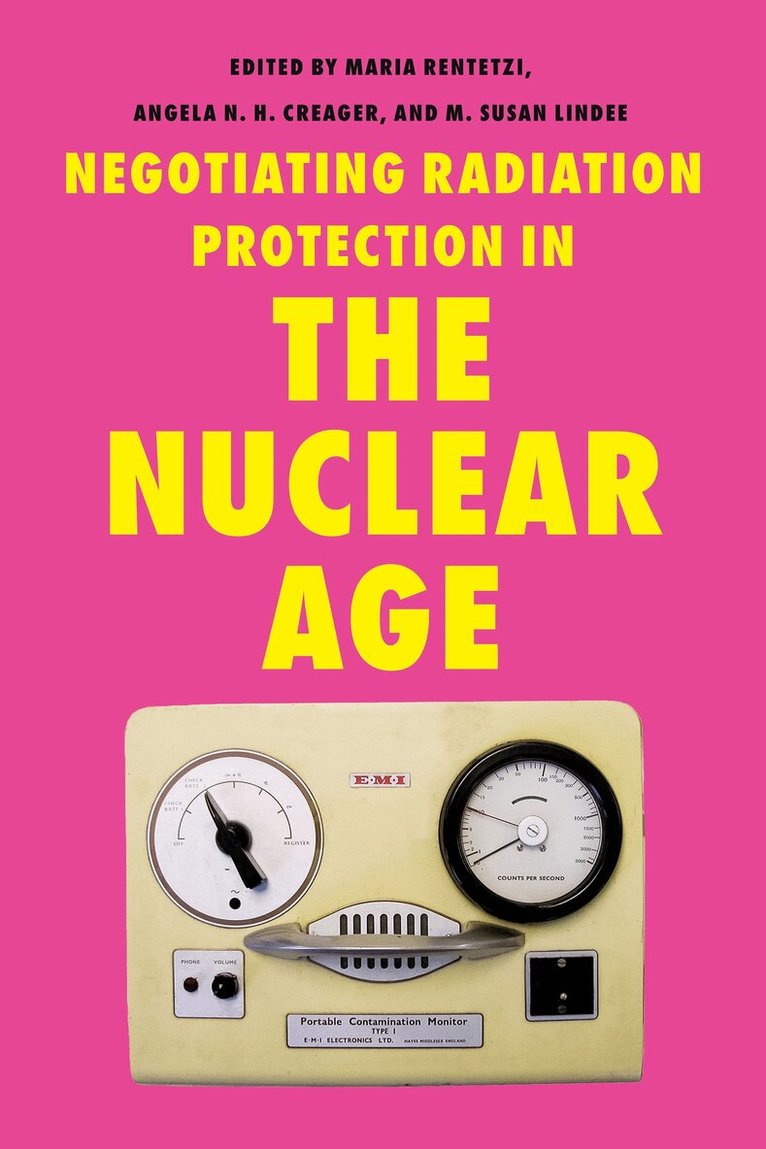
The development of nuclear technologies for war, medicine, and energy production dramatically increased the number of people exposed to artificial radioactivity and raised new stakes and questions about protecting them. This volume examines how the establishment of standards and protocols for radiation protection was not only a technical process, but also the by-product of extensive and ongoing negotiations among scientists, states, international bodies, lawyers, economists, companies, unions, and activists. Over time, exposed individuals—whether Japanese survivors, accident or fallout victims, atomic veterans, or workers—have leveraged their own experiences of radiation exposure to challenge powerful institutions and their standards. Contributors explore radiation risk and protection policies across the globe, from Japan to Canada, Britain to North Africa, and Spain to Greece. They excavate the legal, scientific, diplomatic, and personal challenges posed by radiation protection. Chapters move from the individual and institutional to the global level, arguing that issues of radiation exposure, like so many other forms of risk, are never merely personal but deeply, often invisibly, political and diplomatic.
472 kr
Skickas inom 7-10 vardagar
The development of nuclear technologies for war, medicine, and energy production dramatically increased the number of people exposed to artificial radioactivity and raised new stakes and questions about protecting them. This volume examines how the establishment of standards and protocols for radiation protection was not only a technical process, but also the byproduct of extensive and ongoing negotiations among scientists, states, international bodies, lawyers, economists, companies, unions, and activists. Over time, exposed individuals—whether Japanese survivors, accident or fallout victims, atomic veterans, or workers—have leveraged their own experiences of radiation exposure to challenge powerful institutions and their standards. Contributors explore radiation risk and protection policies across the globe, from Japan to Canada, the United Kingdom to North Africa, and Spain to Greece. They excavate the legal, scientific, diplomatic, and personal challenges posed by radiation protection. Chapters move from the individual and institutional to the global level, arguing that issues of radiation exposure, like so many other forms of risk, are never merely personal but deeply, often invisibly, political and diplomatic.
2 229 kr
Skickas inom 3-6 vardagar
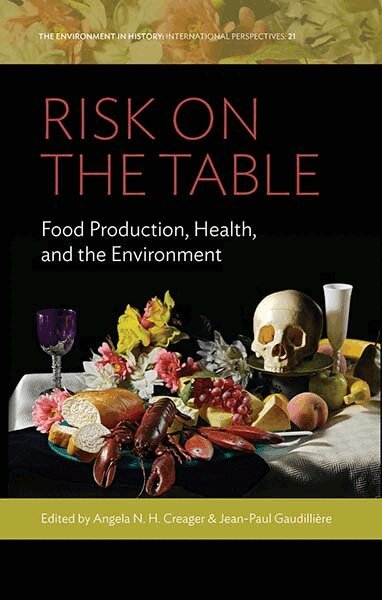
Over the last century, the industrialization of agriculture and processing technologies have made food abundant and relatively inexpensive for much of the world’s population. Simultaneously, pesticides, nitrates, and other technological innovations intended to improve the food supply’s productivity and safety have generated new, often poorly understood risks for consumers and the environment. From the proliferation of synthetic additives to the threat posed by antibiotic-resistant bacteria, the chapters in Risk on the Table zero in on key historical cases in North America and Europe that illuminate the history of food safety, highlighting the powerful tensions that exists among scientific understandings of risk, policymakers’ decisions, and cultural notions of “pure” food.
654 kr
Skickas inom 3-6 vardagar
Over the last century, the industrialization of agriculture and processing technologies have made food abundant and relatively inexpensive for much of the world’s population. Simultaneously, pesticides, nitrates, and other technological innovations intended to improve the food supply’s productivity and safety have generated new, often poorly understood risks for consumers and the environment. From the proliferation of synthetic additives to the threat posed by antibiotic-resistant bacteria, the chapters in Risk on the Table zero in on key historical cases in North America and Europe that illuminate the history of food safety, highlighting the powerful tensions that exists among scientific understandings of risk, policymakers’ decisions, and cultural notions of “pure” food.
282 kr
Skickas inom 7-10 vardagar
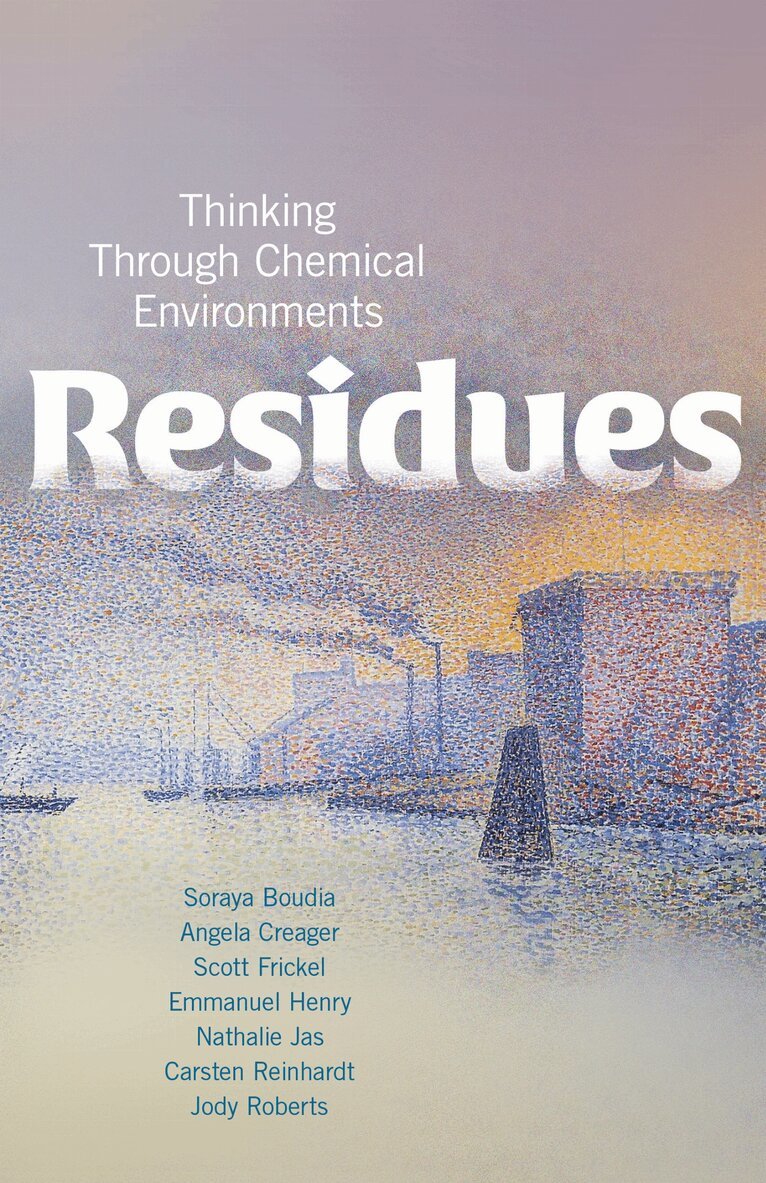
Winner of the 2023 Merton Award from the Science, Knowledge, and Technology section of the American Sociological Association Residues offers readers a new approach for conceptualizing the environmental impacts of chemicals production, consumption, disposal, and regulation. Environmental protection regimes tend to be highly segmented according to place, media, substance, and effect; academic scholarship often reflects this same segmented approach. Yet, in chemical substances we encounter phenomena that are at once voluminous and miniscule, singular and ubiquitous, regulated yet unruly. Inspired by recent studies of materiality and infrastructures, we introduce "residual materialism" as a framework for attending to the socio-material properties of chemicals and their world-making powers. Tracking residues through time, space, and understanding helps us see how the past has been built into our present chemical environments and future-oriented regulatory systems, why contaminants seem to always evade control, and why the Anthropocene is as inextricably harnessed to the synthesis of carbon into new molecules as it is driven by carbon's combustion.
1 579 kr
Skickas inom 7-10 vardagar
Winner of the 2023 Merton Award from the Science, Knowledge, and Technology section of the American Sociological Association Residues offers readers a new approach for conceptualizing the environmental impacts of chemicals production, consumption, disposal, and regulation. Environmental protection regimes tend to be highly segmented according to place, media, substance, and effect; academic scholarship often reflects this same segmented approach. Yet, in chemical substances we encounter phenomena that are at once voluminous and miniscule, singular and ubiquitous, regulated yet unruly. Inspired by recent studies of materiality and infrastructures, we introduce "residual materialism" as a framework for attending to the socio-material properties of chemicals and their world-making powers. Tracking residues through time, space, and understanding helps us see how the past has been built into our present chemical environments and future-oriented regulatory systems, why contaminants seem to always evade control, and why the Anthropocene is as inextricably harnessed to the synthesis of carbon into new molecules as it is driven by carbon's combustion.