• Fri frakt över 249 kr
  • •
  • Snabba leveranser
  • •
  • Billiga böcker
Kundservice

Du är på sajten för privatpersoner.

Företag, bibliotek eller offentlig verksamhet?

Du handlar på classic.bokus.com, där alla dina funktioner finns intakta.
Till classic.bokus.com
Bokus logotyp. Gå till startsidan.
  • Erbjudanden
  • Nyheter
  • Student
  • Topplistor
  • Barn & ungdom
  • Bokus Play
  • E-böcker
  • Pocketböcker
  • Spel & pussel

10% rabatt på allt med kod NYSTART10 →

Sidfot

Mina sidor

    Hjälp

    • Kundservice
    • Vanliga frågor och svar
    • Frakt och leverans
    • Retur vid ångerrätt
    • Reklamera vara
    • Betalning
    • Köpvillkor
    • Allmänna villkor
    • Information om webbplatsens tillgänglighet

    Om Bokus

    • Om oss
    • Pressrum
    • För studenter
    • För företag
    • För bibliotek och offentlig verksamhet
    • För leverantörer
    • Hållbarhet

    Populärt

    • Aktuella erbjudanden
    • Presentkort
    • Studentlitteratur
    • Nya böcker
    • Topplistor
    • Signerade böcker
    • Engelska böcker

    Inspiration

    • Boktips
    • BookTok
    • Populära bokserier
    • Barnbokskaraktärer
    • Populära författare
    Logotyp för Bokus
    Följ oss på Facebook (extern länk)Följ oss på Instagram (extern länk)Följ oss på YouTube (extern länk)Följ oss på TikTok (extern länk)
    bokus @ CookiesAnpassa cookiesIntegritetspolicyKöpvillkor
    Till Citymail hemsida (extern länk)Till Budbee hemsida (extern länk)Till Postnord hemsida (extern länk)Till Schenker hemsida (extern länk)Till Early Bird hemsida (extern länk)Till Walleys hemsida (extern länk)
    1. Historia och arkeologi
    2. Historia
    3. Historia: särskilda händelser och ämnen
    4. Socialhistoria och kulturhistoria

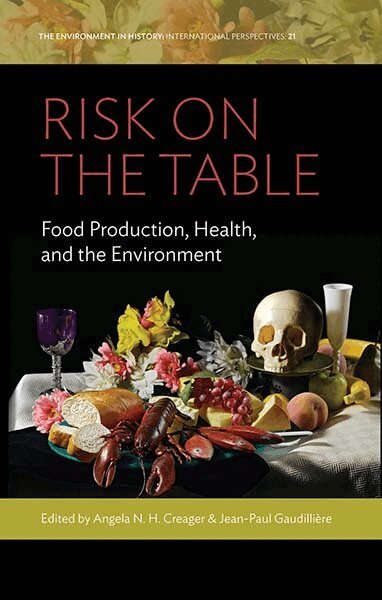
    Risk on the Table

    Food Production, Health, and the Environment

    AvAngela N. H. Creager,Jean-Paul Gaudillière

    Häftad, Engelska, 2024

    Del i serien Environment in History: International Perspectives

    657 kr

    Beställningsvara. Skickas inom 3-6 vardagar. Fri frakt över 249 kr.

    Beskrivning

    Over the last century, the industrialization of agriculture and processing technologies have made food abundant and relatively inexpensive for much of the world’s population. Simultaneously, pesticides, nitrates, and other technological innovations intended to improve the food supply’s productivity and safety have generated new, often poorly understood risks for consumers and the environment. From the proliferation of synthetic additives to the threat posed by antibiotic-resistant bacteria, the chapters in Risk on the Table zero in on key historical cases in North America and Europe that illuminate the history of food safety, highlighting the powerful tensions that exists among scientific understandings of risk, policymakers’ decisions, and cultural notions of “pure” food.

    Produktinformation

    • Utgivningsdatum:2024-11-01
    • Mått:152 x 229 x 23 mm
    • Vikt:538 g
    • Format:Häftad
    • Språk:Engelska
    • Serie:Environment in History: International Perspectives
    • Antal sidor:366
    • Förlag:Berghahn Books
    • ISBN:9781805397366

    Utforska kategorier

    • Socialhistoria och kulturhistoria inom Historia och arkeologi
    • Miljövetenskap och miljöpolitik inom Naturvetenskap och teknik
    • Naturvetenskap:allmänt inom Naturvetenskap och teknik

    Mer om författaren

    Angela N. H. Creager is the Thomas M. Siebel Professor in the History of Science at Princeton University, where she directed the Shelby Cullom Davis Center for Historical Studies from 2016–20. Her current work focuses on the role of genetic tests in environmental science and regulation during the late twentieth century.

    Recensioner i media

    “The book stands out for its multidisciplinary approach, integrating history, science, and policy analysis to explore the historical context and ongoing debates and challenges in food safety, including conflicting interests shaping policies and practices. The volume is particularly relevant in an era where food safety and environmental health are increasingly intertwined with global trade and industrial practices.” • Agriculture and Human Values“The editors have brought together enough international work to form a broad picture of changes in the global food system. This is an extremely welcome view of how those changes were received in different places at different times.” • Technology and Culture“This collection draws insightful genealogies of a persistently virulent problem: food safety. The book brings together a series of well-written and exciting historical cases that together create a picture of the scientific and political struggles for food safety and their obstacles.” • Alexander von Schwerin, Max Planck Institute for the History of Science“‘Risk on the Table’ is a perfectly apt title for a book which deals with a major concern of modern societies: What shall we eat? Combining perspectives of ‘food risk’ as a matter of health concerns; environmental issues; and economic, social and employment problems, this book is truly innovative.” • Karin Zachmann, The Technical University of Munich

    Innehållsförteckning

    • List of Figures and TablesAcknowledgementsList of AbbreviationsIntroductionAngela N. H. Creager & Jean-Paul GaudillièrePart I: Objectifying DangersChapter 1. Salad Days: The Science and Medicine of Bad Greens, 1870–2000Anne Hardy
Chapter 2. Radioactive Diet: Food, Metabolism, and the Environment, c. 1960Soraya de Chadarevian
Chapter 3. Poison and Cancer: The Politics of Food Carcinogens in 1950s West Germany
Heiko StoffChapter 4. “EAT. DIE.” The Domestication of Carcinogens in the 1980s
Angela N. H. CreagerChapter 5. Risk on the Negotiating Table: Malnutrition, Mold Toxicity, and Postcolonial Development
Lucas M. MuellerChapter 6. Contaminated Foods, Global Environmental Health, and the Political Recalcitrance of a Pollution Problem: The Case of PCBs from 1966 to the Present DayAurélien FéronPart II: Ordering RisksChapter 7. Trace Amounts at Industrial Scale: Arsenicals and Medicated Feed in the Production of the “Western Diet”Hannah LandeckerChapter 8. Between Bacteriology and Toxicology: Agricultural Antibiotics and US Risk Regulation (1948–77)
Claas KirchhelleChapter 9. Conflicts of Interest, Ignorance, and Hegemony in the Diethylstilboestral US Food Crisis
Jean-Paul GaudillièreChapter 10. Defining Food Additives: Origins and Shortfalls of the US Regulatory Framework
Maricel V. Maffini and Sarah VogelChapter 11. The Rise (and Fall) of the Food-Drug Line: Classification, Gatekeepers, and Spatial Mediation in Regulating US Food and Health MarketsXaq FrohlichAfterword
Deborah Fitzgerald Index