Angus Nicholls - Böcker
Visar alla böcker från författaren Angus Nicholls. Handla med fri frakt och snabb leverans.
8 produkter
8 produkter
672 kr
Skickas inom 10-15 vardagar
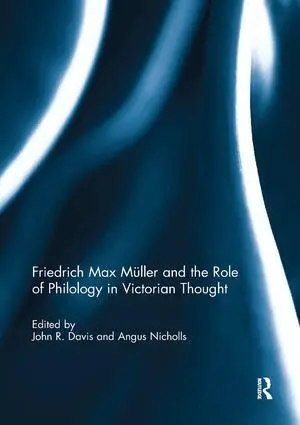
The German comparative philologist Friedrich Max Müller (1823-1900) was one of the most influential scholars in Victorian Britain. Müller travelled to Britain in 1846 in order to prepare a translation of the Rig Veda. This research visit would turn into a lifelong stay after Müller was appointed as Taylor Professor of Modern Languages at Oxford in 1854. Müller’s activities in this position would exert a profound influence on British intellectual life during the second half of the nineteenth-century: his book-length essay on Comparative Mythology (1856) inspired evolutionist thinkers such as Herbert Spencer and Edward Burnett Tylor and made philology into one of the master sciences at mid-century; his debates with Charles Darwin and his followers on the origin of language constituted a significant component of religiously informed reactions to Darwin’s ideas about human descent; his arguments concerning the interdependence of language and thought influenced fields such as psychology, neurology, paediatrics and education until the end of the nineteenth century; his theories concerning an ‘Aryan’ language that purportedly predated Sanskrit and ancient Greek led to controversial debates on the relations between language, religion and race in the Indian subcontinent and beyond; and his monumental 50-volume edition of the Sacred Books of the East helped to lay the foundations for the study of comparative religion. Müller’s interlocutors and readers included people as various as Alexander von Humboldt, Darwin, George Eliot, Matthew Arnold, Friedrich Nietzsche, Ferdinand de Saussure, Ernst Cassirer, Mohandas K. Gandhi and Jarwaharlal Nehru.This volume offers the most comprehensive and interdisciplinary assessment of Müller's career to date. Arising from a conference held at the German Historical Institute in London in 2015, it brings together papers by an international group of experts in German studies, German and British history, linguistics, philosophy, English literary studies, and religious studies in order to examine the many facets of Müller’s scholarship. This book was originally published as a special issue of the Publications of the English Goethe Society.
2 637 kr
Skickas inom 10-15 vardagar
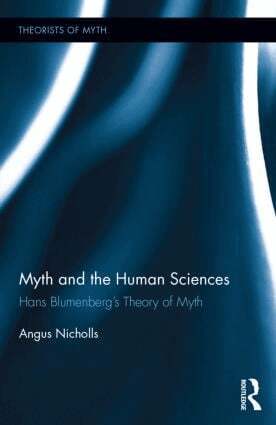
This is the first book-length critical analysis in any language of Hans Blumenberg’s theory of myth. Blumenberg can be regarded as the most important German theorist of myth of the second half of the twentieth century, and his Work on Myth (1979) has resonated across disciplines ranging from literary theory, via philosophy, religious studies and anthropology, to the history and philosophy of science.Nicholls introduces Anglophone readers to Blumenberg’s biography and to his philosophical contexts. He elucidates Blumenberg’s theory of myth by relating it to three important developments in late nineteenth- and early twentieth-century German philosophy (hermeneutics, phenomenology and philosophical anthropology), while also comparing Blumenberg’s ideas with those of other prominent theorists of myth such as Vico, Hume, Schelling, Max Müller, Frazer, Sorel, Freud, Cassirer, Heidegger, Horkheimer and Adorno. According to Nicholls, Blumenberg’s theory of myth can only be understood in relation to the ‘human sciences,’ since it emerges from a speculative hypothesis concerning the emergence of the earliest human beings. For Blumenberg, myth was originally a cultural adaptation that constituted the human attempt to deal with anxieties concerning the threatening forces of nature by anthropomorphizing those forces into mythic images.In the final two chapters, Blumenberg’s theory of myth is placed within the post-war political context of West Germany. Through a consideration of Blumenberg’s exchanges with Carl Schmitt, as well as by analysing unpublished correspondence and parts of the original Work of Myth manuscript that Blumenberg held back from publication, Nicholls shows that Blumenberg’s theory of myth also amounted to a reckoning with the legacy of National Socialism.
1 324 kr
Skickas inom 7-10 vardagar
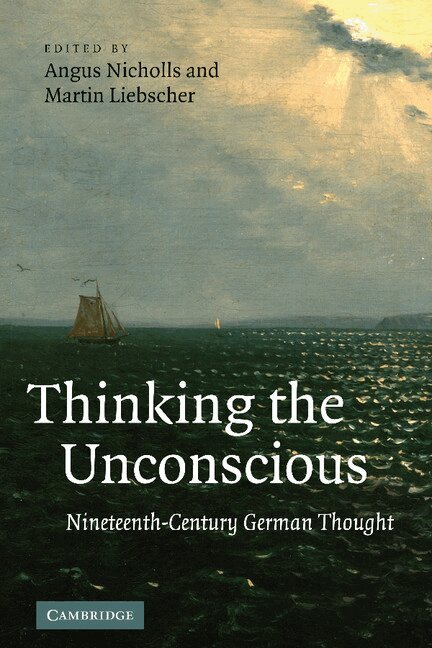
Since Freud's earliest psychoanalytic theorization around the beginning of the twentieth century, the concept of the unconscious has exerted an enormous influence upon psychoanalysis and psychology, and literary, critical and social theory. Yet, prior to Freud, the concept of the unconscious already possessed a complex genealogy in nineteenth-century German philosophy and literature, beginning with the aftermath of Kant's critical philosophy and the origins of German idealism, and extending into the discourses of romanticism and beyond. Despite the many key thinkers who contributed to the Germanic discourses on the unconscious, the English-speaking world remains comparatively unaware of this heritage and its influence upon the origins of psychoanalysis. Bringing together a collection of experts in the fields of German Studies, Continental Philosophy, the History and Philosophy of Science, and the History of Psychoanalysis, this volume examines the various theorizations, representations, and transformations undergone by the concept of the unconscious in nineteenth-century German thought.
547 kr
Skickas inom 7-10 vardagar
Since Freud's earliest psychoanalytic theorization around the beginning of the twentieth century, the concept of the unconscious has exerted an enormous influence upon psychoanalysis and psychology, and literary, critical and social theory. Yet, prior to Freud, the concept of the unconscious already possessed a complex genealogy in nineteenth-century German philosophy and literature, beginning with the aftermath of Kant's critical philosophy and the origins of German idealism, and extending into the discourses of romanticism and beyond. Despite the many key thinkers who contributed to the Germanic discourses on the unconscious, the English-speaking world remains comparatively unaware of this heritage and its influence upon the origins of psychoanalysis. Bringing together a collection of experts in the fields of German Studies, Continental Philosophy, the History and Philosophy of Science, and the History of Psychoanalysis, this volume examines the various theorizations, representations, and transformations undergone by the concept of the unconscious in nineteenth-century German thought.
945 kr
Skickas inom 10-15 vardagar
This is the first book-length critical analysis in any language of Hans Blumenberg’s theory of myth. Blumenberg can be regarded as the most important German theorist of myth of the second half of the twentieth century, and his Work on Myth (1979) has resonated across disciplines ranging from literary theory, via philosophy, religious studies and anthropology, to the history and philosophy of science.Nicholls introduces Anglophone readers to Blumenberg’s biography and to his philosophical contexts. He elucidates Blumenberg’s theory of myth by relating it to three important developments in late nineteenth- and early twentieth-century German philosophy (hermeneutics, phenomenology and philosophical anthropology), while also comparing Blumenberg’s ideas with those of other prominent theorists of myth such as Vico, Hume, Schelling, Max Müller, Frazer, Sorel, Freud, Cassirer, Heidegger, Horkheimer and Adorno. According to Nicholls, Blumenberg’s theory of myth can only be understood in relation to the ‘human sciences,’ since it emerges from a speculative hypothesis concerning the emergence of the earliest human beings. For Blumenberg, myth was originally a cultural adaptation that constituted the human attempt to deal with anxieties concerning the threatening forces of nature by anthropomorphizing those forces into mythic images.In the final two chapters, Blumenberg’s theory of myth is placed within the post-war political context of West Germany. Through a consideration of Blumenberg’s exchanges with Carl Schmitt, as well as by analysing unpublished correspondence and parts of the original Work of Myth manuscript that Blumenberg held back from publication, Nicholls shows that Blumenberg’s theory of myth also amounted to a reckoning with the legacy of National Socialism.
2 158 kr
Skickas inom 10-15 vardagar
The German comparative philologist Friedrich Max Müller (1823-1900) was one of the most influential scholars in Victorian Britain. Müller travelled to Britain in 1846 in order to prepare a translation of the Rig Veda. This research visit would turn into a lifelong stay after Müller was appointed as Taylor Professor of Modern Languages at Oxford in 1854. Müller’s activities in this position would exert a profound influence on British intellectual life during the second half of the nineteenth-century: his book-length essay on Comparative Mythology (1856) inspired evolutionist thinkers such as Herbert Spencer and Edward Burnett Tylor and made philology into one of the master sciences at mid-century; his debates with Charles Darwin and his followers on the origin of language constituted a significant component of religiously informed reactions to Darwin’s ideas about human descent; his arguments concerning the interdependence of language and thought influenced fields such as psychology, neurology, paediatrics and education until the end of the nineteenth century; his theories concerning an ‘Aryan’ language that purportedly predated Sanskrit and ancient Greek led to controversial debates on the relations between language, religion and race in the Indian subcontinent and beyond; and his monumental 50-volume edition of the Sacred Books of the East helped to lay the foundations for the study of comparative religion. Müller’s interlocutors and readers included people as various as Alexander von Humboldt, Darwin, George Eliot, Matthew Arnold, Friedrich Nietzsche, Ferdinand de Saussure, Ernst Cassirer, Mohandas K. Gandhi and Jarwaharlal Nehru.This volume offers the most comprehensive and interdisciplinary assessment of Müller's career to date. Arising from a conference held at the German Historical Institute in London in 2015, it brings together papers by an international group of experts in German studies, German and British history, linguistics, philosophy, English literary studies, and religious studies in order to examine the many facets of Müller’s scholarship. This book was originally published as a special issue of the Publications of the English Goethe Society.
Del 1 - Studies in German Literature Linguistics and Culture
Goethe's Concept of the Daemonic
After the Ancients
Inbunden, Engelska, 2006
1 336 kr
Skickas inom 7-10 vardagar
The first book to examine Goethe's writings on the daemonic in relation to both Classical philosophy and German Idealism.For Plato, the daemonic is a sensibility that brings individuals into contact with divine knowledge; Socrates was also inspired by a "divine voice" known as his "daimonion." Goethe was introduced to this ancient concept by Hamannand Herder, who associated it with the aesthetic category of genius. This book shows how the young Goethe depicted the idea of daemonic genius in works of the Storm and Stress period, before exploring the daemonic in a series of later poetic and autobiographical works. Reading Goethe's works on the daemonic through theorists such as Lukács, Benjamin, Gadamer, Adorno, and Blumenberg, Nicholls contends that they contain arguments concerning reason, nature, and subjectivity that are central to both European Romanticism and the Enlightenment. Angus Nicholls is Claussen-Simon Foundation Research Lecturer in German and Comparative Literature at the Centre for Anglo-German Cultural Relations in the Department of German, Queen Mary, University of London.
In the Embrace of the Swan
Anglo-German Mythologies in Literature, the Visual Arts and Cultural Theory
Inbunden, Engelska, 2010
2 790 kr
Skickas inom 5-8 vardagar
Myths determine the way cultures understand themselves. The papers in this volume examine culturally specific myths in Britain and the German-speaking world, and compare approaches to the theory of myth, together with the ways in which mythological formations operate in literature, aesthetics and politics ‑ with a focus on the period around 1800. They enquire into the consequences of myth-oriented discourses for the way in which these two cultures understand each other, and in this way make a significant contribution to a more profound approach to intercultural research.