• Fri frakt över 249 kr
  • •
  • Snabba leveranser
  • •
  • Billiga böcker
Kundservice

Du är på sajten för privatpersoner.

Företag, bibliotek eller offentlig verksamhet?

Du handlar på classic.bokus.com, där alla dina funktioner finns intakta.
Till classic.bokus.com
Bokus logotyp. Gå till startsidan.
  • Erbjudanden
  • Student
  • Topplistor
  • Barn & ungdom
  • Bokus Play
  • E-böcker
  • Ljudböcker
  • Pocketböcker
  • Spel och pussel

Pocketfynda! Hundratals böcker för 49 kr/st →

Sidfot

Mina sidor

    Hjälp

    • Kundservice
    • Vanliga frågor och svar
    • Frakt och leverans
    • Retur vid ångerrätt
    • Reklamera vara
    • Betalning
    • Köpvillkor
    • Allmänna villkor
    • Information om webbplatsens tillgänglighet

    Om Bokus

    • Om oss
    • Pressrum
    • För studenter
    • För företag
    • För bibliotek och offentlig verksamhet
    • För leverantörer
    • Hållbarhet

    Populärt

    • Aktuella erbjudanden
    • Presentkort
    • Studentlitteratur
    • Nya böcker
    • Topplistor
    • Signerade böcker
    • Engelska böcker

    Inspiration

    • Boktips
    • BookTok
    • Barnbokskaraktärer
    • Populära författare
    Logotyp för Bokus
    Följ oss på Facebook (extern länk)Följ oss på Instagram (extern länk)Följ oss på YouTube (extern länk)Följ oss på TikTok (extern länk)
    bokus @ CookiesAnpassa cookiesIntegritetspolicyKöpvillkor
    Till Citymail hemsida (extern länk)Till Budbee hemsida (extern länk)Till Postnord hemsida (extern länk)Till Schenker hemsida (extern länk)Till Early Bird hemsida (extern länk)Till Walleys hemsida (extern länk)
    1. Psykologi och pedagogik
    2. Psykologi

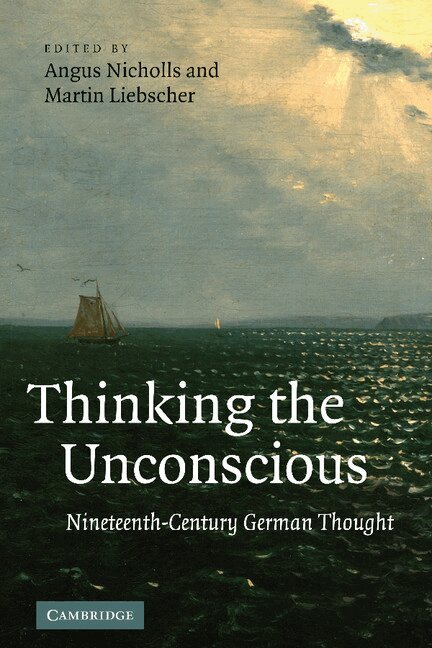
    Thinking the Unconscious

    Nineteenth-Century German Thought

    AvAngus Nicholls,Martin Liebscher

    Inbunden, Engelska, 2010

    1 375 kr

    Beställningsvara. Skickas inom 7-10 vardagar. Fri frakt över 249 kr.

    Beskrivning

    Since Freud's earliest psychoanalytic theorization around the beginning of the twentieth century, the concept of the unconscious has exerted an enormous influence upon psychoanalysis and psychology, and literary, critical and social theory. Yet, prior to Freud, the concept of the unconscious already possessed a complex genealogy in nineteenth-century German philosophy and literature, beginning with the aftermath of Kant's critical philosophy and the origins of German idealism, and extending into the discourses of romanticism and beyond. Despite the many key thinkers who contributed to the Germanic discourses on the unconscious, the English-speaking world remains comparatively unaware of this heritage and its influence upon the origins of psychoanalysis. Bringing together a collection of experts in the fields of German Studies, Continental Philosophy, the History and Philosophy of Science, and the History of Psychoanalysis, this volume examines the various theorizations, representations, and transformations undergone by the concept of the unconscious in nineteenth-century German thought.

    Produktinformation

    • Utgivningsdatum:2010-06-24
    • Mått:158 x 235 x 21 mm
    • Vikt:680 g
    • Format:Inbunden
    • Språk:Engelska
    • Antal sidor:340
    • Förlag:Cambridge University Press
    • ISBN:9780521897532

    Utforska kategorier

    • Psykologi inom Psykologi och pedagogik

    Mer om författaren

    Angus Nicholls is Claussen-Simon Foundation Research Lecturer in German and Comparative Literature in the Centre for Anglo-German Cultural Relations at Queen Mary, University of London. Martin Liebscher is Senior Lecturer in the Institute of Germanic and Romance Studies in the School of Advanced Study at the University of London.

    Recensioner i media

    Review of the hardback: 'From 'Discovering' to 'Thinking the Unconscious': this book offers an enlightening contribution to this still demanding and paradoxical task.' Ludger Lütkehaus, University of Freiburg

    Innehållsförteckning

    • Introduction: thinking the unconscious Angus Nicholls and Martin Liebscher; 1. The unconscious from the Storm and Stress to Weimar classicism: the dialectic of time and pleasure Paul Bishop; 2. The philosophical significance of Schelling's conception of the unconscious Andrew Bowie; 3. The scientific unconscious: Goethe's post-Kantian epistemology Angus Nicholls; 4. The hidden agent of the self: towards an aesthetic theory of the non-conscious in German romanticism Rüdiger Görner; 5. The real essence of human beings: Schopenhauer and the unconscious will Christopher Janaway; 6. Carl Gustav Carus and the science of the unconscious Matthew Bell; 7. Eduard von Hartmann's Philosophy of the Unconscious Sebastian Gardner; 8. Gustav Theodor Fechner and the unconscious Michael Heidelberger; 9. Friedrich Nietzsche's perspectives on the unconscious Martin Liebscher; 10. Freud and nineteenth-century philosophical sources on the unconscious Günter Gödde; Epilogue: the 'optional' unconscious Sonu Shamdasani.