Anke Birkenmaier - Böcker
Visar alla böcker från författaren Anke Birkenmaier. Handla med fri frakt och snabb leverans.
8 produkter
8 produkter
914 kr
Skickas inom 7-10 vardagar
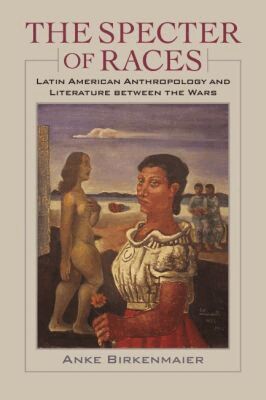
Arguing that race has been the specter that has haunted many of the discussions about Latin American regional and national cultures today, Anke Birkenmaier describes Latin American anthropology as a field of knowledge that evolved dramatically in the period between the two world wars. In response to the rise of scientific racism in Europe and the American hemisphere in the early twentieth century, anthropologists joined numerous writers and artists in founding institutions, journals, and museums that actively pushed for an antiracist science of culture, questioning pseudoscientific theories of race and moving toward more broadly conceived notions of ethnicity and culture.Birkenmaier surveys key figures such as Cuban historian and anthropologist Fernando Ortiz, Haitian scholar and novelist Jacques Roumain, French anthropologist and museum director Paul Rivet, and Brazilian sociologist Gilberto Freyre, focusing on the transnational networks of scholars in France, Spain, and the United States to which they were connected. Reviewing their essays, scientific publications, dictionaries, novels, poetry, and visual arts, the author traces the cultural study of Latin America back to these interdisciplinary discussions about the meaning of race and culture in Latin America, discussions that continue to provoke us today.
349 kr
Skickas inom 7-10 vardagar
Arguing that race has been the specter that has haunted many of the discussions about Latin American regional and national cultures today, Anke Birkenmaier describes Latin American anthropology as a field of knowledge that evolved dramatically in the period between the two world wars. In response to the rise of scientific racism in Europe and the American hemisphere in the early twentieth century, anthropologists joined numerous writers and artists in founding institutions, journals, and museums that actively pushed for an antiracist science of culture, questioning pseudoscientific theories of race and moving toward more broadly conceived notions of ethnicity and culture.Birkenmaier surveys key figures such as Cuban historian and anthropologist Fernando Ortiz, Haitian scholar and novelist Jacques Roumain, French anthropologist and museum director Paul Rivet, and Brazilian sociologist Gilberto Freyre, focusing on the transnational networks of scholars in France, Spain, and the United States to which they were connected. Reviewing their essays, scientific publications, dictionaries, novels, poetry, and visual arts, the author traces the cultural study of Latin America back to these interdisciplinary discussions about the meaning of race and culture in Latin America, discussions that continue to provoke us today.
1 280 kr
Skickas inom 7-10 vardagar
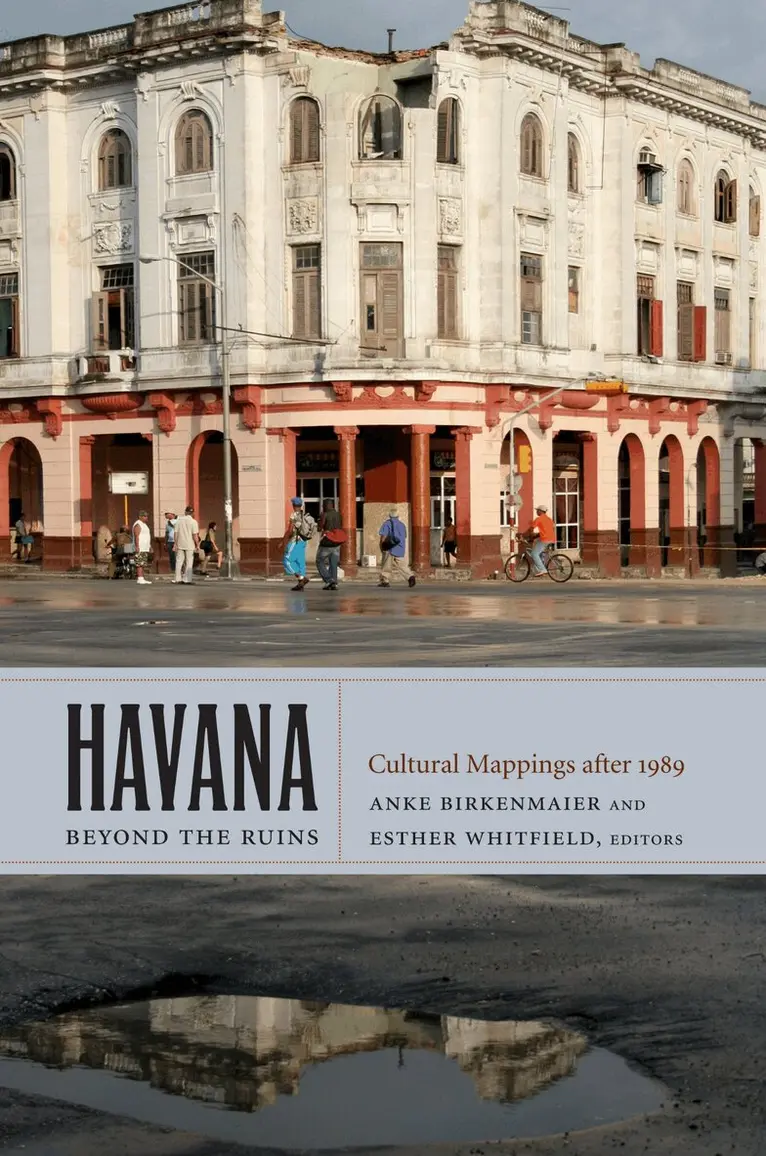
In Havana beyond the Ruins, prominent architects, scholars, and writers based in and outside of Cuba analyze how Havana has been portrayed in literature, music, and the visual arts since Soviet subsidies of Cuba ceased, and the Cuban state has re-imagined Havana as a destination for international tourists and business ventures. Cuba’s capital has experienced little construction since the revolution of 1959; many of its citizens live in poorly maintained colonial and modernist dwellings. It is this Havana-of crumbling houses, old cars, and a romantic aura of ruined hopes-that is marketed in picture books, memorabilia, and films. Meanwhile, Cuba remains a socialist economy, and government agencies maintain significant control of urban development, housing, and employment. Home to more than two million people and a locus of Cuban national identity, Havana today struggles with the some of the same problems as other growing world cities, including slums and escalating social and racial inequalities. Bringing together assessments of the city’s dwellings and urban development projects, Havana beyond the Ruins provides unique insights into issues of memory, citizenship, urban life, and the future of the revolution in Cuba.ContributorsEmma Álvarez-TabÍo AlboEric Felipe-BarkinAnke BirkenmaierVelia Cecilia BobesMario Coyula-CowleyElisabeth EnenbachSujatha FernandesJill HambergPatricio del RealCecelia LawlessJacqueline LossOrlando Luis Pardo LazoAntonio JosÉ PonteNicolÁs QuintanaJose Quiroga Laura RedruelloRafael RojasJoseph L. ScarpaciEsther Whitfield
319 kr
Skickas inom 7-10 vardagar
In Havana beyond the Ruins, prominent architects, scholars, and writers based in and outside of Cuba analyze how Havana has been portrayed in literature, music, and the visual arts since Soviet subsidies of Cuba ceased, and the Cuban state has re-imagined Havana as a destination for international tourists and business ventures. Cuba’s capital has experienced little construction since the revolution of 1959; many of its citizens live in poorly maintained colonial and modernist dwellings. It is this Havana-of crumbling houses, old cars, and a romantic aura of ruined hopes-that is marketed in picture books, memorabilia, and films. Meanwhile, Cuba remains a socialist economy, and government agencies maintain significant control of urban development, housing, and employment. Home to more than two million people and a locus of Cuban national identity, Havana today struggles with the some of the same problems as other growing world cities, including slums and escalating social and racial inequalities. Bringing together assessments of the city’s dwellings and urban development projects, Havana beyond the Ruins provides unique insights into issues of memory, citizenship, urban life, and the future of the revolution in Cuba.ContributorsEmma Álvarez-TabÍo AlboEric Felipe-BarkinAnke BirkenmaierVelia Cecilia BobesMario Coyula-CowleyElisabeth EnenbachSujatha FernandesJill HambergPatricio del RealCecelia LawlessJacqueline LossOrlando Luis Pardo LazoAntonio JosÉ PonteNicolÁs QuintanaJose Quiroga Laura RedruelloRafael RojasJoseph L. ScarpaciEsther Whitfield
1 411 kr
Kommande
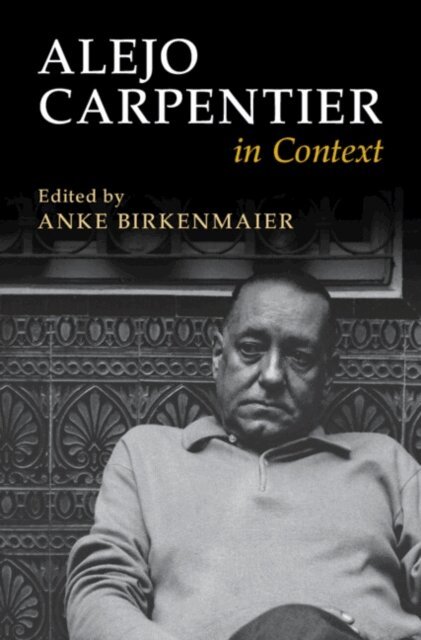
Alejo Carpentier in Context examines one of the greatest novelists of Latin American literature in the 20th century. The Cuban Carpentier was one of the regions firmest supporters of the Cuban Revolution yet was revealed later to have hidden important details of his biography. A polymath of encyclopedic knowledge, contributions to this book showcase his influence, not only as a novelist but also as a musicologist, writer of ballet scenarios, radio broadcaster, opera aficionado and expert in modernist architecture. This volume offers perspectives on Carpentier's concept of the marvelous real, which later morphed into magical realism, as well as on the baroque as a defining characteristic of Latin American culture. Debates focus on Carpentier's role as a public intellectual in Cuba and abroad, on new revelations about his biography and readings of his major novels, introducing ecocritical perspectives, theories of intermediality and recent philosophies of history.
613 kr
Skickas inom 7-10 vardagar
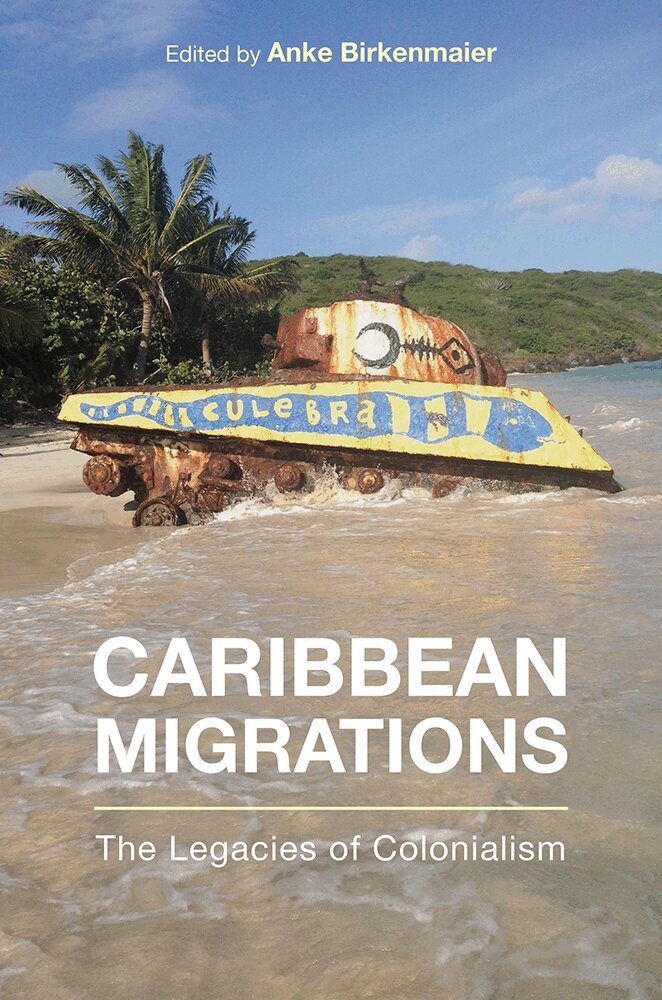
2021 Choice Outstanding Academic TitleWith mass migration changing the configuration of societies worldwide, we can look to the Caribbean to reflect on the long-standing, entangled relations between countries and areas as uneven in size and influence as the United States, Cuba, Hispaniola, Puerto Rico, and Jamaica. More so than other world regions, the Caribbean has been characterized as an always already colonial region. It has long been a key area for empires warring over influence spheres in the new world, and where migration waves from Africa, Europe, and Asia accompanied every political transformation over the last five centuries. In Caribbean Migrations, an interdisciplinary group of humanities and social science scholars study migration from a long-term perspective, analyzing the Caribbean's "unincorporated subjects" from a legal, historical, and cultural standpoint, and exploring how despite often fractured public spheres, Caribbean intellectuals, artists, filmmakers, and writers have been resourceful at showcasing migration as the hallmark of our modern age.
1 805 kr
Skickas inom 7-10 vardagar
2021 Choice Outstanding Academic TitleWith mass migration changing the configuration of societies worldwide, we can look to the Caribbean to reflect on the long-standing, entangled relations between countries and areas as uneven in size and influence as the United States, Cuba, Hispaniola, Puerto Rico, and Jamaica. More so than other world regions, the Caribbean has been characterized as an always already colonial region. It has long been a key area for empires warring over influence spheres in the new world, and where migration waves from Africa, Europe, and Asia accompanied every political transformation over the last five centuries. In Caribbean Migrations, an interdisciplinary group of humanities and social science scholars study migration from a long-term perspective, analyzing the Caribbean's "unincorporated subjects" from a legal, historical, and cultural standpoint, and exploring how despite often fractured public spheres, Caribbean intellectuals, artists, filmmakers, and writers have been resourceful at showcasing migration as the hallmark of our modern age.
Del 52 - Mimesis
Versionen Montezumas
Lateinamerika in Der Historischen Imagination Des 19. Jahrhunderts. Mit Dem Vollständigen Manuskript Von Oswald Spenglers Montezuma. Ein Trauerspiel (1897)
Inbunden, Tyska, 2011
2 417 kr
Skickas inom 5-8 vardagar