Ankur Dumka - Böcker
Visar alla böcker från författaren Ankur Dumka. Handla med fri frakt och snabb leverans.
12 produkter
12 produkter
1 236 kr
Skickas inom 10-15 vardagar
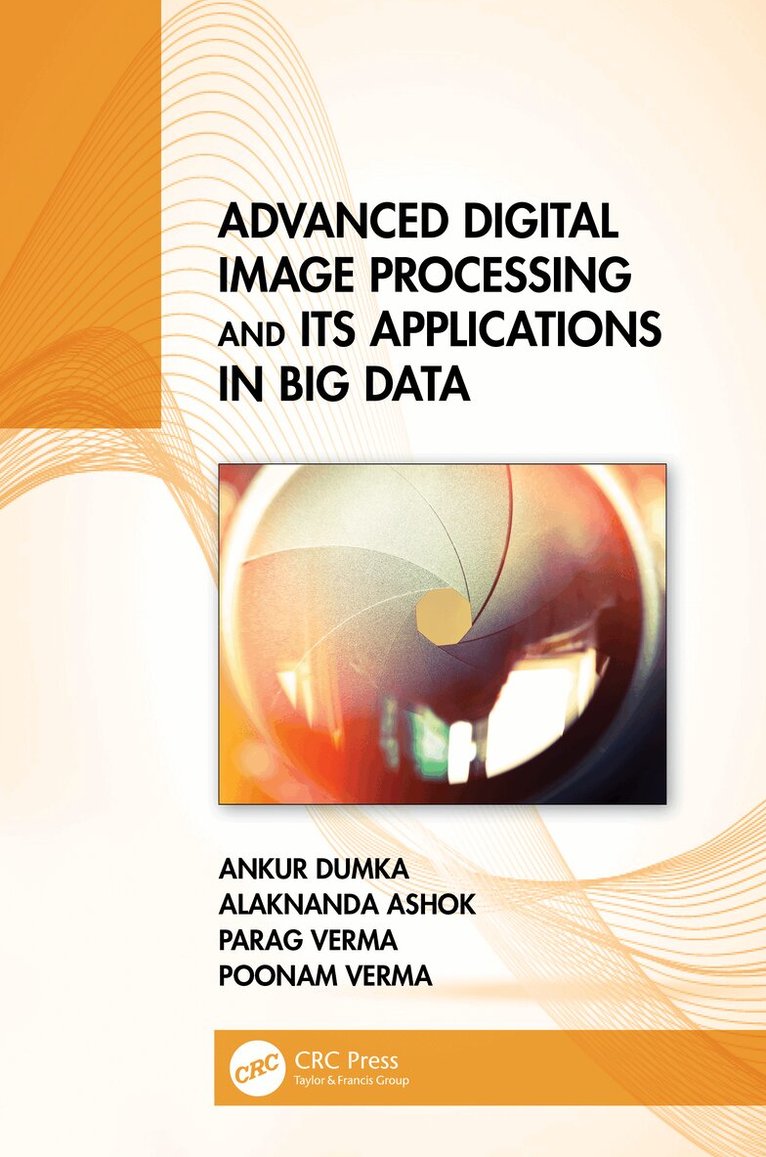
This book covers the technology of digital image processing in various fields with big data and their applications. Readers will understand various technologies and strategies used in digital image processing as well as handling big data, using machine-learning techniques. This book will help to improve the skills of students and researchers in such fields as engineering, agriculture, and medical imaging. There is a need to be able to understand and analyse the latest developments of digital image technology. As such, this book will cover:· Applications such as biomedical science and biometric image processing, content-based image retrieval, remote sensing, pattern recognition, shape and texture analysis· New concepts in color interpolation to produce the full color from the sub-pattern bare pattern color prevalent in today's digital cameras and other imaging devices· Image compression standards that are needed to serve diverse applications· Applications of remote sensing, medical science, traffic management, education, innovation, and analysis in agricultural design and image processing· Both soft and hard computing approaches at great length in relation to major image processing tasks· The direction and development of current and future research in many areas of image processing· A comprehensive bibliography for additional research (integrated within the framework of the book)This book focuses not only on theoretical and practical knowledge in the field but also on the traditional and latest tools and techniques adopted in image processing and data science. It also provides an indispensable guide to a wide range of basic and advanced techniques in the fields of image processing and data science.
929 kr
Skickas inom 10-15 vardagar
This book covers the technology of digital image processing in various fields with big data and their applications. Readers will understand various technologies and strategies used in digital image processing as well as handling big data, using machine-learning techniques. This book will help to improve the skills of students and researchers in such fields as engineering, agriculture, and medical imaging. There is a need to be able to understand and analyse the latest developments of digital image technology. As such, this book will cover:· Applications such as biomedical science and biometric image processing, content-based image retrieval, remote sensing, pattern recognition, shape and texture analysis· New concepts in color interpolation to produce the full color from the sub-pattern bare pattern color prevalent in today's digital cameras and other imaging devices· Image compression standards that are needed to serve diverse applications· Applications of remote sensing, medical science, traffic management, education, innovation, and analysis in agricultural design and image processing· Both soft and hard computing approaches at great length in relation to major image processing tasks· The direction and development of current and future research in many areas of image processing· A comprehensive bibliography for additional research (integrated within the framework of the book)This book focuses not only on theoretical and practical knowledge in the field but also on the traditional and latest tools and techniques adopted in image processing and data science. It also provides an indispensable guide to a wide range of basic and advanced techniques in the fields of image processing and data science.
COVID-19
Origin, Detection and Impact Analysis Using Artificial Intelligence Computational Techniques
Inbunden, Engelska, 2021
1 736 kr
Skickas inom 10-15 vardagar
This book highlights progress in terms of Virus Biology and Infection Detection, Prevention, and Control, along with Screening, Testing, and Detection Techniques, that will provide learners and researchers (from basic to advanced) with the most innovative computer-driven methodologies for the fight against COVID-19. In addition, this book also covers the Pre- and Post-Impact of the COVID-19 Pandemic Crisis that will definitely provide useful content for researchers to think broadly about the analytical areas affected by COVID-19. This ultimately shows different paths to the same destination to help understand the nature of the COVID-19 pandemic and how to avoid it in the future.
COVID-19
Origin, Detection and Impact Analysis Using Artificial Intelligence Computational Techniques
Häftad, Engelska, 2024
677 kr
Skickas inom 10-15 vardagar
This book highlights progress in terms of Virus Biology and Infection Detection, Prevention, and Control, along with Screening, Testing, and Detection Techniques, that will provide learners and researchers (from basic to advanced) with the most innovative computer-driven methodologies for the fight against COVID-19. In addition, this book also covers the Pre- and Post-Impact of the COVID-19 Pandemic Crisis that will definitely provide useful content for researchers to think broadly about the analytical areas affected by COVID-19. This ultimately shows different paths to the same destination to help understand the nature of the COVID-19 pandemic and how to avoid it in the future.
419 kr
Skickas
Wireless sensor networks (WSNs) have attracted high interest over the last few decades in the wireless and mobile computing research community. Applications of WSNs are numerous and growing, including indoor deployment scenarios in the home and office to outdoor deployment in an adversary’s territory in a tactical background. However, due to their distributed nature and deployment in remote areas, these networks are vulnerable to numerous security threats that can adversely affect their performance.This problem is more critical if the network is deployed for some mission-critical applications, such as in a tactical battlefield. Random failure of nodes is also very likely in real-life deployment scenarios. Due to resource constraints in the sensor nodes, a traditional security mechanism with high overhead of computation and communication is not feasible in WSNs. Design and implementation of secure WSNs is, therefore, a particularly challenging task.This book covers a comprehensive discussion on state-of-the-art security technologies for WSNs. It identifies various possible attacks at different layers of the communication protocol stack in a typical WSN and presents their possible countermeasures. A brief discussion on the future direction of research in WSN security is also included.
620 kr
Skickas inom 10-15 vardagar
Wireless sensor networks (WSNs) have attracted high interest over the last few decades in the wireless and mobile computing research community. Applications of WSNs are numerous and growing, including indoor deployment scenarios in the home and office to outdoor deployment in an adversary’s territory in a tactical background. However, due to their distributed nature and deployment in remote areas, these networks are vulnerable to numerous security threats that can adversely affect their performance.This problem is more critical if the network is deployed for some mission-critical applications, such as in a tactical battlefield. Random failure of nodes is also very likely in real-life deployment scenarios. Due to resource constraints in the sensor nodes, a traditional security mechanism with high overhead of computation and communication is not feasible in WSNs. Design and implementation of secure WSNs is, therefore, a particularly challenging task.This book covers a comprehensive discussion on state-of-the-art security technologies for WSNs. It identifies various possible attacks at different layers of the communication protocol stack in a typical WSN and presents their possible countermeasures. A brief discussion on the future direction of research in WSN security is also included.
661 kr
Skickas inom 10-15 vardagar
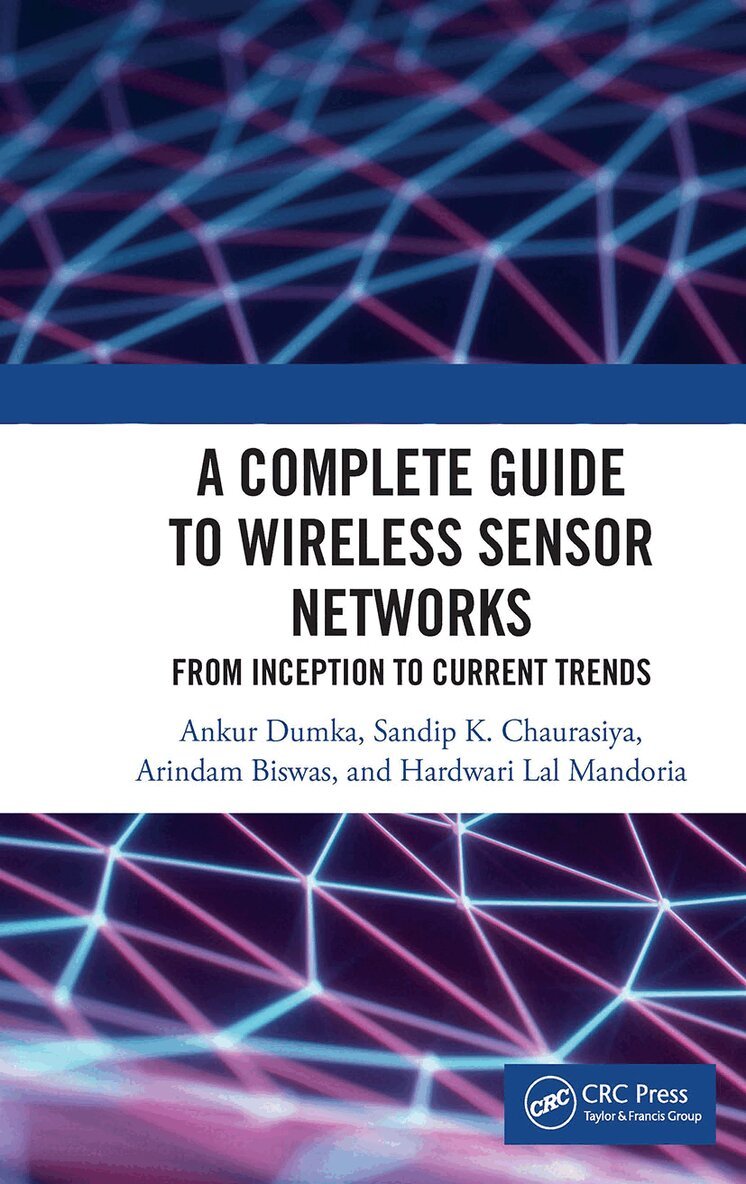
This book provides comprehensive coverage of the major aspects in designing, implementing, and deploying wireless sensor networks by discussing present research on WSNs and their applications in various disciplines. It familiarizes readers with the current state of WSNs and how such networks can be improved to achieve effectiveness and efficiency. It starts with a detailed introduction of wireless sensor networks and their applications and proceeds with layered architecture of WSNs. It also addresses prominent issues such as mobility, heterogeneity, fault-tolerance, intermittent connectivity, and cross layer optimization along with a number of existing solutions to stimulate future research.
1 618 kr
Skickas inom 10-15 vardagar
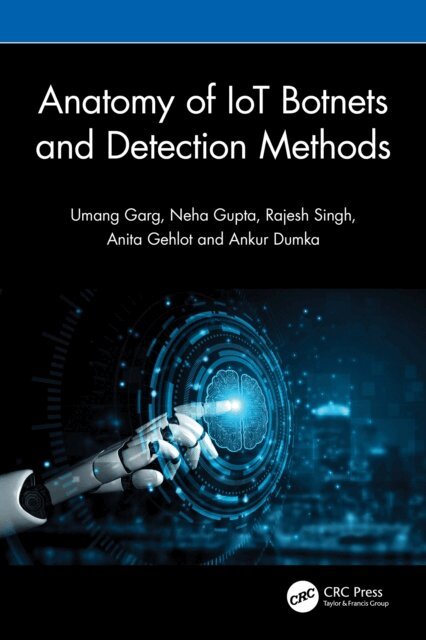
The book Anatomy of IoT Botnets and Detection Methods delves into the evolving landscape of cybersecurity threats associated with the Internet of Things (IoT), specifically focusing on the anatomy, behavior, and detection of IoT-based botnets. As IoT devices proliferate in both consumer and industrial settings, their inherent vulnerabilities—such as weak authentication, limited processing power, and lack of regular updates—make them prime targets for attackers. The book begins by exploring how IoT botnets are formed, highlighting key attack vectors such as malware propagation, command, and control (C&C) mechanisms, and commonly exploited protocols such as Telnet and UPnP. Notable case studies, including the Mirai and Mozi botnets, illustrate real-world impacts, emphasizing the scale and damage these threats can inflict. The core of the book then transitions into detection methodologies, covering both traditional and AI-driven approaches. Techniques such as signature-based detection, anomaly detection using machine learning, network traffic analysis, and honeypot deployment are thoroughly examined. The authors also address the challenges in detecting IoT botnets, including encrypted traffic, device heterogeneity, and low visibility in resource-constrained devices. Furthermore, the book emphasizes the importance of proactive defense strategies, such as firmware hardening, secure boot mechanisms, and real-time behavioral analytics. It underscores the role of collaborative intelligence sharing among stakeholders to enhance detection capabilities. By integrating theoretical concepts with practical insights and current research trends, the book provides a comprehensive guide for researchers, cybersecurity professionals, and IoT developers aiming to understand and counteract botnet threats. Ultimately, Anatomy of IoT Botnet and Detection Methods serves as a crucial resource for strengthening the cybersecurity posture of IoT ecosystems through informed detection and mitigation practices. The content of the book is categorized into the following sub-sections:Introduction to IoT and Botnets: An overview of IoT technology, its adoption, and the rising threat of botnets.IoT Device Vulnerabilities: Analysis of common security weaknesses in IoT devices that cybercriminals exploit.Botnet Architecture: Detailed examination of how IoT botnets are structured, including command-and-control mechanisms.Infection and Propagation: Methods used by attackers to spread malware across IoT networks.Detection Techniques: Overview of current detection methods, including anomaly detection, signature-based approaches, and machine learning.Mitigation Strategies: Practical advice on how to secure IoT devices, including best practices for manufacturers and users.Case Studies: Real-world examples of IoT botnet attacks and their impact.The book concludes with a discussion on the future of IoT security, emphasizing the need for continuous innovation in detection and prevention methods.
658 kr
Skickas inom 10-15 vardagar
The book Anatomy of IoT Botnets and Detection Methods delves into the evolving landscape of cybersecurity threats associated with the Internet of Things (IoT), specifically focusing on the anatomy, behavior, and detection of IoT-based botnets. As IoT devices proliferate in both consumer and industrial settings, their inherent vulnerabilities—such as weak authentication, limited processing power, and lack of regular updates—make them prime targets for attackers. The book begins by exploring how IoT botnets are formed, highlighting key attack vectors such as malware propagation, command, and control (C&C) mechanisms, and commonly exploited protocols such as Telnet and UPnP. Notable case studies, including the Mirai and Mozi botnets, illustrate real-world impacts, emphasizing the scale and damage these threats can inflict. The core of the book then transitions into detection methodologies, covering both traditional and AI-driven approaches. Techniques such as signature-based detection, anomaly detection using machine learning, network traffic analysis, and honeypot deployment are thoroughly examined. The authors also address the challenges in detecting IoT botnets, including encrypted traffic, device heterogeneity, and low visibility in resource-constrained devices. Furthermore, the book emphasizes the importance of proactive defense strategies, such as firmware hardening, secure boot mechanisms, and real-time behavioral analytics. It underscores the role of collaborative intelligence sharing among stakeholders to enhance detection capabilities. By integrating theoretical concepts with practical insights and current research trends, the book provides a comprehensive guide for researchers, cybersecurity professionals, and IoT developers aiming to understand and counteract botnet threats. Ultimately, Anatomy of IoT Botnet and Detection Methods serves as a crucial resource for strengthening the cybersecurity posture of IoT ecosystems through informed detection and mitigation practices. The content of the book is categorized into the following sub-sections:Introduction to IoT and Botnets: An overview of IoT technology, its adoption, and the rising threat of botnets.IoT Device Vulnerabilities: Analysis of common security weaknesses in IoT devices that cybercriminals exploit.Botnet Architecture: Detailed examination of how IoT botnets are structured, including command-and-control mechanisms.Infection and Propagation: Methods used by attackers to spread malware across IoT networks.Detection Techniques: Overview of current detection methods, including anomaly detection, signature-based approaches, and machine learning.Mitigation Strategies: Practical advice on how to secure IoT devices, including best practices for manufacturers and users.Case Studies: Real-world examples of IoT botnet attacks and their impact.The book concludes with a discussion on the future of IoT security, emphasizing the need for continuous innovation in detection and prevention methods.
2 358 kr
Skickas inom 10-15 vardagar
This volume covers a comprehensive range of fundamental concepts in deep learning and artificial neural networks, making it suitable for beginners looking to learn the basics.
1 626 kr
Skickas inom 10-15 vardagar
This book provides comprehensive coverage of the major aspects in designing, implementing, and deploying wireless sensor networks by discussing present research on WSNs and their applications in various disciplines. It familiarizes readers with the current state of WSNs and how such networks can be improved to achieve effectiveness and efficiency. It starts with a detailed introduction of wireless sensor networks and their applications and proceeds with layered architecture of WSNs. It also addresses prominent issues such as mobility, heterogeneity, fault-tolerance, intermittent connectivity, and cross layer optimization along with a number of existing solutions to stimulate future research.
Innovations in Software-Defined Networking and Network Functions Virtualization
Inbunden, Engelska, 2018
2 927 kr
Skickas inom 5-8 vardagar