Ann K. Ferrell - Böcker
Visar alla böcker från författaren Ann K. Ferrell. Handla med fri frakt och snabb leverans.
6 produkter
6 produkter
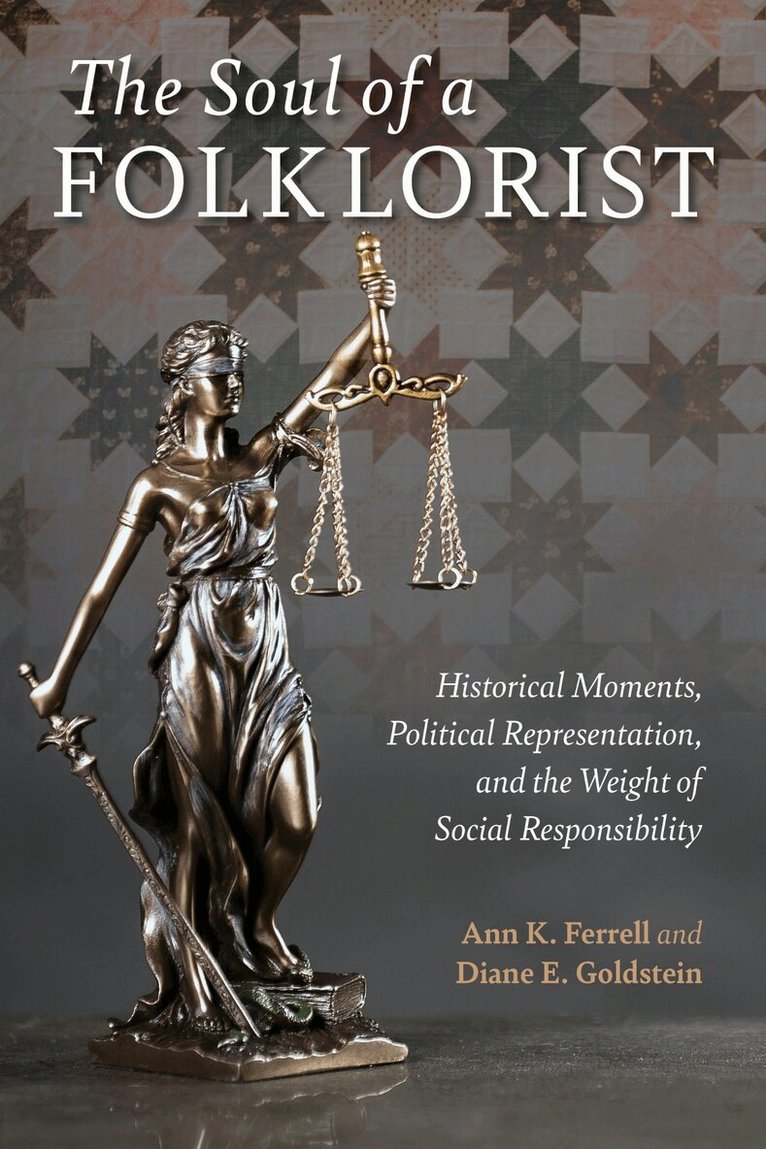
Soul of a Folklorist
Historical Moments, Political Representation, and the Weight of Social Responsibility
Inbunden, Engelska, 2026
1 059 kr
Skickas inom 7-10 vardagar
In the 1960s, '70s, and '80s, the US saw a growing awareness of representational politics following the civil rights, women's, gay and lesbian, anti-war, and environmental justice movements, and, like most fields, folklore became increasingly cognizant of these cultural and political shifts. The Soul of a Folklorist chronicles the growing pains folklorists felt as the field engaged in these new and different ways of thinking about expressive culture, inequality, and political representation.Grounded in primary sources including archival documents and interviews with members of the field, authors Ann K. Ferrell and Diane E. Goldstein examine the discussions that arose during this period among folklore scholars. Some folklorists explored progressive social change initiatives as part of their professional work, while others questioned the scholarly appropriateness of applied or political engagement, at times challenging this professional engagement in contemporary political issues. In a series of case studies from the 1970s and '80s, Ferrell and Goldstein explore how folklorists navigated questions about inequities that existed within the field and the potential adverse effects of those inequities on what and whom they studied, the push and pull of scholarly and public folklore work, the location of the line between research and advocacy as well as the wisdom of crossing that line, and the nature of our responsibility, as individual folklorists and as a field, to those we study and the communities in which we live and work.The Soul of a Folklorist examines how, as folklorists moved toward a perspective that increasingly explored the responsibility of presentation and representation of gender, race, class, and other areas of inequities, the discipline gradually came to understand both the power of its own subject and structures of subordination within the field.
Soul of a Folklorist
Historical Moments, Political Representation, and the Weight of Social Responsibility
Häftad, Engelska, 2026
473 kr
Skickas
In the 1960s, '70s, and '80s, the US saw a growing awareness of representational politics following the civil rights, women's, gay and lesbian, anti-war, and environmental justice movements, and, like most fields, folklore became increasingly cognizant of these cultural and political shifts. The Soul of a Folklorist chronicles the growing pains folklorists felt as the field engaged in these new and different ways of thinking about expressive culture, inequality, and political representation.Grounded in primary sources including archival documents and interviews with members of the field, authors Ann K. Ferrell and Diane E. Goldstein examine the discussions that arose during this period among folklore scholars. Some folklorists explored progressive social change initiatives as part of their professional work, while others questioned the scholarly appropriateness of applied or political engagement, at times challenging this professional engagement in contemporary political issues. In a series of case studies from the 1970s and '80s, Ferrell and Goldstein explore how folklorists navigated questions about inequities that existed within the field and the potential adverse effects of those inequities on what and whom they studied, the push and pull of scholarly and public folklore work, the location of the line between research and advocacy as well as the wisdom of crossing that line, and the nature of our responsibility, as individual folklorists and as a field, to those we study and the communities in which we live and work.The Soul of a Folklorist examines how, as folklorists moved toward a perspective that increasingly explored the responsibility of presentation and representation of gender, race, class, and other areas of inequities, the discipline gradually came to understand both the power of its own subject and structures of subordination within the field.
986 kr
Skickas inom 3-6 vardagar
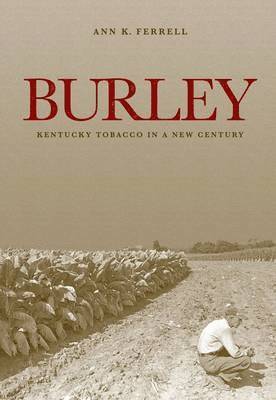
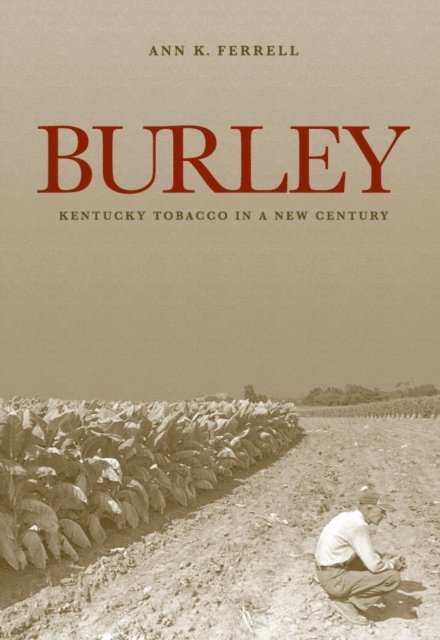
Once iconic American symbols, tobacco farms are gradually disappearing. It is difficult for many people to lament the loss of a crop that has come to symbolize addiction, disease, and corporate deception; yet, in Kentucky, the plant has played an important role in economic development and prosperity. Burley tobacco -- a light, air-cured variety used in cigarette production -- has long been the Commonwealth's largest cash crop and an important aspect of regional identity, along with bourbon, bluegrass music, and Thoroughbred horses.In Burley: Kentucky Tobacco in a New Century, Ann K. Ferrell investigates the rapidly transforming process of raising and selling tobacco by chronicling her conversations with the farmers who know the crop best. She demonstrates that although the 2004 "buyout" ending the federal tobacco program is commonly perceived to be the most significant change that growers have had to negotiate, it is, in reality, only one new factor among many. Burley reveals the tangible and intangible challenges tobacco farmers face today, from the logistics of cultivation to the growing stigma against the crop.Ferrell uses ethnography, archival research, and rhetorical analysis to tell the complex story of burley tobacco production in twenty-first-century Kentucky. Not only does she give a voice to the farmers who persevere in this embattled industry, but she also sheds light on their futures, contesting the widely held assumption that they can easily replace the crop by diversifying their operations with alternative crops. As tobacco fades from both the physical and economic landscapes, this nuanced volume documents and explores the culture and practices of burley production today.
512 kr
Skickas inom 3-6 vardagar
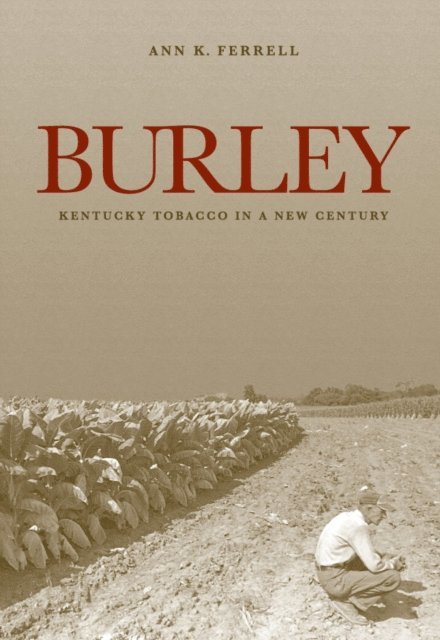
Once iconic American symbols, tobacco farms are gradually disappearing. It is difficult for many people to lament the loss of a crop that has come to symbolize addiction, disease, and corporate deception; yet, in Kentucky, the plant has played an important role in economic development and prosperity. Burley tobacco -- a light, air-cured variety used in cigarette production -- has long been the Commonwealth's largest cash crop and an important aspect of regional identity, along with bourbon, bluegrass music, and Thoroughbred horses.In Burley: Kentucky Tobacco in a New Century, Ann K. Ferrell investigates the rapidly transforming process of raising and selling tobacco by chronicling her conversations with the farmers who know the crop best. She demonstrates that although the 2004 "buyout" ending the federal tobacco program is commonly perceived to be the most significant change that growers have had to negotiate, it is, in reality, only one new factor among many. Burley reveals the tangible and intangible challenges tobacco farmers face today, from the logistics of cultivation to the growing stigma against the crop.Ferrell uses ethnography, archival research, and rhetorical analysis to tell the complex story of burley tobacco production in twenty-first-century Kentucky. Not only does she give a voice to the farmers who persevere in this embattled industry, but she also sheds light on their futures, contesting the widely held assumption that they can easily replace the crop by diversifying their operations with alternative crops. As tobacco fades from both the physical and economic landscapes, this nuanced volume documents and explores the culture and practices of burley production today.
1 166 kr
Kommande
Contributions by Sheila Bock, Olivia Caldeira, Claudia Chiang-Frost, Cynthia Cox, Ann K. Ferrell, Kate Parker Horigan, Stewart Jobrack, Eleanor Paynter, James Phelan, Susan Ritchie, Martha C. Sims, Jasmine Stork, Sydney K. Varajon, and Jason Whitesel In Narrative Knows No Boundaries: Exploring the Claims and Limits of Telling, the contributors examine uses of clearly recognizable narratives, as well as narratives that are implied, assumed, or even absent because they are untellable. The essays in this collection apply key concepts from the work of acclaimed narrative scholar Amy Shuman to a broad array of narrative contexts. Since her first publications in the early 1980s, Shuman has been a much-cited force, not only within the realm of folklore studies (her home discipline), but also in a myriad of other fields, including narrative studies, critical theory, literacy studies, performance, disability studies, human rights and asylum, gender and feminist theory, and identity studies. In the tradition of Shuman’s work, and in honor of her encouragement to her students to push boundaries, the contributors to this volume illustrate varied ways of thinking about and approaching the study of narrative. The range of contexts considered here includes migrants, refugees, and farmers; storytelling in an indigenous community, on a true crime podcast, and during disaster; sexuality education with persons with disabilities and parenting a child with a disability; master narratives about fatness and asexuality in fanfiction; and Gothic literature and tattoos. The volume’s organization emphasizes surprising connections between these subjects, grounded in concepts like narrative promises, entitlement, tellability, and hypervisibility.
288 kr
Kommande
Contributions by Sheila Bock, Olivia Caldeira, Claudia Chiang-Frost, Cynthia Cox, Ann K. Ferrell, Kate Parker Horigan, Stewart Jobrack, Eleanor Paynter, James Phelan, Susan Ritchie, Martha C. Sims, Jasmine Stork, Sydney K. Varajon, and Jason Whitesel In Narrative Knows No Boundaries: Exploring the Claims and Limits of Telling, the contributors examine uses of clearly recognizable narratives, as well as narratives that are implied, assumed, or even absent because they are untellable. The essays in this collection apply key concepts from the work of acclaimed narrative scholar Amy Shuman to a broad array of narrative contexts. Since her first publications in the early 1980s, Shuman has been a much-cited force, not only within the realm of folklore studies (her home discipline), but also in a myriad of other fields, including narrative studies, critical theory, literacy studies, performance, disability studies, human rights and asylum, gender and feminist theory, and identity studies. In the tradition of Shuman’s work, and in honor of her encouragement to her students to push boundaries, the contributors to this volume illustrate varied ways of thinking about and approaching the study of narrative. The range of contexts considered here includes migrants, refugees, and farmers; storytelling in an indigenous community, on a true crime podcast, and during disaster; sexuality education with persons with disabilities and parenting a child with a disability; master narratives about fatness and asexuality in fanfiction; and Gothic literature and tattoos. The volume’s organization emphasizes surprising connections between these subjects, grounded in concepts like narrative promises, entitlement, tellability, and hypervisibility.