Ann V. Murphy – författare
Visar alla böcker från författaren Ann V. Murphy. Handla med fri frakt och snabb leverans.
4 produkter
4 produkter
422 kr
Skickas inom 10-15 vardagar
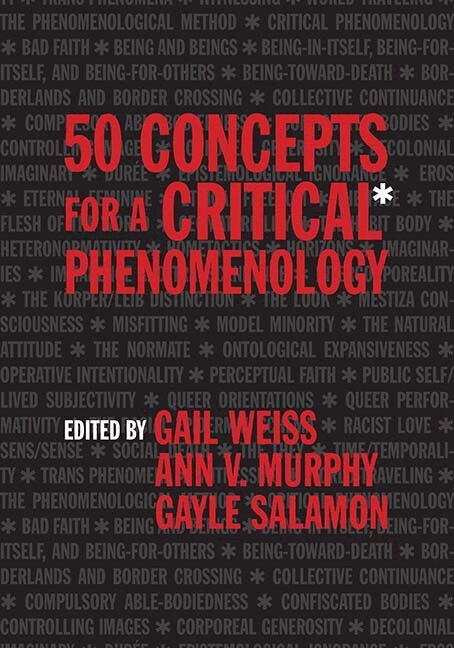
Phenomenology, the philosophical method that seeks to uncover the taken-for-granted presuppositions, habits, and norms that structure everyday experience, is increasingly framed by ethical and political concerns. Critical phenomenology foregrounds experiences of marginalization, oppression, and power in order to identify and transform common experiences of injustice that render “the familiar” a site of oppression for many. In 50 Concepts for a Critical Phenomenology, leading scholars present fresh readings of classic phenomenological topics and introduce newer concepts developed by feminist theorists, critical race theorists, disability theorists, and queer and trans theorists that capture aspects of lived experience that have traditionally been neglected. By centering historically marginalized perspectives, the chapters in this book breathe new life into the phenomenological tradition and reveal its ethical, social, and political promise.The volume will be an invaluable resource for teaching and research in continental philosophy; feminist, gender, and sexuality studies; critical race theory; disability studies; cultural studies; and critical theory more generally.
1 291 kr
Skickas inom 10-15 vardagar
Phenomenology, the philosophical method that seeks to uncover the taken-for-granted presuppositions, habits, and norms that structure everyday experience, is increasingly framed by ethical and political concerns. Critical phenomenology foregrounds experiences of marginalization, oppression, and power in order to identify and transform common experiences of injustice that render "the familiar" a site of oppression for many.In 50 Concepts for a Critical Phenomenology, leading scholars present fresh readings of classic phenomenological topics and introduce newer concepts developed by feminist theorists, critical race theorists, disability theorists, and queer and trans theorists that capture aspects of lived experience that have traditionally been neglected. By centering historically marginalized perspectives, the chapters in this book breathe new life into the phenomenological tradition and reveal its ethical, social, and political promise.The volume will be an invaluable resource for teaching and research in continental philosophy; feminist, gender, and sexuality studies; critical race theory; disability studies; cultural studies; and critical theory more generally.
356 kr
Tillfälligt slut
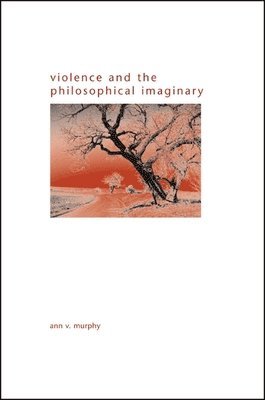
Examines how violence has been conceptually and rhetorically put to use in continental social theory.Images of violence enjoy a particular privilege in contemporary continental philosophy, one manifest in the ubiquity of violent metaphors and the prominence of a kind of rhetorical investment in violence as a motif. Such images have also informed, constrained, and motivated recent continental feminist theory. In Violence and the Philosophical Imaginary, Ann V. Murphy takes note of wide-ranging references to the themes of violence and vulnerability in contemporary theory. She considers the ethical and political implications of this language of violence with the aim of revealing other ways in which identity and the social bond might be imagined, and encourages some critical distance from the images of violence that pervade philosophical critique.
1 057 kr
Tillfälligt slut
Examines how violence has been conceptually and rhetorically put to use in continental social theory.Images of violence enjoy a particular privilege in contemporary continental philosophy, one manifest in the ubiquity of violent metaphors and the prominence of a kind of rhetorical investment in violence as a motif. Such images have also informed, constrained, and motivated recent continental feminist theory. In Violence and the Philosophical Imaginary, Ann V. Murphy takes note of wide-ranging references to the themes of violence and vulnerability in contemporary theory. She considers the ethical and political implications of this language of violence with the aim of revealing other ways in which identity and the social bond might be imagined, and encourages some critical distance from the images of violence that pervade philosophical critique.