Anna Albrektson – författare
Visar alla böcker från författaren Anna Albrektson. Handla med fri frakt och snabb leverans.
5 produkter
Litteraturvetenskap II
Av Sigrid Schottenius Cullhed, Andreas Hedberg m. fl.
Häftad, 2026
479 kr
Lägg i varukorg
Litteraturvetenskap II fördjupar och breddar kunskaperna om olika teorier och metoder inom det litteraturvetenskapliga forskningsområdet. Boken omfattar tolv kapitel, skrivna av specialister inom olika litteraturvetenskapliga fält. Syftet är bland annat att ge vägledning och inspiration för …
Grundbok i litteraturvetenskap - Historia, praktik och teori
Av Carin Franzén, Anna Albrektson m. fl.
Häftad, 2015
2,7 utav 5 stjärnor. Totalt antal röster: (3)
434 kr
Lägg i varukorg
Grundbok i litteraturvetenskap – historia, praktik, teori är en introduktion till litteraturämnets många och skiftande teorier och praktiker. Den perspektivrikedom som karakteriserar den litteraturvetenskapliga verksamheten i dag har ett antal gemensamma grunddrag eller teman som kan ingå i olika …
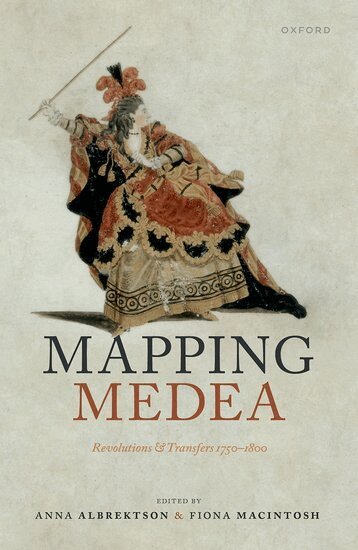
Mapping Medea
Revolutions and Transfers 1750-1800
Av Anna Albrektson, Fiona Macintosh
Inbunden, 2023
1489 kr
Lägg i varukorg
The late-eighteenth century witnessed multiple Medeas take to the stages of Europe, in the Americas, and across the Russian empire. Performances took place in Moscow and São Paulo, in London and Lisbon, in Gotha, Stuttgart, and Venice. This lively collection of essays examines the various reasons …
Mapping Medea
Revolutions and Transfers 1750-1800
Av Fiona Macintosh, Anna Albrektson
E-bok, 2023
1371 kr
Lägg i varukorg
The late-eighteenth century witnessed multiple Medeas take to the stages of Europe, in the Americas, and across the Russian empire. Performances took place in Moscow and São Paulo, in London and Lisbon, in Gotha, Stuttgart, and Venice. This lively collection of essays examines the various reasons …
Mapping Medea
Revolutions and Transfers 1750-1800
Av Fiona Macintosh, Anna Albrektson
E-bok, 2023
1371 kr
Lägg i varukorg
The late-eighteenth century witnessed multiple Medeas take to the stages of Europe, in the Americas, and across the Russian empire. Performances took place in Moscow and São Paulo, in London and Lisbon, in Gotha, Stuttgart, and Venice. This lively collection of essays examines the various reasons …