Anna Cooper - Böcker
Visar alla böcker från författaren Anna Cooper. Handla med fri frakt och snabb leverans.
4 produkter
4 produkter
52 kr
Tillfälligt slut
404 kr
Skickas inom 10-15 vardagar
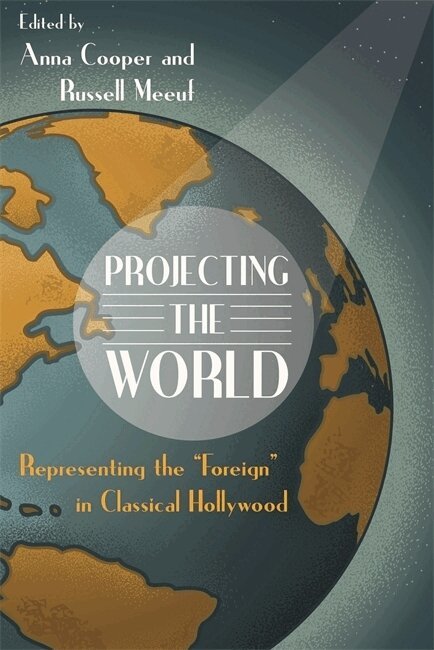
The classical Hollywood films that were released between the 1930s and 1960s were some of the most famous products of global trade, crisscrossing borders and rising to international dominance. In analysing a series of Hollywood films that illustrate moments of nuanced transnational engagement with the "foreign," Projecting the World: Representing the "Foreign" in Classical Hollywood enriches our understanding of mid-twentieth-century Hollywood cinema as a locus of imaginative geographies that explore the United States’ relationship with the world. While previous scholarship has asserted the imperialism and racism at the core of classical Hollywood cinema, Anna Cooper and Russell Meeuf’s collection delves into the intricacies—and sometimes disruptions—of this assumption, seeing Hollywood films as multivalent and contradictory cultural narratives about identity and politics in an increasingly interconnected world.Projecting the World illustrates how Hollywood films negotiate shifting historical contexts of internationalisation through complex narratives about transnational exchange—a topic that has thus far been neglected in scholarship on classical Hollywood. The essays analyse the "foreign" with topics such as the 1930s island horror film, the 1950s Mexico-set bullfighting film, Hollywood’s projection of "exoticism" on Argentina, and John Wayne’s film sets in Africa. Against the backdrop of expanding consumer capitalism and the growth of U.S. global power, Hollywood films such as Tarzan and Anatahan, as well as musicals about Paris, offered resonant images and stories that dramatised America’s international relationships in complicated ways.A fascinating exploration of an oft-overlooked aspect of classical Hollywood films, Projecting the World offers a series of striking new analyses that will entice cinema lovers, film historians, and those interested in the history of American neocolonialism.
1 284 kr
Skickas inom 10-15 vardagar
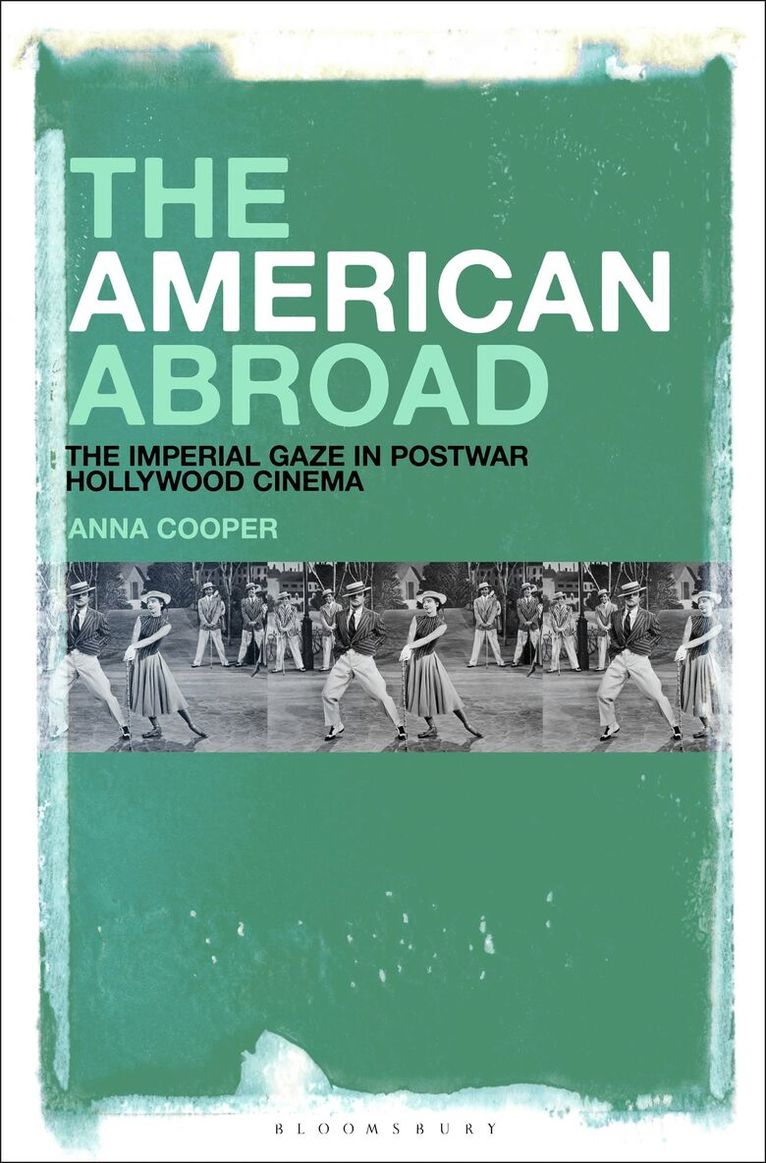
Drawing on cinema and media studies, art history, American studies, and postcolonial studies, this innovative book offers a fresh way of thinking about Hollywood film aesthetics. It explores how eighteenth- and nineteenth-century Western colonial formations of vision influenced classical Hollywood film style, and thus provides a new and unique perspective on the origins of the cinematic gaze. Classical Hollywood cinema constructs global spaces as an imaginative dreamworld,subsuming geographical and cultural differences into utopian fantasy. Yet, this characteristically Hollywoodian aesthetic has rarely been explored in detail. How are such representations constructed within film texts? Is this utopian aesthetic really as uniform and transparent as it appears? What is its relationship to the United States’ status as an imperial power?In The American Abroad, Anna Cooper explores how postwar Hollywood cinema adopted elements of British and French imperial visual culture, transforming them to suit a new United Statesian context. Cooper argues that four visual discourses in particular—the sublime, the ethnographic, the picturesque, and glamour—became building blocks in the development of a new American visual language.
433 kr
Skickas inom 10-15 vardagar
Drawing on cinema and media studies, art history, American studies, and postcolonial studies, this innovative book offers a fresh way of thinking about Hollywood film aesthetics. It explores how eighteenth- and nineteenth-century Western colonial formations of vision influenced classical Hollywood film style, and thus provides a new and unique perspective on the origins of the cinematic gaze. Classical Hollywood cinema constructs global spaces as an imaginative dreamworld,subsuming geographical and cultural differences into utopian fantasy. Yet, this characteristically Hollywoodian aesthetic has rarely been explored in detail. How are such representations constructed within film texts? Is this utopian aesthetic really as uniform and transparent as it appears? What is its relationship to the United States’ status as an imperial power?In The American Abroad, Anna Cooper explores how postwar Hollywood cinema adopted elements of British and French imperial visual culture, transforming them to suit a new United Statesian context. Cooper argues that four visual discourses in particular—the sublime, the ethnographic, the picturesque, and glamour—became building blocks in the development of a new American visual language.