Anna-Katharina Rieger – författare
Visar alla böcker från författaren Anna-Katharina Rieger. Handla med fri frakt och snabb leverans.
4 produkter
4 produkter
Del 12 - Contextualizing the Sacred
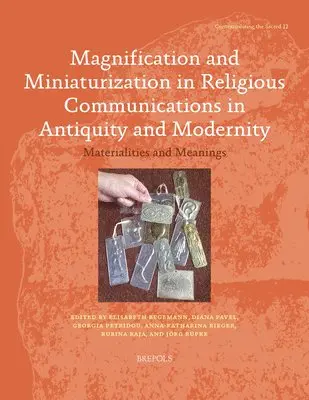
Magnification and Miniaturization in Religious Communication in Antiquity and Modernity
Materialities and Meanings
Häftad, Engelska, 2023
1 626 kr
Skickas inom 5-8 vardagar
Lived Religion in the Ancient Mediterranean World
Approaching Religious Transformations from Archaeology, History and Classics
Inbunden, Engelska, 2020
1 657 kr
Skickas inom 5-8 vardagar
The Lived Ancient Religion project has radically changed perspectives on ancient religions and their supposedly personal or public character. This volume applies and further develops these methodological tools, new perspectives and new questions. The religious transformations of the Roman Imperial period appear in new light and more nuances by comparative confrontation and the integration of many disciplines. The contributions are written by specialists from a variety of disciplinary contexts (Jewish Studies, Theology, Classics, Early Christian Studies) dealing with the history of religion of the Mediterranean, West-Asian, and European area from the (late) Hellenistic period to the (early) Middle Ages and shaped by their intensive exchange. From the point of view of their respective fields of research, the contributors engage with discourses on agency, embodiment, appropriation and experience. They present innovative research in four fields also of theoretical debate, which are “Experiencing the Religious”, “Switching the Code”, „A Thing Called Body“ and “Commemorating the Moment”.
1 414 kr
Skickas inom 3-6 vardagar
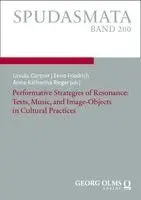
In interdisciplinary projects and research collaborations, participants face multiple demands. However, these expectations encounter a reality that is characterized by time pressure, high demands in one's own discipline, and often increasingly administrative tasks. What can meaningful interdisciplinary work look like in an academic environment? What tasks and constraints do researchers face? And, considering the range of disciplines involved, how can interdisciplinary research projects be designed in a successful way? How does one meaningfully bring different disciplines, their methods, and theories into conversation with each other across the spatial and temporal distance of their subjects? And all that in a way in which the yield is effective and visible in all subprojects? This publication sheds light on this issue by way of example. It reflects on and formulates the experiences and outcomes of interdisciplinary work of a humanities and social science research training group with disciplinary breadth as well as historical depth. The disciplines involved are ancient history, archaeology, art history, music didactics, North American history, patristics, philology (Latin/Greek studies), religious studies, sociology, and theology with the subjects Old and New Testament. In pairs of advanced and young scholars, individual experiences and identifiable results of interdisciplinary work in the respective contributions or research projects are recorded; on a next level, discipline-specific outcomes, but also problems are pinpointed; on a third level, collective experiences with interdisciplinary research displayed. The contributions take a variety of forms: reflections, dialogues, experience reports as well as perspective observations. Rafael Barroso Romero, Complutense University of Madrid, Spain, Elisabeth Begemann, Max-Weber-Kolleg Erfurt, Germany, Enno Friedrich, University of Rostock, Germany, Elena Malagoli, Max-Weber-Kolleg Erfurt, Germany, Anna-Katharina Rieger, University of Graz, Austria, Jörg Rüpke, Max-Weber-Kolleg Erfurt, Germany, Ramón Soneira Martínez, Austrian Archaeological Institute Vienna, Austria, Markus Vinzent, Max-Weber-Kolleg Erfurt, Germany.