Anna Shternshis - Böcker
Visar alla böcker från författaren Anna Shternshis. Handla med fri frakt och snabb leverans.
5 produkter
5 produkter
555 kr
Skickas inom 5-8 vardagar
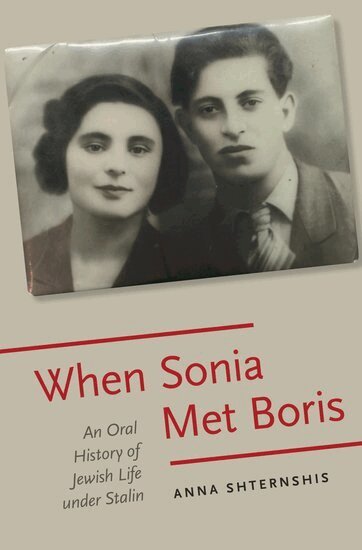
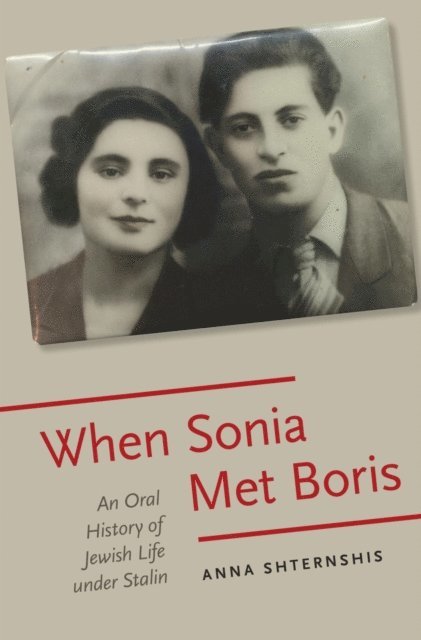
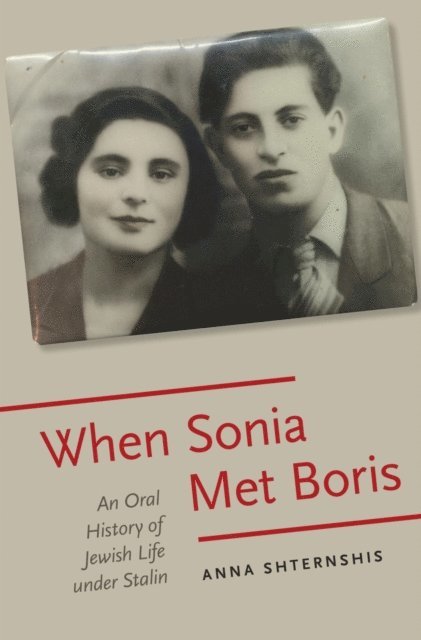
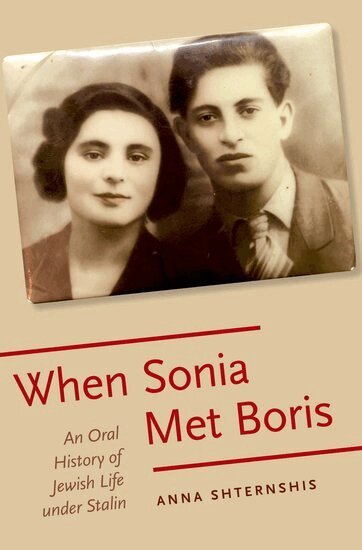
Russian-speaking Jews from the former Soviet Union are a peculiarity in the Jewish world. After decades living in a repressive, nominally atheistic state, these Jews did manage to retain a strong sense of Jewish identity--but one that was almost completely divorced from Judaism. Today, more than ten percent of Jews speak or understand Russian, signaling the importance of an ever-vexing question: why are Russian Jews the way they are? In pursuit of an answer, Anna Shternshis's groundbreaking When Sonia Met Boris draws on nearly 500 oral history interviews on the Soviet Jewish experience with Soviet citizens who were adults by the 1940s. Soviet Jews lived through tumultuous times: the Great Terror, World War II, the anti-Semitic policies of the postwar period, and the collapse of the Soviet Union. But like millions of other Soviet citizens, they married, raised children, and built careers, pursuing life as best as they could in a profoundly hostile environment. One of the first scholars to record and analyze oral testimonies of Soviet Jews, Shternshis unearths heartbreaking, deeply poignant, and often funny stories of the everyday choices Jews were forced to make as a repressed minority living in a totalitarian regime. Shternshis reveals how ethnicity rapidly transformed into a disability, as well as a negative characteristic, for Soviet Jews in the postwar period. That sense of Jewish identity has persisted well into the twenty-first century, influencing the children and grandchildren of Shternshis's subjects, the foundational generation of contemporary Russian Jewish culture. An illuminating work of social and cultural history, When Sonia Met Boris traces the fascinating contours of contemporary Russian Jewish identity back to their very roots.
347 kr
Skickas inom 5-8 vardagar
Russian-speaking Jews from the former Soviet Union are a peculiarity in the Jewish world. After decades living in a repressive, nominally atheistic state, these Jews did manage to retain a strong sense of Jewish identity--but one that was almost completely divorced from Judaism. Today, more than ten percent of Jews speak or understand Russian, signaling the importance of an ever-vexing question: why are Russian Jews the way they are? In pursuit of an answer, Anna Shternshis's groundbreaking When Sonia Met Boris: An Oral History of Jewish Life under Stalin draws on nearly 500 oral history interviews on the Soviet Jewish experience with Soviet citizens who were adults by the 1940s. Soviet Jews lived through tumultuous times: the Great Terror, World War II, the anti-Semitic policies of the postwar period, and the collapse of the Soviet Union. But, like millions of other Soviet citizens, they married, raised children, and built careers, pursuing life as best they could in a profoundly hostile environment. One of the first scholars to record and analyze oral testimonies of Soviet Jews, Shternshis unearths heartbreaking, deeply poignant, and often funny stories of the everyday choices Jews were forced to navigate as a repressed minority living in a totalitarian regime. Shternshis reveals how ethnicity rapidly transformed into a disability, as well as a negative characteristic, for Soviet Jews in the postwar period, and shows how it was something they needed desperately to overcome in order to succeed. That sense of self has persisted well into the twenty-first century, and has impacted the Jewish identities of the children and grandchildren of Shternshis's subjects, the foundational generation of contemporary Russian Jewish culture. An illuminating work of social and cultural history, When Sonia Met Boris traces the fascinating contours of contemporary Russian Jewish identity back to their very roots.
273 kr
Skickas inom 10-15 vardagar
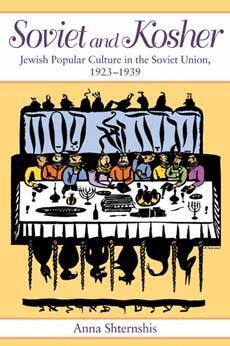
Kosher pork—an oxymoron? Anna Shternshis's fascinating study traces the creation of a Soviet Jewish identity that disassociated Jewishness from Judaism. The cultural transformation of Soviet Jews between 1917 and 1941 was one of the most ambitious experiments in social engineering of the past century. During this period, Russian Jews went from relative isolation to being highly integrated into the new Soviet culture and society, while retaining a strong ethnic and cultural identity. This identity took shape during the 1920s and 1930s, when the government attempted to create a new Jewish culture, "national in form" and "socialist in content." Soviet and Kosher is the first study of key Yiddish documents that brought these Soviet messages to Jews, notably the "Red Haggadah," a Soviet parody of the traditional Passover manual; songs about Lenin and Stalin; scripts from regional theaters; Socialist Realist fiction; and magazines for children and adults. More than 200 interviews conducted by the author in Russia, Germany, and the United States testify to the reception of these cultural products and provide a unique portrait of the cultural life of the average Soviet Jew.
Jews in the Soviet Union: a History
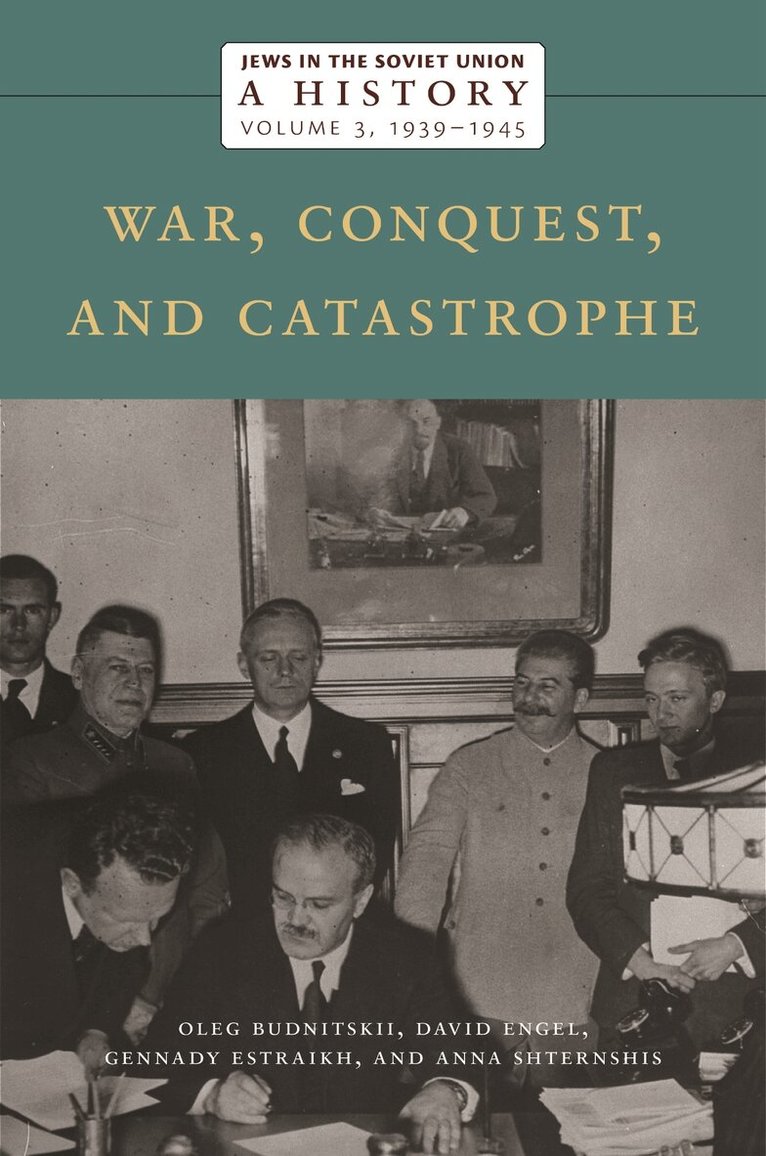
War, Conquest, and Catastrophe, 1939–1945, Volume 3
Inbunden, Engelska, 2022
404 kr
Skickas inom 10-15 vardagar
Provides a comprehensive history of Soviet Jewry during World War IIAt the beginning of the twentieth century, more Jews lived in the Russian Empire than anywhere else in the world. After the Holocaust, the USSR remained one of the world's three key centers of Jewish population, along with the United States and Israel. While a great deal is known about the history and experiences of the Jewish people in the US and in Israel in the twentieth century, much less is known about the experiences of Soviet Jews. Understanding the history of Jewish communities under Soviet rule is essential to comprehending the dynamics of Jewish history in the modern world. Only a small number of scholars and the last generation of Soviet Jews who lived during this period hold a deep knowledge of this history. Jews in the Soviet Union, a new multi-volume history, is an unprecedented undertaking. Publishing over the next few years, this groundbreaking work draws on rare access to documents from the Soviet archives, allowing for the presentation of a sweeping history of Jewish life in the Soviet Union from 1917 through the early 1990s.Volume 3 explores how the Soviet Union's changing relations with Nazi Germany between the signing of a nonaggression pact in August 1939 and the Soviet victory over German forces in World War II affected the lives of some five million Jews who lived under Soviet rule at the beginning of that period. Nearly three million of those Jews perished; those who remained constituted a drastically diminished group, which represented a truncated but still numerically significant postwar Soviet Jewish community.Most of the Jews who lived in the USSR in 1939 experienced the war in one or more of three different environments: under German occupation, in the Red Army, or as evacuees to the Soviet interior. The authors describe the evolving conditions for Jews in each area and the ways in which they endeavored to cope with and to make sense of their situation. They also explore the relations between Jews and their non-Jewish neighbors, the role of the Soviet state in shaping how Jews understood and responded to their changing life conditions, and the ways in which different social groups within the Soviet Jewish population—residents of the newly-annexed territories, the urban elite, small-town Jews, older generations with pre-Soviet memories, and younger people brought up entirely under Soviet rule—behaved. This book is a vital resource for understanding an oft-overlooked history of a major Jewish community.
Jews in the Soviet Union: a History
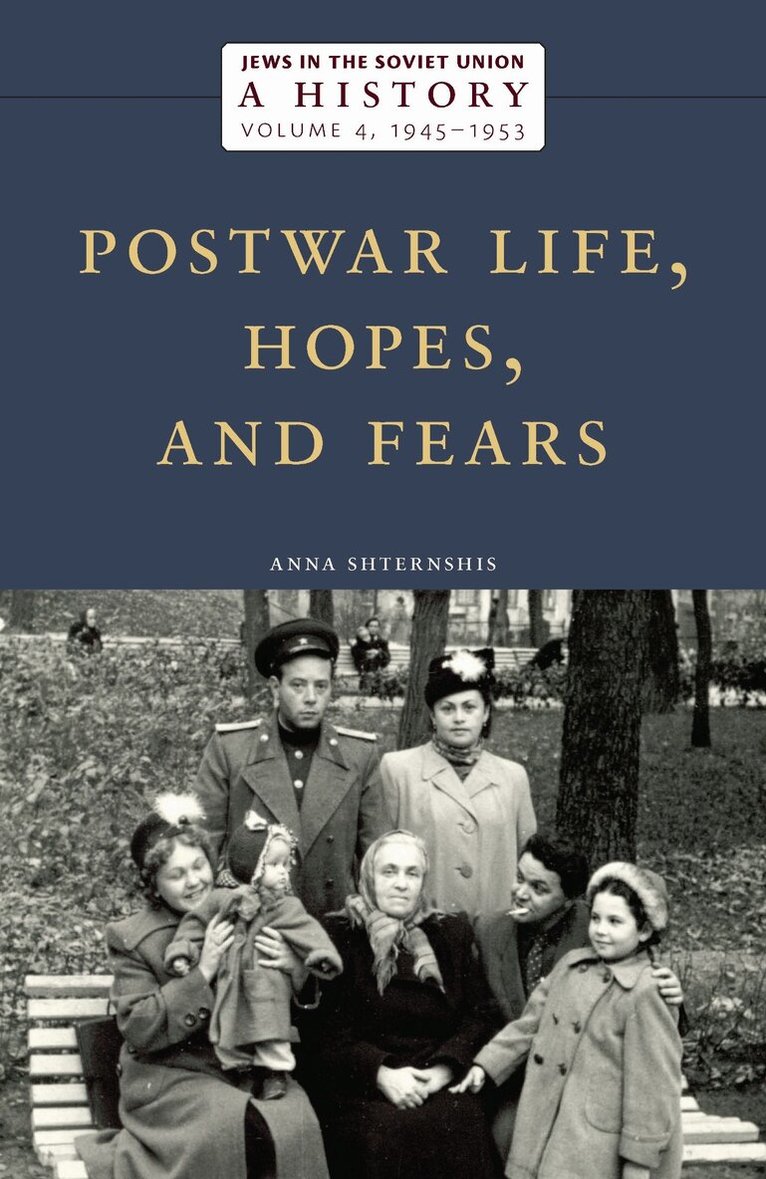
Postwar Life, Hopes, and Fears, 1945–1953, Volume 4
Inbunden, Engelska, 2026
398 kr
Kommande
Offers a compelling account of how Soviet Jews rebuilt their lives amid postwar devastation, rising hostility, discrimination and the repressive final years of Stalin's ruleAt the beginning of the twentieth century, more Jews lived in the Russian Empire than anywhere else in the world. After the Holocaust, the USSR remained one of the world's three key centers of Jewish population, along with the United States and Israel. While a great deal is known about the history and experiences of the Jewish people in the US and in Israel in the twentieth century, much less is known about the experiences of Soviet Jews. Understanding the history of Jewish communities under Soviet rule is essential to comprehending the dynamics of Jewish history in the modern world. Only a small number of scholars and the last generation of Soviet Jews who lived during this period hold a deep knowledge of this history. Jews in the Soviet Union, a new multi-volume history, is an unprecedented undertaking. Publishing over the next few years, this groundbreaking work draws on rare access to documents from the Soviet archives, allowing for the presentation of a sweeping history of Jewish life in the Soviet Union from 1917 through the early 1990s.Focusing on the final eight years of Stalin's rule, Volume 4 offers a gripping account of the complex realities of Soviet Jewish life in the aftermath of World War II. Soviet Jews emerged from the devastation of the Holocaust and the battlefield to face new struggles. The volume traces the lives of key figures and ordinary citizens as they returned to hometowns emptied of their communities, facing the rising tide of hostilities, exclusion, persecution of Jewish cultural leaders, and state-led crackdowns.The book highlights elements of thriving Jewish life despite official repression, from the unprecedented growth of Yiddish theatres to Jewish successes in science, literature, and the arts. It uncovers the deep contradictions of Soviet life– at once enabling and at times even celebrating Jewish achievements in industries and public sphere, while systemically repressing Yiddish culture and identity. With unparalleled depth and insight, historian Anna Shternshis brings to light the resilience and survival strategies of Soviet Jews during one of the most challenging periods in their history.