Anna Teekell – författare
Visar alla böcker från författaren Anna Teekell. Handla med fri frakt och snabb leverans.
6 produkter
6 produkter
482 kr
Skickas inom 5-8 vardagar
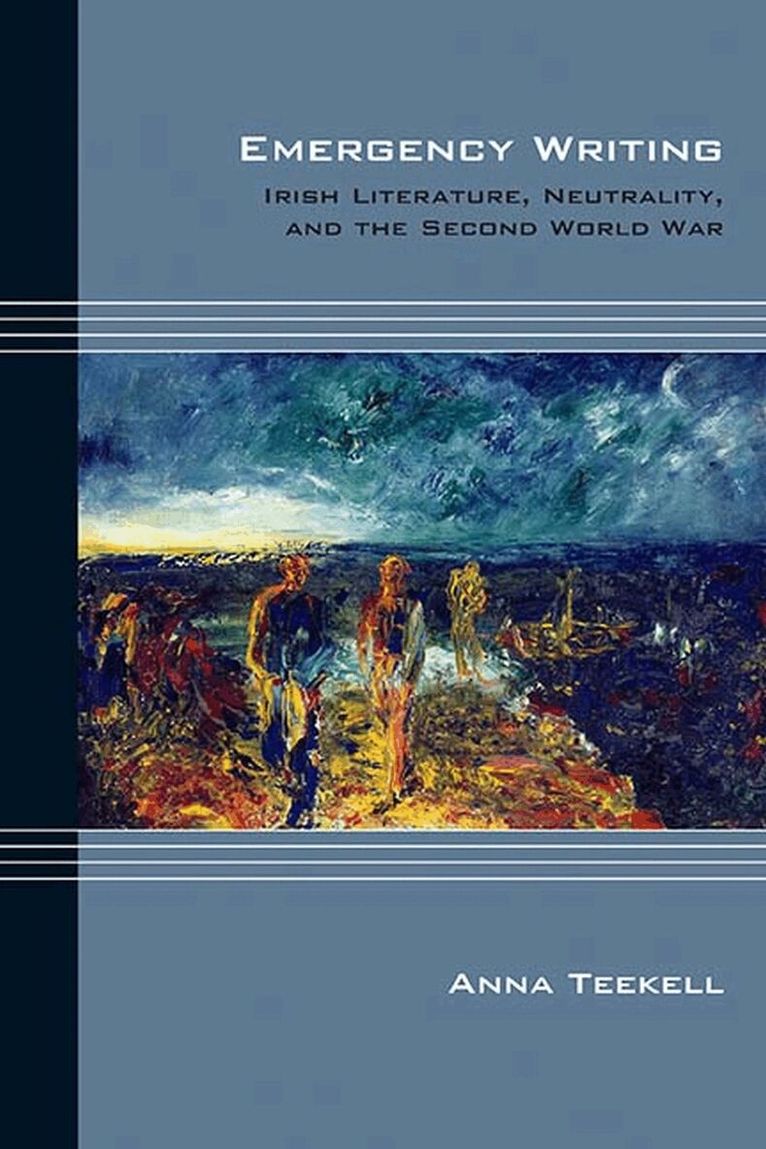
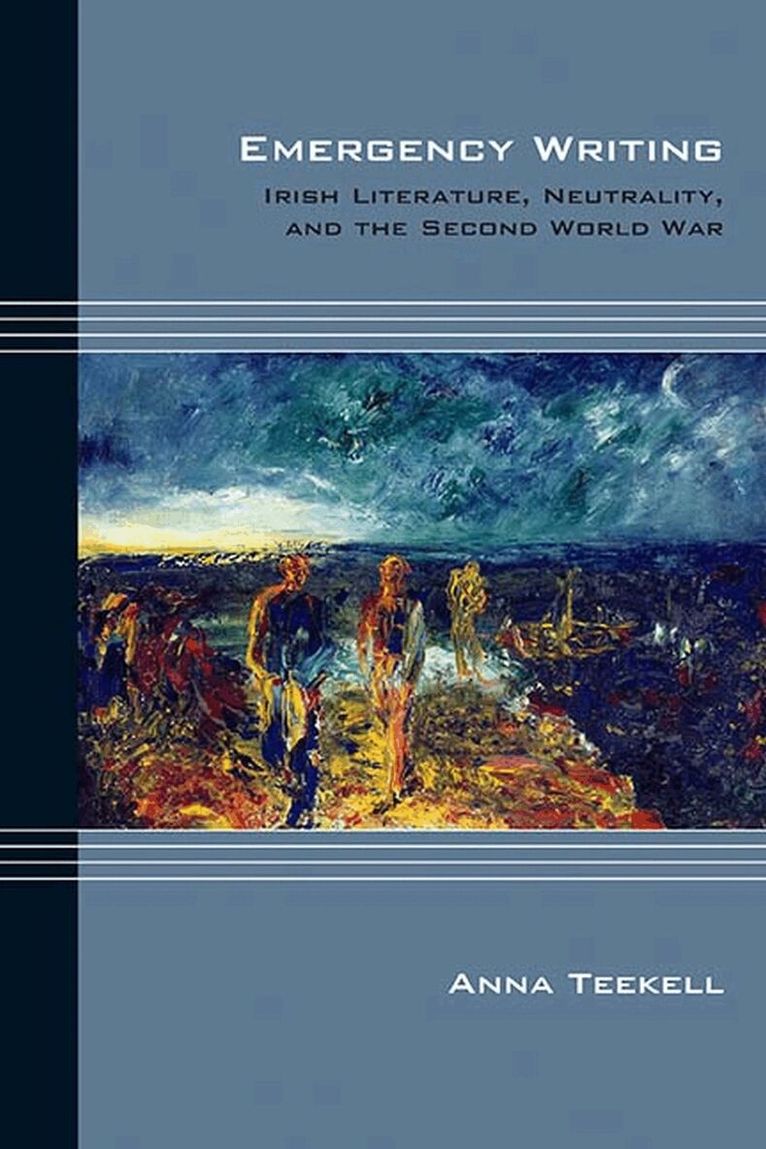
Taking seriously Ireland’s euphemism for World War II, “the Emergency,” Anna Teekell’s Emergency Writing asks both what happens to literature written during a state of emergency and what it means for writing to be a response to an emergency.Anchored in close textual analysis of works by Samuel Beckett, Elizabeth Bowen, Flann O’Brien, Louis MacNeice, Denis Devlin, and Patrick Kavanagh, and suppported by archival material and historical research, Emergency Writing shows how Irish late modernism was a response to the sociopolitical conditions of a newly independent Irish Free State and to a fully emerged modernism in literature and art.What emerges in Irish writing in the wake of Independence, of the Gaelic Revival, of Yeats and of Joyce, is a body of work that invokes modernism as a set of discursive practices with which to counter the Free State’s political pieties. Emergency Writing provides a new approach to literary modernism and to the literature of conflict, considering the ethical dilemma of performing neutrality—emotionally, politically, and rhetorically—in a world at war.
1 247 kr
Skickas inom 10-15 vardagar
Taking seriously Ireland’s euphemism for World War II, “the Emergency,” Anna Teekell’s Emergency Writing asks both what happens to literature written during a state of emergency and what it means for writing to be a response to an emergency.Anchored in close textual analysis of works by Samuel Beckett, Elizabeth Bowen, Flann O’Brien, Louis MacNeice, Denis Devlin, and Patrick Kavanagh, and suppported by archival material and historical research, Emergency Writing shows how Irish late modernism was a response to the sociopolitical conditions of a newly independent Irish Free State and to a fully emerged modernism in literature and art.What emerges in Irish writing in the wake of Independence, of the Gaelic Revival, of Yeats and of Joyce, is a body of work that invokes modernism as a set of discursive practices with which to counter the Free State’s political pieties. Emergency Writing provides a new approach to literary modernism and to the literature of conflict, considering the ethical dilemma of performing neutrality—emotionally, politically, and rhetorically—in a world at war.
420 kr
Skickas inom 5-8 vardagar
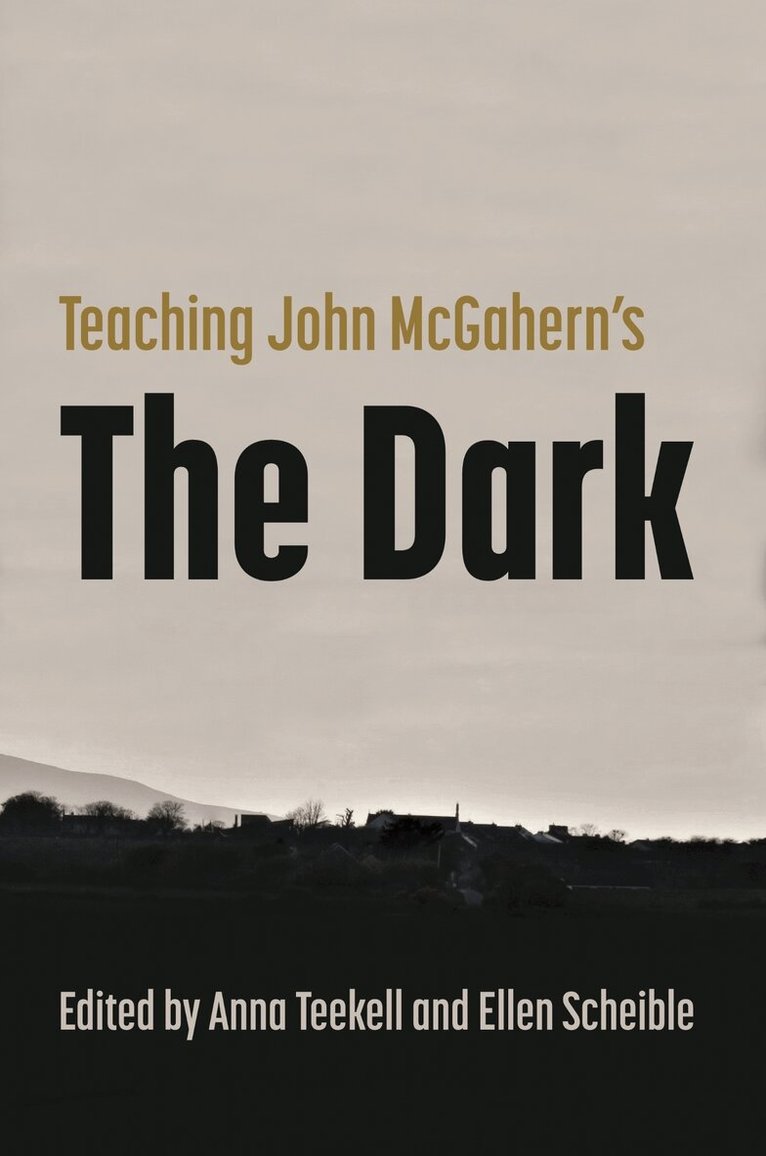
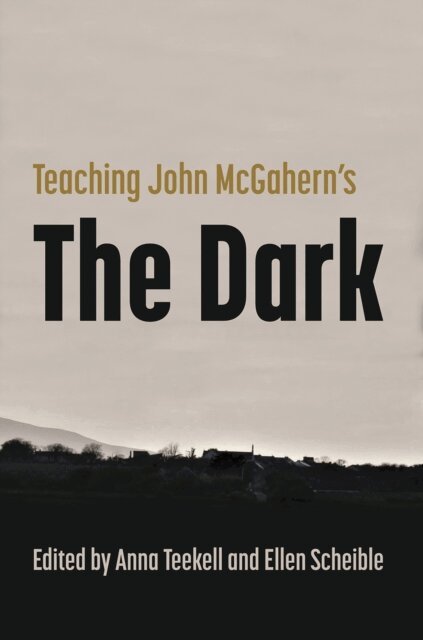
Teaching John McGahern's The Dark provide an indispensable companion to the classic Irish novel. With an introduction aimed at first-time readers and four critical essays, this edition guides readers through the novel’s famously controversial history. While The Dark was initially banned in Ireland for obscenity, scholars now demonstrate that McGahern’s novel of adolescence is not obscene, but revelatory, exposing the corruption underlying authority structures in mid-century Ireland—from the family to the church, to the government’s willingness to ignore national and communal trauma. The Dark is a story of alarming brutality, surprising tenderness, and poetic lyricism; a reflection of Irish society that maintains historical significance as contemporary Ireland continues to build its national identity. An invaluable resource, this edition gives students and scholars a rich source of contextualizing material to address the themes and significance of McGahern’s complex novel.
608 kr
Skickas inom 3-6 vardagar
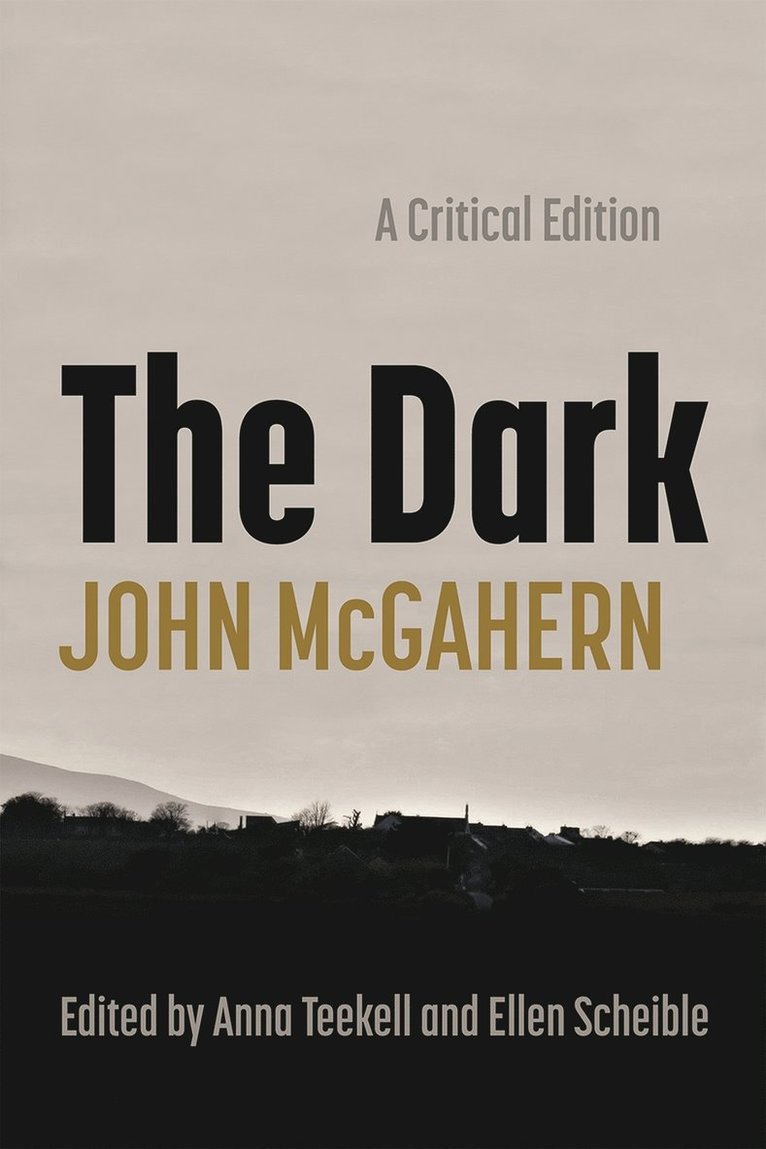
Bringing John McGahern’s 1965 masterpiece back into print in the United States after years of inaccessibility, this new sixtieth-anniversary critical edition includes an introduction aimed at first-time readers, explanatory footnotes, McGahern’s own glossary, and four scholarly essays aimed at guiding readers through the novel’s famously controversial history. While the text was initially banned in Ireland for obscenity, this edition demonstrates that McGahern’s novel of adolescence is not obscene, but revelatory, exposing the corruption underlying authority structures in mid-century Ireland—from the family to the church, to the government’s willingness to ignore national and communal trauma. The Dark follows a promising young boy’s struggles to break free from the economic and social forces trapping him in a lifestyle that is both familiar and suffocating. At the heart of the novel is the boy’s complex and stormy relationship with his abusive, widowed father, who is left to raise a family with little outside aid. The Dark is a story of alarming brutality, surprising tenderness, and poetic lyricism; a reflection of Irish society that maintains historical significance as contemporary Ireland continues to build its national identity.
1 403 kr
Kommande
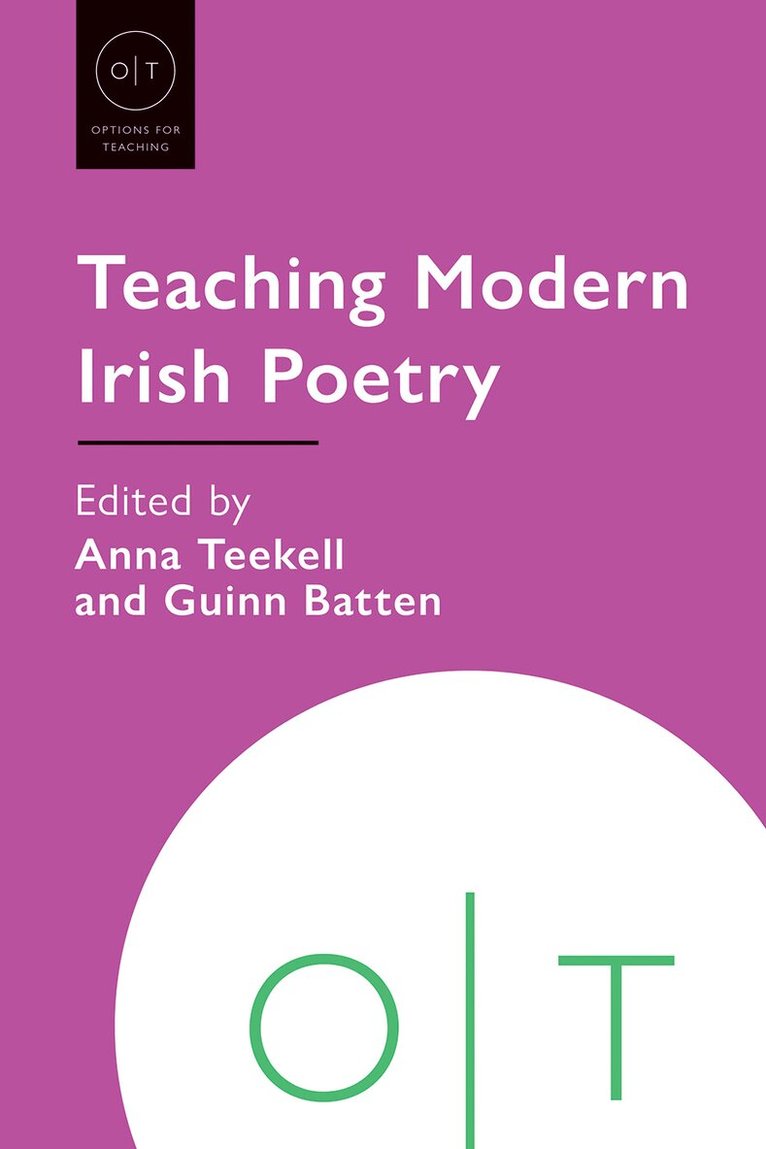
Modern Irish poetry beyond Yeats and HeaneyInterpreting modern Irish poetry within a network of national and cultural identities and in the context of economic and demographic changes of the past fifty years, this volume looks at Irish poetry anew and offers instructors guidance on refashioning the standard Yeats-to-Heaney survey course for the contemporary classroom.Essays address topics such as poetry and trauma, animal poetics, queer poetry, and Black Irish writers and approach teaching Irish poetry in different places, from Mexico to Belfast; to Irish-language learners; with creative writing pedagogy; and alongside classical and medieval poetry. The range of topics and approaches represented here will inspire teachers to explore new poets and poems and to reconsider familiar ones.This volume contains discussion of the following works: Eavan Boland, "Mise Eire," "The Singers," and "That the Science of Cartography Is Limited"; Colette Bryce, "Don't Speak to the Brits, Just Pretend They Don't Exist"; Kimberly Campanello, MOTHERBABYHOME; Ciaran Carson, "Belfast Confetti" and "Hamlet"; Ailbhe Darcy, "Jellyfish"; Aubrey de Vere, "Desolation of the West"; Nidhi Zak/Aria Eipe, "Ama de Casa"; Chiamaka Enyi-Amadi, "When"; Leontia Flynn, "Belfast"; Seamus Heaney, "Punishment"; Nandi Jola, "Black Irish"; Patrick Kavanagh, Lough Derg; Thomas Kinsella, Butcher's Dozen: A Lesson for the Octave of Widgery; Edna Longley, Poetry in the Wars; Louis MacNeice, "Belfast"; Derek Mahon, "The Snow Party" and "A Disused Shed in Co. Wexford"; Paula Meehan, "The Statue of the Virgin at Granard Speaks"; Eibhlín Dubh Ní Chonaill, Caoineadh Airt Uí Laoghaire (The Lament for Art O'Leary); Eiléan Ní Chuilleanáin, "Pygmalion's Image," "Translation," and "Old Roads"; Annemarie Ní Churreáin, "The Secret" and "Weir View"; Nuala Ní Dhomhnaill, The Fifty Minute Mermaid and "Ceist na Teangan"; Doireann Ní Ghríofa, "In Albumen, in Pixels, in Bricks"; Lianne O'Hara, "Bench"; Patrick Pearse, "Mise Éire"; The Táin (anonymous); and W. B. Yeats, "The Rose Tree."
540 kr
Kommande
Modern Irish poetry beyond Yeats and HeaneyInterpreting modern Irish poetry within a network of national and cultural identities and in the context of economic and demographic changes of the past fifty years, this volume looks at Irish poetry anew and offers instructors guidance on refashioning the standard Yeats-to-Heaney survey course for the contemporary classroom.Essays address topics such as poetry and trauma, animal poetics, queer poetry, and Black Irish writers and approach teaching Irish poetry in different places, from Mexico to Belfast; to Irish-language learners; with creative writing pedagogy; and alongside classical and medieval poetry. The range of topics and approaches represented here will inspire teachers to explore new poets and poems and to reconsider familiar ones.This volume contains discussion of the following works: Eavan Boland, "Mise Eire," "The Singers," and "That the Science of Cartography Is Limited"; Colette Bryce, "Don't Speak to the Brits, Just Pretend They Don't Exist"; Kimberly Campanello, MOTHERBABYHOME; Ciaran Carson, "Belfast Confetti" and "Hamlet"; Ailbhe Darcy, "Jellyfish"; Aubrey de Vere, "Desolation of the West"; Nidhi Zak/Aria Eipe, "Ama de Casa"; Chiamaka Enyi-Amadi, "When"; Leontia Flynn, "Belfast"; Seamus Heaney, "Punishment"; Nandi Jola, "Black Irish"; Patrick Kavanagh, Lough Derg; Thomas Kinsella, Butcher's Dozen: A Lesson for the Octave of Widgery; Edna Longley, Poetry in the Wars; Louis MacNeice, "Belfast"; Derek Mahon, "The Snow Party" and "A Disused Shed in Co. Wexford"; Paula Meehan, "The Statue of the Virgin at Granard Speaks"; Eibhlín Dubh Ní Chonaill, Caoineadh Airt Uí Laoghaire (The Lament for Art O'Leary); Eiléan Ní Chuilleanáin, "Pygmalion's Image," "Translation," and "Old Roads"; Annemarie Ní Churreáin, "The Secret" and "Weir View"; Nuala Ní Dhomhnaill, The Fifty Minute Mermaid and "Ceist na Teangan"; Doireann Ní Ghríofa, "In Albumen, in Pixels, in Bricks"; Lianne O'Hara, "Bench"; Patrick Pearse, "Mise Éire"; The Táin (anonymous); and W. B. Yeats, "The Rose Tree."