Annalisa Marzano – författare
Visar alla böcker från författaren Annalisa Marzano. Handla med fri frakt och snabb leverans.
9 produkter
9 produkter
Inbunden, Engelska, 2013
2 558 kr
Skickas inom 5-8 vardagar
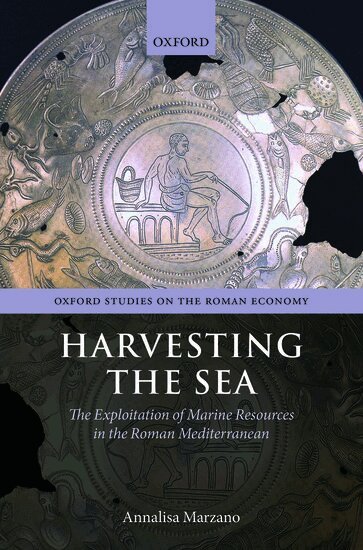
Harvesting the Sea provides the first systematic treatment of the exploitation of various marine resources, such as large-scale fishing, fish salting, salt and purple-dye production, and oyster and fish-farming, in the Roman world and its role within the ancient economy. Bringing together literary, epigraphic, and legal sources, with a wealth of archaeological data collected in recent years, Marzano shows that these marine resources were an important feature of the Roman economy and, in scope and market-oriented production, paralleled phenomena taking place in the Roman agricultural economy on land. The book also examines the importance of technological innovations, the organization of labour, and the use of the existing legal framework in defence of economic interests against competitors for the same natural resource.
Inbunden, Engelska, 2022
1 330 kr
Skickas inom 7-10 vardagar
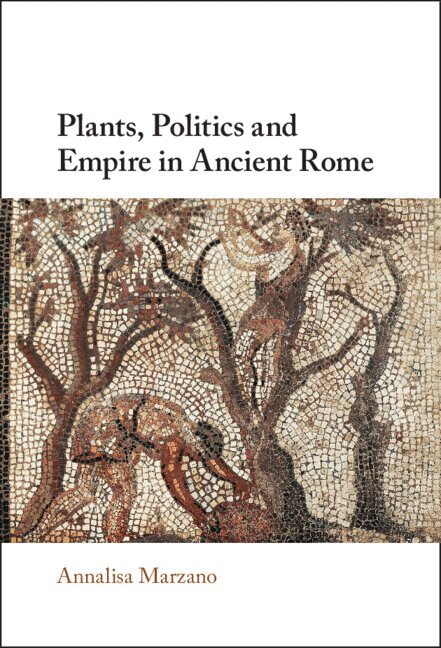
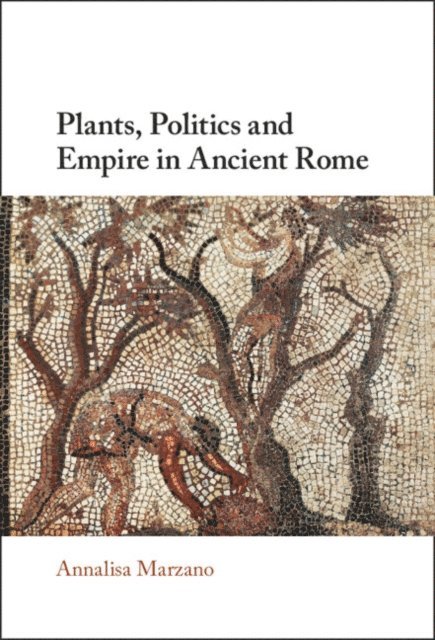
The book investigates the cultural and political dimension of Roman arboriculture and the associated movement of plants from one corner of the empire to the other. It uses the convergent perspectives offered by textual and archaeological sources to sketch a picture of large-scale arboriculture as a phenomenon primarily driven by elite activity and imperialism. Arboriculture had a clear cultural role in the Roman world: it was used to construct the public persona of many elite Romans, with the introduction of new plants from far away regions or the development of new cultivars contributing to the elite competitive display. Exotic plants from conquered regions were also displayed as trophies in military triumphs, making plants an element of the language of imperialism. Annalisa Marzano argues that the Augustan era was a key moment for the development of arboriculture and identifies colonists and soldiers as important agents contributing to plant dispersal and diversity.
Häftad, Engelska, 2025
340 kr
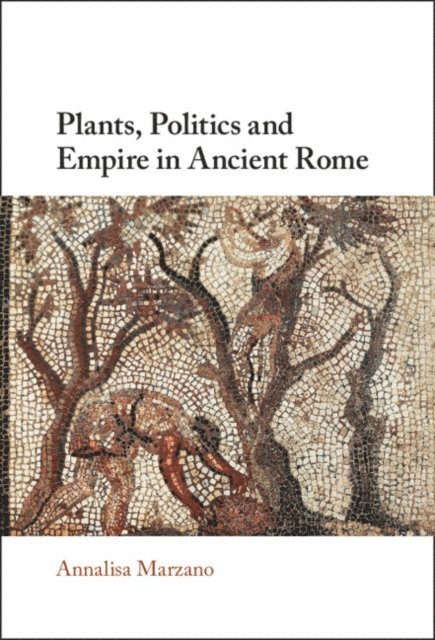
The book investigates the cultural and political dimension of Roman arboriculture and the associated movement of plants from one corner of the empire to the other. It uses the convergent perspectives offered by textual and archaeological sources to sketch a picture of large-scale arboriculture as a phenomenon primarily driven by elite activity and imperialism. Arboriculture had a clear cultural role in the Roman world: it was used to construct the public persona of many elite Romans, with the introduction of new plants from far away regions or the development of new cultivars contributing to the elite competitive display. Exotic plants from conquered regions were also displayed as trophies in military triumphs, making plants an element of the language of imperialism. Annalisa Marzano argues that the Augustan era was a key moment for the development of arboriculture and identifies colonists and soldiers as important agents contributing to plant dispersal and diversity.
E-bok
PDF, Engelska, 2022408 kr
Läs direkt efter köp
The book investigates the cultural and political dimension of Roman arboriculture and the associated movement of plants from one corner of the empire to the other. It uses the convergent perspectives offered by textual and archaeological sources to sketch a picture of large-scale arboriculture as a phenomenon primarily driven by elite activity and imperialism. Arboriculture had a clear cultural role in the Roman world: it was used to construct the public persona of many elite Romans, with the introduction of new plants from far away regions or the development of new cultivars contributing to the elite competitive display. Exotic plants from conquered regions were also displayed as trophies in military triumphs, making plants an element of the language of imperialism. Annalisa Marzano argues that the Augustan era was a key moment for the development of arboriculture and identifies colonists and soldiers as important agents contributing to plant dispersal and diversity.
E-bok
Engelska, 2022408 kr
Läs direkt efter köp
The book investigates the cultural and political dimension of Roman arboriculture and the associated movement of plants from one corner of the empire to the other. It uses the convergent perspectives offered by textual and archaeological sources to sketch a picture of large-scale arboriculture as a phenomenon primarily driven by elite activity and imperialism. Arboriculture had a clear cultural role in the Roman world: it was used to construct the public persona of many elite Romans, with the introduction of new plants from far away regions or the development of new cultivars contributing to the elite competitive display. Exotic plants from conquered regions were also displayed as trophies in military triumphs, making plants an element of the language of imperialism. Annalisa Marzano argues that the Augustan era was a key moment for the development of arboriculture and identifies colonists and soldiers as important agents contributing to plant dispersal and diversity.
Inbunden, Engelska, 2018
2 506 kr
Skickas inom 7-10 vardagar
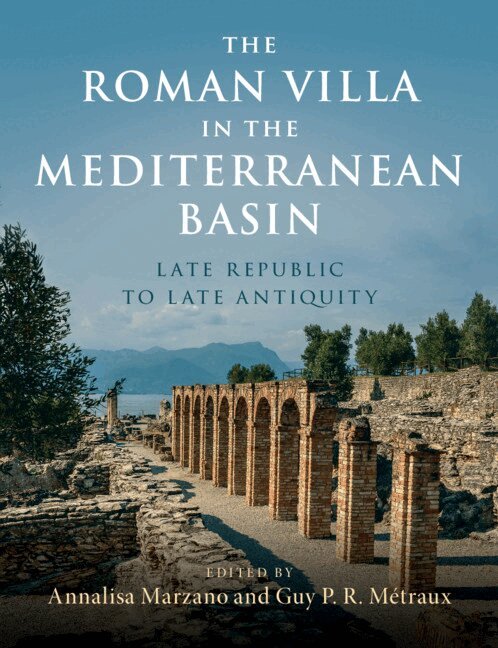
This volume offers a comprehensive survey of Roman villas in Italy and the Mediterranean provinces of the Roman Empire, from their origins to the collapse of the Empire. The architecture of villas could be humble or grand, and sometimes luxurious. Villas were most often farms where wine, olive oil, cereals, and manufactured goods, among other products, were produced. They were also venues for hospitality, conversation, and thinking on pagan, and ultimately Christian, themes. Villas spread as the Empire grew. Like towns and cities, they became the means of power and assimilation, just as infrastructure, such as aqueducts and bridges, was transforming the Mediterranean into a Roman sea. The distinctive Roman/Italian villa type was transferred to the provinces, resulting in Mediterranean-wide culture of rural dwelling and work that further unified the Empire.
E-bok
PDF, Engelska, 20182 830 kr
Läs direkt efter köp
This volume offers a comprehensive survey of Roman villas in Italy and the Mediterranean provinces of the Roman Empire, from their origins to the collapse of the Empire. The architecture of villas could be humble or grand, and sometimes luxurious. Villas were most often farms where wine, olive oil, cereals, and manufactured goods, among other products, were produced. They were also venues for hospitality, conversation, and thinking on pagan, and ultimately Christian, themes. Villas spread as the Empire grew. Like towns and cities, they became the means of power and assimilation, just as infrastructure, such as aqueducts and bridges, was transforming the Mediterranean into a Roman sea. The distinctive Roman/Italian villa type was transferred to the provinces, resulting in Mediterranean-wide culture of rural dwelling and work that further unified the Empire.
E-bok
Engelska, 20182 830 kr
Läs direkt efter köp
This volume offers a comprehensive survey of Roman villas in Italy and the Mediterranean provinces of the Roman Empire, from their origins to the collapse of the Empire. The architecture of villas could be humble or grand, and sometimes luxurious. Villas were most often farms where wine, olive oil, cereals, and manufactured goods, among other products, were produced. They were also venues for hospitality, conversation, and thinking on pagan, and ultimately Christian, themes. Villas spread as the Empire grew. Like towns and cities, they became the means of power and assimilation, just as infrastructure, such as aqueducts and bridges, was transforming the Mediterranean into a Roman sea. The distinctive Roman/Italian villa type was transferred to the provinces, resulting in Mediterranean-wide culture of rural dwelling and work that further unified the Empire.
E-bok
PDF, Engelska, 20074 064 kr
Läs direkt efter köp
This volume, which was awarded Honorable Mention and a Silver Medal from the Premio Romanistico Internationazionale Gerard Boulvert, investigates the socio-economic role of elite villas in Roman Central Italy drawing on both documentary sources and material evidence. Through the composite picture emerging from the juxtaposition of literary texts and archaeological evidence, the book traces elite ideological attitudes and economic behavior, caught between what was morally acceptable and the desire to invest capital intelligently. The analysis of the biases affecting the application of modern historiographical models to the interpretation of the archaeology frames the discussion on the identification of slave quarters in villas and the putative second century crisis of the Italian economy. The book brings an innovative perspective to the debate on the villa-system and the decline of villas in the imperial period.