
Anne J. Mamary – författare
Visar alla böcker från författaren . Handla med fri frakt och snabb leverans.
4 produkter
4 produkter

Häftad, Engelska, 2021
417 kr
Skickas inom 5-8 vardagar
When Harry Potter first boards the Hogwarts Express, he journeys to a world which Rowling says has alchemy as its "internal logic." The Philosopher's Stone, known for its power to transform base metals into gold and to give immortality to its maker, is the subject of the conflict between Harry and Voldemort in the first book of the series. But alchemy is not about money or eternal life, it is much more about the transformations of desire, of power and of people--through love. Harry's equally remarkable and ordinary power to love leads to his desire to find but not use the Philosopher's Stone at the start of the series and his wish to end the destructive power of the Elder Wand at the end. This collection of essays on alchemical symbolism and transformations in Rowling's series demonstrates how Harry's work with magical objects, people, and creatures transfigure desire, power, and identity. As Harry's leaden existence on Privet Drive is transformed in the company of his friends and teachers, the Harry Potter novels have transformed millions of readers, inspiring us to find the gold in our ordinary lives.
Häftad, Engelska, 2026
513 kr
Skickas inom 5-8 vardagar
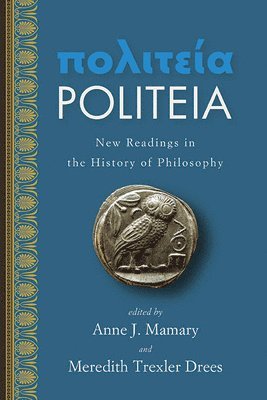
Innovative readings and creative reinterpretations of significant works in the field of ancient philosophy.In classical Greece, the word politeia in its largest sense meant the citizens' engagement with the shared project that is the lived life of their polis, city, civic society. Ancient philosophers, poets, historians, and orators constantly reflected on what this shared project should be and how citizens could participate in it. The chapters in this collection, inspired by the work of Anthony Preus, examine some of the products of their reflections, both the written works themselves and the variety of comparative contexts into which they can be put, from the Greeks' neighboring Asian polities to contemporary philosophical engagements with similar issues. The essays in Politeia hope to inspire readers to think about their own lives in conversation with the lives of the many communities to which we belong—to not only demonstrate the idea of politeia but to bring to life politeia's connection of the individual to the collective, something that seems to be of central importance in a world of division and to be the beating heart of the discipline of philosophy.
Inbunden, Engelska, 2025
1 176 kr
Skickas
Innovative readings and creative reinterpretations of significant works in the field of ancient philosophy.In classical Greece, the word politeia in its largest sense meant the citizens' engagement with the shared project that is the lived life of their polis, city, civic society. Ancient philosophers, poets, historians, and orators constantly reflected on what this shared project should be and how citizens could participate in it. The chapters in this collection, inspired by the work of Anthony Preus, examine some of the products of their reflections, both the written works themselves and the variety of comparative contexts into which they can be put, from the Greeks' neighboring Asian polities to contemporary philosophical engagements with similar issues. The essays in Politeia hope to inspire readers to think about their own lives in conversation with the lives of the many communities to which we belong—to not only demonstrate the idea of politeia but to bring to life politeia's connection of the individual to the collective, something that seems to be of central importance in a world of division and to be the beating heart of the discipline of philosophy.
Häftad, Engelska, 1998
423 kr
Tillfälligt slut
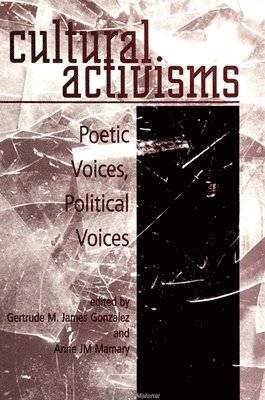
Offers a multiple-genred mosaic of multiple resistances to oppression through a variety of styles and mediums.This text presents art and writing which is political rather than theorizing about how art and writing might be political. The wide array of voices and styles is one of the book's strengths as it not only offers a multi-faceted approach toward activism and positive change, but also speaks a range of emotions from anger, passion, and fear, to joy and courage. This book also opens and creates space for the humor and hope which can come even in the presence of violence and despair.