Anne-Maria Makhulu – författare
Visar alla böcker från författaren Anne-Maria Makhulu. Handla med fri frakt och snabb leverans.
7 produkter
7 produkter
Häftad, Engelska, 2010
428 kr
Skickas inom 5-8 vardagar
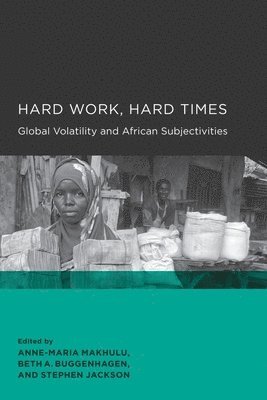
The description of Africa as a continent in perpetual crisis, ubiquitous in the popular media and in policy and development circles, is at once obvious and obfuscating. This collection by leading ethnographers moves beyond the rhetoric of African crisis to theorize people's everyday practices under volatile conditions not of their own making. From Ghanaian hiplife music to the U.S. 'diversity lottery' in Togo, from politicos in Cote d'Ivoire to squatters in South Africa, the essays in "Hard Work, Hard Times" uncover the imaginative ways in which African subjects make and remake themselves and their worlds, and thus make do, get by, get over, and sometimes thrive. The contributors include: Beth A. Buggenhagen, Stephen Jackson, Anne-Maria Makhulu, Mike McGovern, Charles Piot , Dorothea E. Schulz, and Jesse Weaver Shipley.
Inbunden, Engelska, 2015
1 269 kr
Skickas inom 5-8 vardagar
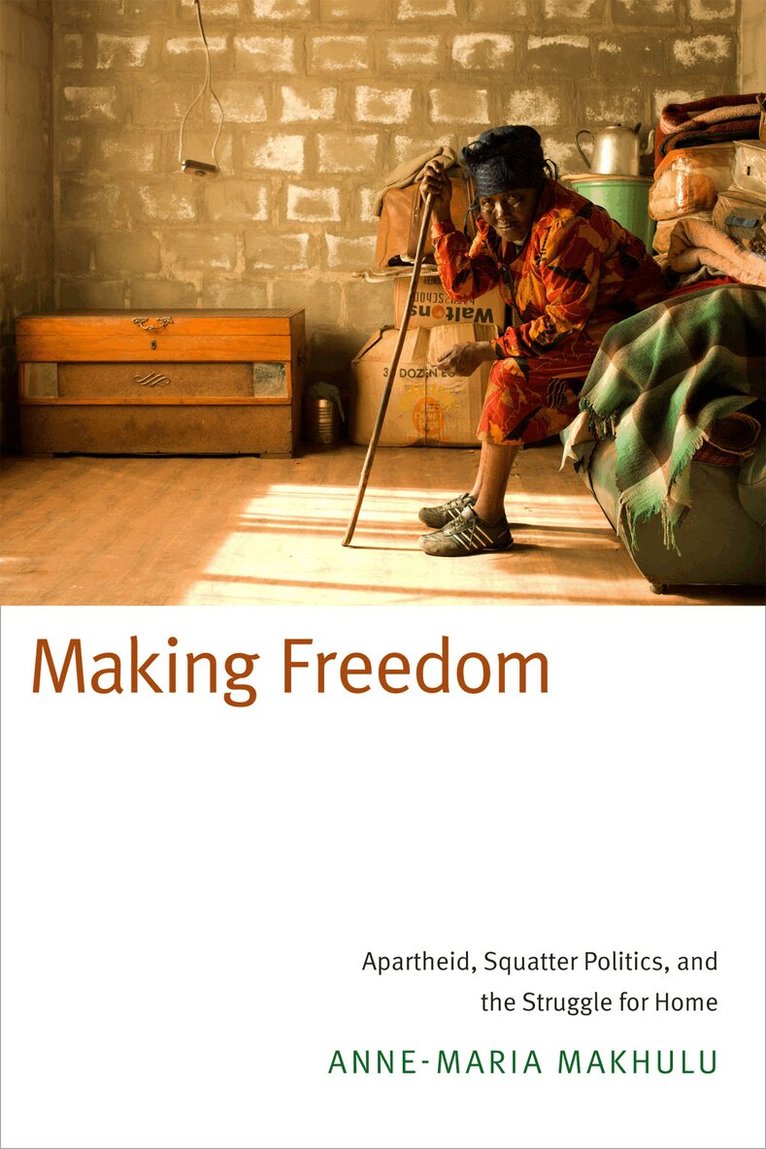
In Making Freedom Anne-Maria Makhulu explores practices of squatting and illegal settlement on the outskirts of Cape Town during and immediately following the end of apartheid. Apartheid's paradoxical policies of prohibiting migrant Africans who worked in Cape Town from living permanently within the city led some black families to seek safe haven on the city's perimeters. Beginning in the 1970s families set up makeshift tents and shacks and built whole communities, defying the state through what Makhulu calls a "politics of presence." In the simple act of building homes, squatters, who Makhulu characterizes as urban militants, actively engaged in a politics of "the right to the city" that became vital in the broader struggles for liberation. Despite apartheid's end in 1994, Cape Town’s settlements have expanded, as new forms of dispossession associated with South African neoliberalism perpetuate relations of spatial exclusion, poverty, and racism. As Makhulu demonstrates, the efforts of black Capetonians to establish claims to a place in the city not only decisively reshaped Cape Town's geography but changed the course of history.
Häftad, Engelska, 2015
386 kr
Skickas inom 5-8 vardagar
In Making Freedom Anne-Maria Makhulu explores practices of squatting and illegal settlement on the outskirts of Cape Town during and immediately following the end of apartheid. Apartheid's paradoxical policies of prohibiting migrant Africans who worked in Cape Town from living permanently within the city led some black families to seek safe haven on the city's perimeters. Beginning in the 1970s families set up makeshift tents and shacks and built whole communities, defying the state through what Makhulu calls a "politics of presence." In the simple act of building homes, squatters, who Makhulu characterizes as urban militants, actively engaged in a politics of "the right to the city" that became vital in the broader struggles for liberation. Despite apartheid's end in 1994, Cape Town’s settlements have expanded, as new forms of dispossession associated with South African neoliberalism perpetuate relations of spatial exclusion, poverty, and racism. As Makhulu demonstrates, the efforts of black Capetonians to establish claims to a place in the city not only decisively reshaped Cape Town's geography but changed the course of history.
E-bok
PDF, Engelska, 2015550 kr
Läs direkt efter köp
In Making Freedom Anne-Maria Makhulu explores practices of squatting and illegal settlement on the outskirts of Cape Town during and immediately following the end of apartheid. Apartheid''s paradoxical policies of prohibiting migrant Africans who worked in Cape Town from living permanently within the city led some black families to seek safe haven on the city''s perimeters. Beginning in the 1970s families set up makeshift tents and shacks and built whole communities, defying the state through what Makhulu calls a "politics of presence." In the simple act of building homes, squatters, who Makhulu characterizes as urban militants, actively engaged in a politics of "the right to the city" that became vital in the broader struggles for liberation. Despite apartheid''s end in 1994, Cape Town’s settlements have expanded, as new forms of dispossession associated with South African neoliberalism perpetuate relations of spatial exclusion, poverty, and racism. As Makhulu demonstrates, the efforts of black Capetonians to establish claims to a place in the city not only decisively reshaped Cape Town''s geography but changed the course of history.
Häftad, Engelska, 2022
431 kr
Skickas inom 5-8 vardagar
This collection explores the complexities of black existence, and intellectual and cultural life in the work and legacies of centenarian writers, Peter Abrahams, Noni Jabavu, Sibusiso Cyril Lincoln Nyembezi and Es'kia Mphahlele
E-bok
PDF, Engelska, 2022618 kr
Läs direkt efter köp
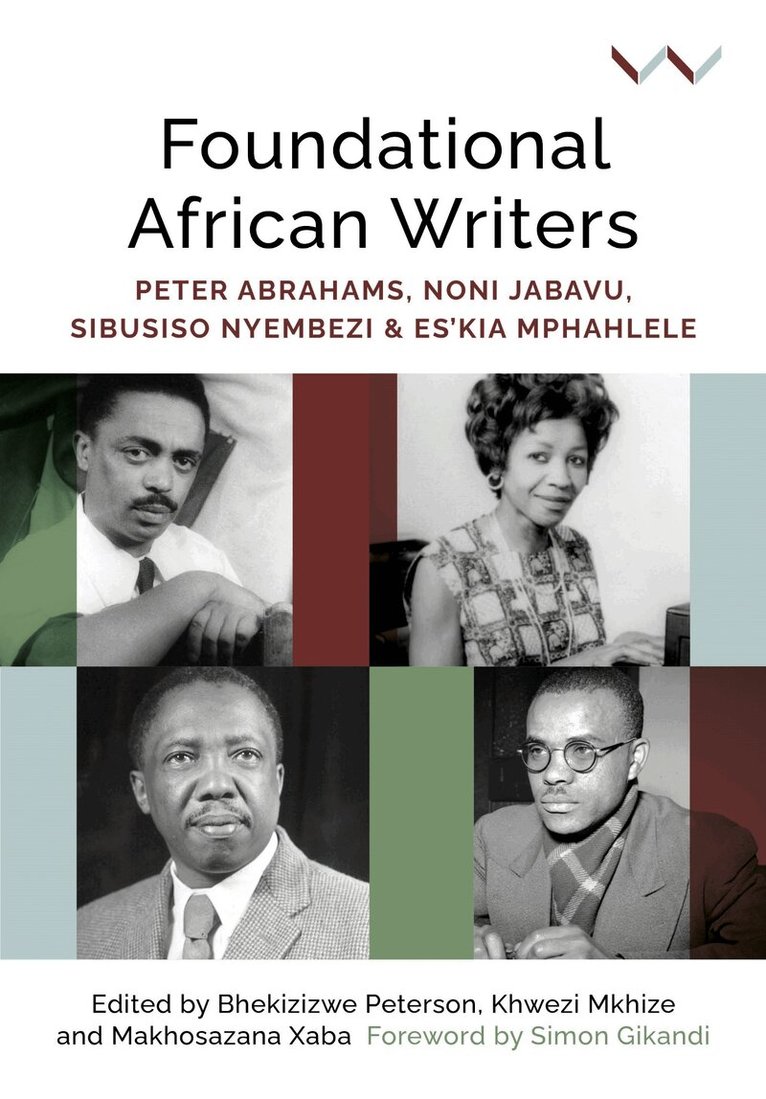
The essays in this collection were crafted in celebration of the centenaries, in 2019, of Peter Abrahams, Noni Jabavu, Sibusiso Cyril Lincoln Nyembezi and Es’kia Mphahlele, all of whom were born in 1919. All four centenarians lived rich and diverse lives across several continents. In the years following the Second World War they produced more than half a century of foundational creative writing and literary criticism, and made stellar contributions to institutions and repertoires of African and black arts and letters in South Africa and internationally. As a result, their oeuvres present multifaceted engagements and generative insights into a wide range of issues, including precolonial existence, colonialism, empire, race, culture, identity, class, the language question, tradition, modernity, exile, Pan-Africanism, and decolonisation. The range of the centenarians’ imaginations, critical analyses and social interventions spanned disciplinary divides. This volume, in the same spirit, draws on approaches that are equally transdisciplinary. Two aims thread through the contributors’ reflections on the complexities of black existence and of intellectual and cultural life in the twentieth century. The first is the exploration of some of the centenarians’ key texts and cultural projects that shaped their legacies. In doing so, the volume contributors trace a number of divergent intellectual and aesthetic lineages in their works and organisational activities. The second aim is a consideration of the ways in which these foundational writers’ legacies continue to resonate today, confirming their status as crucial contributors to modern African and diasporic black arts and letters.
E-bok
Engelska, 2022623 kr
Läs direkt efter köp
The essays in this collection were crafted in celebration of the centenaries, in 2019, of Peter Abrahams, Noni Jabavu, Sibusiso Cyril Lincoln Nyembezi and Es’kia Mphahlele, all of whom were born in 1919. All four centenarians lived rich and diverse lives across several continents. In the years following the Second World War they produced more than half a century of foundational creative writing and literary criticism, and made stellar contributions to institutions and repertoires of African and black arts and letters in South Africa and internationally. As a result, their oeuvres present multifaceted engagements and generative insights into a wide range of issues, including precolonial existence, colonialism, empire, race, culture, identity, class, the language question, tradition, modernity, exile, Pan-Africanism, and decolonisation. The range of the centenarians’ imaginations, critical analyses and social interventions spanned disciplinary divides. This volume, in the same spirit, draws on approaches that are equally transdisciplinary. Two aims thread through the contributors’ reflections on the complexities of black existence and of intellectual and cultural life in the twentieth century. The first is the exploration of some of the centenarians’ key texts and cultural projects that shaped their legacies. In doing so, the volume contributors trace a number of divergent intellectual and aesthetic lineages in their works and organisational activities. The second aim is a consideration of the ways in which these foundational writers’ legacies continue to resonate today, confirming their status as crucial contributors to modern African and diasporic black arts and letters.