Anne O'Byrne - Böcker
Visar alla böcker från författaren Anne O'Byrne. Handla med fri frakt och snabb leverans.
6 produkter
6 produkter
232 kr
Skickas inom 7-10 vardagar
Philosophers are accustomed to thinking about human existence as finite and deathbound. Anne O'Byrne focuses instead on birth as a way to make sense of being alive. Building on the work of Heidegger, Dilthey, Arendt, and Nancy, O'Byrne discusses how the world becomes ours and how meaning emerges from our relations to generations past and to come. Themes such as creation, time, inheritance, birth and action, embodiment, biological determinism, and cloning anchor this sensitive and powerful analysis. O'Byrne's thinking advances and deepens important discussions at the intersections of feminism, continental philosophy, philosophy of religion, and social and political thought.
2 103 kr
Skickas inom 10-15 vardagar
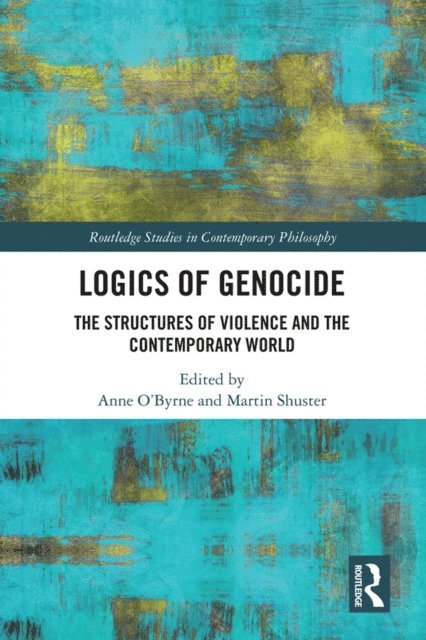
This book is concerned with the connection between the formal structure of agency and the formal structure of genocide. The contributors employ philosophical approaches to explore the idea of genocidal violence as a structural element in the world.Do mechanisms or structures in nation-states produce types of national citizens that are more susceptible to genocidal projects? There are powerful arguments within philosophy that in order to be the subjects of our own lives, we must constitute ourselves specifically as national subjects and organize ourselves into nation states. Additionally, there are other genocidal structures of human society that spill beyond historically limited episodes. The chapters in this volume address the significance—moral, ethical, political—of the fact that our very form of agency suggests or requires these structures. The contributors touch on topics including birthright citizenship, contemporary mass incarceration, anti-black racism, and late capitalism.Logics of Genocide will be of interest to scholars and advanced students working in philosophy, critical theory, genocide studies, Holocaust and Jewish studies, history, and anthropology.
635 kr
Skickas inom 10-15 vardagar
This book is concerned with the connection between the formal structure of agency and the formal structure of genocide. The contributors employ philosophical approaches to explore the idea of genocidal violence as a structural element in the world.Do mechanisms or structures in nation-states produce types of national citizens that are more susceptible to genocidal projects? There are powerful arguments within philosophy that in order to be the subjects of our own lives, we must constitute ourselves specifically as national subjects and organize ourselves into nation states. Additionally, there are other genocidal structures of human society that spill beyond historically limited episodes. The chapters in this volume address the significance—moral, ethical, political—of the fact that our very form of agency suggests or requires these structures. The contributors touch on topics including birthright citizenship, contemporary mass incarceration, anti-black racism, and late capitalism.Logics of Genocide will be of interest to scholars and advanced students working in philosophy, critical theory, genocide studies, Holocaust and Jewish studies, history, and anthropology.
1 476 kr
Skickas inom 10-15 vardagar
Subjects and Simulations presents essays focused on suffering and sublimity, representation and subjectivity, and the relation of truth and appearance in the twenty-first century. Inspired by the work of Jean Baudrillard, Philippe Lacoue-Labarthe and JeanLuc Nancy, sixteen authors study how the real reasserts itself in an age of every more fragmented media, and how art and literature give us access to forms of truth that elude philosophy. How does representation grant us access to the place once occupied by the subject? Is political life possible? Can plural thinking be retrieved? Will metaphor and simulation give us ways of being in an evanescent world? The volume engages discussions of French and Continental philosophy, post-structuralism, deconstruction, simulacra, aesthetics, existentialism, and media theory.
1 181 kr
Skickas inom 10-15 vardagar
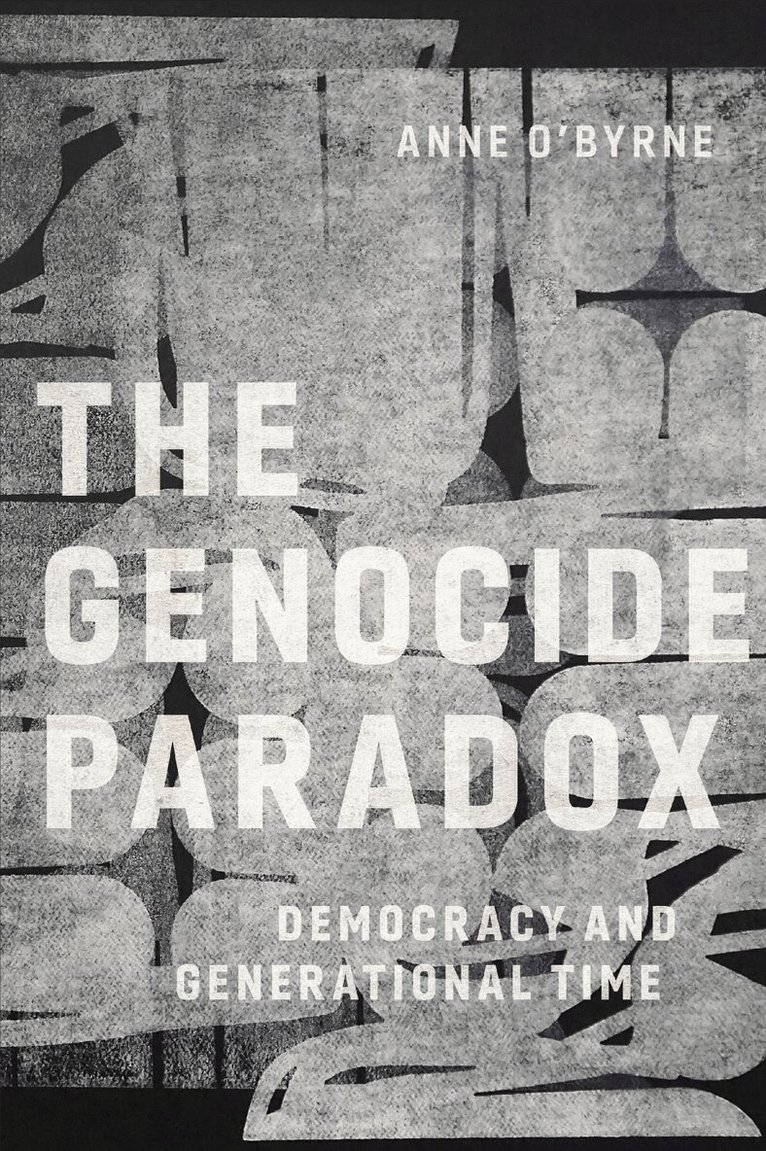
We regard genocidal violence as worse than other sorts of violence—perhaps the worst there is. But what does this say about what we value about the genos on which nations are said to be founded? This is an urgent question for democracies. We value the mode of being in time that anchors us in the past and in the future, that is, among those who have been and those who might yet be. If the genos is a group constituted by this generational time, the demos was invented as the anti-genos, with no criterion of inheritance and instead only occurring according to the interruption of revolutionary time. Insofar as the demos persists, we experience it as a sort of genos, for example, the democratic nation state. As a result, democracies are caught is a bind, disavowing genos-thinking while cherishing the temporal forms of genos-life; they abhor genocidal violence but perpetuate and disguise it. This is the genocide paradox. O'Byrne traces the problem through our commitment to existential categories from Aristotle to the life taxonomies of Linneaus and Darwin, through anthropologies of kinship that tether us to the social world, the shortfalls of ethical theory, into the history of democratic theory and the defensive tactics used by real existing democracies when it came to defining genocide for the U.N. Genocide Convention. She argues that, although models of democracy all make room for contestation, they fail to grasp its generational structure or acknowledge the generational content of our lives. They cultivate ignorance of the contingency and precarity of the relations that create and sustain us. The danger of doing so is immense. It leaves us unprepared for confronting democracy's deficits and its struggle to entertain multiple temporalities. In addition, it leaves us unprepared for understanding the relation between demos and violence, and the ability of good enough citizens to tolerate the slow-burning destruction of marginalized peoples. What will it take to envision an anti-genocidal democracy?
323 kr
Skickas inom 7-10 vardagar
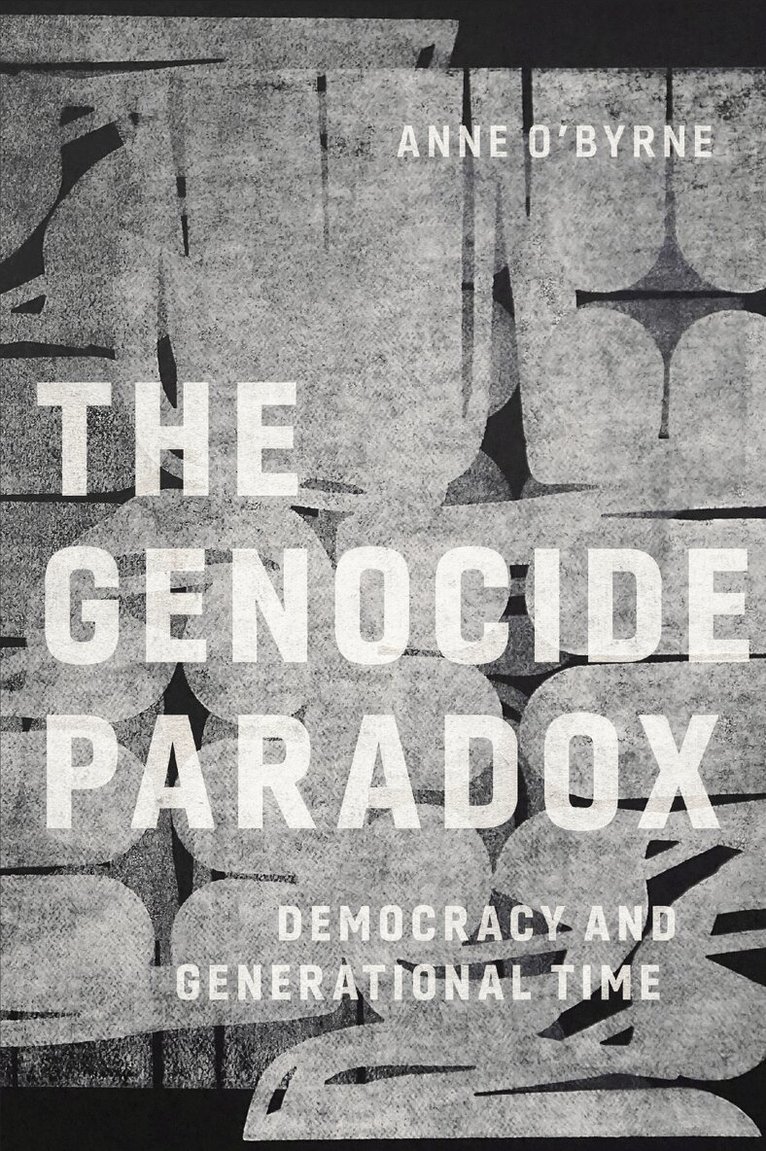
We regard genocidal violence as worse than other sorts of violence—perhaps the worst there is. But what does this say about what we value about the genos on which nations are said to be founded? This is an urgent question for democracies. We value the mode of being in time that anchors us in the past and in the future, that is, among those who have been and those who might yet be. If the genos is a group constituted by this generational time, the demos was invented as the anti-genos, with no criterion of inheritance and instead only occurring according to the interruption of revolutionary time. Insofar as the demos persists, we experience it as a sort of genos, for example, the democratic nation state. As a result, democracies are caught is a bind, disavowing genos-thinking while cherishing the temporal forms of genos-life; they abhor genocidal violence but perpetuate and disguise it. This is the genocide paradox. O'Byrne traces the problem through our commitment to existential categories from Aristotle to the life taxonomies of Linneaus and Darwin, through anthropologies of kinship that tether us to the social world, the shortfalls of ethical theory, into the history of democratic theory and the defensive tactics used by real existing democracies when it came to defining genocide for the U.N. Genocide Convention. She argues that, although models of democracy all make room for contestation, they fail to grasp its generational structure or acknowledge the generational content of our lives. They cultivate ignorance of the contingency and precarity of the relations that create and sustain us. The danger of doing so is immense. It leaves us unprepared for confronting democracy's deficits and its struggle to entertain multiple temporalities. In addition, it leaves us unprepared for understanding the relation between demos and violence, and the ability of good enough citizens to tolerate the slow-burning destruction of marginalized peoples. What will it take to envision an anti-genocidal democracy?