Martin Shuster - Böcker
Visar alla böcker från författaren Martin Shuster. Handla med fri frakt och snabb leverans.
11 produkter
11 produkter
777 kr
Tillfälligt slut
Even though it's frequently asserted that we are living in a golden age of scripted television, television as a medium is still not taken seriously as an artistic art form, nor has the stigma of television as "chewing gum for the mind" really disappeared. Philosopher Martin Shuster argues that television is the modern art form, full of promise and urgency, and in New Television, he offers a strong philosophical justification for its importance. Through careful analysis of shows including The Wire, Justified, and Weeds, among others; and European and Anglophone philosophers, such as Stanley Cavell, Hannah Arendt, and Martin Heidegger; Shuster reveals how various contemporary television series engage deeply with aesthetic and philosophical issues in modernism and modernity. What unifies the aesthetic and philosophical ambitions of new television is a commitment to portraying and exploring the family as the last site of political possibility in a world otherwise bereft of any other sources of traditional authority; consequently, at the heart of new television are profound political stakes.
243 kr
Skickas inom 7-10 vardagar
Even though it's frequently asserted that we are living in a golden age of scripted television, television as a medium is still not taken seriously as an artistic art form, nor has the stigma of television as "chewing gum for the mind" really disappeared. Philosopher Martin Shuster argues that television is the modern art form, full of promise and urgency, and in New Television, he offers a strong philosophical justification for its importance. Through careful analysis of shows including The Wire, Justified, and Weeds, among others; and European and Anglophone philosophers, such as Stanley Cavell, Hannah Arendt, and Martin Heidegger; Shuster reveals how various contemporary television series engage deeply with aesthetic and philosophical issues in modernism and modernity. What unifies the aesthetic and philosophical ambitions of new television is a commitment to portraying and exploring the family as the last site of political possibility in a world otherwise bereft of any other sources of traditional authority; consequently, at the heart of new television are profound political stakes.
849 kr
Skickas inom 7-10 vardagar
What does it mean to wonder in awe or terror about the world? How do you philosophically understand Judaism? In How to Measure a World?: A Philosophy of Judaism, Martin Shuster provides answers to these questions and more. Emmanuel Levinas suggested that Judaism is best understood as an anachronism. Shuster attempts to make sense of this claim by alternatively considering questions of the inscrutability of ultimate reality, of the pain and commonness of human suffering, and of the ways in which Judaism is entangled with the world. Drawing on phenomenology and Jewish thought, Shuster offers novel readings of some of the classic figures of Jewish philosophy while inserting other voices into the tradition, from Moses Maimonides to Theodor W. Adorno to Walter Benjamin to Stanley Cavell. How to Measure a World? examines elements of the Jewish philosophical record to get at the full intellectual scope and range of Levinas's proposal. Shuster's view of anachronism thereby provokes an assessment of the world and our place in it. A particular understanding of Jewish philosophy emerges, not only through the traditions it encompasses, but also through an understanding of the relationship between humans and their world. In the end, Levinas's suggestion is examined theoretically as much as practically, revealing what's at stake for Judaism as much as for the world.
257 kr
Skickas inom 7-10 vardagar
What does it mean to wonder in awe or terror about the world? How do you philosophically understand Judaism? In How to Measure a World?: A Philosophy of Judaism, Martin Shuster provides answers to these questions and more. Emmanuel Levinas suggested that Judaism is best understood as an anachronism. Shuster attempts to make sense of this claim by alternatively considering questions of the inscrutability of ultimate reality, of the pain and commonness of human suffering, and of the ways in which Judaism is entangled with the world. Drawing on phenomenology and Jewish thought, Shuster offers novel readings of some of the classic figures of Jewish philosophy while inserting other voices into the tradition, from Moses Maimonides to Theodor W. Adorno to Walter Benjamin to Stanley Cavell. How to Measure a World? examines elements of the Jewish philosophical record to get at the full intellectual scope and range of Levinas's proposal. Shuster's view of anachronism thereby provokes an assessment of the world and our place in it. A particular understanding of Jewish philosophy emerges, not only through the traditions it encompasses, but also through an understanding of the relationship between humans and their world. In the end, Levinas's suggestion is examined theoretically as much as practically, revealing what's at stake for Judaism as much as for the world.
1 887 kr
Skickas inom 10-15 vardagar
This book presents critical engagements with the work of Hent de Vries, widely regarded as one of the most important living philosophers of religion. Contributions by a distinguished group of scholars discuss the role played by religion in philosophy; the emergence and possibilities of the category of religion; and the relation between religion and violence, secularism, and sovereignty. Together, they provide a synoptic view of how de Vries’s work has prompted a reconceptualization of how religion should be studied, especially in relation to theology, politics, and new media. The volume will be of particular interest to scholars of religious studies, theology, and philosophy.
2 088 kr
Skickas inom 10-15 vardagar
This book is concerned with the connection between the formal structure of agency and the formal structure of genocide. The contributors employ philosophical approaches to explore the idea of genocidal violence as a structural element in the world.Do mechanisms or structures in nation-states produce types of national citizens that are more susceptible to genocidal projects? There are powerful arguments within philosophy that in order to be the subjects of our own lives, we must constitute ourselves specifically as national subjects and organize ourselves into nation states. Additionally, there are other genocidal structures of human society that spill beyond historically limited episodes. The chapters in this volume address the significance—moral, ethical, political—of the fact that our very form of agency suggests or requires these structures. The contributors touch on topics including birthright citizenship, contemporary mass incarceration, anti-black racism, and late capitalism.Logics of Genocide will be of interest to scholars and advanced students working in philosophy, critical theory, genocide studies, Holocaust and Jewish studies, history, and anthropology.
631 kr
Skickas inom 10-15 vardagar
This book is concerned with the connection between the formal structure of agency and the formal structure of genocide. The contributors employ philosophical approaches to explore the idea of genocidal violence as a structural element in the world.Do mechanisms or structures in nation-states produce types of national citizens that are more susceptible to genocidal projects? There are powerful arguments within philosophy that in order to be the subjects of our own lives, we must constitute ourselves specifically as national subjects and organize ourselves into nation states. Additionally, there are other genocidal structures of human society that spill beyond historically limited episodes. The chapters in this volume address the significance—moral, ethical, political—of the fact that our very form of agency suggests or requires these structures. The contributors touch on topics including birthright citizenship, contemporary mass incarceration, anti-black racism, and late capitalism.Logics of Genocide will be of interest to scholars and advanced students working in philosophy, critical theory, genocide studies, Holocaust and Jewish studies, history, and anthropology.
1 753 kr
Skickas inom 10-15 vardagar
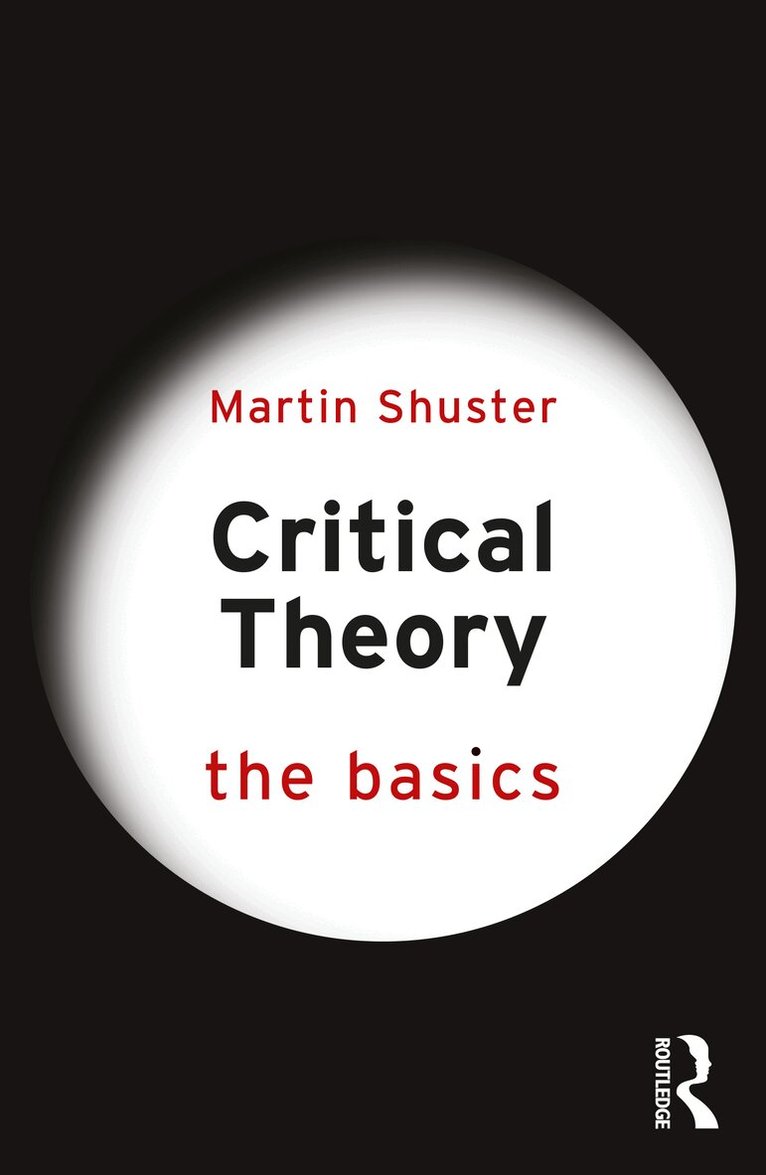
Critical Theory: The Basics brings clarity to a topic that is confusingly bandied about with various meanings today in popular and academic culture.First defined by Max Horkheimer in the 1930s, “critical theory” now extends far beyond its original German context around the Frankfurt School and the emergence of Nazism. We now often speak of critical theories of race, gender, anti-colonialism, and so forth. This book introduces especially the core program of the first-generation of the Frankfurt School (including Horkheimer, Theodor W. Adorno, Erich Fromm, and Herbert Marcuse), and shows how this program remains crucial to understanding the problems, ideologies, and systems of the modern world, including capitalism, racism, sexism, and the enduring problems of colonialism. It explores basic questions like:What is critical theory?What can critical theory be? What should it be?Why and how does critical theory remain vital to understanding the contemporary world, including notions of self, society, politics, art, religion, culture, race, gender, and class?With suggestions for further reading, this book is an ideal starting point for anyone seeking an accessible but robust introduction to the richness and complexity of this tradition and to its continuing importance today.
251 kr
Skickas inom 10-15 vardagar
Critical Theory: The Basics brings clarity to a topic that is confusingly bandied about with various meanings today in popular and academic culture.First defined by Max Horkheimer in the 1930s, “critical theory” now extends far beyond its original German context around the Frankfurt School and the emergence of Nazism. We now often speak of critical theories of race, gender, anti-colonialism, and so forth. This book introduces especially the core program of the first-generation of the Frankfurt School (including Horkheimer, Theodor W. Adorno, Erich Fromm, and Herbert Marcuse), and shows how this program remains crucial to understanding the problems, ideologies, and systems of the modern world, including capitalism, racism, sexism, and the enduring problems of colonialism. It explores basic questions like:What is critical theory?What can critical theory be? What should it be?Why and how does critical theory remain vital to understanding the contemporary world, including notions of self, society, politics, art, religion, culture, race, gender, and class?With suggestions for further reading, this book is an ideal starting point for anyone seeking an accessible but robust introduction to the richness and complexity of this tradition and to its continuing importance today.
576 kr
Skickas inom 10-15 vardagar
This book presents critical engagements with the work of Hent de Vries, widely regarded as one of the most important living philosophers of religion. Contributions by a distinguished group of scholars discuss the role played by religion in philosophy; the emergence and possibilities of the category of religion; and the relation between religion and violence, secularism, and sovereignty. Together, they provide a synoptic view of how de Vries’s work has prompted a reconceptualization of how religion should be studied, especially in relation to theology, politics, and new media. The volume will be of particular interest to scholars of religious studies, theology, and philosophy.
335 kr
Skickas inom 5-8 vardagar
ENG:What does it mean to wonder in awe or terror about the world? How do you philosophically understand Judaism? In How to Measure a World?: A Philosophy of Judaism, Martin Shuster provides answers to these questions and more.Emmanuel Levinas suggested that Judaism is best understood as an anachronism. Shuster attempts to make sense of this claim by alternatively considering questions of the inscrutability of ultimate reality, of the pain and commonness of human suffering, and of the ways in which Judaism is entangled with the world. Drawing on phenomenology and Jewish thought, Shuster offers novel readings of some of the classic figures of Jewish philosophy while inserting other voices into the tradition, from Moses Maimonides to Theodor W. Adorno to Walter Benjamin to Stanley Cavell.How to Measure a World? examines elements of the Jewish philosophical record to get at the full intellectual scope and range of Levinas's proposal. Shuster's view of anachronism thereby provokes an assessment of the world and our place in it. A particular understanding of Jewish philosophy emerges, not only through the traditions it encompasses, but also through an understanding of the relationship between humans and their world. In the end, Levinas's suggestion is examined theoretically as much as practically, revealing what's at stake for Judaism as much as for the world.RUS:Что значит испытывать благоговение или страх перед миром? Как философски осмыслить иудаизм? В книге «Как измерить мир? Философия иудаизма» Мартин Шустер предлагает ответы на эти и многие другие вопросы.Эммануэль Левинас считал, что иудаизм следует понимать как анахронизм. Шустер пытается осмыслить это утверждение, исследуя вопросы непостижимости высшей реальности, непреодолимости страданий, а также то, каким образом иудаизм вплетен в повседневность. Опираясь на феноменологию и классическую еврейскую мысль, автор предлагает оригинальные интерпретации ключевых фигур, вводя в традицию современные голоса — от Маймонида до Теодора В. Адорно, Вальтера Беньямина и Стэнли Кавелла.Позиция Левинаса рассматривается не только с теоретической, но и с практической точки зрения, это позволяет глубже понять, что именно поставлено на карту — как для иудаизма, так и для мира в целом.