Antonio Stramaglia – författare
Visar alla böcker från författaren Antonio Stramaglia. Handla med fri frakt och snabb leverans.
19 produkter
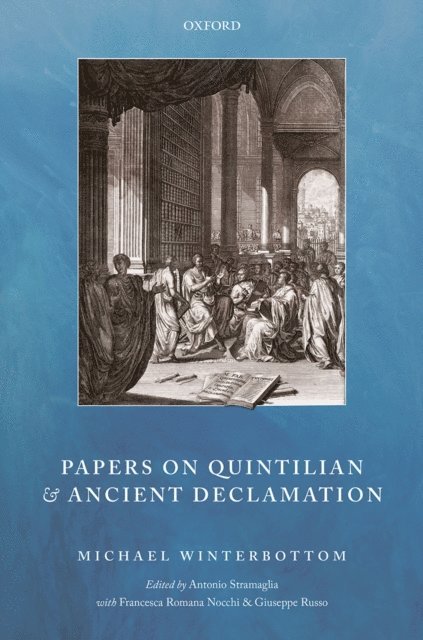
Papers on Quintilian and Ancient Declamation
Av Michael Winterbottom, Giuseppe Russo m. fl.
E-bok, 2019
1961 kr
Lägg i varukorg
Declamation - the practice of training young men to speak in public by setting them to compose and deliver speeches on fictional legal cases - was central to the Greek and Roman educational systems over many centuries and has been the subject of a recent explosion of scholarly interest. The work of …
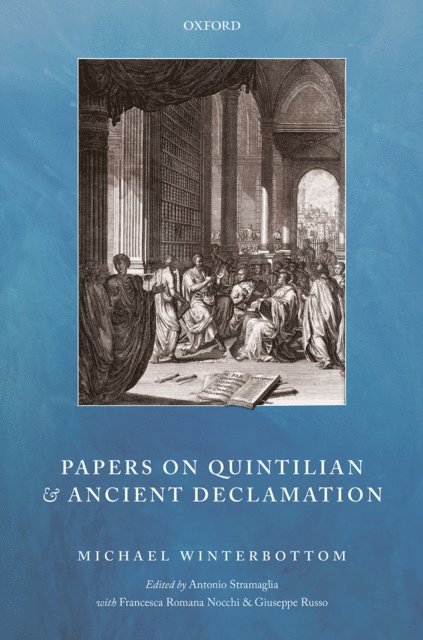
Papers on Quintilian and Ancient Declamation
Av Michael Winterbottom, Giuseppe Russo m. fl.
E-bok, 2019
1961 kr
Lägg i varukorg
Declamation - the practice of training young men to speak in public by setting them to compose and deliver speeches on fictional legal cases - was central to the Greek and Roman educational systems over many centuries and has been the subject of a recent explosion of scholarly interest. The work of …
Papers on Quintilian and Ancient Declamation
Av Michael Winterbottom, Antonio Stramaglia m. fl.
Inbunden, 2019
2112 kr
Lägg i varukorg
Declamation - the practice of training young men to speak in public by setting them to compose and deliver speeches on fictional legal cases - was central to the Greek and Roman educational systems over many centuries and has been the subject of a recent explosion of scholarly interest. The work of …
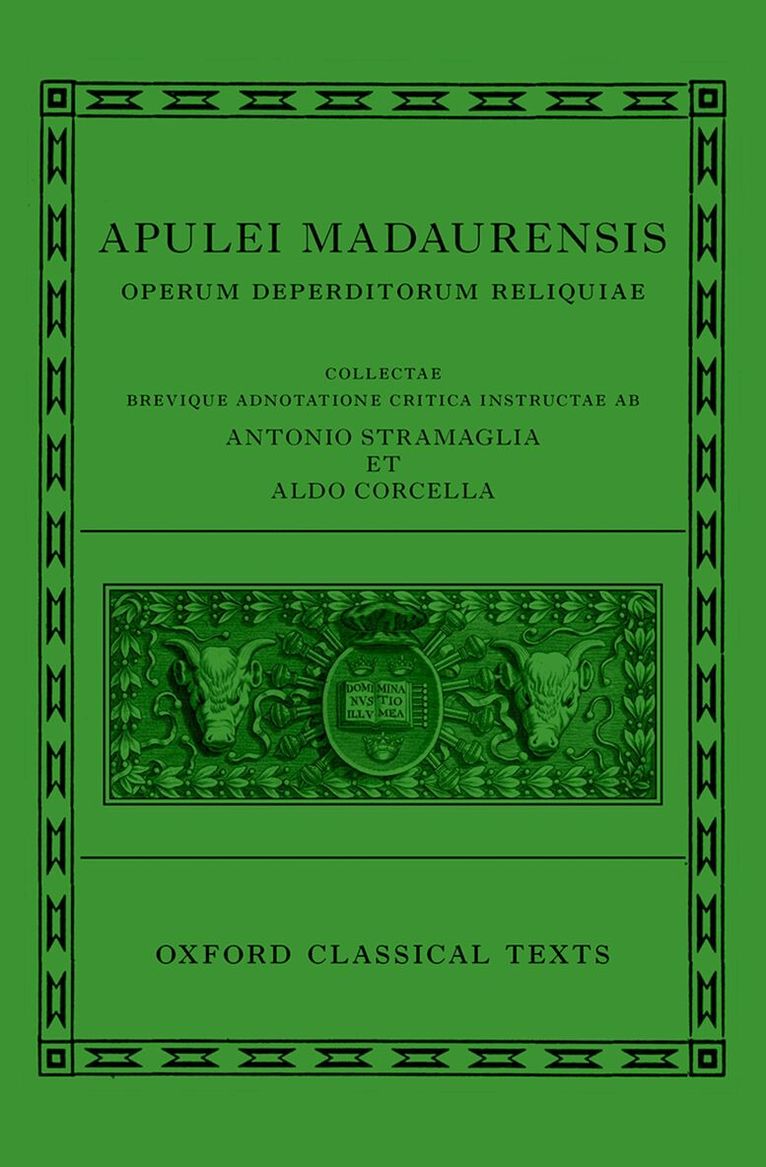
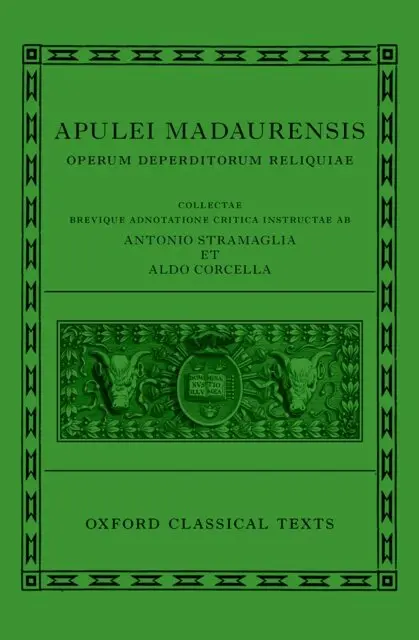
Apuleius: Fragmentary Works (Apulei Madaurensis Operum deperditorum reliquiae)
Av Antonio Stramaglia, Aldo Corcella
Inbunden, 2025
758 kr
Lägg i varukorg
This edition of Apuleius's fragmentary works includes 62 items which, based on the most up-to-date scholarship, can be attributed with reasonable certainty to the 'lost Apuleius'. In most cases, identifying the ipsissima verba of the author is difficult or impossible, and even the methodological …
Apuleius: Fragmentary Works (Apulei Madaurensis Operum deperditorum reliquiae)
Av Aldo Corcella, Antonio Stramaglia
E-bok, 2025
703 kr
Lägg i varukorg
This edition of Apuleius''s fragmentary works includes 62 items which, based on the most up-to-date scholarship, can be attributed with reasonable certainty to the ''lost Apuleius''. In most cases, identifying the ipsissima verba of the author is difficult or impossible, and even the methodological …
Major Declamations, Volume I
Av Quintilian, Antonio Stramaglia
Inbunden, 2021
372 kr
Lägg i varukorg
Mock trial—Roman style.The Major Declamations stand out for their unique contribution to our understanding of the final stage in Greco-Roman rhetorical training. These exercises, in which students learned how to compose and deliver speeches on behalf of either the prosecution or the defense at …
Major Declamations, Volume II
Av Quintilian, Antonio Stramaglia
Inbunden, 2021
372 kr
Lägg i varukorg
Mock trial—Roman style.The Major Declamations stand out for their unique contribution to our understanding of the final stage in Greco-Roman rhetorical training. These exercises, in which students learned how to compose and deliver speeches on behalf of either the prosecution or the defense at …
Major Declamations, Volume III
Av Quintilian, Antonio Stramaglia
Inbunden, 2021
372 kr
Lägg i varukorg
Mock trial—Roman style.The Major Declamations stand out for their unique contribution to our understanding of the final stage in Greco-Roman rhetorical training. These exercises, in which students learned how to compose and deliver speeches on behalf of either the prosecution or the defense at …
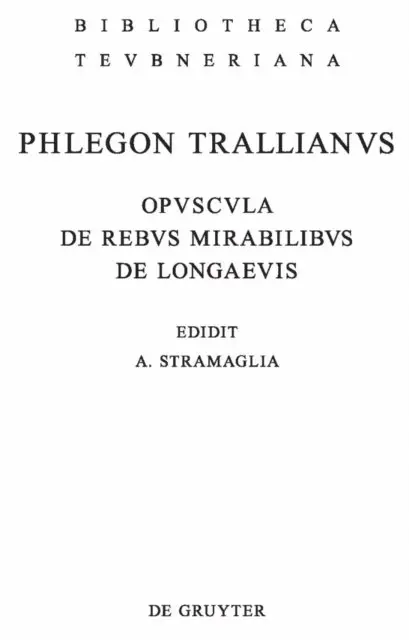
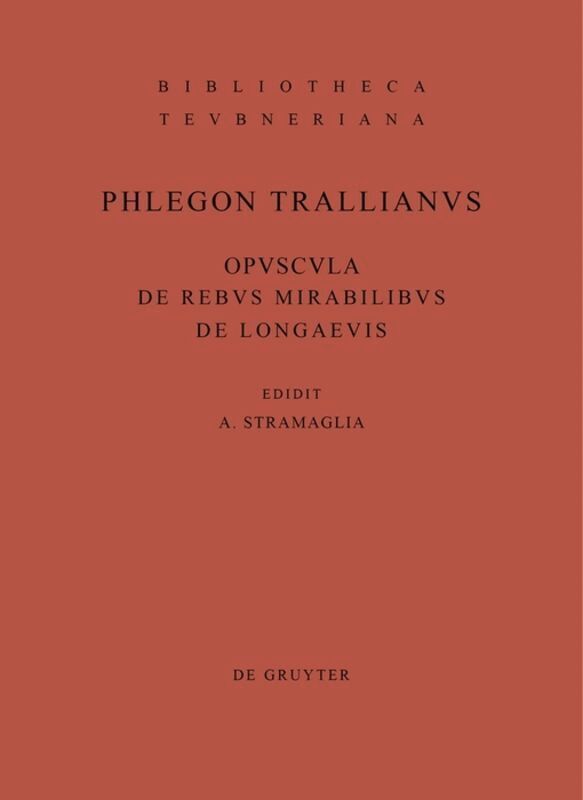
Opuscula de rebus mirabilibus et de longaevis
Av Phlegon <Trallianus>, Antonio Stramaglia
E-bok, 2010
825 kr
Lägg i varukorg
Die Bibliotheca Teubneriana , gegründet 1849, ist die weltweit älteste, traditionsreichste und umfangreichste Editionsreihe griechischer und lateinischer Literatur von der Antike bis zur Neuzeit. Pro Jahr erscheinen 4-5 neue Editionen. Sämtliche Ausgaben werden durch eine lateinische oder englische …
Opuscula de rebus mirabilibus et de longaevis
Av Phlegon <Trallianus>, Antonio Stramaglia
Inbunden, 2010
915 kr
Lägg i varukorg
Phlegon of Tralles, a learned freedman of Hadrian’s, was a prolific writer, but only two of his works have – though not entirely – survived: Peri thaumasion (‘On marvellous things’) and Peri makrobion (‘On long-lived persons’). The former is probably the main extant paradoxographic collection from …
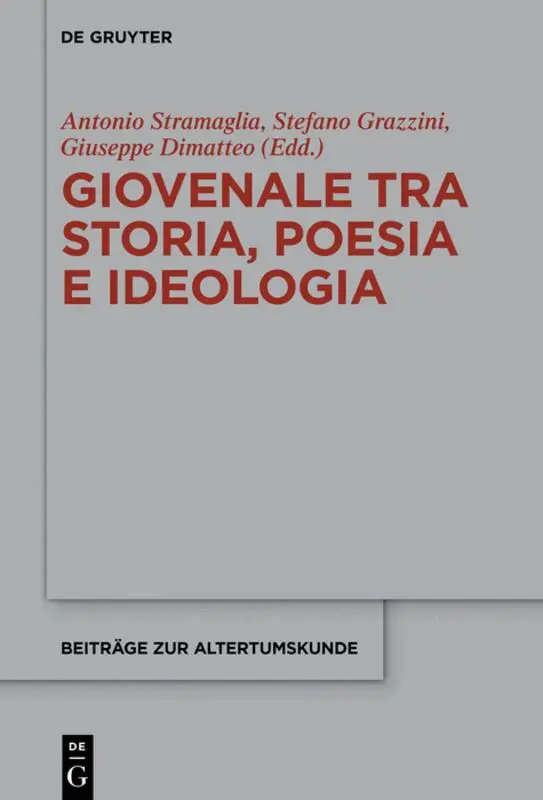
Giovenale tra storia, poesia e ideologia
Av Antonio Stramaglia, Stefano Grazzini m. fl.
Inbunden, 2016
2149 kr
Lägg i varukorg
Juvenal’s satire continues to fascinate his readers and to challenge scholars by the constant interplay of a strong poetical identity, a keen historical perception, and an irresoluble ideological tension. The essays collected in this volume pursue these three strands from different but …
Giovenale tra storia, poesia e ideologia
Av Giuseppe Dimatteo, Stefano Grazzini m. fl.
E-bok, 2016
1997 kr
Lägg i varukorg
Juvenal’s satire continues to fascinate his readers and to challenge scholars by the constant interplay of a strong poetical identity, a keen historical perception, and an irresoluble ideological tension. The essays collected in this volume pursue these three strands from different but …
Giovenale tra storia, poesia e ideologia
Av Giuseppe Dimatteo, Stefano Grazzini m. fl.
E-bok, 2016
2041 kr
Lägg i varukorg
Juvenal’s satire continues to fascinate his readers and to challenge scholars by the constant interplay of a strong poetical identity, a keen historical perception, and an irresoluble ideological tension. The essays collected in this volume pursue these three strands from different but …
Kommentar zu Seneca Maior, "Controversiae", Buch I
Av Lennart Francesco Håkanson Citti, Francesco Citti m. fl.
Inbunden, 2016
1569 kr
Lägg i varukorg
At his sudden death in 1987, Håkanson left a number of unpublished scholarly works. A former volume in this series (2014) printed four essays on the pseudo-Quintilianic Major Declamations; one more has appeared elsewhere. The present volume contains a commentary on Book One of the Controversiae by …
Kommentar zu Seneca Maior, "Controversiae", Buch I
Av Antonio Stramaglia, Biagio Santorelli m. fl.
E-bok, 2016
1278 kr
Lägg i varukorg
At his sudden death in 1987, Håkanson left a number of unpublished scholarly works. A former volume in this series (2014) printed four essays on the pseudo-Quintilianic Major Declamations ; one more has appeared elsewhere. The present volume contains a commentary on Book One of the Controversiae by …
Kommentar zu Seneca Maior, "Controversiae", Buch I
Av Antonio Stramaglia, Biagio Santorelli m. fl.
E-bok, 2016
1278 kr
Lägg i varukorg
At his sudden death in 1987, Håkanson left a number of unpublished scholarly works. A former volume in this series (2014) printed four essays on the pseudo-Quintilianic Major Declamations ; one more has appeared elsewhere. The present volume contains a commentary on Book One of the Controversiae by …
Le ›Declamazioni maggiori‹ pseudo-quintilianee nella Roma imperiale
Av Giusto Traina, Antonio Stramaglia m. fl.
E-bok, 2021
2055 kr
Lägg i varukorg
The world portrayed by ancient declamation is often thought to be timeless; but it was in fact deeply rooted in the historical texture of the Roman Empire. The central aim of the volume is to recover this historical dimension, with particular reference to the so-called Major Declamations , a …
Le ›Declamazioni maggiori‹ pseudo-quintilianee nella Roma imperiale
Av Giusto Traina, Antonio Stramaglia m. fl.
E-bok, 2021
2076 kr
Lägg i varukorg
The world portrayed by ancient declamation is often thought to be timeless; but it was in fact deeply rooted in the historical texture of the Roman Empire. The central aim of the volume is to recover this historical dimension, with particular reference to the so-called Major Declamations , a …
›Declamazioni maggiori‹ pseudo-quintilianee nella Roma imperiale
Av Andrea Lovato, Antonio Stramaglia m. fl.
Inbunden, 2021
2096 kr
Lägg i varukorg
The world portrayed by ancient declamation is often thought to be timeless; but it was in fact deeply rooted in the historical texture of the Roman Empire. The central aim of the volume is to recover this historical dimension, with particular reference to the so-called Major Declamations, a …