Anupama Roy - Böcker
Visar alla böcker från författaren Anupama Roy. Handla med fri frakt och snabb leverans.
6 produkter
6 produkter
1 216 kr
Skickas inom 5-8 vardagar
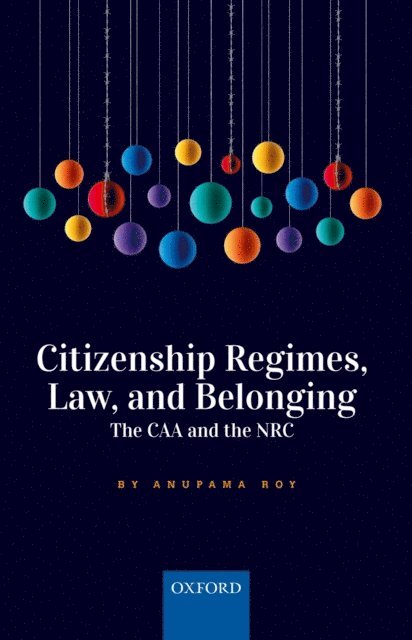
Successive amendments in the citizenship law in India have spawned distinct regimes of citizenship. The idea of citizenship regimes is crucial for making the argument that law must be seen not simply as bare provisions but also examined for the ideological practices that validate it and lay claims to its enforceability. While citizenship regime in India can be distinguished from one another on the basis on their distinct political and legal rationalities, cumulatively they present a movement from jus soli to jus sanguinis. The movement towards jus sanguinis has been a complex process of entrenchment of exclusionary nationhood under the veneer of liberal citizenship. This work argues that the contemporary landscape of citizenship in India is dominated by the Citizenship Amendment Act (CAA) 2019 and the National Register of Citizens (NRC). The CAA 2019 and the NRC emerged as distinct tendencies from the amendment in the citizenship law in 2003. These tendencies subsequently become conjoined in an ideological alignment to make citizenship dependent on lineage, spelling out ideas of belonging which are tied to descent and blood ties. The NRC has invoked the spectre of 'crisis' in citizenship generated by indiscriminate immigration and the risks presented by 'illegal migrants', to justify an extraordinary regime of citizenship. The CAA provides for the exemption of some migrants from this regime by making religion the criterion of distinguishability. The CAA 2019 and NRC have generated a regime of 'bounded citizenship' based on the assumption that citizenship can be passed on as a legacy of ancestry making it a natural and constitutive identity. The politics of Hindutva serves as an ideological apparatus buttressing the regime and propelling the movement away from the foundational principles of secular-constitutionalism that characterised Indian citizenship in 1949.
131 kr
Skickas inom 5-8 vardagar
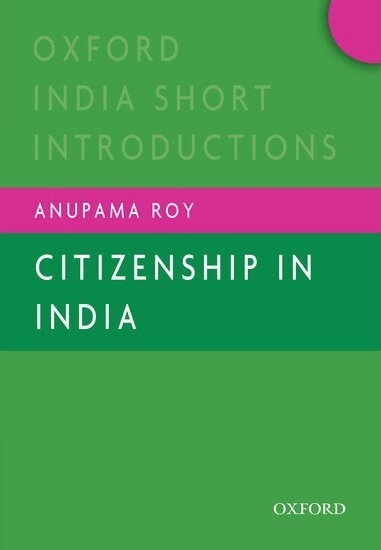
The idea of citizenship goes beyond a legal-formal framework to denote substantive membership in the political community. While citizenship is identified with an ideal condition of equality of status and belonging, it gets challenged in societies marked by inequalities. As an idea that inspires struggle, citizenship remains an institution that is unbounded, changing, and always incomplete. This short introduction lucidly describes the history of citizenship in India, before moving on to the pluralities and the contemporary landscapes of citizenship. It traces the amendments in the Citizenship Act, 1955 and argues that the legal enframing of the citizen involves a simultaneous production of its other-the non-citizen. This book looks at the multiple margins that constitute the sites of constant churnings, releasing powerful new idioms, imaginaries, and practices of citizenship.
414 kr
Skickas inom 5-8 vardagar
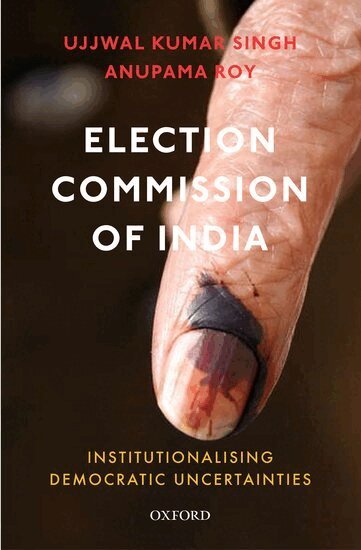
Responding to a pressing need for a focussed study of India's public institutions, Singh and Roy put together the first comprehensive monograph-length study of the Election Commission (EC) of India. They probe the consistent credibility that the EC enjoys as a non-partisan constitutional body entrusted with the responsibility of conducting elections in India. The EC is generally seen as a regulatory body which enforces rules to conduct elections effectively and efficiently. The authors argue that the EC must be seen as performing a range of functions, not all of which are regulatory. The EC is actively engaged in framing and implementing rules to ascertain procedural certainty in order to ensure the democratic principle of uncertainty of electoral outcome. Innovations in conducting elections which are often seen through the lens of electoral 'management' and 'electoral integrity' have become part of the deliberative content of elections. The work also examines the relationship between the legal-institutional frameworks of electoral governance within the larger institutional matrix of democracy, and the political field in which they are located. The latter, the authors argue, both limit and enable the effectiveness of the EC in the shared space of democracy in India.
548 kr
Skickas inom 5-8 vardagar
977 kr
Skickas inom 10-15 vardagar
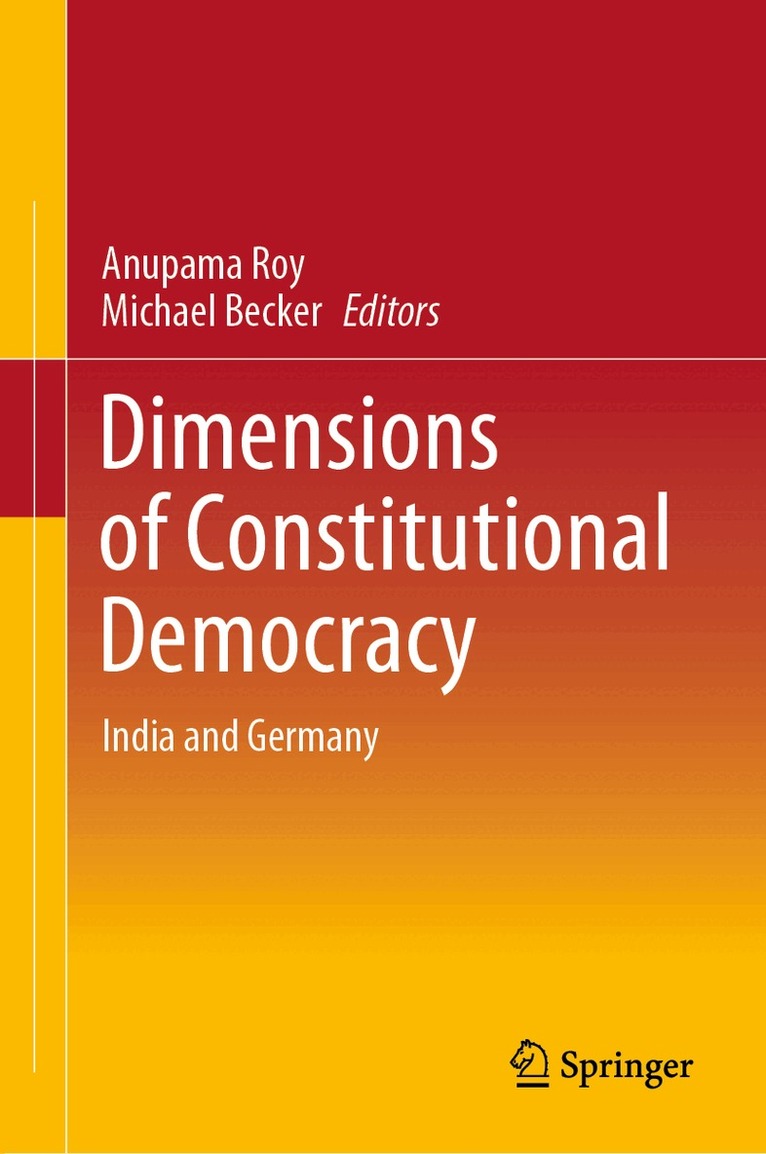
This book examines a selection of themes that have become salient in contemporary debates on constitutional democracies. It focuses in particular on the experiences of India and Germany as examples of post-war and post-colonial constitutional democracies whose trajectories illustrate democratic transitions and transformative constitutionalism. While transformative constitutionalism has come to be associated specifically with the post-apartheid experience in South Africa, this book uses the transformative as an analytical framework to transcend the dichotomy of west and east and explore how temporally coincident constitutions have sought to install constitutional democracies by breaking with the past. While the constitution-making processes in the two countries were specific to their political contexts, the constitutional promises and futures converged. In this context, the book explores the themes of Constitutionalism, Nationalism, Secularism, Sovereignty and Rule of Law, Freedoms and Rights, to investigate how the contestations over democratic transitions and democratic futures have unfolded in the two democracies. It offers readers valuable insights into how the normative frameworks of constitutional democracy take concrete form at specific sites of democratic and constitutional imagination in Dalit and Islamic writings, as well as the relationship between state and religion in the writings of public intellectuals, political and legal philosophers. The book also focuses on specific sites of contestation in democracies including the relationship between sovereignty and citizenship in post-colonial India, free speech and sedition in liberal democracies, questions of land rights in connection with economic and political changes in contemporary contexts, and the rights of indigenous communities with regard to international conventions and domestic law. Given its scope, it will be of interest to students and scholars of political theory, political philosophy,comparative constitutionalism, law and human rights.
977 kr
Skickas inom 10-15 vardagar
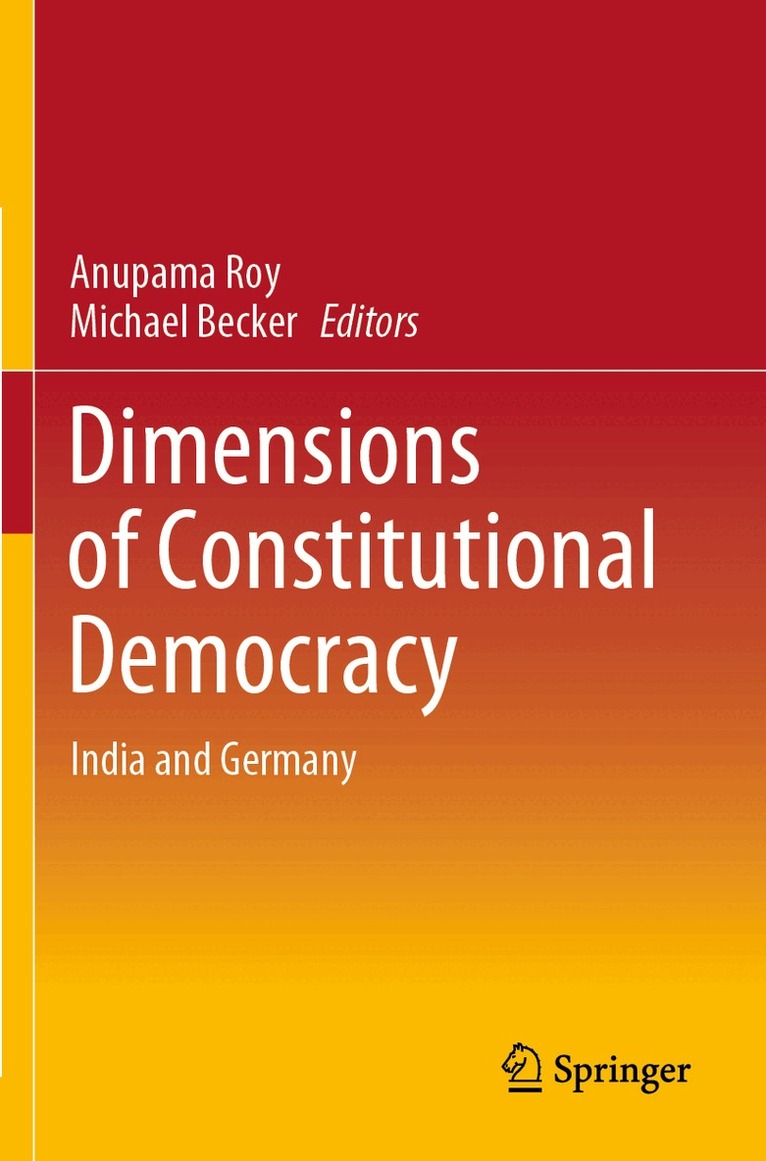
This book examines a selection of themes that have become salient in contemporary debates on constitutional democracies. It focuses in particular on the experiences of India and Germany as examples of post-war and post-colonial constitutional democracies whose trajectories illustrate democratic transitions and transformative constitutionalism. While transformative constitutionalism has come to be associated specifically with the post-apartheid experience in South Africa, this book uses the transformative as an analytical framework to transcend the dichotomy of west and east and explore how temporally coincident constitutions have sought to install constitutional democracies by breaking with the past. While the constitution-making processes in the two countries were specific to their political contexts, the constitutional promises and futures converged. In this context, the book explores the themes of Constitutionalism, Nationalism, Secularism, Sovereignty and Rule of Law, Freedoms and Rights, to investigate how the contestations over democratic transitions and democratic futures have unfolded in the two democracies. It offers readers valuable insights into how the normative frameworks of constitutional democracy take concrete form at specific sites of democratic and constitutional imagination in Dalit and Islamic writings, as well as the relationship between state and religion in the writings of public intellectuals, political and legal philosophers. The book also focuses on specific sites of contestation in democracies including the relationship between sovereignty and citizenship in post-colonial India, free speech and sedition in liberal democracies, questions of land rights in connection with economic and political changes in contemporary contexts, and the rights of indigenous communities with regard to international conventions and domestic law. Given its scope, it will be of interest to students and scholars of political theory, political philosophy,comparative constitutionalism, law and human rights.