April London – författare
Visar alla böcker från författaren April London. Handla med fri frakt och snabb leverans.
7 produkter
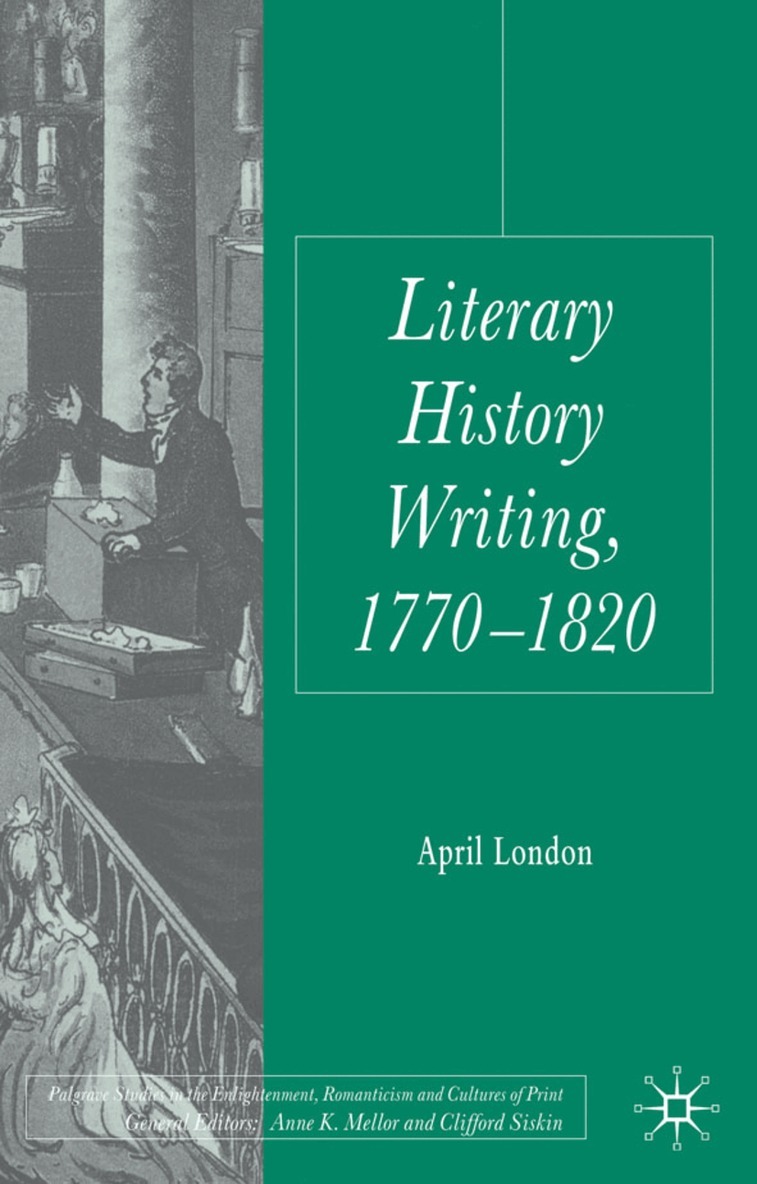
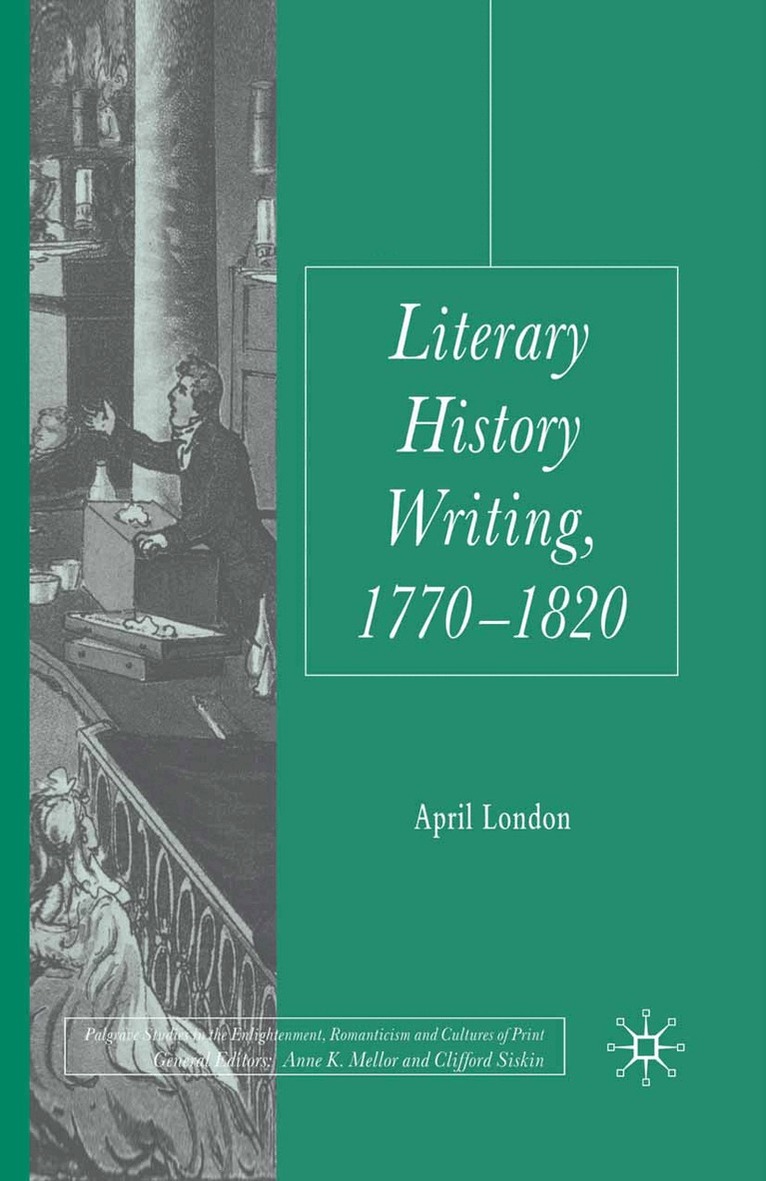
Literary History Writing, 1770-1820
Av April London
Inbunden, 2010
634 kr
Lägg i varukorg
This investigation of literary history writing between 1770 and 1820 identifies the mode's distinction from canon formation as central to its cultural vitality. Using secret history, memoir and the novel, amongst other sources, it invites a re-thinking of literary history's place in late eighteenth …
Literary History Writing, 1770-1820
Av April London
E-bok, 2015
877 kr
Lägg i varukorg
This investigation of literary history writing between 1770 and 1820 identifies the mode''s distinction from canon formation as central to its cultural vitality. Using secret history, memoir and the novel, amongst other sources, it invites a re-thinking of literary history''s place in late …
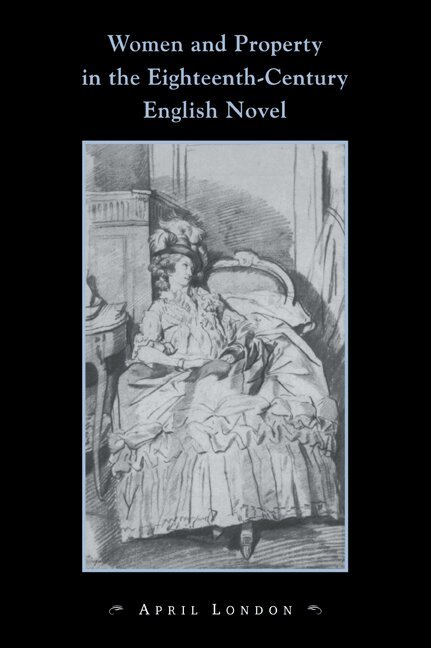
Women and Property in the Eighteenth-Century English Novel
Av April London
Häftad, 2006
654 kr
Lägg i varukorg
This book investigates the critical importance of women to the eighteenth-century debate on property as conducted in the fiction of the period. April London argues that contemporary novels advanced several, often conflicting, interpretations of the relation of women to property, ranging from …
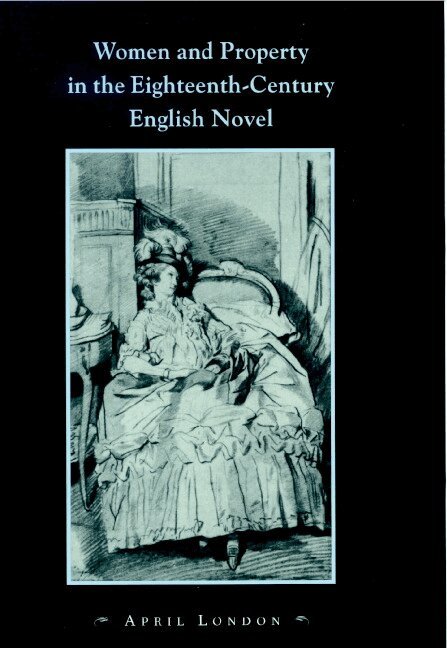
Women and Property in the Eighteenth-Century English Novel
Av April London
Inbunden, 1999
1704 kr
Lägg i varukorg
This book investigates the critical importance of women to the eighteenth-century debate on property as conducted in the fiction of the period. April London argues that contemporary novels advanced several, often conflicting, interpretations of the relation of women to property, ranging from …
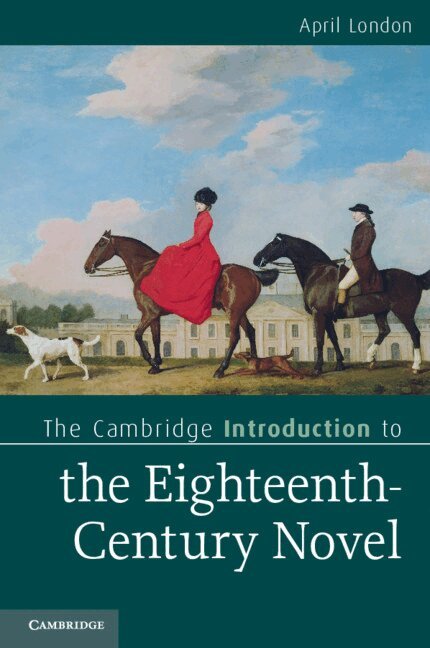
The Cambridge Introduction to the Eighteenth-Century Novel
Av April London
Häftad, 2012
475 kr
Lägg i varukorg
In the eighteenth century, the novel became established as a popular literary form all over Europe. Britain proved an especially fertile ground, with Defoe, Fielding, Richardson and Burney as early exponents of the novel form. The Cambridge Introduction to the Eighteenth-Century Novel considers the …
The Cambridge Introduction to the Eighteenth-Century Novel
Av April London
Inbunden, 2012
1741 kr
Lägg i varukorg
In the eighteenth century, the novel became established as a popular literary form all over Europe. Britain proved an especially fertile ground, with Defoe, Fielding, Richardson and Burney as early exponents of the novel form. The Cambridge Introduction to the Eighteenth-Century Novel considers the …
Literary History Writing, 1770-1820
Av April London
Häftad, 2010
634 kr
Lägg i varukorg
This investigation of literary history writing between 1770 and 1820 identifies the mode's distinction from canon formation as central to its cultural vitality. Using secret history, memoir and the novel, amongst other sources, it invites a re-thinking of literary history's place in late eighteenth …