Ari Y. Kelman - Böcker
Visar alla böcker från författaren Ari Y. Kelman. Handla med fri frakt och snabb leverans.
9 produkter
9 produkter
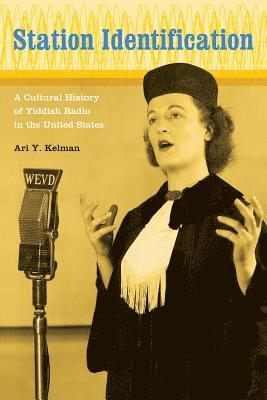
Station Identification
A Cultural History of Yiddish Radio in the United States
Inbunden, Engelska, 2009
1 323 kr
Skickas inom 3-6 vardagar
This study examines the culture of Yiddish radio in the United States during radio's golden age. Ari Y. Kelman explores the dynamic relationships between an immigrant population and a mass medium and between audience and community. By focusing on voices previously excluded from radio histories, this treatment of non-English-language radio breaks new ground in the study of both American mass media and immigrant culture. Yiddish radio directly addressed the everyday lives of Jewish immigrants, while providing them with invaluable guidance as they struggled to become American. Throughout the 1930s and 1940s, radio created a virtual place where Jewish immigrants could listen to voices like theirs and affirm the sound of their community as it evolved, particularly in light of World War II and the years that followed.
504 kr
Skickas inom 10-15 vardagar
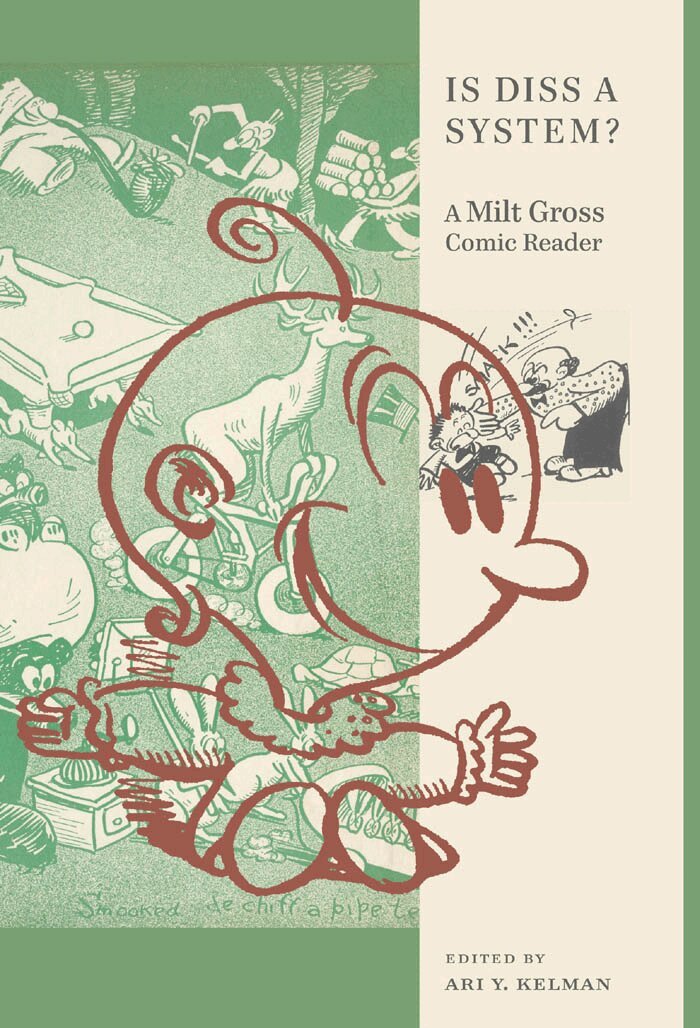
Milt Gross (1895-1953), a Bronx-born cartoonist and animator, first found fame in the late 1920s, writing comic strips and newspaper columns in the unmistakable accent of Jewish immigrants. By the end of the 1920s, Gross had become one of the most famous humorists in the United States, his work drawing praise from writers like H. L. Mencken and Constance Roarke, even while some of his Jewish colleagues found Gross' extreme renderings of Jewish accents to be more crass than comical.Working during the decline of vaudeville and the rise of the newspaper cartoon strip, Gross captured American humor in transition. Gross adapted the sounds of ethnic humor from the stage to the page and developed both a sound and a sensibility that grew out of an intimate knowledge of immigrant life. His parodies of beloved poetry sounded like reading primers set loose on the Lower East Side, while his accounts of Jewish tenement residents echoed with the mistakes and malapropisms born of the immigrant experience.Introduced by an historical essay, Is Diss a System? presents some of the most outstanding and hilarious examples of Jewish dialect humor drawn from the five books Gross published between 1926 and 1928—Nize Baby, De Night in de Front from Chreesmas, Hiawatta, Dunt Esk, and Famous Fimmales—providing a fresh opportunity to look, read, and laugh at this nearly forgotten forefather of American Jewish humor.
954 kr
Skickas inom 10-15 vardagar
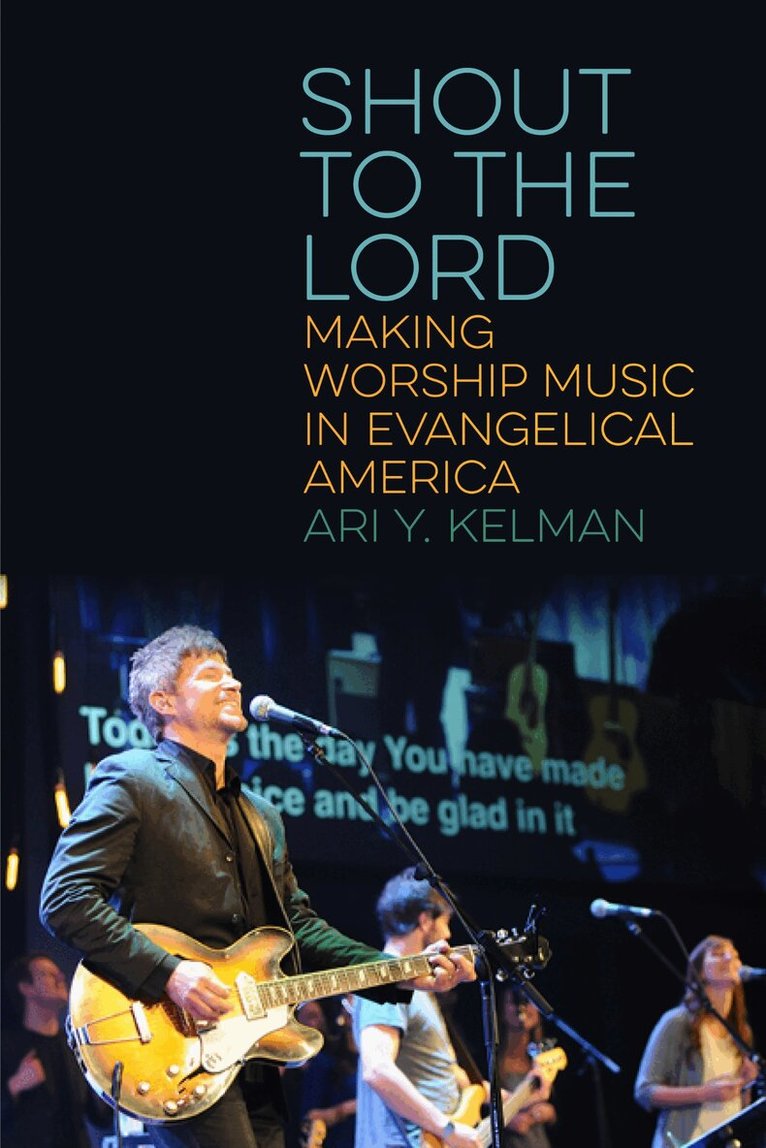
How music makes worship and how worship makes music in Evangelical churches Music is a nearly universal feature of congregational worship in American churches. Congregational singing is so ingrained in the experience of being at church that it is often misunderstood to be synonymous with worship. For those who assume responsibility for making music for congregational use, the relationship between music and worship is both promising and perilous – promise in the power of musical style and collective singing to facilitate worship, peril in the possibility that the experience of the music might eclipse the worship it was written to facilitate. As a result, those committed to making music for worship are constantly reminded of the paradox that they are writing songs for people who wish to express themselves, as directly as possible, to God. This book shines a new light on how people who make music for worship also make worship from music. Based on interviews with more than 75 songwriters, worship leaders, and music industry executives, Shout to the Lord maps the social dimensions of sacred practice, illuminating how the producers of worship music understand the role of songs as both vehicles for, and practices of, faith and identity. This book accounts for the human qualities of religious experience and the practice of worship, and it makes a compelling case for how – sometimes – faith comes by hearing.
336 kr
Skickas inom 7-10 vardagar
How music makes worship and how worship makes music in Evangelical churches Music is a nearly universal feature of congregational worship in American churches. Congregational singing is so ingrained in the experience of being at church that it is often misunderstood to be synonymous with worship. For those who assume responsibility for making music for congregational use, the relationship between music and worship is both promising and perilous – promise in the power of musical style and collective singing to facilitate worship, peril in the possibility that the experience of the music might eclipse the worship it was written to facilitate. As a result, those committed to making music for worship are constantly reminded of the paradox that they are writing songs for people who wish to express themselves, as directly as possible, to God. This book shines a new light on how people who make music for worship also make worship from music. Based on interviews with more than 75 songwriters, worship leaders, and music industry executives, Shout to the Lord maps the social dimensions of sacred practice, illuminating how the producers of worship music understand the role of songs as both vehicles for, and practices of, faith and identity. This book accounts for the human qualities of religious experience and the practice of worship, and it makes a compelling case for how – sometimes – faith comes by hearing.
1 331 kr
Skickas inom 5-8 vardagar
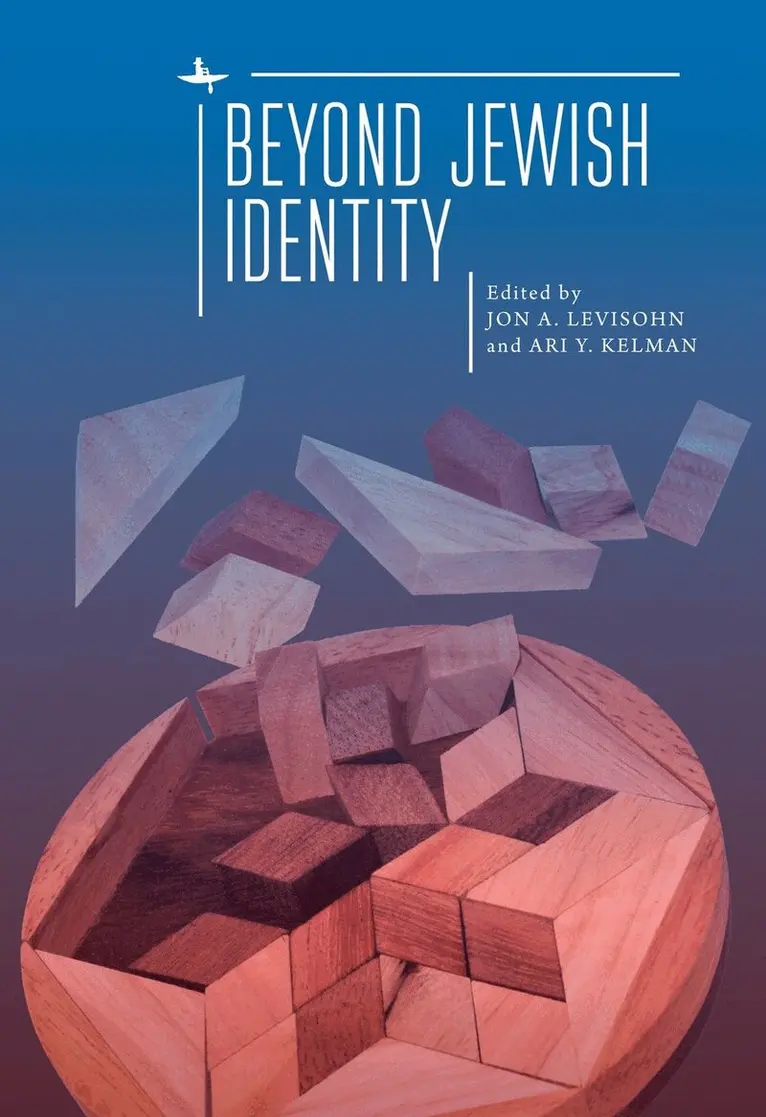
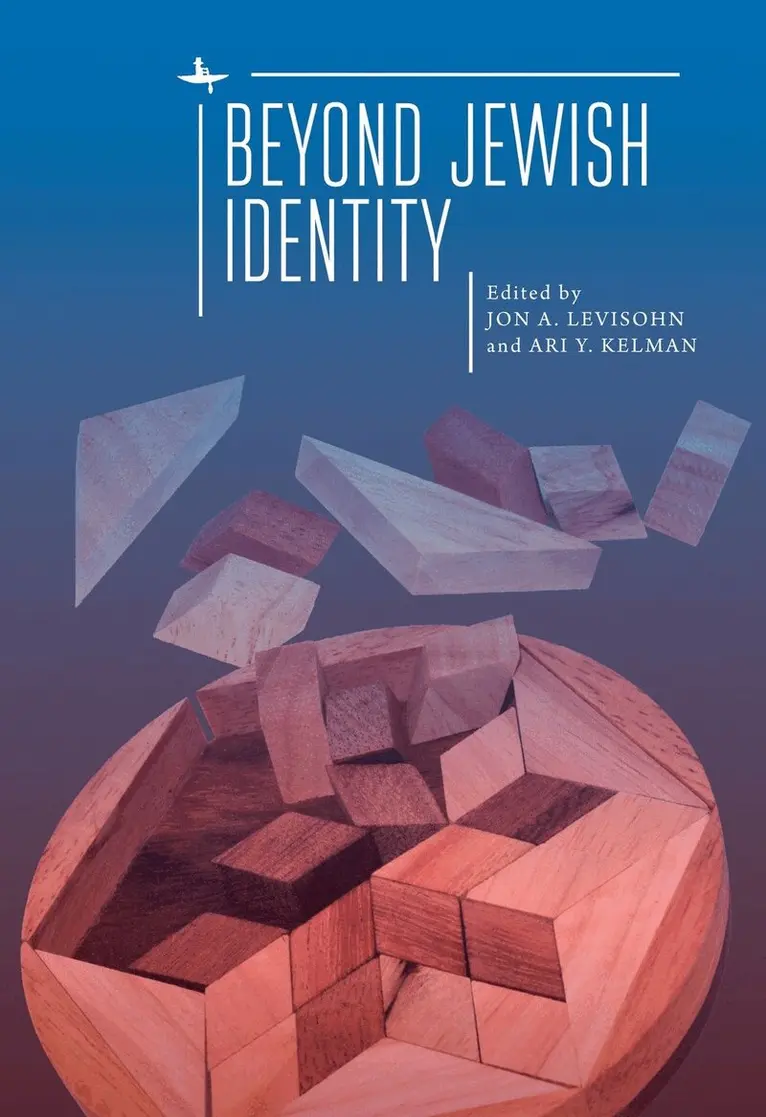
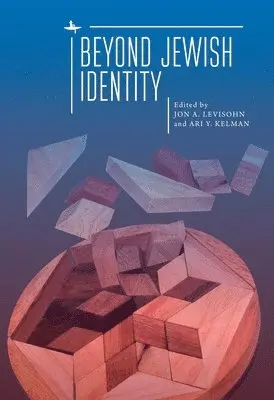
There is something deeply problematic aboutthe ways that Jews, particularly in America, talk about “Jewish identity” as adesired outcome of Jewish education. For many, the idea that the purpose ofJewish education is to strengthen Jewish identity is so obvious that it hardlyseems worth disputing—and the only important question is which kinds of Jewisheducation do that work more effectively or more efficiently. But what does itmean to “strengthen Jewish identity”? Why do Jewish educators, policy-makersand philanthropists talk that way? What do they assume, about Jewish educationor about Jewish identity, when they use formulations like “strengthen Jewishidentity”? And what are the costs of doing so?This volume, the first collection toexamine critically the relationship between Jewish education and Jewishidentity, makes two important interventions. First, it offers a criticalassessment of the relationship between education and identity, arguing that thereification of identity has hampered much educational creativity in the pursuitof this goal, and that the nearly ubiquitous employment of the term obscuressignificant questions about what Jewish education is and ought to be. Second,this volume offers thoughtful responses that are not merely synonymousreplacements for “identity,” suggesting new possibilities for how to thinkabout the purposes and desired outcomes of Jewish education, potentially contributingto any number of new conversations about the relationship between Jewish educationand Jewish life.
1 069 kr
Tillfälligt slut
Examines the relationship between Jewish education and Jewish identity. The book offers responses that are not merely synonymous replacements for ""identity"". With a selection of more critical essays, the quthors begin to expand, rather than replace, the array of ideas that the term ""identity"" is so often used to represent.
402 kr
Skickas inom 5-8 vardagar
This volume, while not the first to explore and critique the concept of Jewish identity, makes two important interventions into contemporary understandings of American Jewish life. It is the first collection to critically examine the relationship between Jewish education and Jewish identity. Insofar as Jewish identity has become the most popular way to talk about the desired outcome of Jewish education, a critical assessment of the relationship between education and identity is both useful and necessary. It is useful because the reification of identity has, we believe, hampered much educational creativity in the rather single-minded pursuit of this goal. It is necessary because the nearly ubiquitous employment of the term obscures a whole set of significant questions about what Jewish education is and ought to be for in the first place.Second, this volume offers responses that are not merely synonymous replacements for "identity." With a selection of more critical essays, we hope that we can begin to expand, rather than replace, the array of ideas that the term "identity" is so often used to represent.As scholars of Jewish education, the authors of this book hope their work contributes to any number of new conversations about the relationship between Jewish education and Jewish life. The intention here is to move from critical inquiry (in Part I of the volume) to suggestive possibilities (Part II). The true measure of this effort, of course, lies in the hands of the readers, those who will advance our understanding of the complexities of American Jewish education and life—beyond Jewish identity.
362 kr
Skickas inom 7-10 vardagar
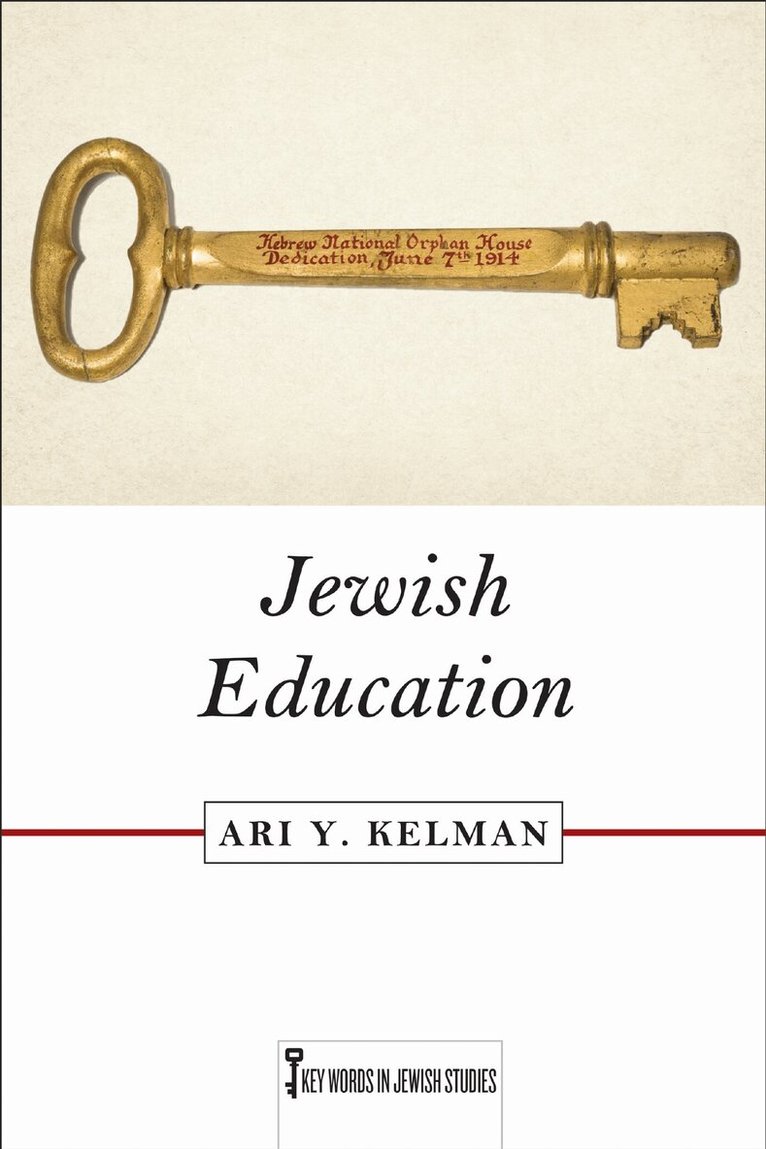
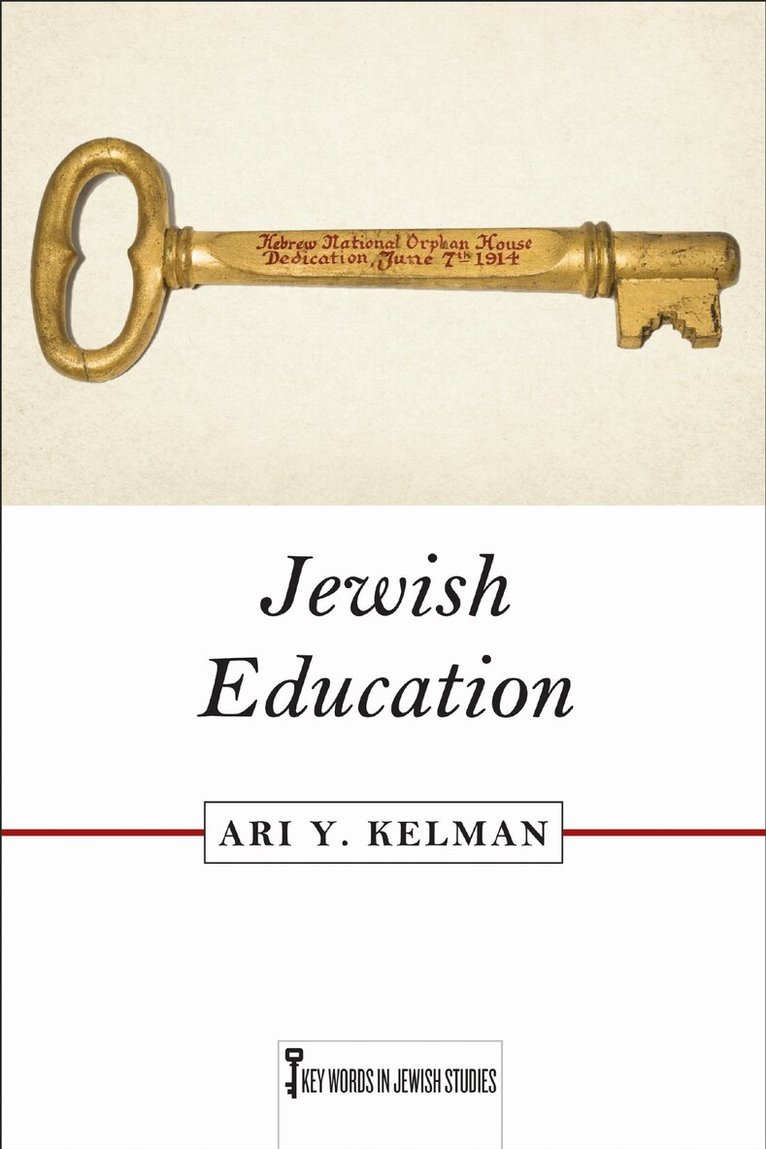
Most writing about Jewish education has been preoccupied with two questions: What ought to be taught? And what is the best way to teach it? Ari Y Kelman upends these conventional approaches by asking a different question: How do people learn to engage in Jewish life? This book, by centering learning, provides an innovative way of approaching the questions that are central to Jewish education specifically and to religious education more generally.At the heart of Jewish Education is an innovative alphabetical primer of Jewish educational values, qualities, frameworks, catalysts, and technologies which explore the historical ways in which Jewish communities have produced and transmitted knowledge. The book examines the tension between Jewish education and Jewish Studies to argue that shifting the locus of inquiry from “what people ought to know” to “how do people learn” can provide an understanding of Jewish education that both draws on historical precedent and points to the future of Jewish knowledge.
1 270 kr
Skickas inom 7-10 vardagar
Most writing about Jewish education has been preoccupied with two questions: What ought to be taught? And what is the best way to teach it? Ari Y Kelman upends these conventional approaches by asking a different question: How do people learn to engage in Jewish life? This book, by centering learning, provides an innovative way of approaching the questions that are central to Jewish education specifically and to religious education more generally.At the heart of Jewish Education is an innovative alphabetical primer of Jewish educational values, qualities, frameworks, catalysts, and technologies which explore the historical ways in which Jewish communities have produced and transmitted knowledge. The book examines the tension between Jewish education and Jewish Studies to argue that shifting the locus of inquiry from “what people ought to know” to “how do people learn” can provide an understanding of Jewish education that both draws on historical precedent and points to the future of Jewish knowledge.