Jon A. Levisohn - Böcker
Visar alla böcker från författaren Jon A. Levisohn. Handla med fri frakt och snabb leverans.
11 produkter
11 produkter
Teaching Historical Narratives
A Philosophical Inquiry into the Virtues of Historical Interpretation
Inbunden, Engelska, 2024
1 175 kr
Skickas inom 10-15 vardagar
With this book Jon Levisohn argues that current history education is set up in a way that sees students of history at one end of a continuum with the academic experts in the field of history at the other, and where the goal of history education is to help students to think like historians. Building on a critical engagement with Carl Hempel, Hayden White, and David Carr, as well as contemporary work in virtue epistemology, Levisohn proposes a new theory of historiography which serves as a set of guidelines for the teaching and learning of history. According to the theory, the work of historiography is best characterized as a negotiation among narratives, weaving together received narratives with new information and ideas in order to construct a new narrative. This negotiation happens with a particular orientation towards negative evidence or ‘flexible disconfirmationism’, and is assessed according to the openness, sensitivity, responsibility, creativity, boldness and humility, i.e. the virtues of historical interpretation. The book rethinks the work of history education, offering new ways of thinking about the goals of the teaching of history, namely, in terms of the cultivation of the interpretive virtues.
Teaching Historical Narratives
A Philosophical Inquiry into the Virtues of Historical Interpretation
Häftad, Engelska, 2026
471 kr
Kommande
With this book Jon Levisohn argues that current history education is set up in a way that sees students of history at one end of a continuum with the academic experts in the field of history at the other, and where the goal of history education is to help students to think like historians. Building on a critical engagement with Carl Hempel, Hayden White, and David Carr, as well as contemporary work in virtue epistemology, Levisohn proposes a new theory of historiography which serves as a set of guidelines for the teaching and learning of history. According to the theory, the work of historiography is best characterized as a negotiation among narratives, weaving together received narratives with new information and ideas in order to construct a new narrative. This negotiation happens with a particular orientation towards negative evidence or ‘flexible disconfirmationism’, and is assessed according to the openness, sensitivity, responsibility, creativity, boldness and humility, i.e. the virtues of historical interpretation. The book rethinks the work of history education, offering new ways of thinking about the goals of the teaching of history, namely, in terms of the cultivation of the interpretive virtues.
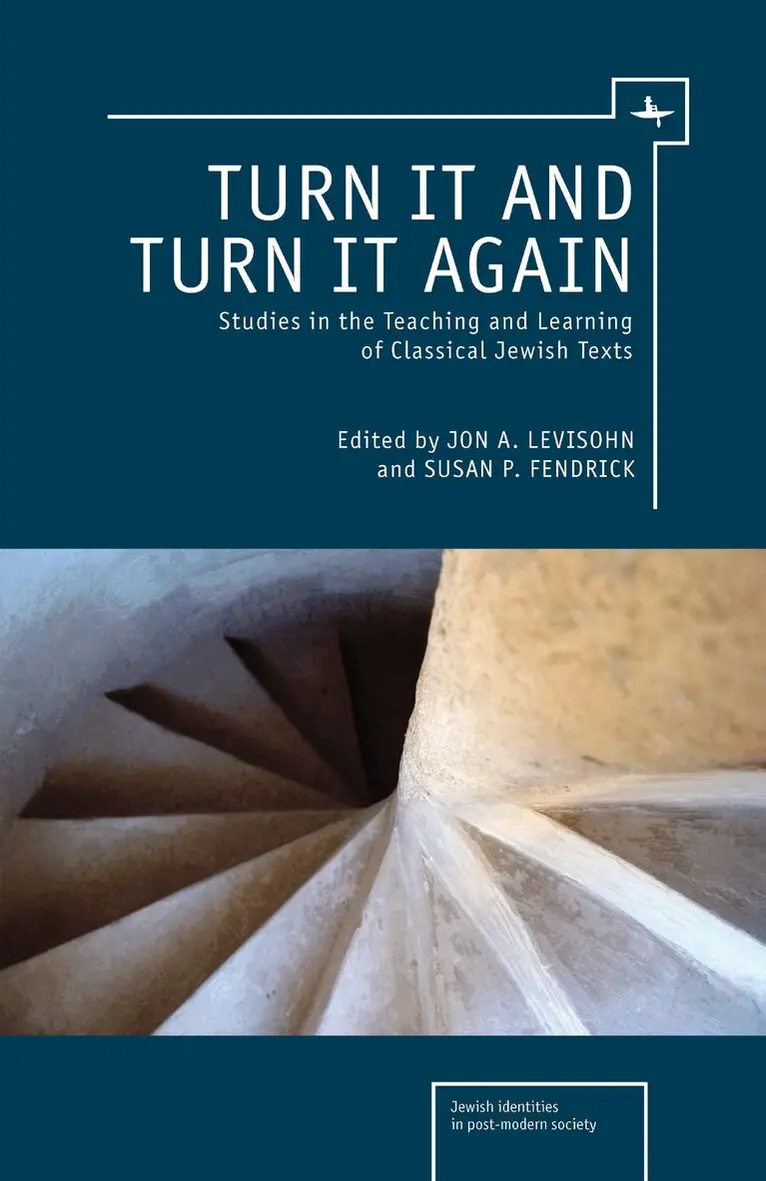
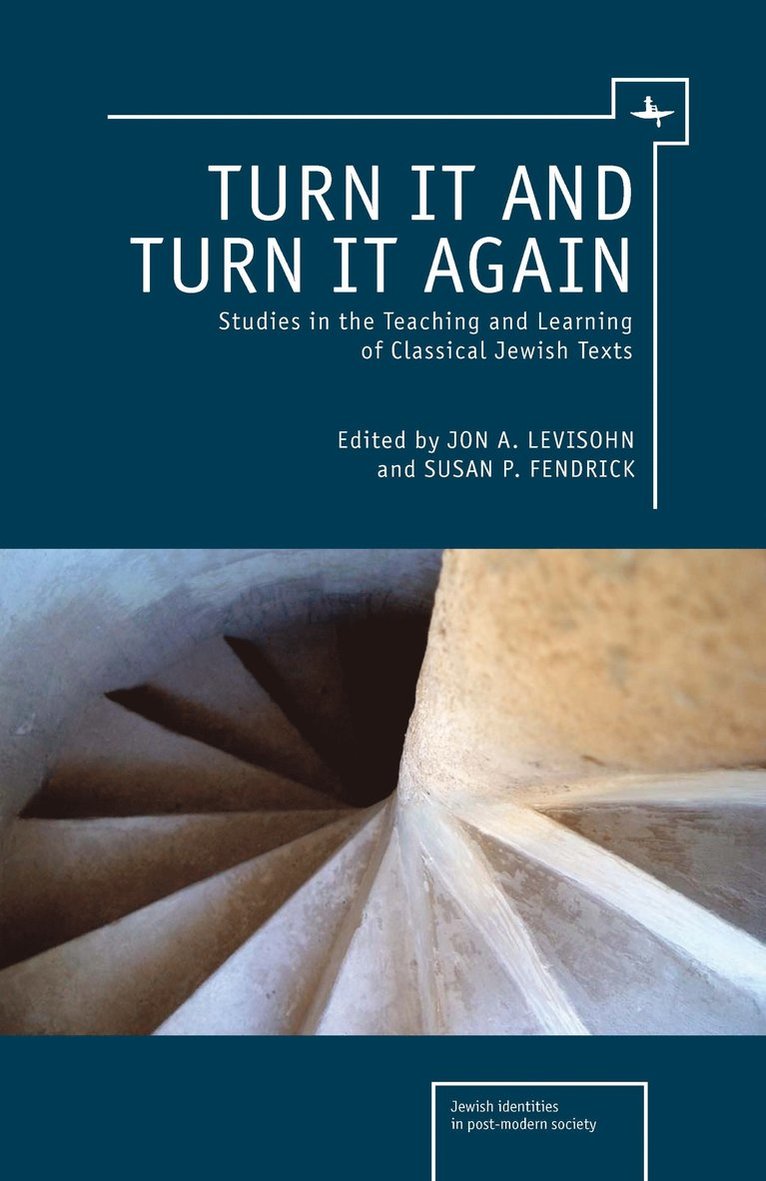
Turn it and Turn it Again
Studies in the Teaching and Learning of Classical Jewish Texts
Häftad, Engelska, 2014
385 kr
Skickas
The study of classical Jewish texts is flourishing in day schools and adult education, synagogues and summer camps, universities and yeshivot. But serious inquiry into the practices and purposes of such study is far rarer. In this book, a diverse collection of empirical and conceptual studies illuminates particular aspects of the teaching of Bible and rabbinic literature to, and the learning of, children and adults. In addition to providing specific insights into the pedagogy of Jewish texts, these studies serve as models of what the disciplined study of pedagogy can look like. The book will be of interest to teachers of Jewish texts in all contexts, and will be particularly valuable for the professional development of Jewish educators.
1 331 kr
Skickas inom 5-8 vardagar
Jewish educational projects and programs are thriving, attracting philanthropic support for exciting and creative approaches in every sector and setting. But underneath that energy, we are not as clear as we ought to be about desired outcomes, the kinds of learning needed to achieve these, and how those kinds of learning actually occur. This volume is the first of its kind to bring together scholars from inside Jewish education and from the learning sciences. It offers a set of critical perspectives on learning, sometimes borrowing models from other domains (such as science) and sometimes examining specific domains within Jewish education (such as havruta learning or the learning of Jewish history). Collectively, these contributions will help to advance a smarter, sharper conversation about Jewish learning that matters.
402 kr
Skickas inom 5-8 vardagar
Jewish educational projects and programs are thriving, attracting philanthropic support for exciting and creative approaches in every sector and setting. But underneath that energy, we are not as clear as we ought to be about desired outcomes, the kinds of learning needed to achieve these, and how those kinds of learning actually occur. This volume is the first of its kind to bring together scholars from inside Jewish education and from the learning sciences. It offers a set of critical perspectives on learning, sometimes borrowing models from other domains (such as science) and sometimes examining specific domains within Jewish education (such as havruta learning or the learning of Jewish history). Collectively, these contributions will help to advance a smarter, sharper conversation about Jewish learning that matters.
1 331 kr
Skickas inom 5-8 vardagar
There is something deeply problematic aboutthe ways that Jews, particularly in America, talk about “Jewish identity” as adesired outcome of Jewish education. For many, the idea that the purpose ofJewish education is to strengthen Jewish identity is so obvious that it hardlyseems worth disputing—and the only important question is which kinds of Jewisheducation do that work more effectively or more efficiently. But what does itmean to “strengthen Jewish identity”? Why do Jewish educators, policy-makersand philanthropists talk that way? What do they assume, about Jewish educationor about Jewish identity, when they use formulations like “strengthen Jewishidentity”? And what are the costs of doing so?This volume, the first collection toexamine critically the relationship between Jewish education and Jewishidentity, makes two important interventions. First, it offers a criticalassessment of the relationship between education and identity, arguing that thereification of identity has hampered much educational creativity in the pursuitof this goal, and that the nearly ubiquitous employment of the term obscuressignificant questions about what Jewish education is and ought to be. Second,this volume offers thoughtful responses that are not merely synonymousreplacements for “identity,” suggesting new possibilities for how to thinkabout the purposes and desired outcomes of Jewish education, potentially contributingto any number of new conversations about the relationship between Jewish educationand Jewish life.
1 069 kr
Tillfälligt slut
Examines the relationship between Jewish education and Jewish identity. The book offers responses that are not merely synonymous replacements for ""identity"". With a selection of more critical essays, the quthors begin to expand, rather than replace, the array of ideas that the term ""identity"" is so often used to represent.
402 kr
Skickas inom 5-8 vardagar
This volume, while not the first to explore and critique the concept of Jewish identity, makes two important interventions into contemporary understandings of American Jewish life. It is the first collection to critically examine the relationship between Jewish education and Jewish identity. Insofar as Jewish identity has become the most popular way to talk about the desired outcome of Jewish education, a critical assessment of the relationship between education and identity is both useful and necessary. It is useful because the reification of identity has, we believe, hampered much educational creativity in the rather single-minded pursuit of this goal. It is necessary because the nearly ubiquitous employment of the term obscures a whole set of significant questions about what Jewish education is and ought to be for in the first place.Second, this volume offers responses that are not merely synonymous replacements for "identity." With a selection of more critical essays, we hope that we can begin to expand, rather than replace, the array of ideas that the term "identity" is so often used to represent.As scholars of Jewish education, the authors of this book hope their work contributes to any number of new conversations about the relationship between Jewish education and Jewish life. The intention here is to move from critical inquiry (in Part I of the volume) to suggestive possibilities (Part II). The true measure of this effort, of course, lies in the hands of the readers, those who will advance our understanding of the complexities of American Jewish education and life—beyond Jewish identity.
318 kr
Skickas inom 7-10 vardagar
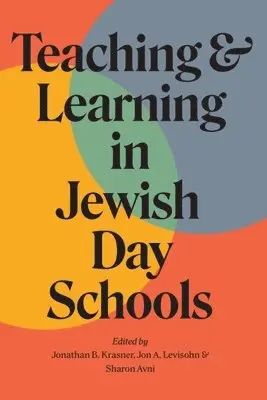
Examines how day schools are educating diverse Jewish youth in a variety of content areas. Teaching and Learning in Jewish Day Schools offers an important analysis of Jewish day school classrooms today. In light of difficulties initiating, evaluating, and sustaining educational innovation, this volume takes stock of what is happening among students and teachers in contemporary Jewish day school classrooms. The authors of this volume confront and question several bedrock principles of Jewish education to address how day schools intersect with broader societal issues including race and gender. They point to themes and topics that scholars and practitioners are grappling with to explore new potential pathways to evaluating student learning and learning outcomes: assessing core subject areas; understanding the ways social and environmental factors contribute to learning; and studying how race, ethnicity, class, and gender shape student learning and school culture. The chapters address topics relevant to educators working in contemporary Jewish day schools including Zionism, the outcomes of Israel education, Jewish engagement, the experience of Latinx students, community building, and more.
939 kr
Skickas inom 7-10 vardagar
Examines how day schools are educating diverse Jewish youth in a variety of content areas. Teaching and Learning in Jewish Day Schools offers an important analysis of Jewish day school classrooms today. In light of difficulties initiating, evaluating, and sustaining educational innovation, this volume takes stock of what is happening among students and teachers in contemporary Jewish day school classrooms. The authors of this volume confront and question several bedrock principles of Jewish education to address how day schools intersect with broader societal issues including race and gender. They point to themes and topics that scholars and practitioners are grappling with to explore new potential pathways to evaluating student learning and learning outcomes: assessing core subject areas; understanding the ways social and environmental factors contribute to learning; and studying how race, ethnicity, class, and gender shape student learning and school culture. The chapters address topics relevant to educators working in contemporary Jewish day schools including Zionism, the outcomes of Israel education, Jewish engagement, the experience of Latinx students, community building, and more.
Turn it and Turn it Again
Studies in the Teaching and Learning of Classical Jewish Texts
Inbunden, Engelska, 2013
1 548 kr
Skickas inom 5-8 vardagar
The study of classical Jewish texts is flourishing in day schools and adult education, synagogues and summer camps, universities and yeshivot. But serious inquiry into the practices and purposes of such study is far rarer. In this book, a diverse collection of empirical and conceptual studies illuminates particular aspects of the teaching of Bible and rabbinic literature to, and the learning of, children and adults. In addition to providing specific insights into the pedagogy of Jewish texts, these studies serve as models of what the disciplined study of pedagogy can look like. The book will be of interest to teachers of Jewish texts in all contexts, and will be particularly valuable for the professional development of Jewish educators.