Arianne Conty - Böcker
Visar alla böcker från författaren Arianne Conty. Handla med fri frakt och snabb leverans.
3 produkter
3 produkter
566 kr
Skickas inom 3-6 vardagar
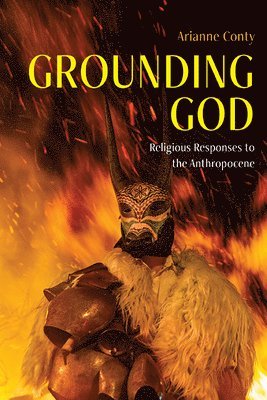
Looks at how different religious traditions (Christian, Buddhist, neopagan, and animist) have attempted to resacralize the earth and provide new values that include the more-than-human world.Now that we have entered the Anthropocene, the geological age in which humans have altered the natural world to such an extent that nature and culture can no longer be separated, the modern dichotomies of mind versus body and culture versus nature have become implausible and need to be replaced. In Grounding God, Arianne Conty argues that it is in the field of religion where we can find a new ontology better suited for the Anthropocene. Conty calls this new religious ontology the grounding of the sacred, in that it seeks to deconstruct the binaries of modernity and provide in their place a revalorization of the immanent earth and the more-than-human beings that inhabit it. Such a grounding of the sacred is a potent means to overcome the exploitation and desecration of the earth and its nonhuman beings and, to provide in its stead, an inclusive cosmopolitics that extends mind into matter and culture into nature. Tracing such a grounding in the Christian, Buddhist, neopagan, and animist traditions, Conty seeks to elaborate an interdisciplinary ecosophy, one that uses philosophy, anthropology, and religious studies to provide new values for the present age.This book is freely available in an open access edition thanks to Knowledge Unlatched-an initiative that provides libraries and institutions with a centralized platform to support OA collections and from leading publishing houses and OA initiatives. Learn more at the Knowledge Unlatched website at https://www.knowledgeunlatched.org.
1 456 kr
Skickas inom 3-6 vardagar
Looks at how different religious traditions (Christian, Buddhist, neopagan, and animist) have attempted to resacralize the earth and provide new values that include the more-than-human world.Now that we have entered the Anthropocene, the geological age in which humans have altered the natural world to such an extent that nature and culture can no longer be separated, the modern dichotomies of mind versus body and culture versus nature have become implausible and need to be replaced. In Grounding God, Arianne Conty argues that it is in the field of religion where we can find a new ontology better suited for the Anthropocene. Conty calls this new religious ontology the grounding of the sacred, in that it seeks to deconstruct the binaries of modernity and provide in their place a revalorization of the immanent earth and the more-than-human beings that inhabit it. Such a grounding of the sacred is a potent means to overcome the exploitation and desecration of the earth and its nonhuman beings and, to provide in its stead, an inclusive cosmopolitics that extends mind into matter and culture into nature. Tracing such a grounding in the Christian, Buddhist, neopagan, and animist traditions, Conty seeks to elaborate an interdisciplinary ecosophy, one that uses philosophy, anthropology, and religious studies to provide new values for the present age.This book is freely available in an open access edition thanks to Knowledge Unlatched-an initiative that provides libraries and institutions with a centralized platform to support OA collections and from leading publishing houses and OA initiatives. Learn more at the Knowledge Unlatched website at https://www.knowledgeunlatched.org.
1 193 kr
Skickas
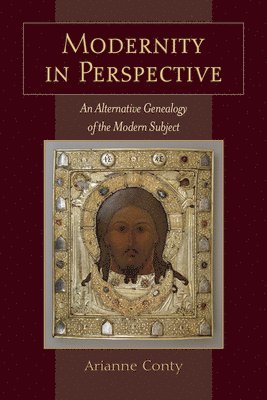
Draws on the work of the Renaissance theologian and mystic Nicolas of Cusa to offer an alternative to Cartesian subjectivity.The normative history of modernity begins with the Renaissance and the invention of linear perspective, which places man, instead of God, at the center of the world. The vanishing point of linear perspective portrays the world from the perspective of the single right eye of a singular subject, and it is this perspective that inspired Descartes's optics and his isolated cogito as the prime example of modern subjectivity. This book returns to the invention of linear perspective to seek another interpretation, offering an alternative to the Cartesian subject. Using the work of Renaissance theologian and mystic Nicolas of Cusa, Arianne Conty traces an alternative genealogy of the modern subject, one that allows the world, and the painting, to return our gaze. In elucidating the critique of the Cartesian subject by twentieth-century philosophers Benjamin, Heidegger, Lacan, Sartre, Merleau-Ponty, and Marion, she asks how modernity could be reconceived if philosophers were to take into account the geometric vision of Nicolas of Cusa and how his alternative vision might enable us to escape narcissism and share our world with the absolute other.