Armin Steinbach - Böcker
Visar alla böcker från författaren Armin Steinbach. Handla med fri frakt och snabb leverans.
13 produkter
13 produkter
1 789 kr
Skickas inom 3-6 vardagar
The intersection between law and economics is a dynamic field of research. Yet, European law has so far not been the subject of comprehensive, systematic economic analysis. Instead issues such as the European debt crisis, COVID-19 pandemic, and the climate emergency have largely escaped scholarly analysis through the nexus of EU law and economics.EU Law and Economics closes this gap, providing an overview of the application of economics to the institutional, procedural, and substantive aspects of European law. Drawing on various branches of the economic sciences - including rational choice and game theory, and institutional and behavioural economics - this book goes beyond conventional methods of EU legal scholarship to expand our understanding of EU law and its effects. This book devotes attention to EU Treaties and secondary law, as well as their adjudicative interpretation, while using economic theory to explain their core legal principles such as conferral, subsidiarity, and mutual recognition.Systematic and original, this book offers additional descriptive and normative metrics that expand our understanding of the decision-making behaviour of EU institutions and member states, while opening a new dialogue between two distinct disciplines.This is an open access title available under the terms of a CC BY-NC-ND 4.0 International licence. It is free to download from OUP and selected open access locations.
567 kr
Skickas inom 10-15 vardagar
The European debt crisis has given new impetus to the debate on economic policy coordination. In economic literature, the need for coordination has long been denied based on the view that fiscal, wage and monetary policy actors should work independently. However, the high and persistent degree of macroeconomic disparity within the EU and the absence of an optimum currency area has led to new calls for examining policy coordination.This book adopts an institutional perspective, exploring the incentives for policymakers that result from coordination mechanisms in the fields of fiscal, monetary and wage policy. Based on the concept of externalities, the work examines cross-border spillovers (e.g. induced by fiscal policy) and cross-policy spillovers (e.g. between fiscal and monetary policies), illuminating how they have empirically changed over time and how they have been addressed by policymakers. Steinbach introduces a useful classification scheme that distinguishes between vertical and horizontal coordination as well as between cross-border and cross-policy coordination. The author discusses farther-reaching forms of fiscal coordination (e.g. debt limits, insolvency proceedings, Eurobonds) with special attention to how principals of state organization affect their viability. Federal states and Bundesstaaten differ in the incentives they offer for debt accumulation – and thus in their suitability for fiscal coordination.Steinbach finds that the originally strict separation between policy areas has undergone significant change during the debt crisis. Indeed, recent efforts to coordinate policy are no longer limited to one policy area, but now extend to several areas. Steinbach argues that further fiscal policy coordination can be effectively deployed to address policy externalities, but that the coordination mechanisms used must match the form of state organization in the first place. Regarding wage policies, there are significant barriers to coordination. Notwithstanding some empirical successes in the implementation of a productivity-oriented wage policy, the high heterogeneity of national wage-setting institutions is likely to prevent any wage coordination.
2 305 kr
Skickas inom 10-15 vardagar
The European debt crisis has given new impetus to the debate on economic policy coordination. In economic literature, the need for coordination has long been denied based on the view that fiscal, wage and monetary policy actors should work independently. However, the high and persistent degree of macroeconomic disparity within the EU and the absence of an optimum currency area has led to new calls for examining policy coordination.This book adopts an institutional perspective, exploring the incentives for policymakers that result from coordination mechanisms in the fields of fiscal, monetary and wage policy. Based on the concept of externalities, the work examines cross-border spillovers (e.g. induced by fiscal policy) and cross-policy spillovers (e.g. between fiscal and monetary policies), illuminating how they have empirically changed over time and how they have been addressed by policymakers. Steinbach introduces a useful classification scheme that distinguishes between vertical and horizontal coordination as well as between cross-border and cross-policy coordination. The author discusses farther-reaching forms of fiscal coordination (e.g. debt limits, insolvency proceedings, Eurobonds) with special attention to how principals of state organization affect their viability. Federal states and Bundesstaaten differ in the incentives they offer for debt accumulation – and thus in their suitability for fiscal coordination.Steinbach finds that the originally strict separation between policy areas has undergone significant change during the debt crisis. Indeed, recent efforts to coordinate policy are no longer limited to one policy area, but now extend to several areas. Steinbach argues that further fiscal policy coordination can be effectively deployed to address policy externalities, but that the coordination mechanisms used must match the form of state organization in the first place. Regarding wage policies, there are significant barriers to coordination. Notwithstanding some empirical successes in the implementation of a productivity-oriented wage policy, the high heterogeneity of national wage-setting institutions is likely to prevent any wage coordination.
1 174 kr
Skickas inom 10-15 vardagar
The book provides both a legal and economic assessment of an increasingly important issue for the EU: the question of whether individuals can hold the European Union liable for damages they suffer due to its infringement of international economic law. However, liability regimes vary depending on the issue concerned. In international trade law the individual holds a weak position, being deprived of both legal remedies to seek annulment and damages. This is due to the constant refusal of the direct effect of WTO law. By contrast, international investment law has been designed in an 'individualistic' manner from the outset – states agree reciprocally to grant certain procedural and substantial individual rights, which they invoke to claim damages before international tribunals rather than domestic courts. The divergent role of the individual in the respective area of international economic law leads to a different set of research questions related to liability. In international trade law, the doctrinal exercise of de-coupling the notion of direct effect from liability is at the core of establishing liability. In international investment law, liability is connected to a number of issues emerging from the recent transfer of competence pertaining to investment issues from Member States to the EU and the nature of investment agreements as mixed agreements. Against this backdrop, exploring liability issues in the area of international economic law reveals a heterogeneous set of questions depending on the area of law concerned, thus offering different perspectives for studying liability issues.This title is included in Bloomsbury Professional's International Arbitration online service.
449 kr
Skickas inom 10-15 vardagar
The book provides both a legal and economic assessment of an increasingly important issue for the EU: the question of whether individuals can hold the European Union liable for damages they suffer due to its infringement of international economic law. However, liability regimes vary depending on the issue concerned. In international trade law the individual holds a weak position, being deprived of both legal remedies to seek annulment and damages. This is due to the constant refusal of the direct effect of WTO law. By contrast, international investment law has been designed in an 'individualistic' manner from the outset – states agree reciprocally to grant certain procedural and substantial individual rights, which they invoke to claim damages before international tribunals rather than domestic courts. The divergent role of the individual in the respective area of international economic law leads to a different set of research questions related to liability. In international trade law, the doctrinal exercise of de-coupling the notion of direct effect from liability is at the core of establishing liability. In international investment law, liability is connected to a number of issues emerging from the recent transfer of competence pertaining to investment issues from Member States to the EU and the nature of investment agreements as mixed agreements. Against this backdrop, exploring liability issues in the area of international economic law reveals a heterogeneous set of questions depending on the area of law concerned, thus offering different perspectives for studying liability issues.This title is included in Bloomsbury Professional's International Arbitration online service.
1 712 kr
Skickas inom 3-6 vardagar
1 772 kr
Skickas inom 5-8 vardagar
1 716 kr
Skickas inom 5-8 vardagar
1 510 kr
Skickas inom 3-6 vardagar
Der Netzausbau bleibt ein Schlüsselprojekt und das Nadelöhr der Energiewende. Nur mit der Realisierung von Höchstspannungsleitungen – und hier insbesondere der großen Nord-Süd-Verbindungen – wird die Integration Erneuerbarer Energien in das deutsche Energiesystem und eine preisgünstige, sichere Energieversorgung zu gewährleisten sein. Netzausbau ist und bleibt ein Thema, das die Öffentlichkeit stark bewegt. Unter Berücksichtigung der neuen Vorschriften zum Energieleitungsausbau, insbesondere der Ergänzungen im Netzausbaubeschleunigungsgesetz (NABEG), im Energiewirtschaftsgesetz (EnwG) und im Windenergie-auf-See-Gesetz (WindSeeG). Die Neuauflage berücksichtigt die Fortentwicklung der gesetzlichen Rahmenbedingungen für den Netzausbau, die bisherigen praktischen Erfahrungen und die lebhafte wissenschaftliche Diskussion.
441 kr
Tillfälligt slut
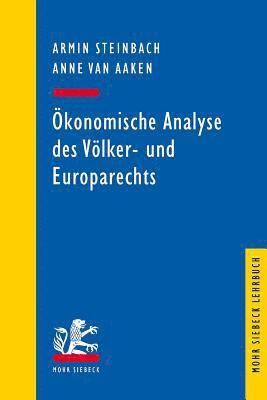
Das Buch bietet eine Darstellung der ökonomischen Analyse des Rechts und ihrer Anwendung auf das Völker- und Europarecht. Es behandelt die Grundlagen dieser Forschungsrichtung, die ökonomische Analyse internationaler Kooperation und supranationaler Entscheidungen sowie der Rechtsquellen des Völker- und Europarechts. Dieser Ansatz wird auf zentrale Bereiche des Völker- und Europarechts angewendet, insbesondere auf den Europäischen Binnenmarkt, das Wettbewerbsrecht, die Fiskalpolitik in der Währungsunion, das Wirtschaftsvölkerrecht, das Umweltrecht, das völkerrechtliche Regelwerk zu Krieg und Frieden sowie den Menschenrechtsschutz.Für Bibliotheken gelten bei diesem Titel abweichende Konditionen; bitte wenden Sie sich an den Vertrieb.
535 kr
Tillfälligt slut
Mehr als 60 Jahre nach der Gründung des Bundesverwaltungsgerichts hat die Verwaltungsrechtsprechung eine lange Tradition vorzuweisen. Das bietet Anlass, in retrospektiver Perspektive eine Sammlung jener Entscheidungen anzubieten, die sowohl von historischer als sachgebietsbezogener Bedeutung sind - in Fortsetzung an den bereits erschienenen Band Verfassungsrechtsprechung. Ziel ist es, wichtige Entscheidungen vor ihrem Hintergrund und mit Blick auf ihre verwaltungsrechtliche und didaktische Relevanz aufzubereiten und über weiterführende Literatur eine Vertiefung zu ermöglichen. Die Autoren erläutern den juristischen Kontext der Entscheidungen, fokussieren deren Kernaussagen und identifizieren die daraus resultierenden Linien und Brüche in der Rechtsprechung.Für Bibliotheken gelten bei diesem Titel abweichende Konditionen; bitte wenden Sie sich an den Vertrieb.
1 605 kr
Tillfälligt slut
Gesetze müssen rational sein - so eine häufig erhobene Forderung. Gleichzeitig sind die Mängel an Gesetzen vielfältig, ihre Irrationalität wird oft beklagt. Doch was macht ein rationales Gesetz aus? Rationalität ist kein genuin juristischer Begriff, jede Disziplin kennt einen anderen Rationalitätsbegriff. Anliegen dieser Arbeit ist es, die außerjuridischen Rationalitätskonzepte so aufzubereiten, dass sie in rechtswissenschaftlichen Kategorien verwertbar und hinsichtlich ihrer verfassungsrechtlichen Verankerung überprüfbar werden. Außerjuridisch lautet die Frage: Welchen Sinngehalt entfaltet die Rationalität in Abhängigkeit ihres disziplinspezifischen Ursprungs in Bezug auf Gesetzgebung? Rechtstheoretisch kann auf dieser Grundlage jedes Rationalitätspostulat individuell auf einen normativen Aussagewert für Gesetzgebung untersucht werden. Welche Überschneidungen, welche Widersprüche lassen sich daraus für rationale Gesetze ermitteln? Verfassungsrechtlich stellt sich die Frage: Finden diese außerjuridischen Rationalitätsattribute normativ in der Verfassung Verankerung? Der komplementäre und aufeinander aufbauende Ansatz soll eine konstruktive Zusammenarbeit der Wissenschaftsdisziplinen ermöglichen.Die Arbeit wurde mit dem Wissenschaftspreis 2018 der Deutschen Gesellschaft für Gesetzgebung e.V. ausgezeichnet.
236 kr
Skickas inom 3-6 vardagar