Armstead L. Robinson - Böcker
Visar alla böcker från författaren . Handla med fri frakt och snabb leverans.
2 produkter
2 produkter
199 kr
Skickas inom 7-10 vardagar
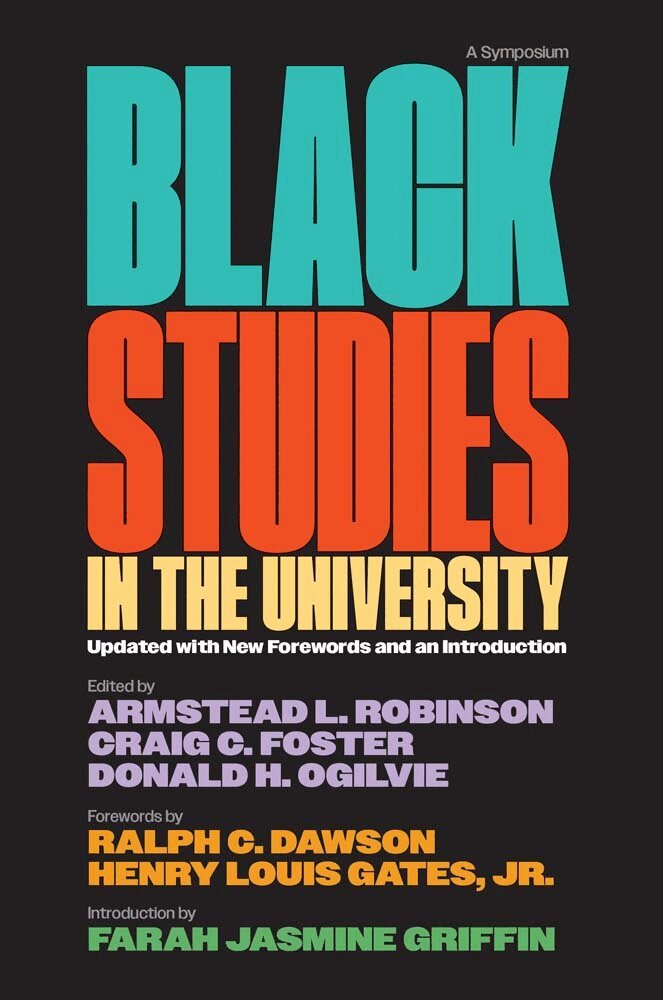
A founding document of African American Studies, reissued for today’s students and scholars In a landmark 1968 conference at Yale University, students, faculty, and community activists helped establish “Afro‑American Studies” as a major, and then a thriving department, at Yale. In these conference proceedings, participants argue for the necessity of Black Studies as a field, start to delineate its central debates, discuss its relationship to the broader community, and plot a course of study. Bristling with implied action and the power of an idea whose time has come, this classic reissue will serve as a resource for new generations of scholars and activists. Contributors to the proceedings include McGeorge Bundy, Lawrence W. Chisolm, Harold Cruse, David Brion Davis, Nathan Hare, Maulana Ron Karenga, Martin Kilson, Jr., Gerald A. McWorter, Sidney W. Mintz, Boniface Obichere, Alvin Poussaint, Edwin S. Redkey, Charles H. Taylor, Jr., and Robert Farris Thompson. In a new introduction, Farah Jasmine Griffin reflects on the legacy of this book and the trajectory of the field over the decades; forewords by Ralph C. Dawson and Henry Louis Gates, Jr., recall the pioneering moment at Yale and all that it made possible.
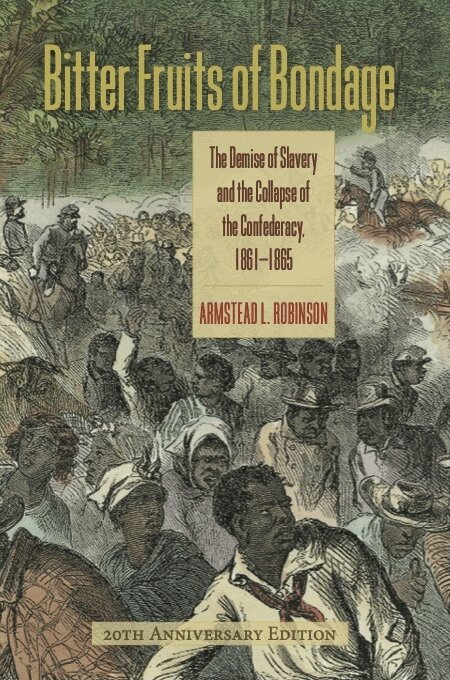
Bitter Fruits of Bondage
The Demise of Slavery and the Collapse of the Confederacy, 1861-1865
Häftad, Engelska, 2024
310 kr
Skickas inom 10-15 vardagar
Bitter Fruits of Bondage is the late Armstead L. Robinson's magnum opus, a controversial history that explodes orthodoxies on both sides of the historical debate over why the South lost the Civil War. Recent studies, while conceding the importance of social factors in the unraveling of the Confederacy, still conclude that the South was defeated as a result of its losses on the battlefield, which in turn resulted largely from the superiority of Northern military manpower and industrial resources. Robinson contends that these factors were not decisive, that the process of social change initiated during the birth of Confederate nationalism undermined the social and cultural foundations of the southern way of life built on slavery, igniting class conflict that ultimately sapped white southerners of the will to go on.In particular, simmering tensions between nonslaveholders and smallholding yeoman farmers on the one hand and wealthy slaveholding planters on the other undermined Confederate solidarity on both the home front and the battlefield. Through their desire to be free, slaves fanned the flames of discord. Confederate leaders were unable to reconcile political ideology with military realities, and, as a result, they lost control over the important Mississippi River Valley during the first two years of the war. The major Confederate defeats in 1863 at Vicksburg and Missionary Ridge were directly attributable to growing disenchantment based on class conflict over slavery.Because the antebellum way of life proved unable to adapt successfully to the rigors of war, the South had to fight its struggle for nationhood against mounting odds. By synthesizing the results of unparalleled archival research, Robinson tells the story of how the war and slavery were intertwined, and how internal social conflict undermined the Confederacy in the end.