Arnold E. Franklin – författare
Visar alla böcker från författaren Arnold E. Franklin. Handla med fri frakt och snabb leverans.
3 produkter
3 produkter
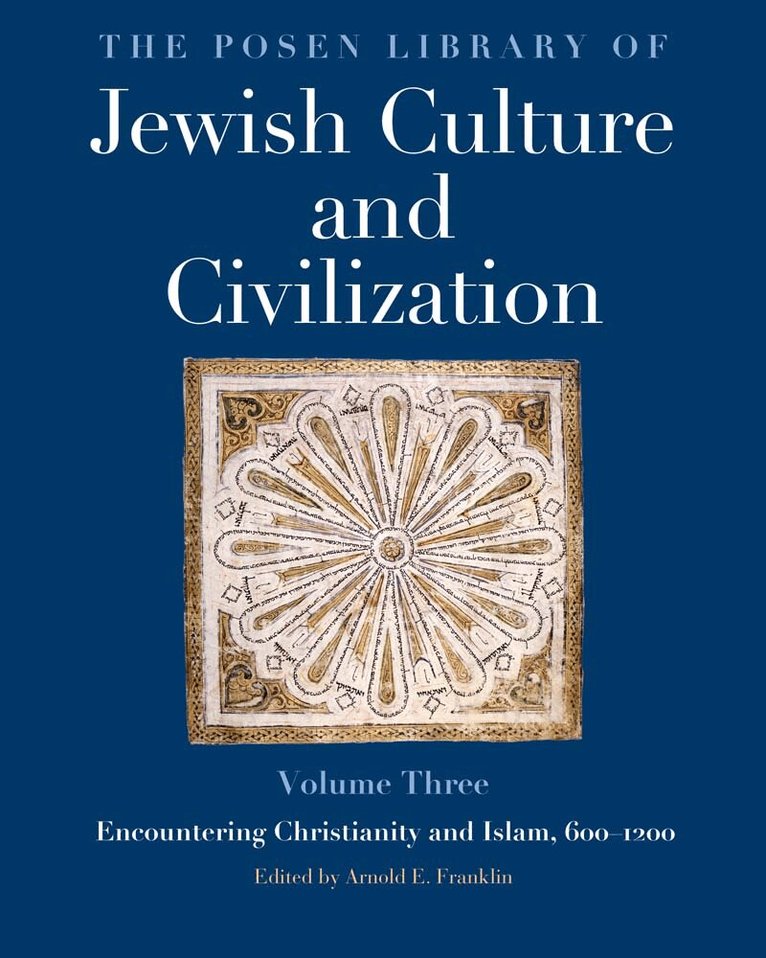
Del 3 - Posen Library of Jewish Culture and Civilization
Posen Library of Jewish Culture and Civilization, Volume 3
Encountering Christianity and Islam, 600-1200
Inbunden, Engelska, 2026
2 095 kr
Kommande
This volume of the Posen Library of Jewish Culture and Civilization covers the religious, political, economic, and geographic transformations of Jewish life through the early Middle Ages Volume 3 of the Posen Library of Jewish Culture and Civilization presents a time of tremendous vibrancy for Jews and Judaism in the early Middle Ages, with a comprehensive historical introduction to the period in over a thousand source texts, alongside the extant visual and material culture. The sources offer an unprecedented range of voices—male and female, religious and secular, mystical and rationalist, learned and commoner—from a historical period that is thoroughly unfamiliar to modern audiences. The volume captures passionate political controversies, virtuosic liturgical poets, learned scientific and medical texts, and spiritually uplifting philosophical and theological discussions, all alongside the plaintive voices of Jewish mothers writing to their sons, real-life cases of commercial transactions, legal contests, and the details of domestic disputes.
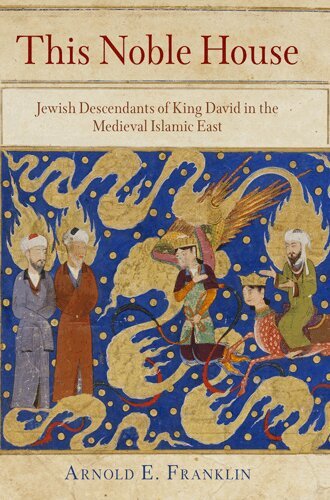
This Noble House
Jewish Descendants of King David in the Medieval Islamic East
Inbunden, Engelska, 2012
888 kr
Skickas inom 10-15 vardagar
This Noble House explores the preoccupation with biblical genealogy that emerged among Jews in the Islamic Near East between the eleventh and fourteenth centuries. Arnold Franklin looks to Jewish society's fascination with Davidic ancestry, examining the profusion of claims to the lineage that had already begun to appear by the year 1000, the attempts to chart the validity of such claims through elaborate genealogical lists, and the range of meanings that came to be ascribed to the House of David in this period. Jews and Muslims shared the perception that the Davidic line and the noble family of the Prophet Muhammad were counterparts to one another, but captivation with Davidic lineage was just one facet of a much broader Jewish concern with biblical ancestry.Based on documentary material from the Cairo Geniza, the book argues that this "genealogical turn" should be understood as a consequence of Jewish society's dynamic encounter with its Arab-Islamic milieu and constituted a selective adaptation to the importance of ancestry in the dominant cultural environment. While Jewish society surely had genealogical materials and preoccupations of its own upon which to draw, the Arab-Islamic regard for tracing the lineage of Muhammad provided the impetus for deploying those traditions in new and unprecedented ways.On the one hand, the increased focus on ancestry is an instance of medieval Jews reflexively and unselfconsciously making use of the cultural forms of their Muslim neighbors; on the other, it is an expression of cultural competitiveness or even resistance, an implicit response to the claim of Arab genealogical superiority that uses the very methods of the Arab "science of genealogy." To be sure, Franklin notes, Jews were only one of several non-Arab minority groups to take up genealogy in this way. At the broadest level, then, This Noble House illuminates a strategy that various minority populations utilized as they sought legitimacy within the medieval Arab-Islamic world.
Del 2 - Christians and Jews in Muslim Societies
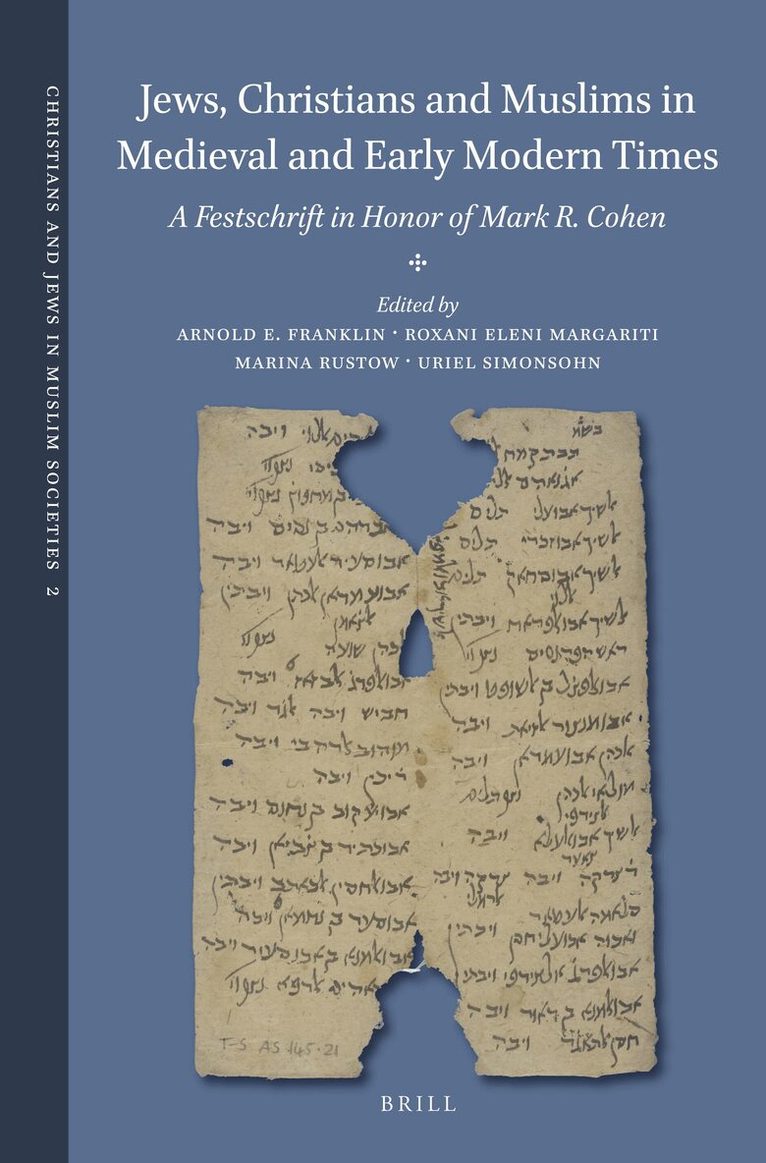
Jews, Christians and Muslims in Medieval and Early Modern Times
A Festschrift in Honor of Mark R. Cohen
Inbunden, Engelska, 2014
2 914 kr
Skickas inom 5-8 vardagar
This volume brings together articles on the cultural, religious, social and commercial interactions among Jews, Christians and Muslims in the medieval and early modern periods. Written by leading scholars in Jewish studies, Islamic studies, medieval history and social and economic history, the contributions to this volume reflect the profound influence on these fields of the volume’s honoree, Professor Mark R. Cohen.